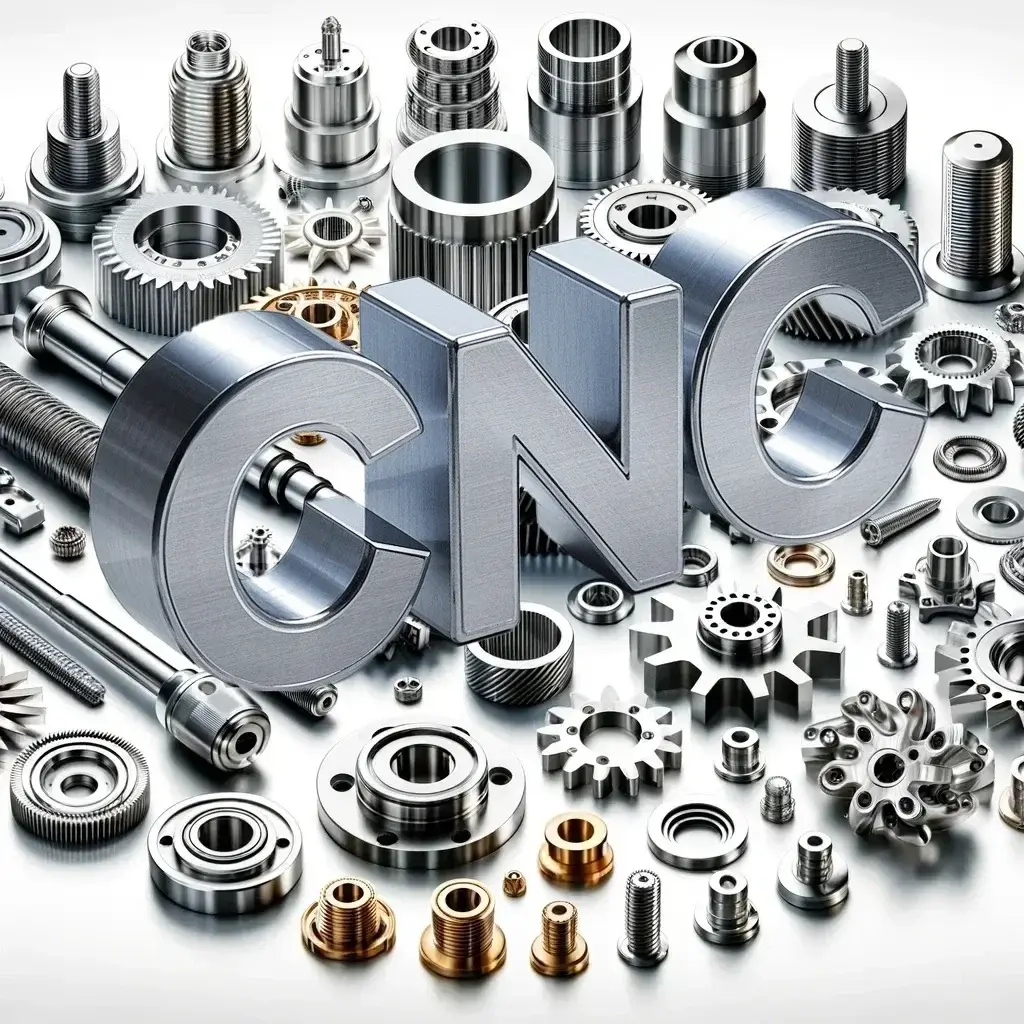
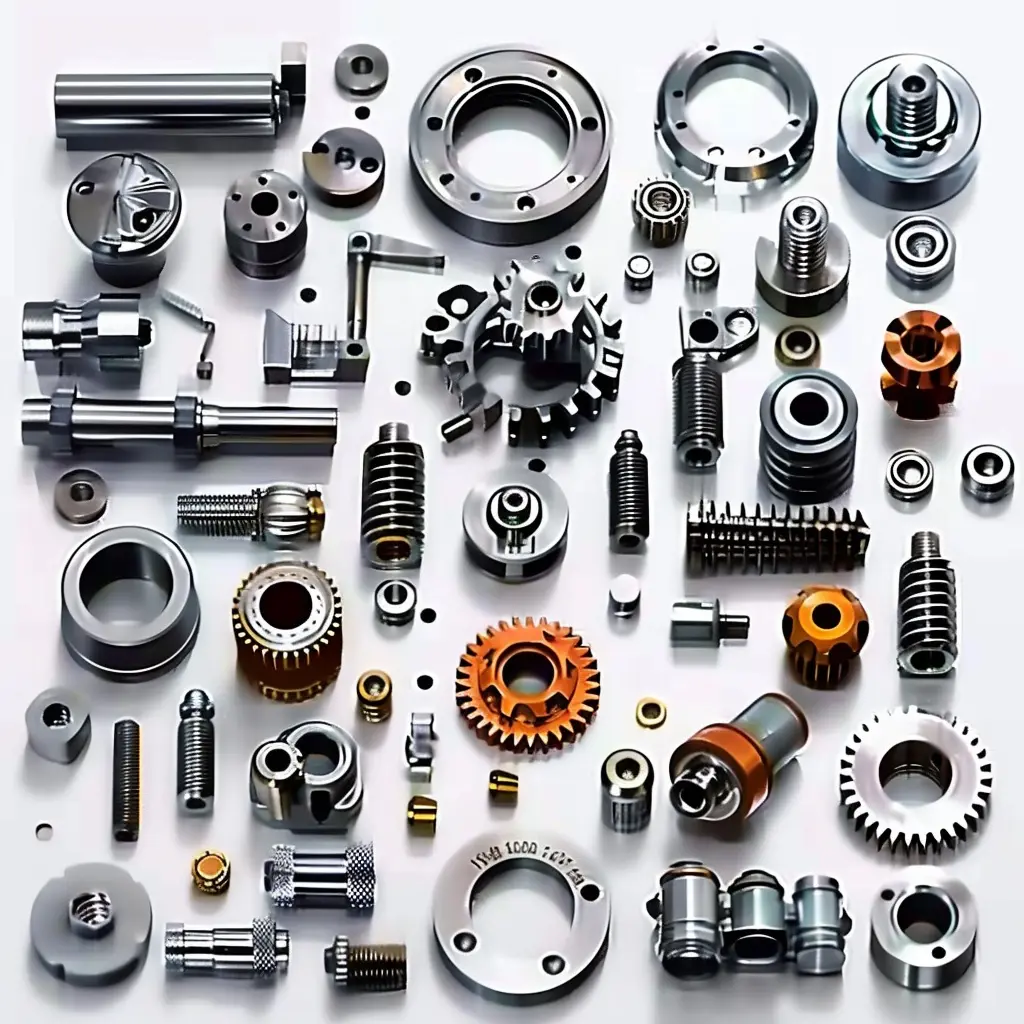
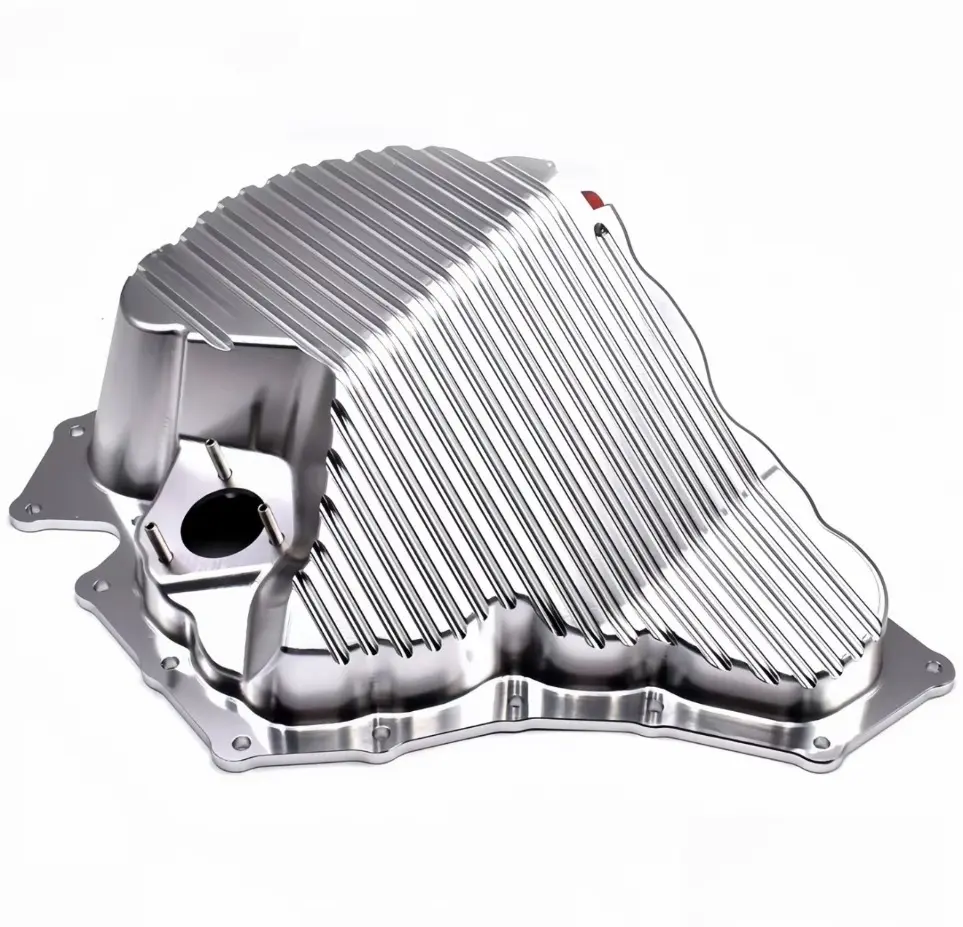
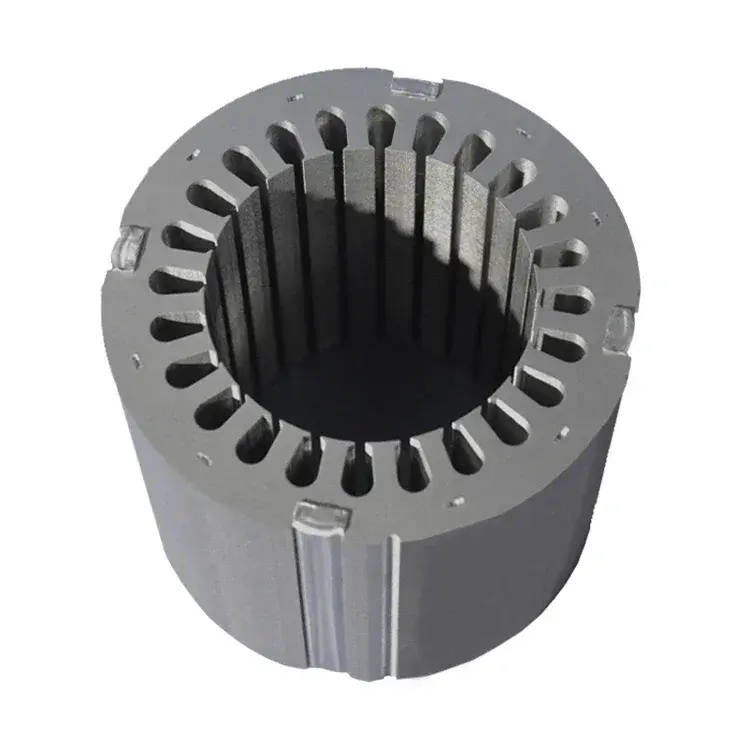
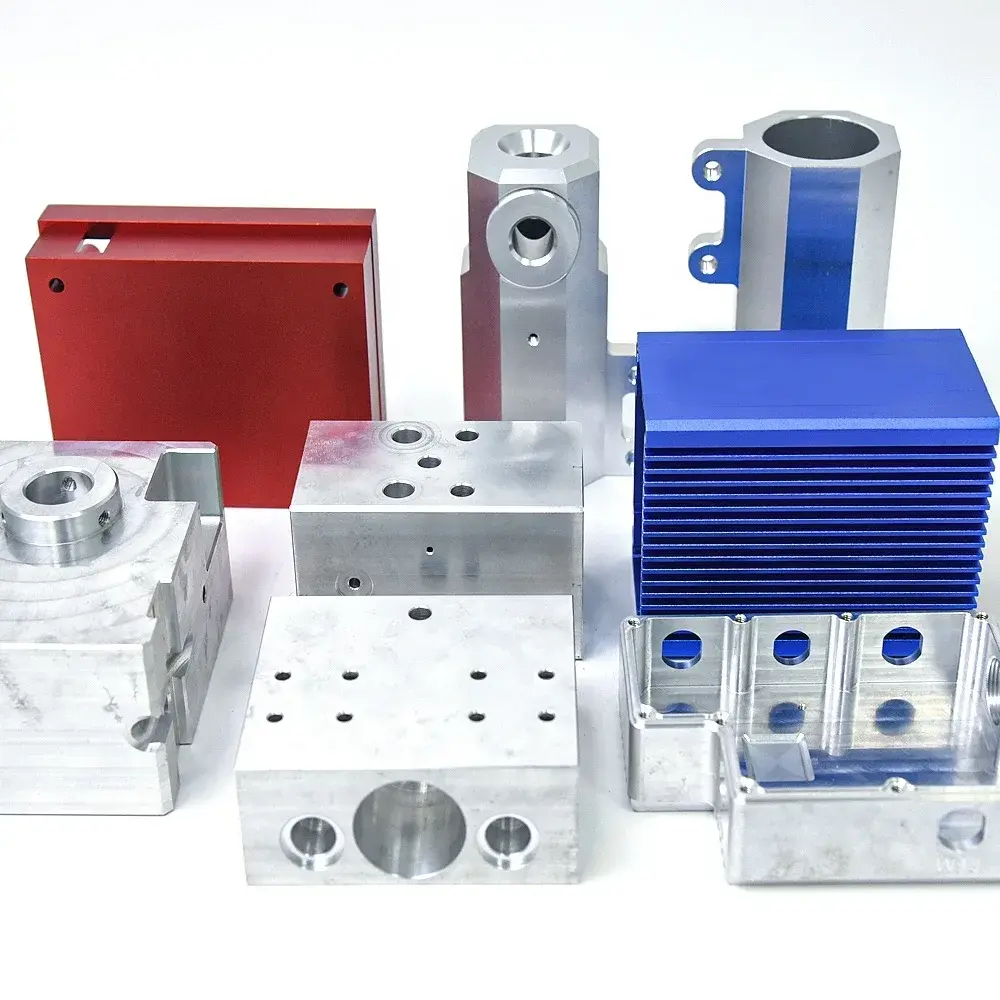
Machining at five axes (5 -axis machining), a machining mode of the CNC machine.
According to the provisions of the ISO, during the description of the movement of a CNC machine, a system of rectangular coordinates on the right is used; , Y and the Z axis are respectively A, B and C, respectively. The movement of each axes of coordinates can be obtained by the SOELEBENCH or by the movement of the tool, but the direction is defined by the movement of movement of the tool compared to the part. Usually, the five -axis connection refers to the linear interpolation movement of 5 coordinates in X, Y, Z, A, B and C. In other words, the five axes refer to the three axes of movement X, Y And z plus two axes of rotation. Compared to the processing common to three axes (three degrees of freedom), the treatment at five axes refers to the need for machining tools to position and connect in five degrees of freedom during the treatment of parts with geometric shapes relatively complex.
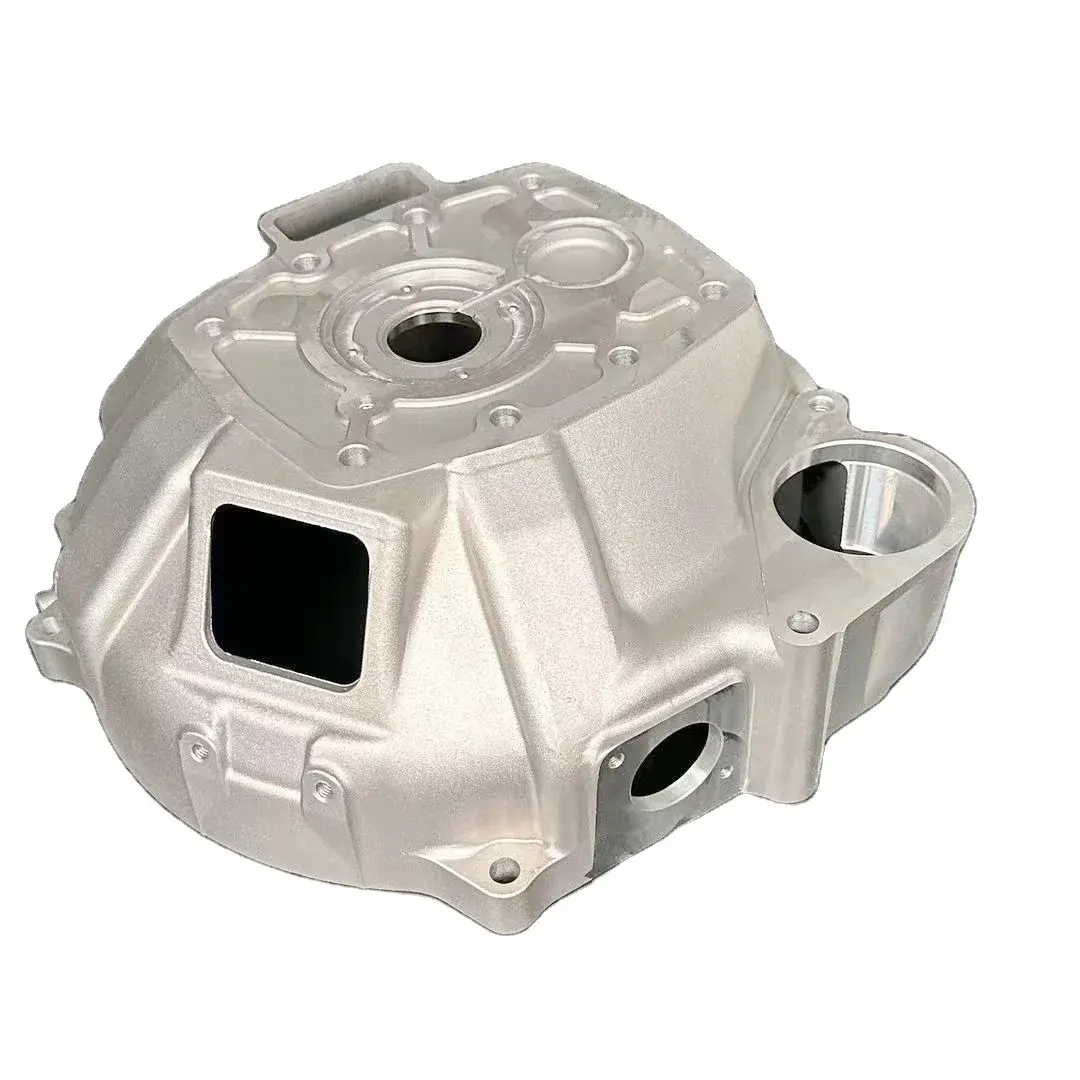
The machine tools used for five-axis machining are generally called five-axis or five-axis machine tools. Machining at five axes is often used in the aerospace field, dealing with body parts, turbine parts and training with free curved surfaces. The five-axis machine-tool can treat different sides of the room without modifying the position of the part on the machine tool, which can considerably improve the machining efficiency of prism-shaped parts.
Development of five -axes technology
For decades, it has been largely believed that five -axis CNC machining technology is the only way to treat continuous, smooth and complex surfaces. Once people encounter insoluble problems in the design and manufacture of complex surfaces, they will require help with five -axis machining technology.
The CNC five -axis link is the most difficult and most used technology among CNC technology. CNC -liaison technology with five axes is considered to be a symbol of the country’s production equipment level technology. Because of its special status, in particular its important influence on the aviation, aerospace and soldiers industries, as well as its technical complexity, the Western industrial developed countries have always implemented the license system export as strategic material.
Compared to CNC machining linked to three axes, from the point of view of the process and programming, the use of CNC machining at five axes for complex surfaces has the following advantages:
1) Improve the quality and efficiency of treatment
2) Develop the scope of the process
3) Meet the new compound development department
However, due to the interference and the control of the position of the tool in the processing space, CNC machining at five axes has a much more complex CNC programming, a CNC system and a machine-tool structure that the machine tools with three axes. Therefore, the five axes are easy to say, but it is really difficult to implement it! In addition, it is even more difficult to work well!

Speaking of the five axes, we have to talk about the real and false axes to five? The difference between True and Faux 5 axes is mainly if there is an RTCP function.
RTCP, let me explain, RTCP of Fidia is the abbreviation of “point of center of rotation tools”, which literally means “rotation tool center”. as “rotary tool”. The RTCP of PA is the abbreviation of the first words “rotation of the center of tools in real time”. Heiden calls for so-called similar upgrade technology TCPM, which is the abbreviation of “management points management”, Tool Center Point Management. Some manufacturers call a similar TCPC technology, which is the abbreviation of “tool point check”, tool center control.
The literal meaning of Fidia RTCP, assuming that the RTCP function is carried out manually, the central point of the tool and the real contact point between the tool and the surface of the part will remain unchanged. Point of contact between the tool and the surface of the part.
In order to achieve the aim of allowing the tool support to simply turn around the target track point (that is to say the central point of the tool) during the execution of the RTCP function, it is necessary to compensate for the lag of linear coordinates of the central point of the tool due to the rotation of the tool support. The tool and the surface of the unchanged part, in order to play the best cut of the ball head tool. Consequently, RTCP seems to be more about to stand at the central point of the tool (that is, the target trajectory point of the CNC code) and the treatment of changes in rotation coordinates.

Machine-tools with five axes and CNC systems that do not have RTCP must rely on CAM programming and post-processing, and plan the tool path in advance. Post-processing must be put in place, so it can only be done. Of course, it is understandable that people insist in order to be called five axes, but this (false) axis with five axes is not the (real) axis at five axes!
The publisher also consulted industry experts.
It’s a common saying, not a standard saying. Positioning treatment with five axes. The mode can also be understood as a false axis with five axes.
Current form of five-axis CNC machine tools
In the mechanical design of 5-axis machining centers, manufacturers of machine tools are always determined to develop new modes of movement to meet various requirements. Based on the different machine tools with five axes on the market, although their mechanical structures are diverse, they mainly have the following forms:

Two rotation contact details directly control the management of the axis of the tool (double swing head form)

The two axes of coordinates are at the top of the tool, but the rotation axis is not perpendicular to the linear axis (type of sagging swing head)

Two rotation coordinates directly control the rotation of the space (double platinum shape)

Two axes are on the Trousseau, but the rotation axis is not perpendicular to the linear axis (type of work of the sagging type)

One of the two rotation coordinates acts on the tool and the other acts on the room (a swing and a form of rotation)
After seeing these machine tools with five axes, I think we have to understand what moves and how the five-axis machine tools move.
CNC programming abstraction with five axes, operating difficulty
This is a puzzle for each traditional CNC programmer. The three-axes machine tools only have axes of right coordinates, while the five-axis CNC machine tools have various structures; Axis Machine Tool cannot be applied to all types of five-axis machine tools. In addition to the linear movement, the CNC programming must also coordinate the related calculations of the rotation movement, such as the inspection of the race at the angle of rotation, the verification of non -linear errors, the calculation of the tool rotation movement , etc. The amount of information processed is very large and CNC programming is extremely abstract.
The skills in the functioning of CNC machines with five axes are closely linked. It is only by repeated practice that programming can control the necessary knowledge and skills. Rich programming experience and the lack of operators are a major resistance to the popularization of CNC technology with five axes.
Many domestic manufacturers have bought CNC machine tools at five axes abroad. Many opportunities, three-axis machine tools are not as good as using three-axis machine tools.
Very strict requirements for NC interpolation controllers and servommetry service systems
The movement of a machine tool with five axes is a synthesis of the five -axis movement. The addition of rotation coordinates not only increases the load of interpolation operations, but also the slight error of rotation coordinates will considerably reduce the treatment accuracy. Therefore, the controller must have higher calculation accuracy.
The movement characteristics of five-axis machine tools require that the servo driving system has good dynamic characteristics and a high-speed regulation range.
The checking of the CNC NC program at five axes is particularly important
To improve the efficiency of mechanical treatment, it is urgent to eliminate the traditional verification method of the “test cutting method”. In CNC machining at five axes, the work of verifying the NC program has also become very important, because the parts generally treated with CNC machine tools with five axes are very expensive, and the collision is a common problem in the CNC machining with five axes: cutting of tools in the tool in output parts; The tools collide in the room at extremely high speeds; In the CNC at five axes, the collisions are difficult to provide and the calibration procedure must carry out a complete analysis of the kinematics and the machine-tool control system.
If the CAM system detects an error, the tool trajectory may be treated immediately; But if an NC program error is found during the machining process, the tool trajectory cannot be directly modified as in the three -axis CNC. On three-axis machine tools, machine tool operators can directly modify parameters such as the tool department. In machining at five axes, the situation is not so simple, because changes in the size and position of the tools have a direct impact on the subsequent rotational movement trajectory.
Compensation tool department
In the NC liaison program with five axes, the tool length compensation function is always valid, while the tool’s radius compensation fails. When you use cylindrical strawberries for training and contact milling, different procedures are necessary for tools of different diameters. The current popular CNC systems cannot complete the compensation of the radius of the tool because there is not enough data provided in the ISO file to recalculate the position of the tool. When you perform CNC machining, users must frequently change the tool or adjust the exact size of the tool. This leads to very low efficiency throughout the processing process.
To solve this problem, Norwegian researchers develop a temporary solution called LCOPS (production of low -cost production). The data required for correction of the tool track is sent to the CAM system by the CNC application, and the calculated tool track is sent directly to the controller. LCOPS requires a third party to provide CAM software which can be directly connected to the CNC machine, and CAM system files are transmitted instead of ISO codes. The ultimate solution to this problem depends on the introduction of a new generation of CNC control systems which can identify artifact model files (such as STEP, etc.) or CAD system files in a common format.
Post-processor
The difference between five-axis machine tools and three-axis machines is that it has two rotation coordinates. Using the popular post-processor generator on the market, you can generate a post-processor for a three-axis CNC machine tool by simply grasping the basic settings of the machine. For CNC machine tools with five axes, there are currently only improved post-processors. The five-axis CNC machine-tools should be developed.
When the three -axis link is connected, the tool trajectory does not have to take into account the position of the part of the part on the Tool Workbench machine. For a five -axis link, for example, when treating on a horizontal shredder with a five -axis link of X, Y, Z, B and C, the position size of the part on the C plate and the size of the position Between the B and C Turtonables, and when the tool track is generated, the tool track is generated. Workers generally spend a lot of time managing these positional relationships when tightening the parts. If the post-processor can process this data, the installation of the part and the processing of the tool track will be considerably simplified; In post-processing, the tool track can be post-tray to obtain the appropriate NC program.
Non -linear error problems and singularity
Due to the introduction of rotation coordinates, the kinematics of CNC machine tools with five axes is much more complex than that of three-axis machine tools. The first problem related to rotation is the non -linear error. Non -linear errors must be attributed to programming errors and can be checked by reducing the distance distance. In the pre-customer stage, the programmer cannot know the extent of the non-linear error. The linearization of the tool trajectory can solve this problem. Certain control systems can linearize the trajectories of tools during machining, but are generally linearized in a post-processor.
Another problem caused by the axis rotation is singularity. If the singular point is in the limit position of the rotation axis, if there is a small oscillation near the singular point, it will cause a reversal of 180 ° of the rotation axis, which is quite dangerous.
Requirements for CAD / CAM systems
For pentaedrical treatment, users must rely on mature CAD / CAM systems and experienced programmers must operate the CAD / CAM systems.
In the past, the price difference between five -axis and three axes machines was enormous. From now on, adding a rotary tree to a three-axis machine-tool is essentially the price of an ordinary three axes machine, which can perform the functions of a multi-axis machine tool. At the same time, the price of machine tools to five axes is only 30% to 50% higher than that of three-axis machine tools.
In addition to the investment of the tool-machine itself, the CAD / CAM system software must also be upgraded to adapt to the requirements of five axes machining; tool. .
Future intelligent trend of machine machine tools at five axes
The control mode and the human-understanding interface of intelligent equipment will undergo large modifications. And more popular. The touch screen that maintains the pace with times and graphical interface to compare multi-touch graphics will gradually replace the buttons, switches, mice and keyboards. People, in particular young people, have gotten used to the operation of intelligent electronic consumption products and can quickly respond, change screen, download or download data, thus considerably enriching the content of human-computer interaction and considerably reducing the error operations rate.
Daguang focuses on providing solutions such as precision CNC machining services (3-axis, 4-axis, 5-axis machining), CNC milling, 3D printing and rapid prototyping services.