GreatLight CNC Machining Factory logo
CNC Machining
Rapid Prototyping
Materials
Industries
News
About GL

Get Instant Quote

EV & Hybrid Drivetrain Parts

CNC Machining for Electric Motor Stator and Rotor Components

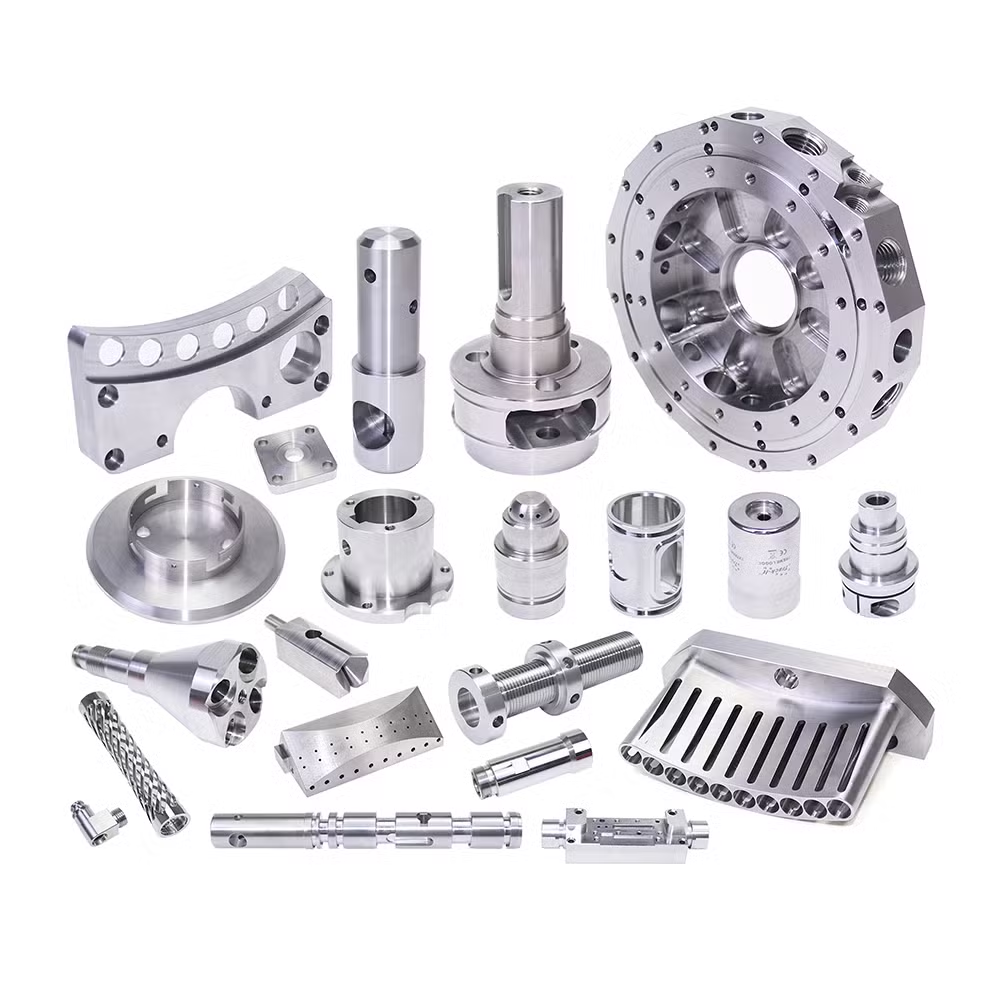
We machine stator and rotor housings, lamination stacks, shafts and fixture plates for electric motor builds. Tolerance held to ±0.005 mm, 100% inspection before shipment, and DFM feedback inside 12 hours.

±0.005 mm tolerance16 five-axis centersIATF 16949:2016No MOQ12-hour quote3–5 day shipping
low volume manufacturing
±0.005 mmTolerance on critical fits
16Simultaneous 5-axis centers
4,000 mmMaximum processing size
99.99%Qualification rate
Where motor parts go wrong

Four Failures That Start at the Fixture

Most stator and rotor problems are not electrical. They are dimensional, and they show up after assembly.

01

Stack height drifts across the run

Lamination stacks clamped on a flat plate get compressed unevenly. Stack height moves 0.05 mm between the first and last part, rotor-to-stator air gap changes, and the motor runs hotter or noisier than the prototype.

02

Bore and shaft centerline are off

When the housing bore and the shaft bore are cut in two setups, the centerline shifts. Bearing preload changes, the rotor drags, and you find out at end-of-line testing rather than at the machine.

03

Thin laminations burr and short

Silicon steel at 0.20–0.35 mm thickness deforms under clamping pressure. Burrs bridge adjacent laminations, eddy currents rise, and the core loses more energy than the thermal model predicted.

04

Prototype fits, production does not

The first ten parts come off a freshly trammed machine. By part 500 the fixture has worn, the deburr station has drifted, and the same drawing now produces parts that fail the go/no-go gauge.

How we hold the geometry

One Setup Where It Matters, Inspection Where It Counts

Motor cores live or die on concentricity, stack height and surface condition. We plan the process around those three.

cnc machining
Core capability 1

Bore and face in a single five-axis setup

Housing bores, mounting faces and dowel holes come off a simultaneous 5-axis center in one setup. That removes the re-fixturing error that normally shows up as a shifted centerline between the bearing bore and the stator seat.

We check the bore with an air gauge or a CMM and record the roundness and cylindricity numbers. If the drawing calls for a fit that a reamed bore cannot hold, we bore and hone instead of reaming.

  • 1
    ConcentricityBore to mounting face held within the drawing callout, verified per setup.
  • 2
    RoundnessMeasured on the CMM, not assumed from the tool path.
  • 3
    Dowel and bolt patternsDrilled and reamed in the same setup as the bore.

Get Instant Quote

cnc-machining-hdpe
Core capability 2

Lamination stacks and thin-wall parts without crushing them

Silicon steel laminations and thin-wall aluminium housings move when you clamp them. We use soft jaws, expanding mandrels and dedicated fixtures that spread clamping force over a large area instead of a few points.

For laminated cores we control stack height with a pre-load step and verify it after clamping, so the number on the inspection sheet matches the number in the motor. Deburring is done by hand on the stack edges where a tumbler would round the lamination corners.

  • 1
    Soft jaws and mandrelsClamping pressure spread over the full circumference.
  • 2
    Stack height controlMeasured after clamp-up, before the finish pass.
  • 3
    Selective deburringHand work on lamination edges, tumbling only where safe.

Get Instant Quote

Process selection

Which Process Fits Which Motor Part

Use this to decide what to quote. It is the same table our process engineers use at review.

PartRecommended processWhy
Housing bore, Ø80–400 mm5-axis mill + honeHolds roundness and centerline in one setup
Rotor shaft, Ø10–120 mmMill-turn centerTurns and mills keyways without re-chucking
Lamination stack, 0.2–0.5 mm sheetFixture + grind flatControls stack height and burr height
End plate, thin wall3-axis with vacuum plateAvoids clamp distortion on 2 mm walls
Prototype end bell3D printing, then CNCFast geometry check before metal
Production end bellDie casting + CNC finishLower cost per part above 1,000 pieces
What we machine

Motor Core and Accessory Fabrication Services

One shop for the metal parts around the stator and rotor, from a single prototype to a 10,000 part run.

01

5-Axis CNC Machining

Simultaneous 5-axis work on housings, end bells and stator seats. 16 centers available, up to 4,000 mm travel on the large machines.

02

CNC Milling & Turning

Mill-turn centers for rotor shafts with keyways, threads and bearing journals cut without moving the part between operations.

03

Rapid Prototyping

Printed or machined prototypes for fit checks and early motor builds. Useful before the lamination die is committed.

04

Die Casting

Aluminium housings and end bells cast to near net shape, then CNC finished on the critical bores and faces.

05

Surface Finishing

Anodizing, electroless nickel, powder coating and bead blasting. Conductive anodizing is available for grounding paths.

06

Sheet Metal & Fixtures

Fixture plates, brackets and mounting hardware for motor test stands and production assembly stations.

Scope and limits

Machining Envelope and Material Coverage

ItemRange
Tolerance±0.005 mm on critical fits
Surface finishRa 0.2–0.8 μm fine, Ra 0.8–1.6 μm standard
Maximum part size4,000 mm, largest machine travel 4,000 × 400 × 150 mm
Rotary tableØ400 mm for circular features
Aluminium6061, 6061-T6, 2024, 5052, 5083, 6063, 6082, 7075, ADC12
Stainless303, 304, 316, 316L, 420, 430, 440C, 17-4PH
Steel1018, 1045, 4130, 4140, 4340, A36, tool steel
Copper and brassC101, C110, beryllium copper, C36000
PlasticsABS, PC, POM, PA, PEEK, PP, HDPE
Minimum orderOne part, no minimum order quantity
Why GreatLight

Numbers We Can Show You

GreatLight has run precision machining out of Dongguan since 2011. These are the figures that decide whether your part ships on time.

15Y

15 years in precision machining

Founded in 2011, three wholly-owned plants, 7,600 m² of floor space and 150 technicians on the shop floor.

127

127 high-precision CNC machines

16 simultaneous 5-axis centers, 12 four-axis mills, 27 three-axis machines and 16 mill-turn centers under one roof.

±0.005

Tight tolerance as standard

±0.005 mm (0.0002 in) on the fits that matter, with CMM reports available on request.

12H

Quote and DFM in 12 hours

Send a drawing or STEP file and get a quotation plus free DFM analysis within 12 hours. Production can start inside 24 hours.

3–5D

Parts ship in 3–5 days

Standard turnaround after drawing release. Historical late-delivery probability stays below 2%.

0

No minimum order quantity

From a single prototype to a 10,000+ part run on the same process plan. No tooling charge to start.

7,600 m²Manufacturing space
150Technicians
3Wholly-owned plants
99.99%Qualification rate
Industry requirements

What These Industries Ask For, and What We Deliver

cnc machining

Automotive & EV

IATF 16949:2016 process control for traction motor housings and end bells.

  • IATF 16949:2016
  • ±0.005 mm
  • 100% inspection
cnc machining

Robotics & Automation

Stator housings for servo and stepper motors where bore concentricity drives torque ripple.

  • Ra 0.8–1.6 μm
  • CMM reports
  • One-setup bore
cnc machining

Industrial Machinery

Large motor frames and mounting plates up to 4,000 mm, machined on the long-travel centers.

  • 4,000 mm travel
  • Ø400 mm rotary
  • 3–5 day ship
cnc machining

New Energy

Prototype rotor and stator hardware for drivetrain development, from one part upward.

  • No MOQ
  • 12-hour DFM
  • Prototype to 10,000+
FAQs

Questions Engineers Ask Before They Send a Drawing

Can you machine a full stator or rotor assembly, or only individual parts?

We machine the metal parts around the magnetic circuit: housings, end bells, shafts, end plates, fixture plates and mounting hardware.

Lamination stamping and winding are not done in-house. We regularly machine the stack fixture and the housing that the wound stator drops into, and we can quote the stack machining if you supply the laminations.

What tolerance can you hold on a housing bore?

±0.005 mm (0.0002 in) on critical fits, with the bore and the mounting face cut in one five-axis setup.

If your drawing calls for a tighter fit than a reamed bore can hold, we bore and hone. Send the fit class and we will tell you which route we would take before quoting.

How do you keep thin laminations from burring?

Clamping pressure is the main cause. We use soft jaws and expanding mandrels so the force spreads over the circumference instead of a few contact points.

Deburring on lamination edges is done by hand. Tumbling is only used where it will not round the corners that stack against the next lamination.

Which materials do you stock for motor parts?

Aluminium 6061, 6061-T6, 2024, 5052, 5083, 6063, 6082, 7075 and ADC12 for housings and end bells.

Stainless 303, 304, 316, 316L, 420, 430, 440C and 17-4PH for shafts and corrosion-resistant hardware. Copper and brass grades C101, C110 and C36000 for busbars and terminals.

Do you sign an NDA before I send drawings?

Yes. Uploads are kept secure and confidential, and we can sign your NDA or provide ours before any file transfer.

Our non-disclosure agreement is available on request. If your motor program is under a development embargo, tell us at the quote stage and we will restrict who sees the files.

How fast can I get parts for a prototype build?

Quotation and DFM analysis come back within 12 hours of receiving a clear drawing or STEP file. Production can start within 24 hours.

Standard parts ship in 3–5 days after drawing release. If you need a housing and an end bell together, send both drawings in one request so they are planned as a set.

What inspection documentation comes with the parts?

Every shipment is 100% inspected before it leaves. Incoming material is checked, dimensions are monitored in process, and the final inspection is recorded.

Reports are provided on request. If your quality group needs first-article inspection or CMM data on specific features, name those features on the drawing or the purchase order.

Is there a minimum order quantity for motor housings?

No. We run from a single prototype to 10,000+ part runs on the same process plan.

For quantities above roughly 1,000 pieces, die casting plus CNC finishing usually costs less per part than machining from solid. We will say so if that is the case for your part.

Send Your Stator or Rotor Drawing

Upload a drawing or STEP file and get a quotation with DFM feedback inside 12 hours. No minimum order quantity, 100% inspection before shipment.

12-hour quote100% inspectionNo MOQNDA on request

Trusted by engineers and manufacturers worldwide

Tesla Ford Motor Company BYD Auto Denso Magna International Boeing Airbus Medtronic KUKA FANUC