GreatLight CNC Machining Factory logo
CNC Machining
Rapid Prototyping
Materials
Industries
News
About GL

Get Instant Quote

Precision Plastic Machining

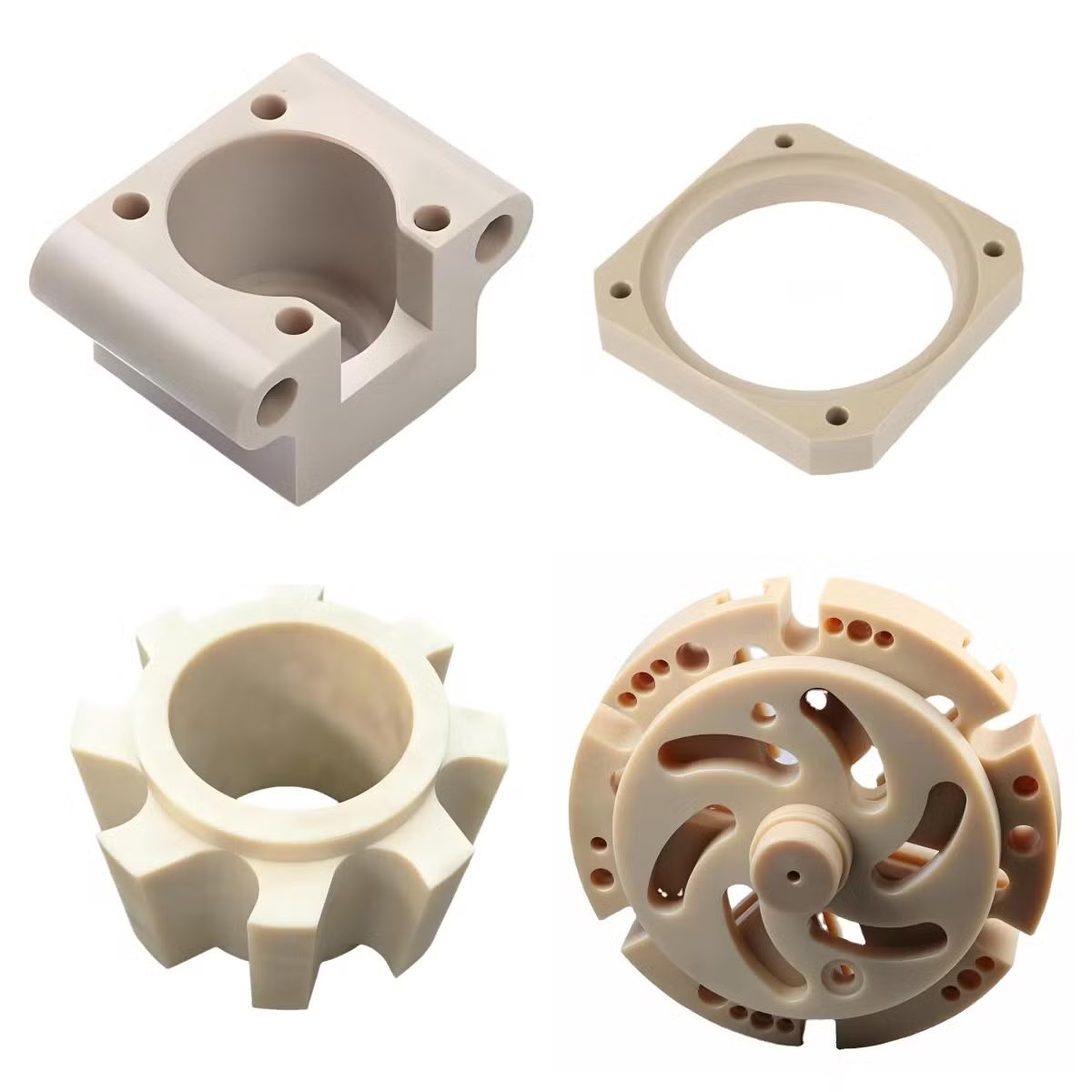
PEEK CNC Machining for Seals, Bushings and Insulators

Polyetheretherketone cuts clean only when the blank is annealed, the tooling is sharp and the feeds are slow. We machine unfilled and filled grades to ±0.005 mm, from one prototype to 10,000+ parts.

Unfilled, GF30, CF30±0.005 mmRa 0.8–1.6 μmAnnealed blanksNo MOQISO 9001 / IATF 16949
peek cnc machining
127High-precision CNC machines
16Simultaneous 5-axis centers
12 hQuote plus DFM analysis
99.99%Qualification rate
Where parts go wrong

Four Failures We See on PEEK Prints

If any of these look familiar, the fix is usually in the blank, the tool or the clamping.

01

Do you open a box and find warped bushings?

Stock that was not annealed before cutting keeps moving for days after the last pass. A bushing that measured Ø20.00 mm on the bench can drift out of round once it sits in a warm assembly. Stress relief before machining is the only reliable cure.

02

Are your seal faces chipping at the edges?

PEEK is notch sensitive. A dull end mill or too much feed leaves micro cracks along a sealing lip, and those cracks open under pressure. Sharp carbide, climb milling and light finishing passes keep the edge intact.

03

Does your 30% glass-filled part eat tooling?

Glass and carbon fibres abrade carbide fast. We see shops burn through a cutter per part and still miss the bore tolerance. The answer is coated tooling, shorter tool life windows and a planned re-cut before the edge breaks down.

04

Is your insulator discoloured or smeared?

Heat builds at the cutting edge because PEEK conducts heat poorly. Run it too fast and the surface smears, turns brown and loses dielectric strength. Coolant, modest spindle speed and sharp geometry protect both finish and electrical performance.

How we hold the tolerance

Machining PEEK So It Stays Where You Put It

Three process steps decide whether the part holds size after it leaves the machine.

industrial-machinery1
Blank preparation

Anneal First, Cut Second

Extruded PEEK rod and plate carry locked-in stress from the mill. Cut into it cold and the part relieves that stress by moving. We anneal blanks to the supplier's recommended cycle before the first cut, then rough, rest and finish.

For thin-wall bushings and long insulators we rough within 0.5 mm, let the part cool fully, then take the finishing pass. It costs one extra setup and removes most of the post-machining drift.

  • 1
    Annealed blanksStress relief before roughing, not after finishing.
  • 2
    Rough, rest, finishCooling pause between passes on thin walls.
  • 3
    Frozen datumsOne datum scheme from first op to last.

Get Instant Quote

cnc-machining-hdpe
Tooling and feeds

Sharp Carbide, Climb Cuts, Light Passes

Polyetheretherketone machines more like a soft metal than a typical plastic. It wants positive rake, polished flutes and high surface speed with a modest chip load. Get that wrong and you get smeared walls and pulled fibres on filled grades.

We keep a separate tool set for filled material so abrasive wear never carries over to an unfilled job. Every finishing cutter is checked for edge condition before the last pass, not after the part is off the table.

  • 1
    Diamond-polished flutesFewer micro scratches on sealing surfaces.
  • 2
    Separate tools for filled gradesWear from glass or carbon stays off unfilled work.
  • 3
    Coolant controlKeeps edge temperature down and colour clean.

Get Instant Quote

Grade selection

Which PEEK Grade Fits the Job

Match the grade to the load, the temperature and the wear mode before you finalise the print.

GradeBest ForWatch Out For
Unfilled PEEKSeals, insulators, food-contact partsLow wear resistance under sliding load
PEEK GF30Bushings, structural brackets, pump partsAbrasive to tooling, harder to hold a fine finish
PEEK CF30High-stiffness wear parts, bearingsConductive, so not for electrical isolation
PEEK with PTFE / graphiteDry-running bearings and sealsLower mechanical strength than the base grade
Medical-grade PEEKImplant and instrument componentsNeeds traceable stock and clean handling
PEEK stock shapesRod, plate and tube from 6 mm upExtruded stock must be annealed before cutting
What we run

Services Around Plastic and Metal Parts

Most PEEK programs need more than one operation. We keep them under one roof.

01

5 Axis CNC Machining

Complex PEEK geometry in one setup. Angled ports, contoured seal grooves and undercut features without repositioning errors.

02

CNC Milling and Turning

Mill-turn for bushings, sleeves and threaded insulators. Turning holds concentricity on thin-wall tubes far better than milling alone.

03

Rapid Prototyping

One-off PEEK parts for fit checks and test rigs. Same process as production, so the prototype predicts the final part.

04

Surface Finishing

Bead blasting, tumbling and polishing. We avoid processes that add heat or solvents to a PEEK surface.

05

Sheet Metal Fabrication

The metal housing, bracket or shield that goes around your plastic part. One supplier, one tolerance stack.

06

Custom 3D Printing

For jigs, fixtures and low-load prototypes where PEEK machining would be overkill on cost.

Shop capability

PEEK Machining Range and Inspection

Numbers you can check a print against.

ItemRange
General tolerance±0.005 mm (±0.0002 in)
Fine finishRa 0.2–0.8 μm
Standard machined finishRa 0.8–1.6 μm
Maximum part size4,000 mm
Large travel4,000 × 400 × 150 mm
Rotary tableØ400 mm
Inspection100% before shipment, reports on request
Order sizeOne prototype to 10,000+ parts, no MOQ
Why GreatLight

What Decides the Outcome on a PEEK Job

±0.005

Held on Plastic, Not Just Metal

The same tolerance we quote for aluminium applies to PEEK, provided the blank is annealed and the finishing pass is light.

16

Simultaneous 5-Axis Centers

Angled seal grooves and contoured ports come off one setup, which removes the re-datum error that shows up on multi-setup plastic parts.

12 h

Quote and DFM in Half a Day

We review wall thickness, corner radii and thread depth against the grade you picked, and flag the features that will not hold before cutting starts.

15Y

Working in Engineering Plastics Since 2011

PEEK, POM, PA, PC and filled grades. The shop knows which materials need a cooling pause and which need a sharper cutter.

99.99%

Qualification Rate

Raw material check, in-process monitoring and final inspection on every run. Dimensional reports are available when your drawing calls for them.

0

Minimum Order Quantity

One prototype for a test rig, or a 10,000-part production run. Nothing in the process changes between the two.

7,600 m²Manufacturing space
150Technicians
3Wholly-owned plants
<2%Historical late-delivery rate

Where PEEK parts go

Industry Requirements and What We Deliver

aerospace-prototyping

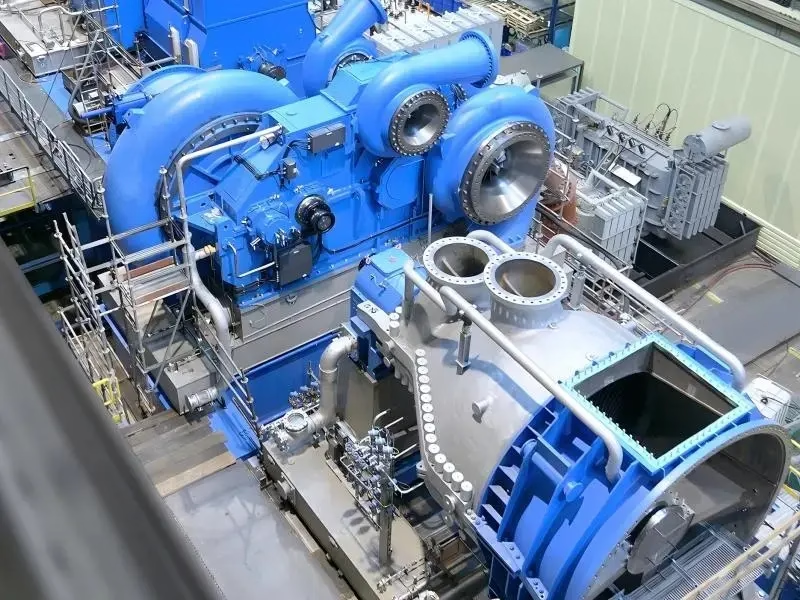
Aerospace

Bushings and wear pads that must hold size across a wide temperature swing.

  • ±0.005 mm
  • 100% inspection
medical-devices-rapid-prototyping

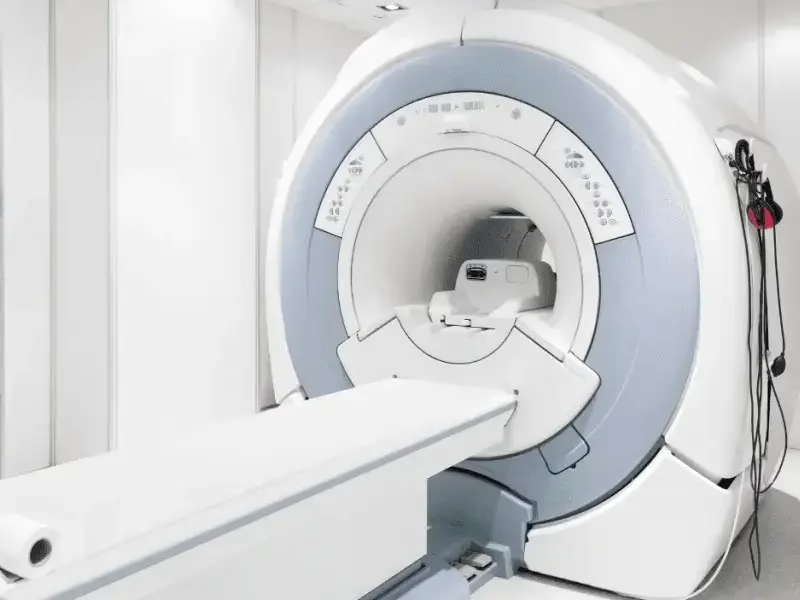
Medical Devices

Insulators and instrument parts needing clean surfaces and traceable stock.

  • ISO 13485
  • Ra 0.8–1.6 μm
humanoid-robot

Robotics and Automation

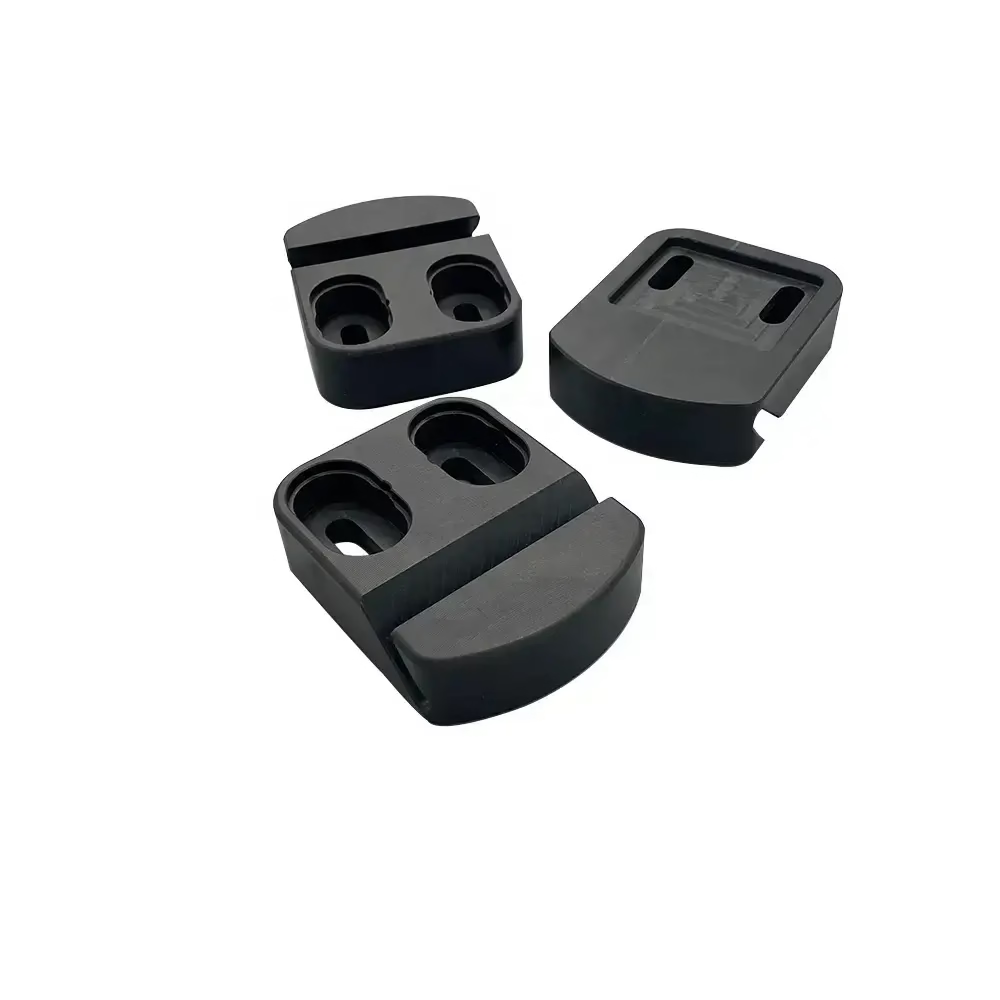
Low-friction bearing cages and joint liners that run without external lubrication.

  • Filled grades
  • Mill-turn
electronic-product-housing-prototype

Electronics

Dielectric spacers and connector bodies where discolouration means a failed part.

  • Unfilled PEEK
  • Colour control
FAQs

Questions Engineers Ask Before Ordering PEEK Parts

What tolerance can you actually hold on PEEK?

We quote ±0.005 mm on features that are stable, meaning a wall thick enough to resist deflection and a blank that was annealed before cutting. Thin-wall tubes and long slender parts are harder and we will tell you which dimensions need a wider band.

If a print calls for a tolerance that will not survive the material's own movement, we raise it in the DFM review instead of shipping parts that drift in your incoming inspection.

Do you machine glass-filled and carbon-filled grades?

Yes. GF30 and CF30 both cut cleanly, but the abrasive filler shortens tool life and changes the finishing strategy. We keep separate cutters for filled material so wear never transfers to an unfilled job.

Carbon-filled grades are electrically conductive. If the part is meant to insulate, stay with unfilled or glass-filled stock.

Why does my PEEK part change size after machining?

Almost always because the stock was not stress relieved. Extruded rod and plate carry internal stress, and removing material lets that stress pull the part out of shape over hours or days.

We anneal before roughing and leave a cooling pause between rough and finish. That is the step most shops skip when a quote looks unusually cheap.

What surface finish should I specify for a sealing face?

For a dynamic seal face, Ra 0.2–0.8 μm is a reasonable target. Static seals are usually fine at Ra 0.8–1.6 μm. Anything rougher than Ra 3.2 μm will wear the mating seal faster.

Note that polishing PEEK adds heat and can smear the surface. We reach fine finishes with cutter geometry and light passes rather than heavy buffing.

Can you handle a single prototype?

Yes. There is no minimum order quantity. A one-piece run goes through the same annealing, tooling and inspection steps as a production batch.

That matters for PEEK because a prototype cut on a different process tells you very little about the production part.

What are the lead times?

Quotation and a free DFM analysis come back within 12 hours. Production can start within 24 hours of approval, and parts typically ship in 3–5 days.

Filled grades and medical-grade stock may need to be ordered in, so mention the grade early if the schedule is tight.

Is my design data kept confidential?

Uploads are secure and treated as confidential. We can sign an NDA before you send drawings if your program requires it.

We hold ISO 27001:2022 for information security, alongside ISO 9001:2015, IATF 16949:2016 and ISO 13485:2016.

When should I choose PEEK over POM or PA?

Choose PEEK when the part sees continuous service above roughly 100 °C, needs chemical resistance to aggressive fluids, or has to keep its stiffness at temperature. POM is cheaper and machines faster for room-temperature wear parts.

If the load is light and the temperature is moderate, POM or PA will usually do the job at lower cost. We will say so if that is the case.

Send Your PEEK Drawing for a Quote

Upload the print and the grade. You get a quotation and a DFM analysis within 12 hours, and parts that pass inspection before they ship.

12-hour quote100% inspectionNo minimum orderNDA on request

Trusted by engineers and manufacturers worldwide

Tesla Ford Motor Company BYD Auto Denso Magna International Boeing Airbus Medtronic KUKA FANUC