
01
Parts come off the machine bowed
Extruded HDPE bar and plate carry internal stress. Cut one face and the part curls before finishing. We rough, stress-relieve and re-clamp, so the last pass still removes a light, even chip.
HDPE machines clean and fast, but it moves when you cut it. We hold ±0.005 mm on stress-relieved stock using sharp tooling, air blast cooling and light finishing passes. One prototype or 10,000 parts.
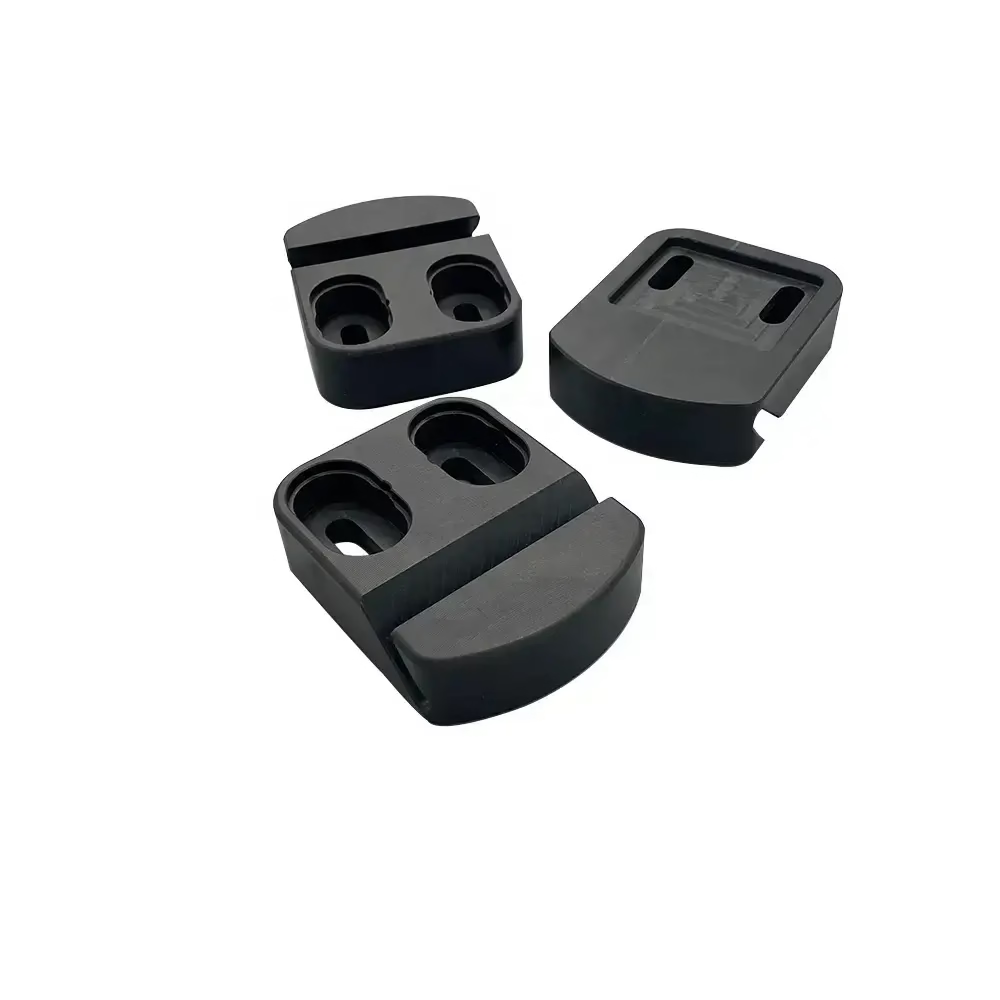
The material is not hard to cut. It is hard to cut accurately twice.
Extruded HDPE bar and plate carry internal stress. Cut one face and the part curls before finishing. We rough, stress-relieve and re-clamp, so the last pass still removes a light, even chip.
HDPE has low thermal conductivity, so heat stays at the edge. A dull tool or a stopped feed smears the surface and leaves a hairy finish that no secondary operation fixes. Sharp carbide and air blast keep the cut clean.
The part measures 0.05 mm oversize in the morning and on size in the afternoon. Thermal expansion near 100–200 × 10⁻⁶ per °C explains most of it. We machine in a temperature-stable shop and let parts settle before final inspection.
HDPE cold-flows. Threads alone loosen, and a clamped joint loses preload. We spec through-bolts with washers, coarse pitch threads or brass inserts, and we tell you when a design should be metal instead.
Three decisions control whether an HDPE part holds tolerance: cutter geometry, heat removal and how the blank is held.
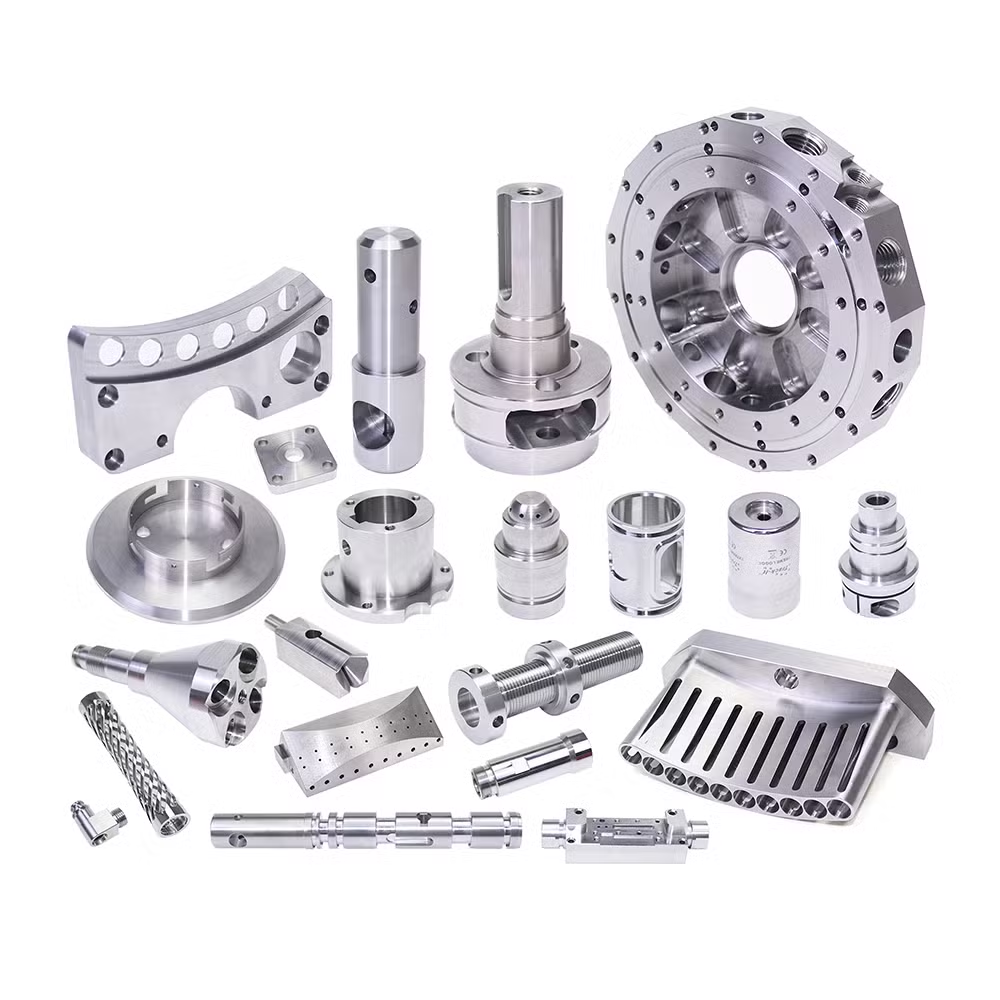
HDPE chips best when the tool shears rather than rubs. We run polished single-flute or two-flute carbide end mills with high rake angles, spindle speeds well above what the same cutter would use in aluminum, and feeds that keep the edge loaded.
Air blast carries chips out of the pocket. Coolant is optional and often unnecessary, but trapped chips are not: they recut, generate heat and weld to the wall. A vacuum shoe on the finish pass keeps the surface free of shavings.
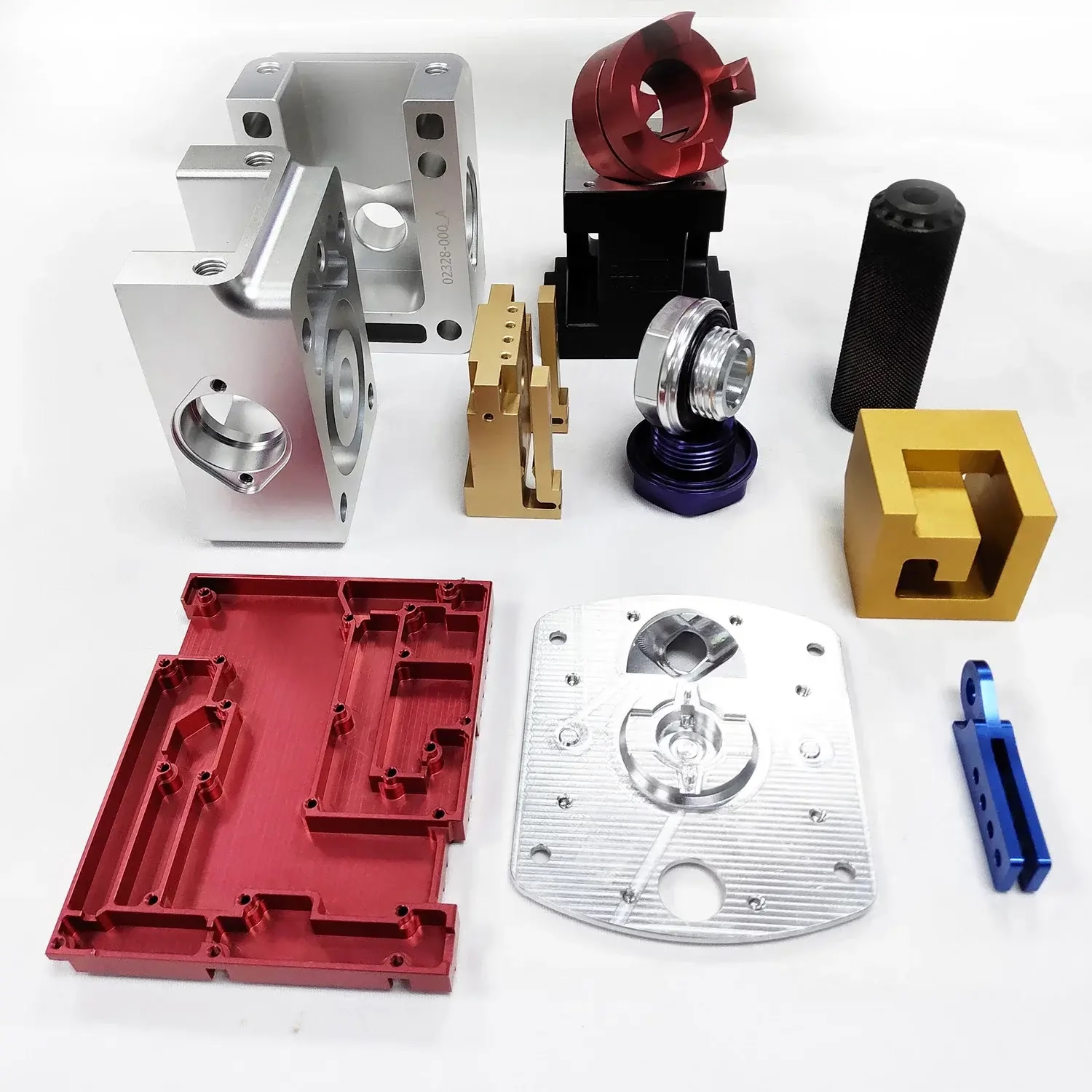
HDPE deforms under clamp pressure. We hold thin plates in soft jaws or vacuum fixtures, set clamping force low, and support the floor of thin pockets with a sacrificial backup so the wall cannot flex inward during the cut.
Inspection happens after the part returns to room temperature. Measuring a warm part guarantees a false reading. For long parts we check straightness on a surface plate and record the number, so you can see what the material did rather than trusting a single caliper reading.
A quick read on where HDPE wins and where it should be replaced.
| Requirement | HDPE | Better choice |
|---|---|---|
| Chemical resistance | Strong against acids and bases | HDPE |
| Electrical insulation | Good, low moisture uptake | HDPE |
| Sliding wear, low load | Works, low friction | HDPE or POM |
| Stiffness and load bearing | Low modulus, cold flows | POM, PA or aluminum |
| Service above 80 °C | Softens, loses strength | PEEK or PTFE |
| Optical clarity | Opaque, waxy surface | PC or PMMA |
| Tight thread strength | Threads strip easily | Brass insert in HDPE |
| Dimensional stability | High thermal expansion | POM or aluminum |
One supplier from blank to finished, inspected part.
Plates, manifolds, covers and insulators with pockets, slots and drilled patterns. 27 machines available for plastic work.
Angled ports, contoured ducts and multi-face parts in one setup. 16 simultaneous 5-axis centers cut handling error out of the tolerance stack.
Bushings, rollers, spacers and flanged fittings. 16 mill-turn centers combine turning and milling without a second fixture.
One-off HDPE parts for fit checks and flow testing, machined from stock instead of tooled, so the geometry can change between revisions.
Bead blasting, tumbling, brushing and polishing to control surface texture. Laser marking available down to 1.5 mm character height.
Insert installation, hardware fitting and 100% inspection before shipment, with dimensional reports on request.
| Item | Range | Notes |
|---|---|---|
| Tolerance | ±0.005 mm | On stable features after settling |
| Surface finish | Ra 0.8–1.6 μm | As-machined Ra 1.6–3.2 μm |
| Maximum part size | 4,000 mm | Long travel up to 4,000 × 400 × 150 mm |
| Minimum order | One part | Prototype to 10,000+ runs |
| Lead time | 3–5 days | Production can start within 24 hours |
| Thickness limit | From 1.5 mm | Thin walls need backup support |
| Inspection | 100% before shipment | Reports on request |
| Confidentiality | NDA on request | Secure uploads |
Founded in 2011, we have machined plastics long enough to know which grades behave and which fight the tool. HDPE sits in the easy group when the setup is right.
On stable HDPE features, ±0.005 mm is achievable. We say so up front when a drawing asks for more than the material can hold.
Milling, turning, mill-turn and 5-axis capacity in three plants across 7,600 m². A plastic job does not wait behind a metal backlog.
Send a model and get pricing plus a manufacturability read within 12 hours. We flag thin walls, sharp internal corners and thread choices before cutting.
Once the drawing is frozen, machining can begin within 24 hours. Parts typically ship in 3–5 days.
Raw material check, in-process monitoring and final inspection. Nothing leaves without a dimensional check. Reports on request.
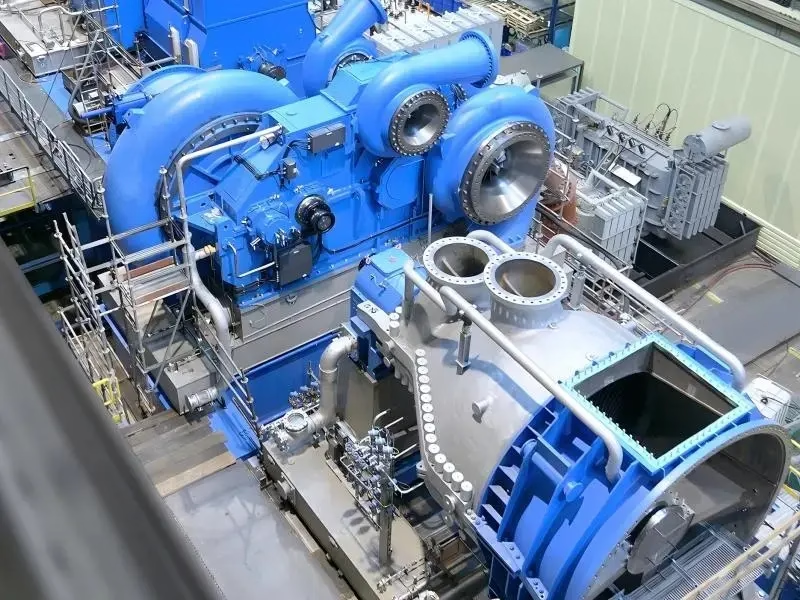
Tank liners, pump housings, valve bodies and wear strips. The sector needs chemical resistance and flat sealing faces.

Insulating plates, spacers and non-conductive fixtures for cell handling and test rigs.

Guides, star wheels, chute liners and cutting boards where low moisture absorption and easy cleaning matter.

Lightweight end-effector plates, guards and jigs that must not scratch or short nearby electronics.
On a stable feature that has settled at room temperature, ±0.005 mm is realistic. Long unsupported walls and large flat plates are harder because the material expands and contracts with the shop temperature.
If a drawing calls for tighter than the material allows, we say so before machining rather than shipping a part that will not repeat.
Extruded stock carries internal stress from the extrusion process. Removing material on one side releases that stress unevenly and the part bows.
The fix is sequencing: rough both sides, let the part relax, then take light finishing passes. We also remove equal amounts from opposing faces where the geometry allows.
Air blast handles most jobs. It clears chips and limits heat without the cleanup that coolant brings to a porous plastic.
Coolant helps in deep pockets and small-diameter holes where chips pack and heat has nowhere to go. In those cases we use it deliberately, not by default.
Yes, but threads in HDPE are for light duty. They strip under repeated assembly or sustained load because the material cold-flows.
For anything that gets opened more than a few times, we recommend a brass insert or a through-bolt with a washer. We will tell you which one suits the wall thickness.
Around 1.5 mm on a supported wall. Below that, clamp pressure and cutting force deflect the material and the dimension drifts.
We support thin floors with a sacrificial backup and take shallow step-down passes. If the design needs a 0.8 mm wall, a different plastic or a molded part is usually the better route.
HDPE is softer, cheaper and more chemical resistant. It machines faster and wears tools less than POM or PEEK.
POM holds tolerance better and carries load without creeping. PEEK handles high temperature and keeps strength. Pick HDPE when chemical resistance and cost drive the decision, not stiffness.
Yes. Our long-travel machines handle up to 4,000 × 400 × 150 mm, and other cells cover 750 × 1,150 × 550 mm plus smaller envelopes.
Long parts need special attention to straightness. We check them on a surface plate after the material returns to room temperature.
No minimum. We run one prototype or a 10,000-part production batch on the same process.
Uploads are treated as confidential and an NDA is available on request if the drawing is sensitive.
Upload a model and get a price plus a manufacturability review within 12 hours. We will flag anything the material cannot hold before the first chip is cut.
12-hour quote100% inspectionNo minimum orderNDA on request
Trusted by engineers and manufacturers worldwide










Upload your 3D model or 2D drawing and get a quotation with a free DFM analysis. Maximum processing size 4,000 mm.
CNC Metals 13 grades
CNC Plastics 10 grades
Machines & processes 12 options
Surface & post-processing 10 options
Material: not selected Machine: not selected Post-process: not selected