
01
Melting instead of cutting
ABS softens around 105 °C. Run the cut dry at high spindle speed and the surface smears, then the burr tears off what was supposed to be a sealing face. The part measures fine cold and leaks hot.
We machine ABS on 127 high-precision CNC machines, from a single prototype to 10,000+ part runs. Free DFM analysis with your quote, and 100% inspection before shipment.
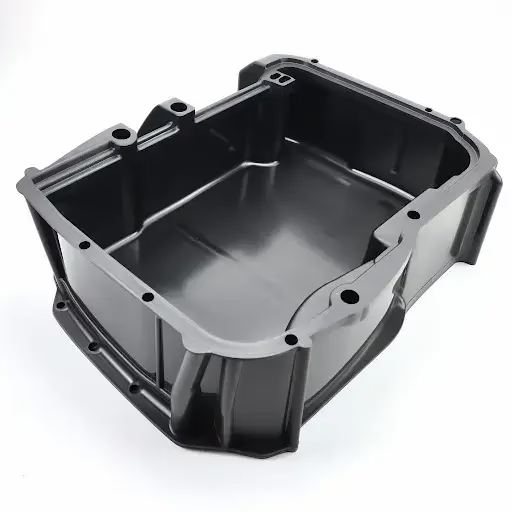
Most ABS problems start before the cutter touches material. These are the four we see weekly.
ABS softens around 105 °C. Run the cut dry at high spindle speed and the surface smears, then the burr tears off what was supposed to be a sealing face. The part measures fine cold and leaks hot.
Machined ABS carries molded-in and cutting stress. Screw a metal insert in with no pilot relief and the boss splits days later, after the unit has shipped and the housing is bonded shut.
Long stringy chips wrap the tool and pack into a deep bore. Picking them out by hand scratches the wall, and a scratched bore no longer holds the shaft fit you designed around.
A thin ABS cover released from the vise springs back overnight. Bolted onto a housing the next morning, it rocks on two corners and the gasket never seats.
ABS is not a slow metal. It rewards sharp tools, open flutes, and light finishing passes.
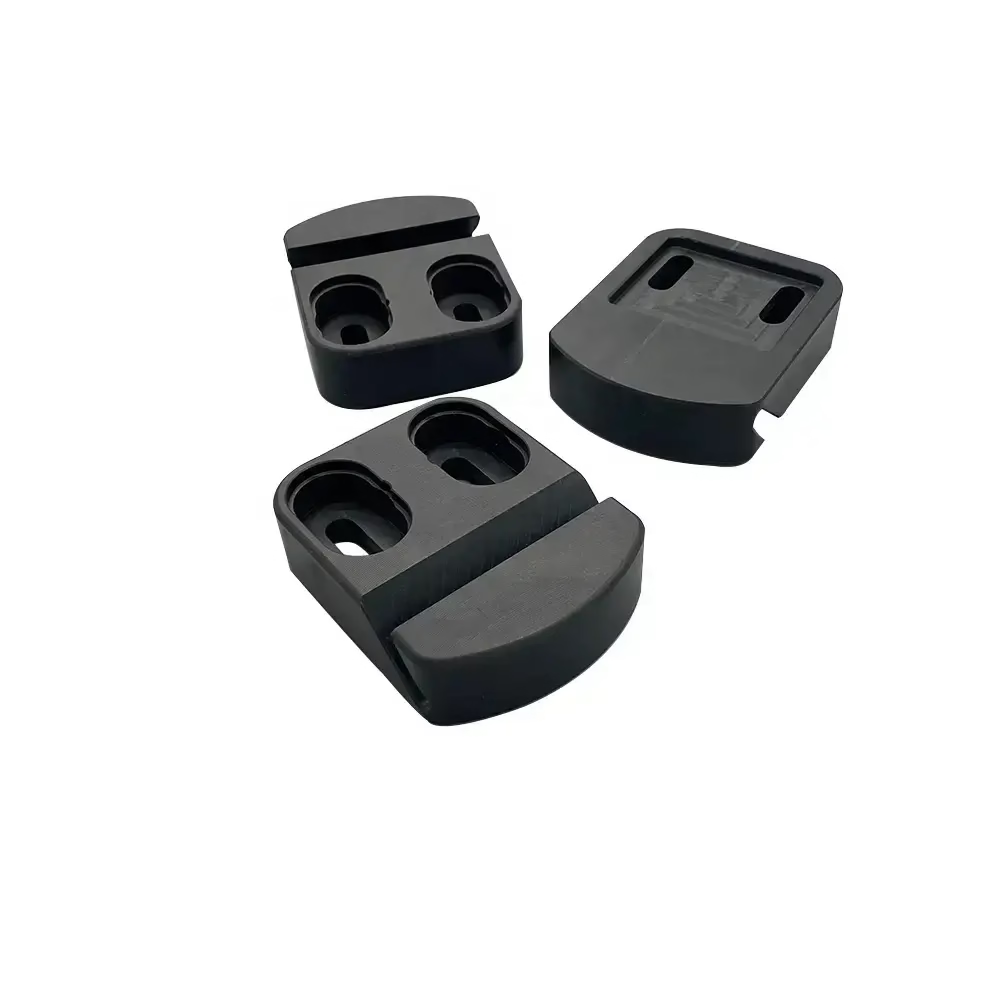
ABS machines best with two or three flute carbide cutters polished for aluminum. We run them fast and shallow, then take a light finishing pass to leave a clean wall instead of a melted one. Water-soluble coolant carries the heat away. Skip it and the chip welds back onto the part.
Bore depth is the limit. Past roughly four diameters, chip evacuation gets unreliable and we would rather ream or interpolate in two steps than gamble on one deep pass.
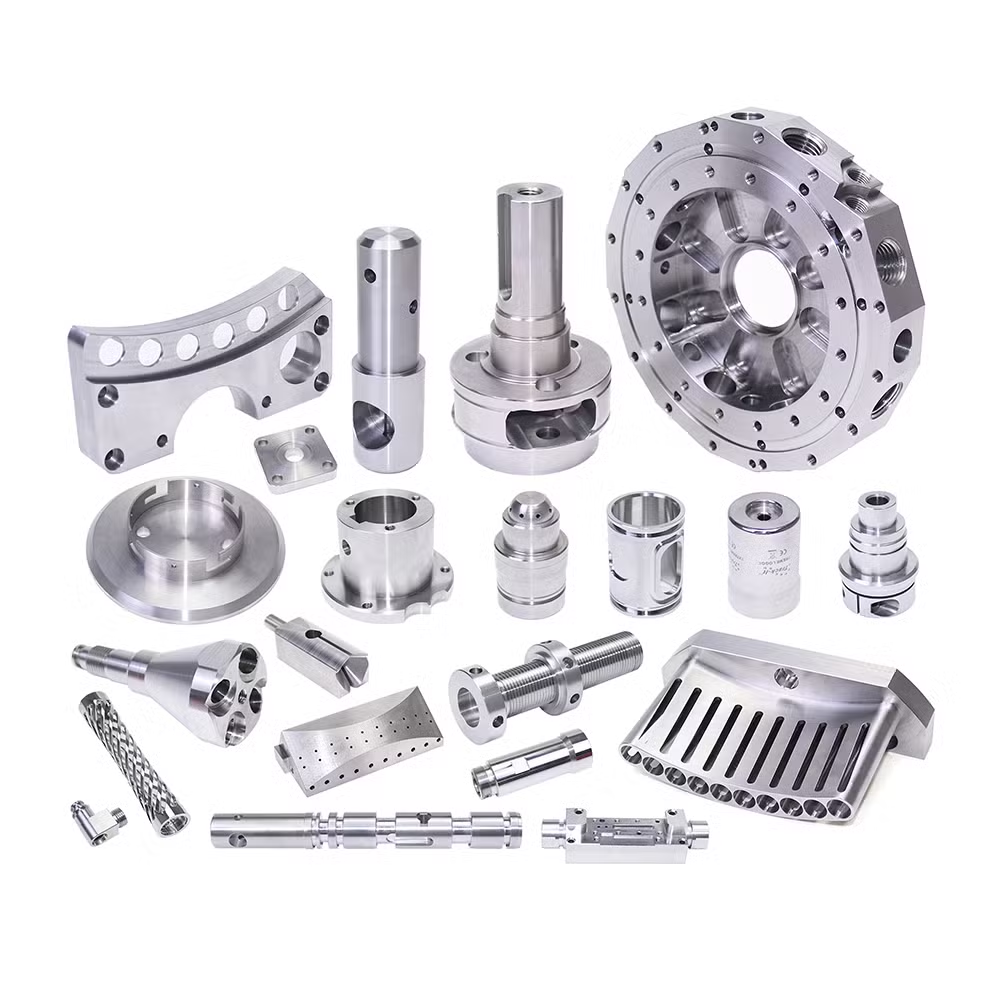
Machined ABS relaxes. Thin covers, snap-fit rails, and long brackets move after they leave the vise. We rough, let the part rest, then finish, and on thin sections we back the cut with soft jaws or a support plate so the wall cannot deflect into the cutter.
For flatness we face both sides in one setup where the geometry allows. On the 16 simultaneous 5-axis centers we reach features on five faces without re-chucking, which removes the setup error that shows up as a rocking cover.
Pick the plastic that matches the load, not the one on the original drawing.
| Material | Use it when | Watch out for |
|---|---|---|
| ABS | Housings, covers, brackets, prototypes | Low heat and solvent resistance |
| PC | Impact parts, transparent guards | Higher cost, stress cracking |
| POM | Sliding parts, gears, bushings | Hard to bond, needs sharp tools |
| PA | Wear parts, clips, structural brackets | Moisture uptake changes size |
| PMMA | Windows, light guides, displays | Brittle under sharp impact |
| PEEK | High temperature, chemical service | Expensive, slower to machine |
One shop for the plastic part, its finish, and the housing around it.
16 simultaneous 5-axis centers cut five-face features in one chucking. Good for contoured housings and parts with angled bosses.
27 three-axis machines and 12 four-axis mills handle prismatic ABS parts, panels, and drilled plates at volume.
16 mill-turn centers cover ABS knobs, bushings, and threaded inserts with a milled feature on the same setup.
One-off ABS parts in 3–5 days. Use them for fit checks and assembly trials before you commit to tooling.
Bead blasting, tumbling, brushing, and polishing on plastic. Laser marking down to 1.5 mm character height.
Metal brackets, die-cast frames, and vacuum-cast covers so the ABS part arrives with the rest of the assembly.
| Item | What we deliver |
|---|---|
| Tolerance | ±0.005 mm on critical features, ±0.0002 in |
| Surface finish | Ra 0.8–1.6 μm as standard, Ra 0.2–0.8 μm on request |
| Build size | Up to 4,000 mm on the largest travel |
| Batch size | One prototype to 10,000+ parts, no minimum order |
| Inspection | 100% before shipment, reports on request |
| Lead time | Quote and DFM in 12 hours, parts ship in 3–5 days |
Numbers, not adjectives. Every one of these is checked before parts leave the floor.
Fifteen years on plastic and metal parts, three wholly-owned plants, 7,600 m² of floor space, 150 technicians.
Held on critical ABS features and verified with in-process monitoring, not just a final check.
Send a STEP file and get a price plus a manufacturability review within 12 hours. Production can start in 24.
One prototype or 10,000 parts, same shop, same inspection standard. No tooling to amortize on the first run.
Raw material check, in-process monitoring, final inspection. Reports available on request.
ISO 9001:2015, IATF 16949:2016, ISO 13485:2016, ISO 27001:2022 across the plants.
Instrument housings and internal brackets where the cover has to sit flat and shield the board.

Test fixtures and trim prototypes cut on 5-axis so angled bosses come off in one setup.
ABS covers and trays machined under an ISO 13485:2016 quality system with traceable inspection.

Lightweight ABS links and sensor mounts where mass matters and wall sections run thin.
The machine holds the same ±0.005 mm. The material does not. ABS is softer and moves more after the cut, so we hit tight numbers on features that are supported and stiff, and we tell you when a thin wall cannot hold them.
Send the drawing and we will flag the features that need a tolerance review before quoting.
ABS is the cheapest of the three to machine and easy to bond, paint, and laser mark. It suits housings, covers, and brackets that see room temperature and light loads.
Move to PC when impact is the concern, POM when the part slides against another surface, and PEEK when heat or chemicals are involved.
Yes. The extruded sheet or bar already carries stress, and cutting adds more. On thin parts we rough, let the part rest, then take a light finish pass.
For flat covers we face both sides in a single setup where geometry allows. If the part still moves, we will say so rather than ship it.
Ra 0.8–1.6 μm is our standard machined finish, and Ra 0.2–0.8 μm is available on request. Bead blasting gives an even matte look and hides tool marks on visible faces.
Laser marking works on ABS down to 1.5 mm character height. Deeper engraving tends to raise a burr on plastic.
Around four diameters on a straight bore before chip evacuation becomes unreliable. Past that we ream, interpolate, or drill from both ends.
Deep bores are where hand-picked chips scratch the wall, so we would rather add a step than risk the fit.
There is no minimum order quantity, so a single prototype is fine. The largest travel is 4,000 mm, and we run compact work on 500 × 500 × 450 mm and 500 × 310 × 200 mm machines.
For small parts we quote the batch you actually need, from one to 10,000+ pieces.
Quotation and free DFM analysis come back within 12 hours, and production can start within 24 hours of approval. Machined parts ship in 3–5 days.
That timeline assumes the drawing is released and the material is in stock. We will tell you if either is not.
Yes. Uploads are secure and confidential, and we sign an NDA on request before drawings change hands. Our ISO 27001:2022 information security system covers how those files are stored.
Ask for it in the first message and we will send the document back before you upload anything.
Upload a STEP file and get a price plus a manufacturability review within 12 hours. One prototype or 10,000 parts, no minimum order.
12-hour quote100% inspectionNo minimum orderNDA on request
Trusted by engineers and manufacturers worldwide










Upload your 3D model or 2D drawing and get a quotation with a free DFM analysis. Maximum processing size 4,000 mm.
CNC Metals 13 grades
CNC Plastics 10 grades
Machines & processes 12 options
Surface & post-processing 10 options
Material: not selected Machine: not selected Post-process: not selected