GreatLight CNC Machining Factory logo
CNC Machining
Rapid Prototyping
Materials
Industries
News
About GL

Get Instant Quote

GreatLight Metal Technology Co., Ltd

Precision 5 Axis CNC Machining Services

5-Axis CNC Machining & Turning in China — ±0.005 mm, Parts in 3–5 Days

Humanoid Robotics · Automotive · AerospaceISO 9001:2015 CertifiedMaximum Processing Size 4,000 mm127 CNC Machines In-House8000+ Happy Customers
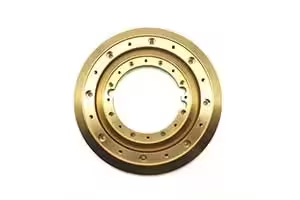
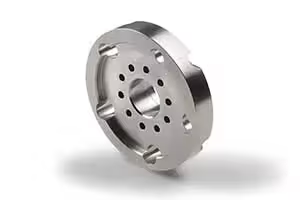
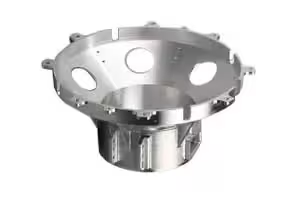
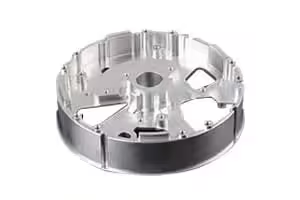
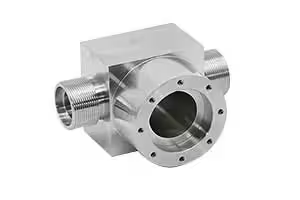
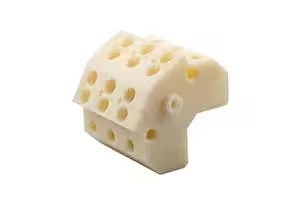
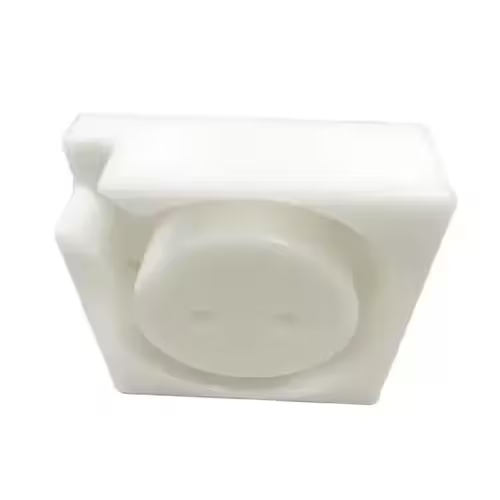
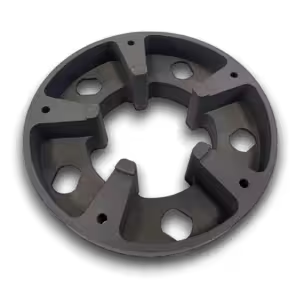
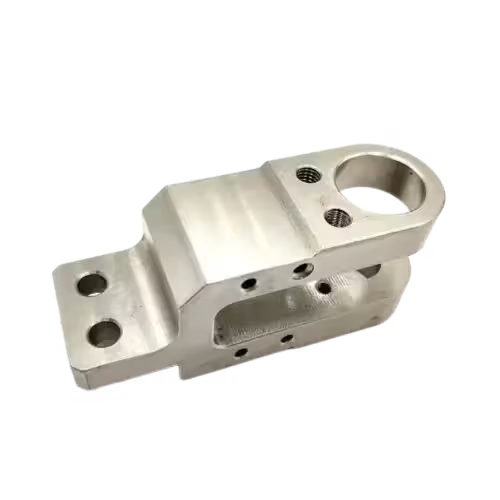
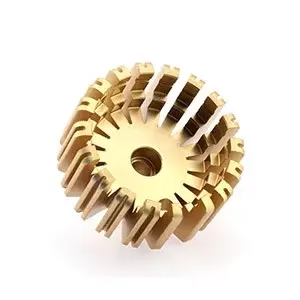
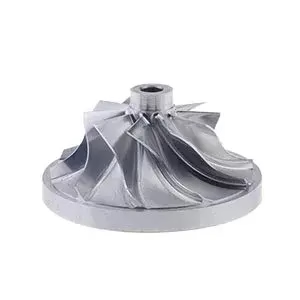
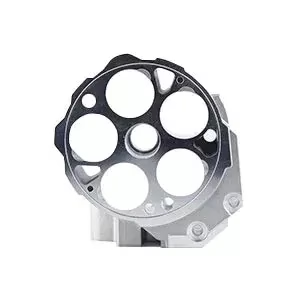
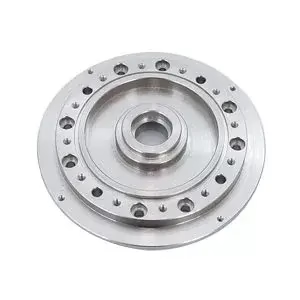
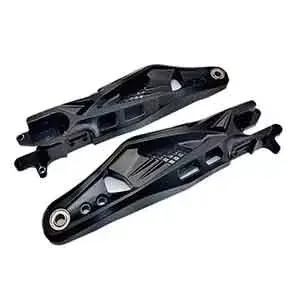
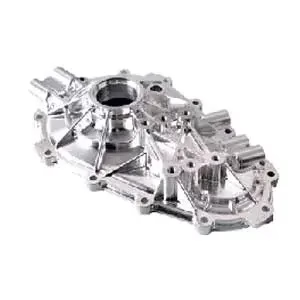
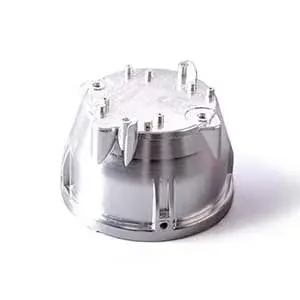
Products that can only be made with 5 axis CNC machining
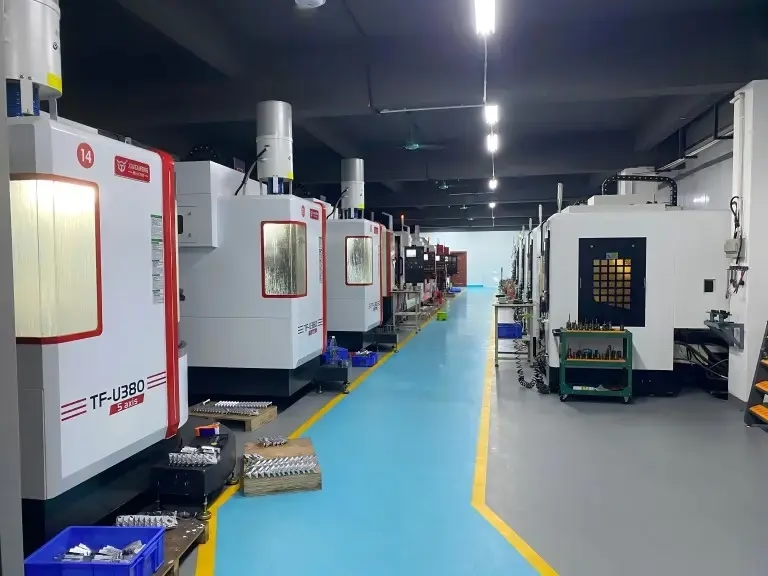
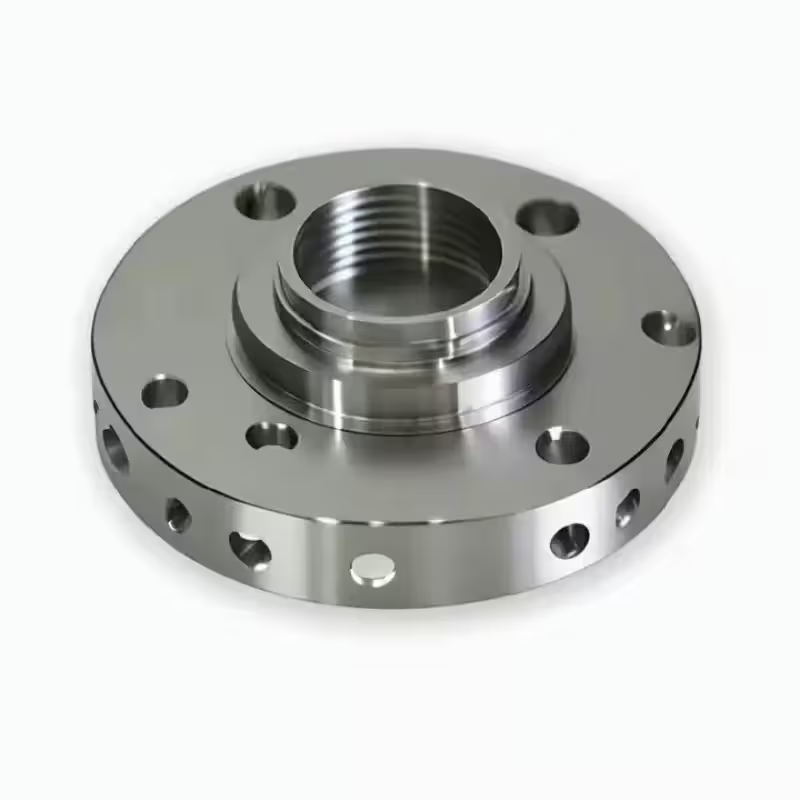
5-axis CNC machined parts · GreatLight factory, Dongguan China
±0.005 mmMachining tolerance · Ra0.2μm
4,000 mmMaximum processing size
127High-precision CNC machines
3–5 DaysFrom drawing to parts
GreatLight · Founded 2011

Precision manufacturing is the cornerstone of industrial progress

Founded in 2011, GreatLight has focused on precision CNC machining for fifteen years. Technology is our engine — driving the future of high-end manufacturing.

Humanoid robot structural parts machined by GreatLight

Humanoid Robotics

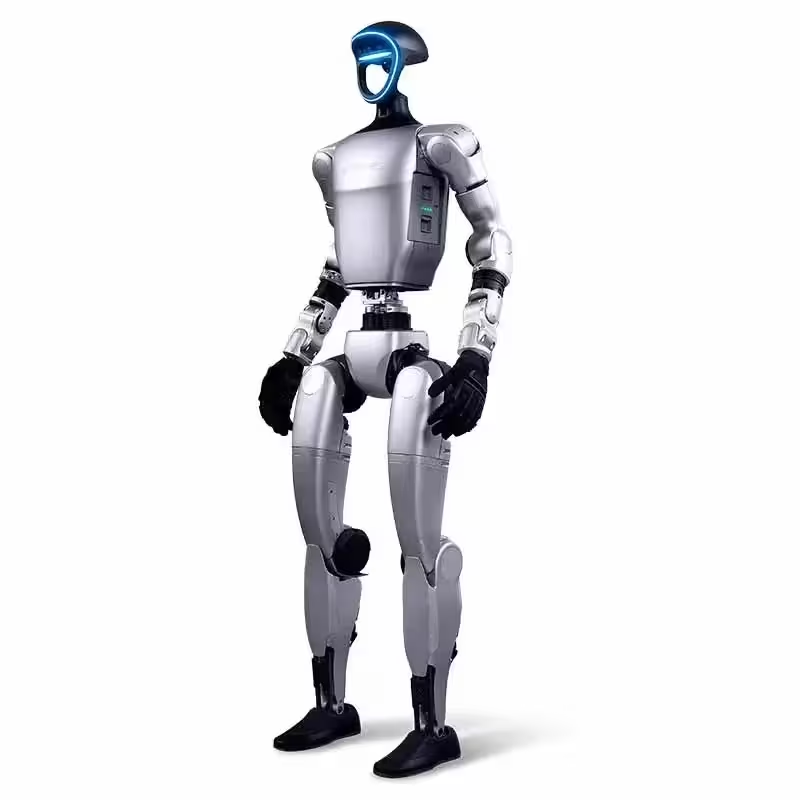
Humanoid robot frames, joint housings, harmonic-drive and micro gearing machined to micron-level precision — lightweight, high-strength structural parts in 7075 aluminium, titanium and engineering plastics.

  • Single-setup 5-axis
  • ±0.005 mm
  • Thin-wall & lightweight
Custom automotive spare parts 5 axis CNC machined at GreatLight

Automotive & EV Parts

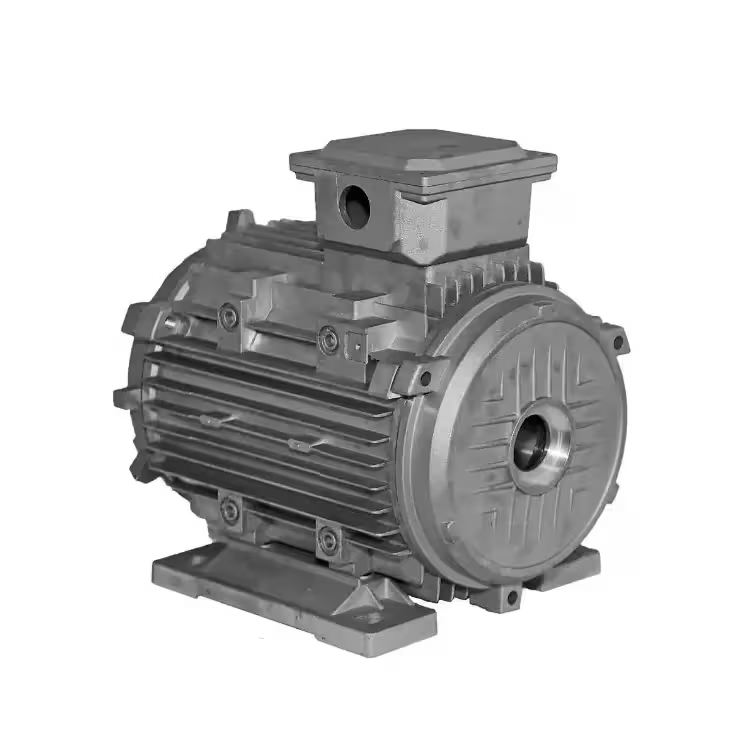
Engine blocks, transmission and bell housings, motor housings, oil pans, stator and rotor components — produced under IATF 16949 process control for OEM and Tier-1 programmes.

  • IATF 16949
  • Volume production
  • Full inspection reports
High complexity structural part machined on a 5 axis CNC milling center

High-Complexity Structural Parts

Large monolithic and thin-wall structural components up to 4,000 mm, machined from titanium and aerospace aluminium for aerospace, energy and industrial equipment.

  • Up to 4,000 mm
  • Deep cavities
  • Aerospace alloys
01

Strength Builds Quality

7,600 m² smart manufacturing plant and 150 professional technicians. 127 precision machines and three wholly-owned plants form a one-stop capability across CNC machining, sheet metal, 3D printing and metal die casting — from micro precision parts to large structural components.

02

Precision Achieves Excellence

Five-axis simultaneous machining is our core advantage — complex parts are completed in a single setup. Accuracy reaches ±0.005 mm, giving every part a hard guarantee.

03

Craftsmanship Empowers Everything

In humanoid robotics, automotive and aerospace, we deliver lightweight, high-strength structural parts at micron-level precision. From land to sky, from machines to intelligence — GreatLight is everywhere.

04

Standards Earn Trust

ISO quality management system certification, automotive industry certification and information security management certification — every certificate is a promise of quality.

05

Co-create the Intelligent Future

From rapid prototyping to volume production, from CNC machining to surface finishing — GreatLight looks forward to creating the future together with you.

06

One Partner, Full Chain

Engineering (DFM) support, machining, finishing, assembly and international express delivery handled under one roof — prototypes in days, production to your schedule.

7,600 m²Smart manufacturing plant
150Professional technicians
127Precision machines
3Wholly-owned factories
5-Axis Simultaneous Machining Single-Setup Complex Parts ±0.005 mm Micron Precision Lightweight High-Strength Structures CNC · Sheet Metal · 3D Printing · Die Casting Prototype to Volume Production Surface Finishing

Start Your Project Robotics & Automation Automotive Prototyping

Upload a drawing, get a price and a free DFM report in 12 hours

Material, tolerance, surface finish — send what you have, we come back with a manufacturable answer. Max processing size 4,000 mm.

How Great Light Works

Rapid With a Delivery Time of 3 Days

2D drawings upload for instant quote

Get Instant Quote

Simply upload your design to our email, and within 12 hours, get an instant quote and a free design analysis for your prototypes and production parts.

Quote and design analysis for CNC production

Start Production

Once you have approved the quote and design, we will start production on your CNC prototype or CNC machined parts products.

Receive your custom CNC machined parts

Receive Your Custom Parts

CNC machined parts or products will be produced within a few days. We ship to you by international express. Please feel free to give us feedback to ensure that they meet your expectations.

Get A Free Sample Test

CNC Machining Services

Precision CNC Machining Services

As the titans of CNC machining, Great Light has more than ten years of experience in custom Precision CNC prototypes in the metal field, providing professional and comprehensive Precision CNC machining prototype services to customers from multiple industries around the world for the manufacture of a variety of complex parts: medical, automotive, aerospace, electronics, design studios, robotics, industrial parts, etc.

5X

5 Axis CNC Machining

For complex geometric machining parts, our 5-axis CNC machining service provides unparalleled flexibility and speed.

3X

3 Axis CNC Machining

The high-precision, high-efficiency and high-flexibility processing capabilities can meet the processing requirements of complex shapes and precision.

4X

4 Axis CNC Machining

High efficiency, heavy cutting capability, simple operation, high precision and good surface effect.

M&T

CNC Milling & Turning

CNC Milling & Turning services that support rapid prototyping design and production needs, High precision, good surface finish and high efficiency.

Great Light - Leader in CNC Machining

One of the Best Rapid Prototyping Companies from China

Great Light CNC Machining Center is an ISO 9001:2015 certified manufacturer and is an excellent choice for custom metal and plastic parts. Whether you need a complex part made from a 3D design or a finished product for a high-level conference presentation, we can quickly produce prototypes and parts in a matter of days using 3-, 4- and 5-axis CNC machining.

12Four-Axis CNC Mills
27Three-Axis CNC Mills
16Milling & Turning Centers
127Machines In-House
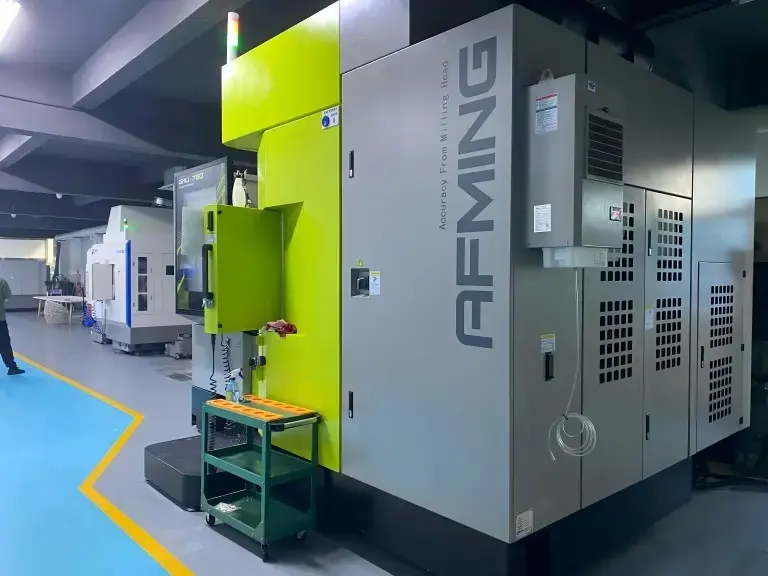
5 axis CNC machining center at GreatLight factory
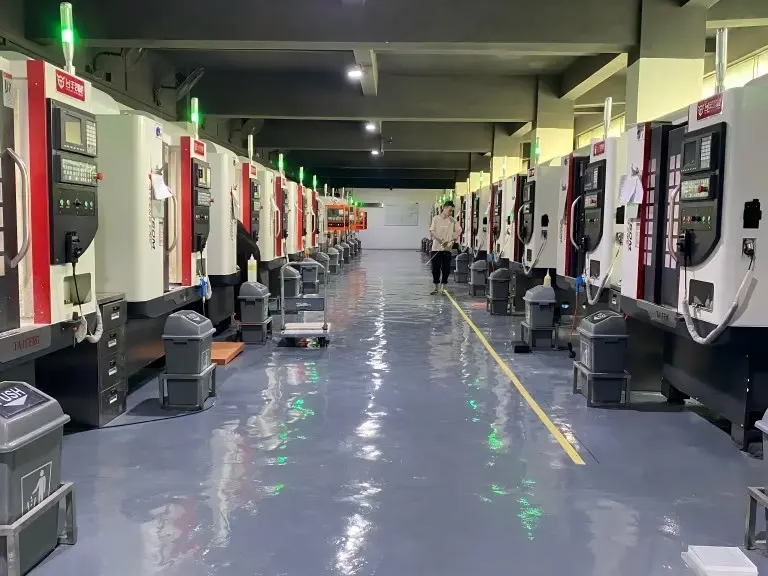
4 axis CNC machining center at GreatLight factory
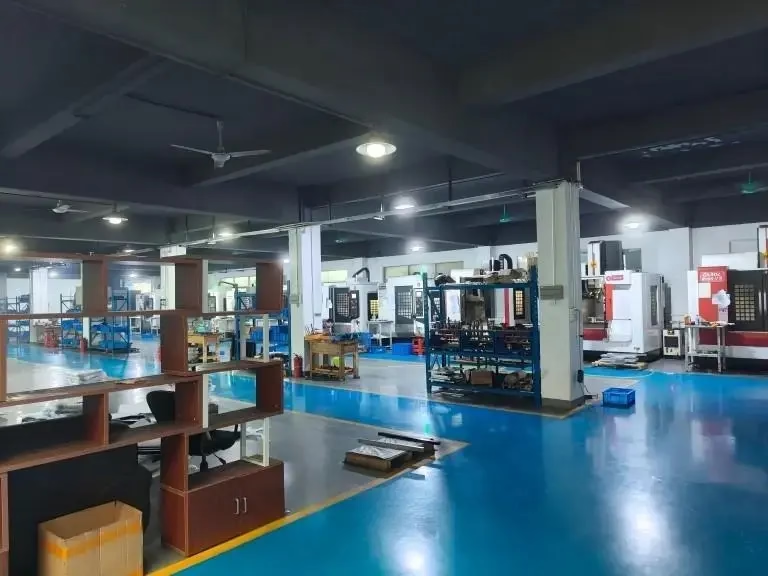
3 axis CNC machining center at GreatLight factory
CNC milling and turning center at GreatLight factory
Why you can trust GreatLight

8000+ Happy Customers

GB/T19001-2016 · ISO9001:2015 · ISO 13485:2016 · ISO 27001:2022 · IATF 16949:2016 · AS9100D · ITAR

01

No minimum order quantity requirement

There is no limit on the order quantity and product value. Own equipment to support High Volume CNC Machining services.

02

A wide range of materials to choose from

There are many types of materials for CNC processing. The main metal materials are: aluminum alloy, stainless steel, brass, various steels, titanium alloys, etc., which can meet the performance requirements of different materials.

03

High precision and stable quality

One of the most important advantages of CNC prototypes is that its CNC processing accuracy is higher than other processing, and the maximum tolerance can reach ±0.005mm / 0.0002 In, and multi-faceted structural products can be formed in one go.

04

High fidelity and super high surface finish

CNC prototypes have high fidelity and high surface treatment level. After subsequent processing such as grinding, polishing, sandblasting, painting, silk screen, UV, electroplating, etc., the product effect is completely comparable to the products produced by the mold.

Applications & Industries

Custom CNC Machining Parts For Every Industry

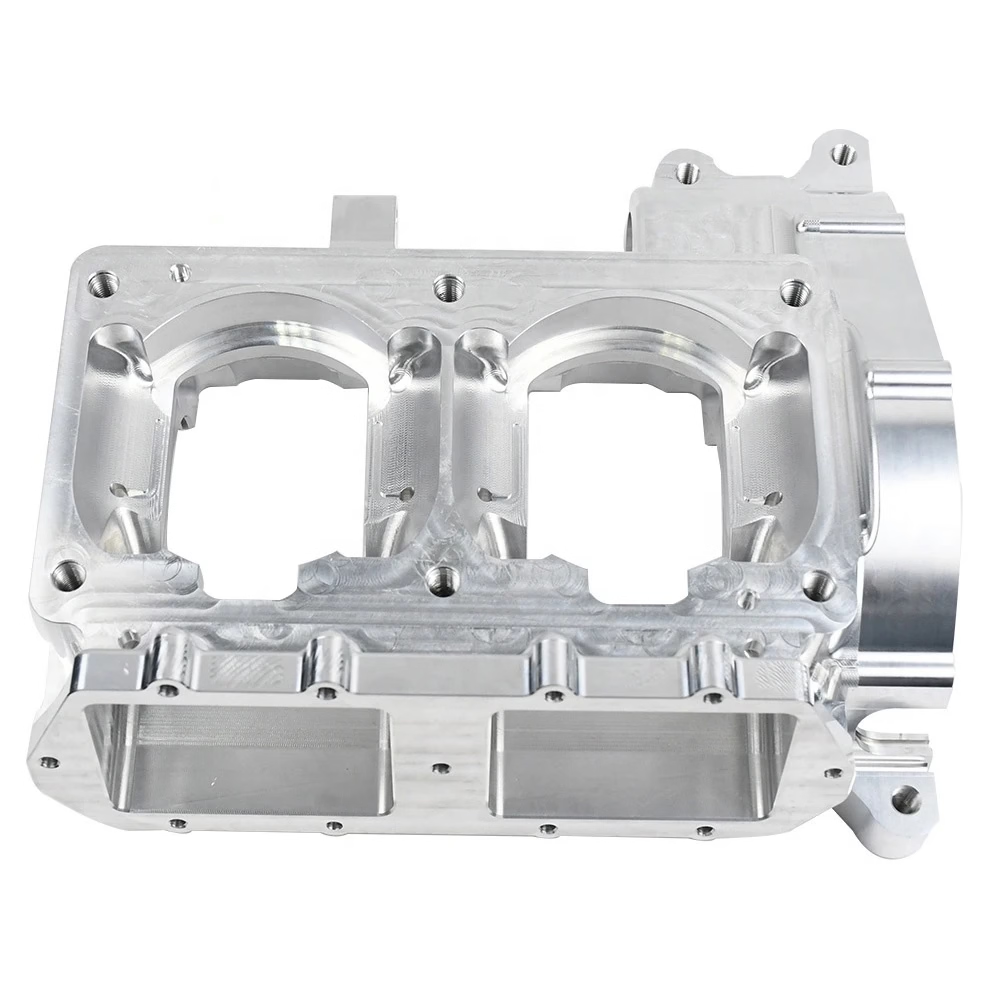
Custom Auto Spare Parts 5 Axis CNC Machining Engine Parts

Custom Auto Spare Parts 5 Axis CNC Machining Engine Parts

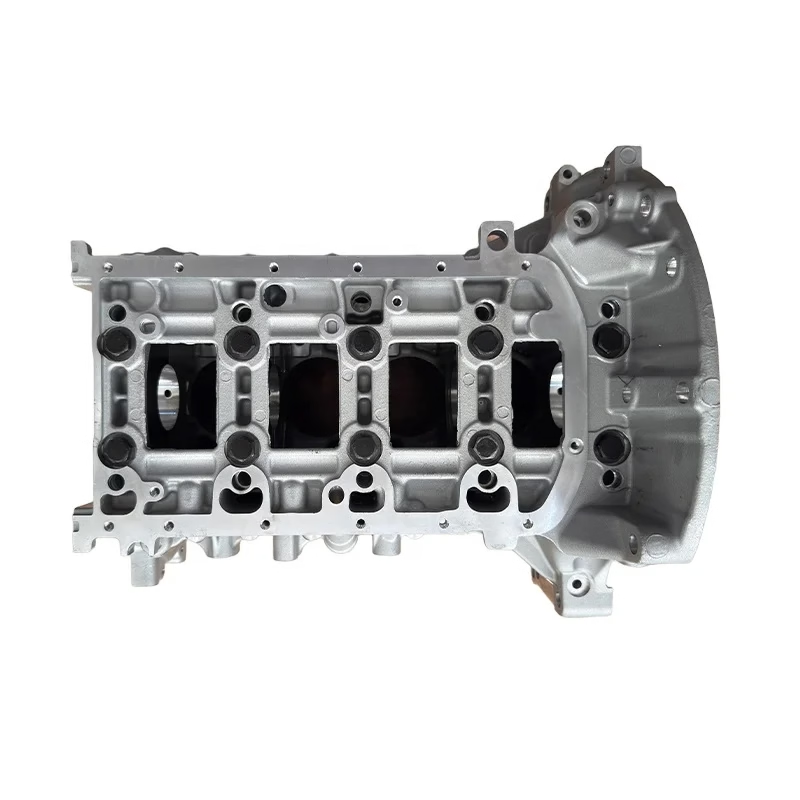
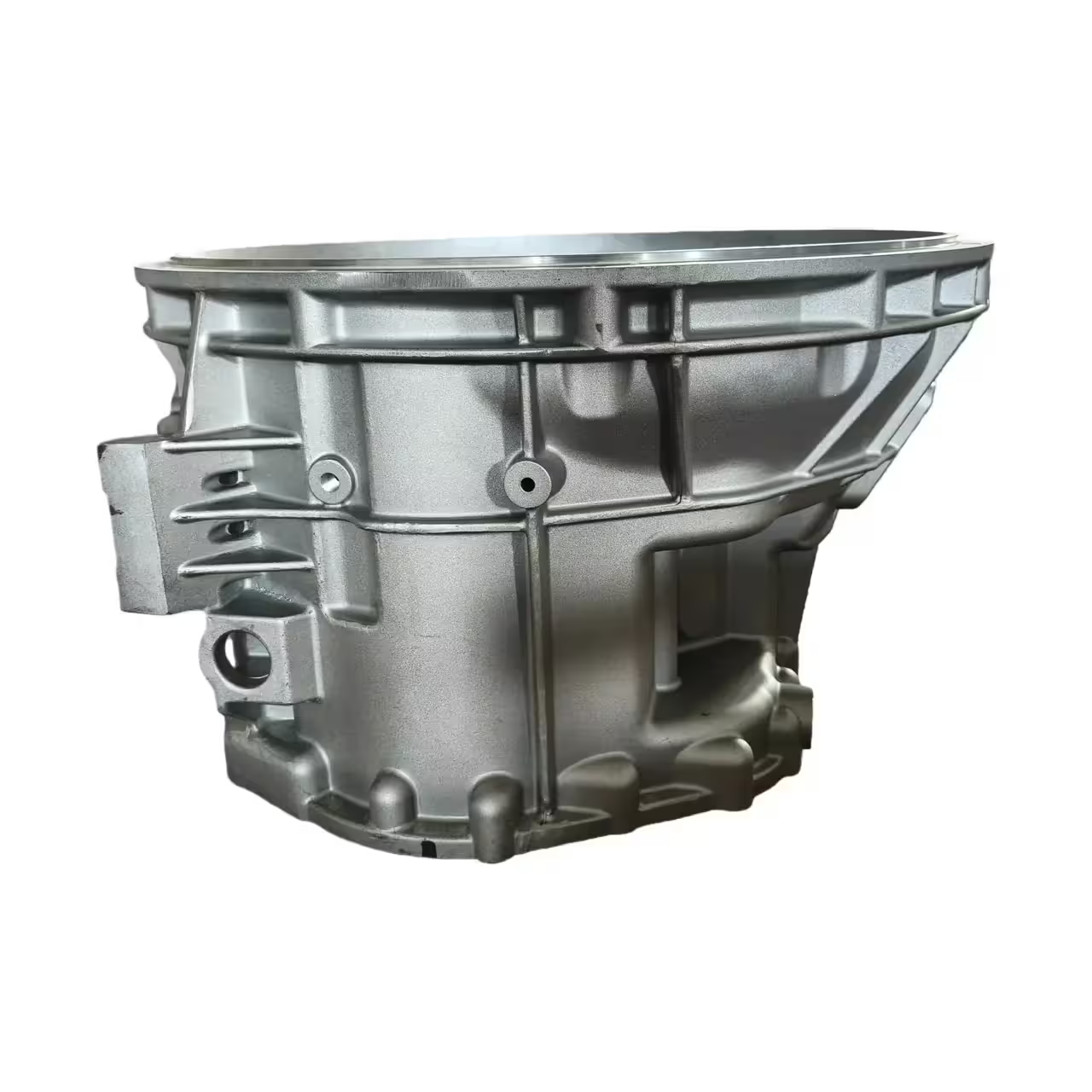
CNC Engine Block Machine Price

CNC Engine Block Machine Price

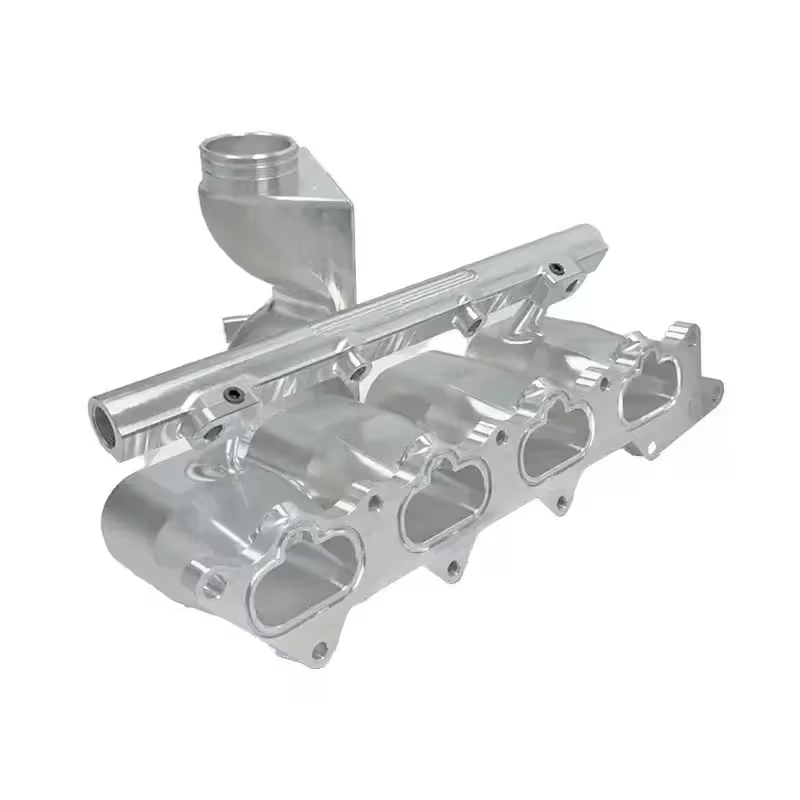
CNC Machined Manifold Parts Manufacturing

CNC Machined Manifold Parts Manufacturing

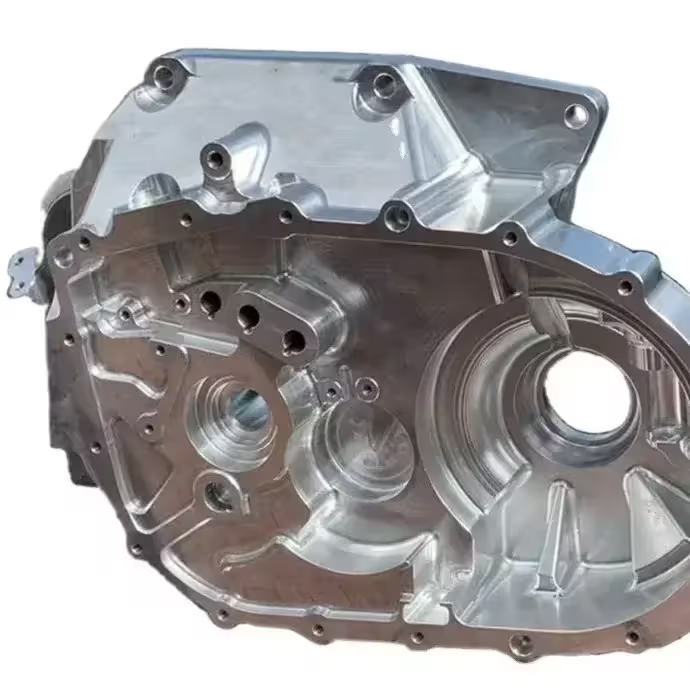
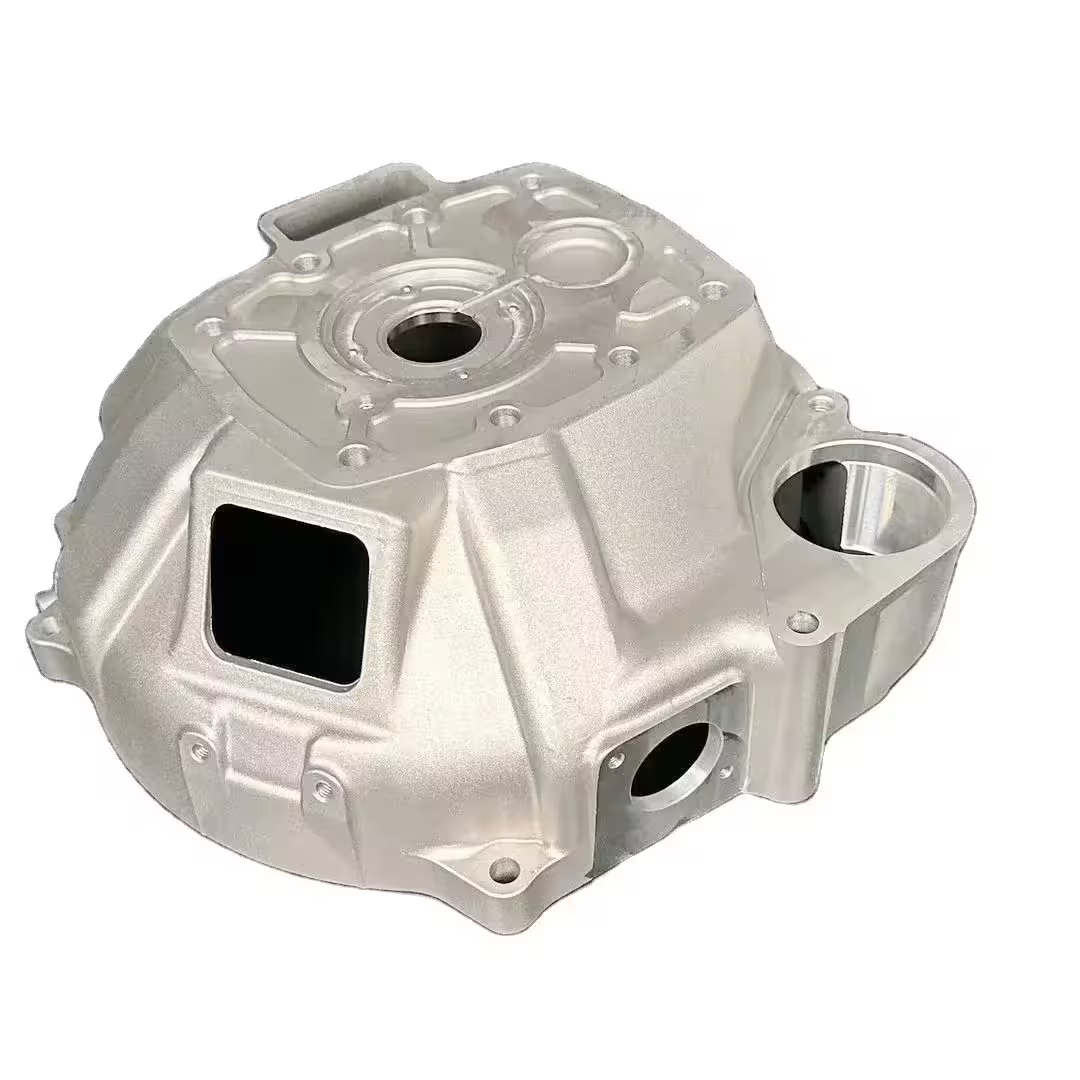
CNC Machining Engine Transmission Bell Housing

CNC Machining Engine Transmission Bell Housing

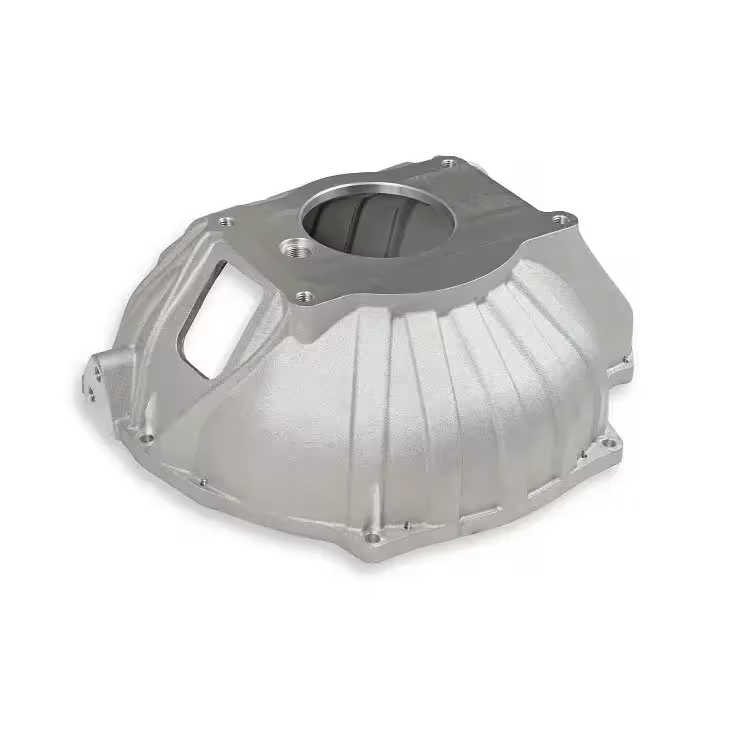
Manual Gearbox Bell Housing Custom CNC Truck Parts

Manual Gearbox Bell Housing Custom CNC Truck Parts

CNC Machining Bell Housing Transmission​ Motor Housing Die Casting

CNC Machining Bell Housing Transmission​ Motor Housing Die Casting

GreatLight CNC Machining – Precision Engine Hardware Associated Parts

GreatLight CNC Machining – Precision Engine Hardware Associated Parts

CNC Machining For Unitree G1 Humanoid Robot

CNC Machining For Unitree G1 Humanoid Robot

Precision CNC Machining Services

Why choose Great Light?

8 Reasons To Choose Great Light

01

First-class equipment and technical capabilities

02

Fully suitable for specified materials required for your

03

High quality assurance

04

Your project will be produced within 24H after order

05

Internationally competitive prices

06

Reliable reputation and worry-free after-sales guarantee

07

Certification and Compliance

08

Complete supporting auxiliary services

  • 1Advanced CNC machine tools:High-precision 5-, 4- and 3-axis machining centers, lathes, milling machines, grinders and spark machines — 127 sets in total.
  • 2Accuracy and Tolerance:The processing accuracy is plus or minus 0.001mm, the surface roughness is Ra0.2μm, and the product qualification rate is 99.99%. It is confirmed that the required accuracy of your parts can be achieved.
  • 3Software Technology:We have advanced software technology that matches CNC machine tools to achieve precise design and processing of complex parts.
  • 4Technical team:Our technical team has rich experience and expertise, has an impressive track record in the industry, and can handle a variety of complex processing tasks and provide technical support and solutions.
  • 5Design for Manufacturing (DFM) Support:Can provide customers with reasonable feedback to improve design for manufacturability.
Materials

CNC Machining Materials

Metal and plastic grades available for CNC machining — full alloy lists preserved from the original page.

Aluminum heat sink thermal module parts CNC machined

Aluminum

Lightweight yet strong, with excellent machinability and corrosion resistance. Ideal for aerospace and automotive parts.

  • 6061
  • 2024
  • 5052
  • 6082
  • 7075
  • ADC12
Milling copper parts

Copper

Superior electrical conductivity and thermal properties, perfect for electrical components and heat exchangers.

  • C101(T2)
  • C103(T1)
  • C110(TU0)
  • Beryllium Copper
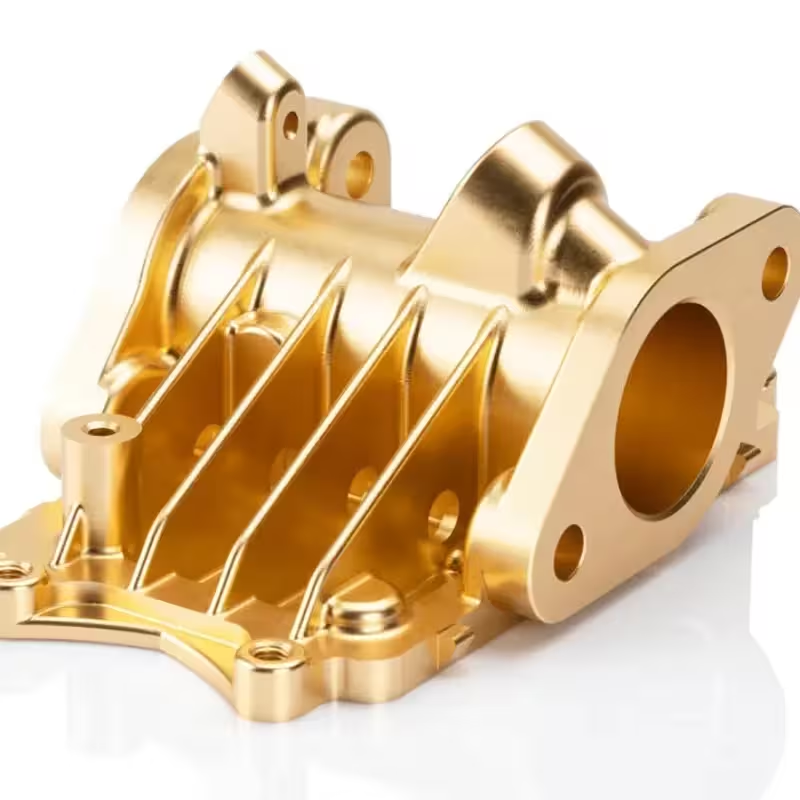
Brass CNC machined components

Brass

Durable with a low friction coefficient, suitable for fittings, tools and musical instruments that require precision.

  • C27400
  • C28000
  • C36000
Bronze CNC machined bearings and bushings

Bronze

Highly resistant to corrosion and metal fatigue, favoured for bearings, bushings and marine hardware.

  • Tin Bronze
Steel CNC machined parts

Steel

An alloy with high tensile strength and durability, commonly used in construction and automotive industries.

  • 1018
  • 1045
  • 1215
  • 4130
  • 4140
  • 4340
  • A36
  • Die steel
  • Alloy steel
  • Spring steel
Stainless steel CNC machined parts

Stainless Steel

Renowned for its corrosion resistance, a prime choice for medical devices and food processing equipment.

  • SUS201
  • SUS303
  • SUS304
  • SUS316
  • SUS316L
Magnesium CNC machined parts

Magnesium

The lightest structural metal, offering high strength-to-weight ratios for automotive and aerospace applications.

  • AZ31B
  • AZ91D
Titanium CNC machined parts

Titanium

The highest strength-to-density ratio among metals, highly resistant to corrosion and fatigue.

  • TA1
  • TA2
  • TC4 / Ti-6Al-4V
Surface Finishing

CNC Machining Surface Finishes

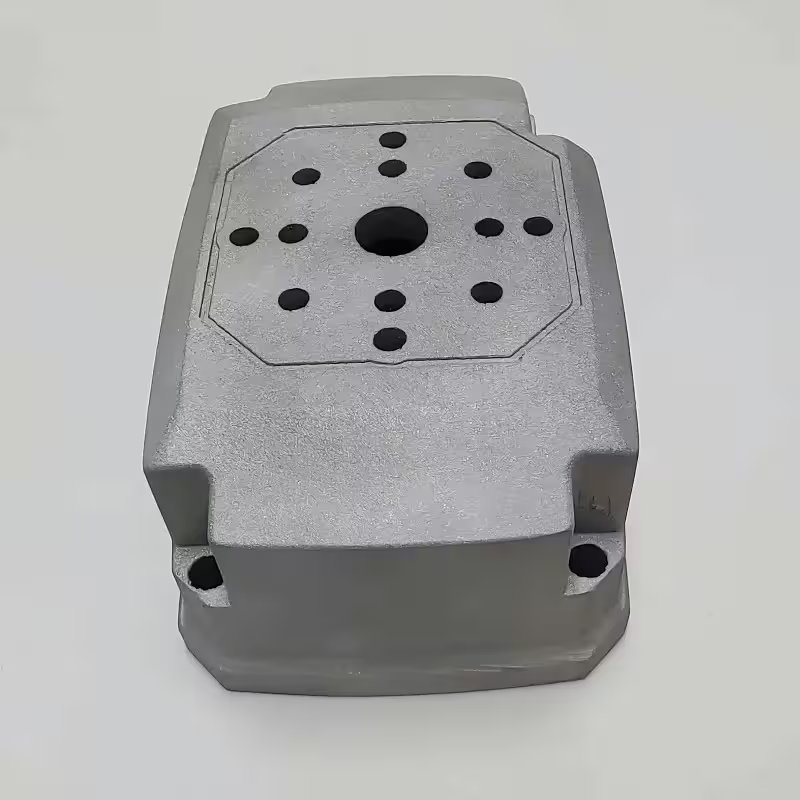
As machined surface finish

As Machined

Anodizing surface finish

Anodizing

Mirror polishing surface finish

Mirror Polishing

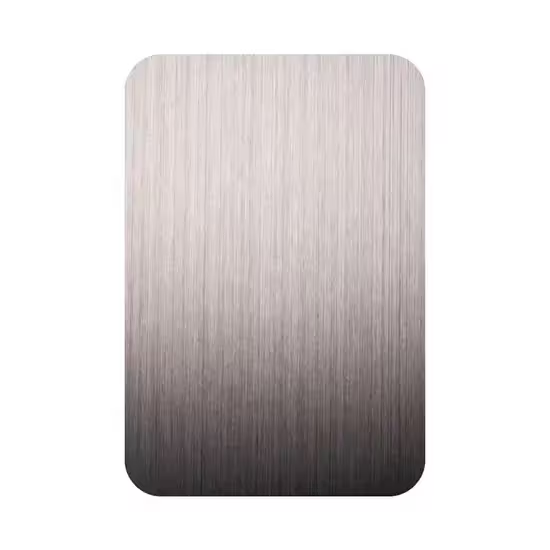
Brushed finish

Brushed Finish

Powder coating finish

Powder Coating

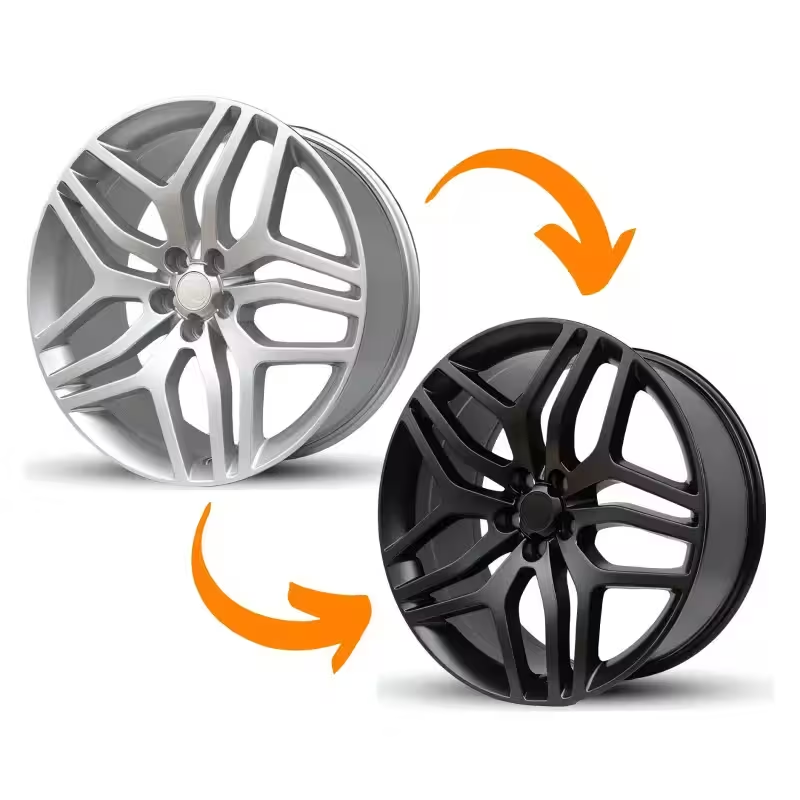
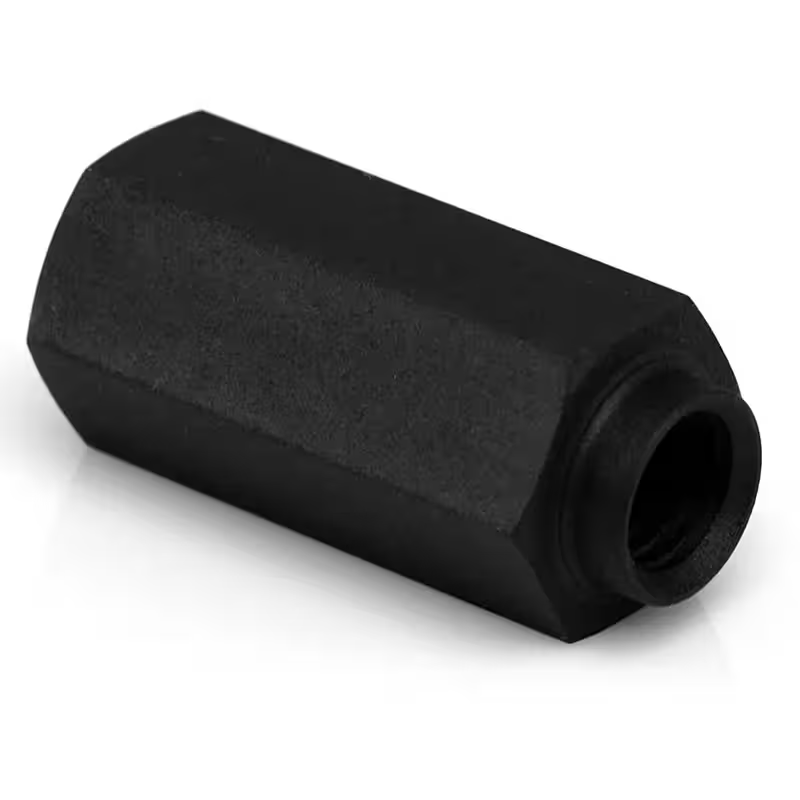
Black oxide finish

Black Oxide

Sand blasting finish

Sand Blasting

Electroplating finish

Electroplating

CNC Technology

CNC Technology & Capacity

5 axis CNC machining parts

Five-Axis CNC

Complex geometry in one setup.

4 axis CNC machining parts

Four-Axis CNC

12 units available.

3 axis CNC machining parts

Three-Axis CNC

27 units available.

CNC milling and turning

Milling & Turning

16 milling and turning centers.

In short, 5-axis CNC services provide the capability to produce highly complex, precise, and high-value parts that are impossible or inefficient to make with traditional machining.

FAQs

5 Axis CNC Machining Services FAQs

Eight long-form answers migrated verbatim from the current homepage.

What's 5 Axis CNC Machining Services?

What Are 5-Axis CNC Machining Services?

5-Axis CNC Machining is an advanced manufacturing process where a cutting tool moves in five different directions simultaneously to create complex parts from a solid block of material (like metal or plastic). Unlike 3-axis machines that move in linear X, Y, and Z directions, a 5-axis machine can also rotate on two additional axes (A and B, or B and C), allowing the tool to approach the workpiece from any direction in a single setup.

In short, 5-axis CNC services provide the capability to produce highly complex, precise, and high-value parts that are impossible or inefficient to make with traditional machining.

The Core Concept: How It Works

Imagine trying to carve a detailed statue. With a 3-axis machine, you’d have to stop and manually reposition the statue multiple times to reach all the sides and undercuts. With a 5-axis machine, the “chisel” can swivel and tilt to reach any part of the statue without having to reposition it.

  • The Five Axes:

    • X-axis: Left to Right

    • Y-axis: Front to Back

    • Z-axis: Up and Down

    • A-axis: Rotation around the X-axis (Tilting)

    • B-axis: Rotation around the Y-axis (Tilting) – or – C-axis: Rotation around the Z-axis

This simultaneous movement allows for unparalleled flexibility and precision.

Key Advantages of Using 5-Axis CNC Services

Advantage Description
✅ Single-Setup Machining The part is fixed once. All five sides (except the base) can be machined without manual repositioning. This eliminates errors and saves significant time.
✅ Complex Geometry It can produce intricate shapes, organic contours, undercuts, and compound angles that are impossible on 3-axis machines.
✅ Superior Precision & Quality By avoiding multiple setups, you maintain a single, consistent datum reference, resulting in higher accuracy and perfect feature alignment.
✅ Improved Surface Finish The tool can be tilted to maintain the optimal cutting position, allowing for faster feeds and a better surface finish with no tool marks.
✅ Use Shorter, Stronger Tools Tilting the part or tool allows you to use a shorter cutter to reach deep areas, reducing vibration and improving accuracy.
✅ Faster Production Combining multiple operations into one setup drastically reduces lead times from design to finished part.

Common Applications & Industries

5-axis services are essential for industries where complexity, precision, and performance are critical:

  • Aerospace: Turbine blades, engine components, lightweight structural parts with complex contours.

  • Automotive: Cylinder heads, custom turbocharger housings, complex prototypes.

  • Medical: Orthopedic implants, surgical instruments, prosthetics with organic shapes.

  • Energy: Impellers, turbine wheels, complex manifolds for oil & gas.

  • Robotics: Lightweight, high-strength arms, joints, and actuator housings.

  • High-End Consumer Products: Architectural models, intricate art pieces, and premium audio equipment.

When Do You Need 5-Axis CNC Services?

Consider 5-axis machining if your part requires:

  • Machining on multiple faces in a single operation.

  • Complex 3D surfaces or organic, sculpted shapes.

  • Extremely tight tolerances and flawless feature alignment.

  • Materials that are expensive or difficult to machine , where maximizing accuracy and minimizing waste is crucial.

Summary

5-axis CNC machining services offer a powerful solution for manufacturing sophisticated components with high efficiency and unparalleled accuracy. By investing in these services, you are not just buying a machining process; you are acquiring the capability to turn ambitious designs into reality, reduce time-to-market, and achieve a level of quality that sets your products apart.

What are your 5-Axis CNC machining capabilities?

Our 5-Axis CNC Machining Capabilities: Powering Complex Projects at Scale

We run 127 high-precision CNC machines in-house, covering both complex prototypes and large-volume production runs. Here is what our shop floor can do:

✔️ Advanced Equipment Portfolio

  • Five-Axis CNC Centers: 16 Units

    • Capable of simultaneous 5-axis machining for the most complex geometries, contours, and undercuts.

    • Ideal for: aerospace components, turbine blades, impellers, medical implants, and complex structural parts.

  • Four-Axis CNC Mills: 12 Units

    • Perfect for cylindrical machining, indexing, and producing parts with features on multiple sides, such as camshafts or gears.

  • Three-Axis CNC Mills: 27 Units

    • The workhorses for high-precision 2.5D and 3D milling, facing, and drilling operations. We use these for less complex features or to offload simpler operations, optimizing overall production flow.

  • CNC Milling & Turning Centers: 16 Units

    • Offer integrated milling and turning (e.g., Mill-Turn centers), allowing us to complete complex parts that require both rotational and prismatic features in a single setup.

✔️ Our Core Strengths & What This Means for You

  1. Unmatched Versatility & Scalability:

    • Our mixed fleet allows us to match the right machine to your specific part geometry and tolerance requirements, ensuring cost-effectiveness without compromising on quality.

    • Whether you need a single 5-axis prototype or a production run of 10,000+ parts utilizing our full range of 3, 4, and 5-axis machines, we have the capacity.

  2. Massive Production Capacity:

    • With over 70 total CNC machines in our facility, we can handle very large orders and offer accelerated lead times by running jobs in parallel.

  3. Seamless Complex-to-Simple Workflow:

    • We can machine the complex, free-form surfaces of a part on a 5-axis machine and then efficiently complete standard drilling and tapping on our high-speed 3-axis machines, maximizing overall equipment efficiency for your project.

  4. End-to-End Solution:

    • From complex 5-axis milling to precision turning and secondary operations, we can manage your entire project under one roof, simplifying your supply chain and ensuring consistency.

✔️ Industries & Applications We Serve

  • Aerospace & Defense: Structural components, bulkheads, engine parts, drone frames.

  • Automotive & Racing: Prototypes, cylinder heads, suspension components, custom intake manifolds.

  • Medical & Dental: Surgical guides, instrument housings, orthopedic implants, research equipment.

  • Energy: Pump housings, valve bodies, impellers, components for oil & gas.

  • Industrial Machinery: Robotic end-effectors, custom actuators, high-tolerance fixtures.

Let’s Start Your Project

We are confidently equipped to meet and exceed your “larger processing needs.” Our scalable setup is designed for growth and is ready to become an extension of your manufacturing team.

Next Steps:
➡️ Send us your 3D CAD model for a comprehensive DFM (Design for Manufacturability) analysis and a competitive quotation.
➡️ Discuss your annual volume or project scope —we will create a tailored production plan to ensure on-time delivery.

Why Choose 5-Axis CNC Machining Services?

Why Choose 5-Axis CNC Machining Services? The Ultimate Advantage

Choosing 5-axis CNC machining isn’t just about making a part; it’s about optimizing your entire manufacturing process for superior quality, efficiency, and design freedom. That is why 5-axis machining is the standard choice for complex, high-value components.

1. Unmatched Design Freedom & Complexity

  • The “Impossible” Made Possible: Create complex, organic geometries, compound curves, undercuts, and intricate contours that are simply unachievable with 3-axis machining.

  • Single-Step Sculpting: Machine parts that would otherwise require multiple assemblies into a single, strong, integrated component.

2. Supreme Precision & Accuracy

  • Single Setup Superiority: The part is fixed once. By machining five sides in one operation, you eliminate the cumulative errors introduced by repositioning the part across multiple setups.

  • Perfect Feature Alignment: Critical features on different planes (like angled holes or intersecting surfaces) are perfectly aligned to a single datum, ensuring flawless assembly and performance.

3. Dramatically Improved Efficiency & Cost-Effectiveness

  • Faster Production: Drastically reduce total production time by completing parts in a single setup. This means faster prototyping and a quicker path to market.

  • Reduced Labor & Overhead: Automated, complex machining requires less manual intervention, fixture building, and machine idle time, lowering your overall cost per part, especially for complex components.

  • Lower Total Cost of Ownership: While the hourly rate may be higher, the reduction in setup time, labor, and secondary operations often makes 5-axis machining more cost-effective for complex parts.

4. Superior Surface Finish

  • Optimal Tool Orientation: The tool can be tilted to maintain the perfect cutting position, allowing for higher feed rates and a better surface finish right off the machine.

  • No Witness Lines: Eliminate the visible “stair-step” lines or mismatch marks that occur when a part is moved and re-fixtured for different operations.

5. Ability to Machine Challenging Parts

  • Short-Tool Advantage: By tilting the part, you can use shorter, more rigid cutting tools to reach deep or obstructed areas. This reduces tool vibration, deflection, and breakage, resulting in higher accuracy and a better surface finish.

  • Ideal for Expensive Materials: Maximize yield and precision when machining high-value materials like titanium, Inconel, or advanced composites, where every gram of waste counts.

When is 5-Axis CNC the Right Choice?

Consider 5-axis services if your project involves:

  • Complex 3D surfaces (aerofoils, impellers, custom molds).

  • Multiple angled features on different faces of a part.

  • Parts requiring high accuracy across several planes.

  • Need for reduced lead times and assembly consolidation.

  • Machining expensive materials where precision is paramount.

Summary: The Smart Choice for Advanced Manufacturing

In essence, 5-axis CNC machining transforms manufacturing from a series of compromises into a streamlined, high-fidelity process. It’s not just a machining method; it’s a strategic advantage that enables innovation, ensures quality, and delivers complex parts faster and more efficiently.

What's the 5 Axis CNC Machining Process?

The 5-Axis CNC Machining Process: A Step-by-Step Guide

Phase 1: Digital Foundation & Programming

  1. CAD Design (Computer-Aided Design):
    • The process begins with a 3D model of the part created in CAD software (e.g., SolidWorks, CATIA, NX). This model defines the final part’s exact geometry, including all complex curves, angles, and surfaces.

  2. CAM Programming (Computer-Aided Manufacturing):
    • The 3D CAD model is imported into CAM software (e.g., Mastercam, PowerMill, HyperMill).

    • A programmer then defines the toolpaths—the precise routes the cutting tool will take.

    • This is the most critical step for 5-axis machining. The programmer must:

      • Select the appropriate cutting tools.

      • Set cutting speeds, feed rates, and depth of cuts.

      • Define the tool axis orientation , constantly controlling how the tool tilts and rotates to avoid collisions and ensure optimal cutting.

      • Perform virtual collision checking to simulate the entire process and ensure the tool, holder, and machine components do not crash into the part or fixture.

  3. Post-Processing:
    • The CAM software translates the toolpaths into G-code, a language the specific 5-axis CNC machine understands. This code controls all movements of the machine’s five axes simultaneously.

Phase 2: Physical Setup

  1. Machine & Workpiece Setup:
    • A block of raw material (the “workpiece”) is securely mounted to the machine’s table or a precision fixture.

    • Crucially, this is typically the only time the part is fixtured. The ability to access almost all sides in one setup is a key advantage.

    • The required cutting tools are loaded into the machine’s automatic tool changer (ATC).

Phase 3: Machining Execution

  1. Simultaneous 5-Axis Machining:
    • The machine executes the G-code program.

    • Unlike 3-axis machining, the tool can move linearly (X, Y, Z) while the workpiece and/or tool simultaneously rotates on two additional axes (A, B, or C). This allows the cutting tool to maintain the most efficient orientation to the part’s surface.

    • This stage often involves:

      • Roughing: Using powerful cuts to quickly remove the bulk of the material.

      • Semi-Finishing: Removing material to leave a small, uniform amount for the final pass.

      • Finishing: Using precise tools and paths to achieve the final dimensions, tolerances, and surface finish.

      • Feature Creation: Machining holes, threads, and intricate contours from multiple angles without re-fixturing.

  2. In-Process Verification (Optional but Common):
    • On advanced machines, a touch probe can automatically check critical dimensions during the process, allowing for real-time adjustments and ensuring quality.

Phase 4: Completion & Validation

  1. Part Removal & Deburning:
    • Once the cycle is complete, the finished part is removed from the machine. Any minor sharp edges (burrs) are carefully removed.

  2. Final Inspection & Quality Control:
    • The part is thoroughly inspected using precision metrology tools like CMMs (Coordinate Measuring Machines) to verify that all dimensions and geometric tolerances meet the CAD model’s specifications.

    • Surface finish may also be measured with a profilometer.

  3. Post-Processing (If Required):
    • The part may be sent for additional treatments such as anodizing, plating, painting, or heat treatment, depending on its application.

Summary: The Key Differentiator

The entire 5-axis CNC process is orchestrated around one core principle: completing complex geometries in a single setup. This eliminates the errors and time associated of moving the part between multiple machines, resulting in a faster, more accurate, and more cost-effective solution for complex parts.

#5AxisCNC #CNCProgramming #PrecisionMachining #ManufacturingProcess #CADCAM #Engineering #AdvancedManufacturing

What's the Difference Between 3D Printing and CNC Machining?

What’s the Difference Between 3D Printing and CNC Machining?

While both 3D Printing and CNC Machining are used to create complex parts, they are fundamentally different processes with their own strengths and weaknesses.

Here’s a clear breakdown of the differences:

The Core Difference: Additive vs. Subtractive

  • 3D Printing (Additive Manufacturing): Builds a part layer-by-layer from the bottom up, using material (like plastic filament or resin) that is deposited, fused, or cured.

    • Analogy: A hot glue gun building a shape by stacking lines of glue.

  • CNC Machining (Subtractive Manufacturing): Starts with a solid block of material (like metal or plastic) and cuts away material using rotating cutting tools to achieve the final shape.

    • Analogy: A sculptor carving a statue from a block of marble.

Head-to-Head Comparison

Feature 3D Printing CNC Machining
Process Additive (Adds material) Subtractive (Removes material)
Materials • Photopolymers (Resins)
• Thermoplastics (PLA, ABS, Nylon)
• Metals (Specialized printers)
• Sand/Ceramics
• Metals (Aluminum, Steel, Titanium, Brass)
• Plastics (ABS, Nylon, PEEK, PTFE)
• Wood & Composites
Key Strengths • Extreme Complexity: Creates internal lattices, hollow parts, and undercuts at no extra cost.
• Rapid Prototyping: Very fast for initial concept models.
• Part Consolidation: Can combine many parts into one.
• Low Start-up Cost: No specialized tooling or fixtures needed.
• Superior Strength: Parts are fully dense and isotropic (same strength in all directions).
• Excellent Accuracy & Finish: Holds very tight tolerances and can achieve a smooth, ready-to-use surface.
• Material Versatility: Works with a vast range of proven, high-performance engineering materials.
Key Limitations • Weaker Parts: Layer-by-layer construction can create weaker points between layers.
• Poor Surface Finish: Visible layer lines often require post-processing.
• Limited Material Options: Fewer engineering-grade materials compared to CNC.
• Slow for Large Parts: Building a solid, large part can be very time-consuming.
• Design Restrictions: Difficulty with internal geometries and complex enclosed channels.
• Material Waste: The removed material (chips/swarf) is often wasted.
• Higher Skill & Setup: Requires skilled programming and fixturing, leading to higher initial cost.
Cost Drivers • Cost of the printing material.
• Machine time (less sensitive to part complexity).
• Cost of the solid raw material blank.
• Machine time (highly sensitive to part complexity).
• Cost of labor for programming and operation.
Best For • Prototyping and concept models.
• Complex, lightweight geometries (lattices, organic shapes).
• Custom, one-off parts (e.g., medical implants, architectural models).
• Parts that are impossible to machine.
• Functional prototypes and end-use parts.
• Parts requiring high strength, durability, and heat resistance.
• Parts with tight tolerances and superior surface finish.
• Medium to high-volume production runs.

How to Choose: A Simple Guideline

  • Choose 3D Printing when:

    • Your design has intricate, internal geometries .

    • You need a prototype quickly and cheaply .

    • Part lightweighting through complex lattices is a priority.

    • You are only making 1 to 10 parts .

  • Choose CNC Machining when:

    • You need a part with high strength and durability .

    • Tight tolerances and a smooth finish are critical (e.g., for bearings or seals).

    • You are using standard engineering metals or plastics .

    • You are producing 10 to 10,000+ parts .

#3DPrinting #CNCMachining #AdditiveManufacturing #SubtractiveManufacturing #Prototyping #ProductDesign #Engineering #Manufacturing

What is the typical cost of a 5-Axis CNC machined part?

What is the typical cost of a 5-Axis CNC machined part?

Our engineering and sales teams will provide one-on-one quote support for your project. Typically, for similar parts, CNC lathes cost 15% less to machine than standard 3-axis CNC milling. In contrast, the cost of 5-axis machining increases, continuous 5-axis CNC milling typically costs over 20% higher than an indexed 5-axis machine (also referred to as 3+2 milling), and about double that of a standard 3-axis mill. To achieve the most cost-effective CNC machined parts, larger production runs are recommended to spread the cost of machine setup.

Key Factors That Determine the Cost

  1. Part Geometry & Complexity:
    • Simple Bracket vs. Complex Impeller: A simple block with a few angled holes costs far less than a turbine impeller with complex, free-form blades. Complexity increases programming and machining time exponentially.

  2. Material Cost & Machinability:
    • Aluminum 6061: ~$5-10 per kg (Most economical, easy to machine)

    • Stainless Steel 304/316: ~$10-20 per kg (Harder on tools, slower machining)

    • Titanium (Ti-6Al-4V): ~$50-100+ per kg (Very hard on tools, requires slow speeds, specialized knowledge)

    • Engineering Plastics (PEEK, Delrin): ~$50-150 per kg (Material cost can be high, but often faster to machine)

  3. Part Size & Initial Raw Material Block:
    • Cost is heavily influenced by the size of the raw stock needed. A large part requires a large, expensive block of metal, and a significant amount of that material may be machined away into chips.

  4. Quantity:
    • 1-10 Parts (Prototyping): High cost per part. Setup and programming costs are amortized over few units.

    • 10-100 Parts (Low-Volume Production): Cost per part drops significantly as setup costs are spread out.

    • 100+ Parts (Production): Lowest cost per part. The manufacturer can optimize the process for volume.

  5. Tolerances & Surface Finish Requirements:
    • Tolerances are held to ±0.005 mm / ±0.0002 in. Holding that tolerance requires slower machining, specialized tools, and more inspection than general machining work, which increases cost.

    • A standard machined finish is included. A mirror-quality finish requires additional polishing steps.

  6. Post-Processing:
    • Costs add up for processes like:

      • Anodizing, Plating, Painting

      • Heat Treatment

      • Laser Engraving

      • Specialized Inspection (e.g., CMM reports)

Realistic Price Estimate Ranges

Here are some very rough estimates for a single part, excluding material extremes like titanium and assuming aluminum.

Part Scenario Very Rough Cost Estimate Key Cost Drivers
Small, Simple Prototype
(e.g., a custom bracket, ~50mm cube)
$200 – $600 Programming & Setup time dominates the cost. Low material cost.
Medium Complexity Part
(e.g., a drone arm with curves, a custom housing)
$600 – $2,500 Increased programming complexity and machine time.
Highly Complex Part
(e.g., a small impeller, medical implant, aerospace component)
$2,500 – $10,000+ Extensive programming, long machine cycle times, potential for specialized tooling, and high scrap risk.

Important Note: For production quantities , the unit price can often drop by 50% or more once the initial setup and programming are complete.

Why is 5-Axis CNC Often More Expensive (and Worth It)?

  • Higher Machine Cost: 5-axis machines are a significant capital investment, which is reflected in their hourly rate ($75-$150+/hour vs. $40-$90/hour for 3-axis).

  • Advanced Programming: Creating collision-free, efficient 5-axis toolpaths requires highly skilled engineers and expensive CAM software.

  • Specialized Tooling & Fixturing: May require custom fixtures to hold complex parts.

However, it can be more cost-effective overall because it consolidates what would require multiple 3-axis setups and secondary operations into one, reducing labor, handling, and potential for error.

How to Get an Accurate Quote

To get a meaningful quote, provide a manufacturer with:

  1. 3D CAD Model (e.g., .STEP or .IGES file).

  2. 2D Drawing with critical dimensions, tolerances, and finish callouts.

  3. Material Specification .

  4. Quantity Required .

  5. Any Post-Processing Needs .

Summary

There is no “typical” cost, but understanding the drivers allows for informed decisions. For a accurate budget, always request a formal quotation. The investment in 5-axis CNC is justified when you need a part with complex geometries, high precision, and superior quality that would be impossible or more expensive to produce using multiple traditional methods.

#5AxisCNC #CNCMachining #CostEstimate #Manufacturing #Prototyping #ProductDevelopment #Engineering

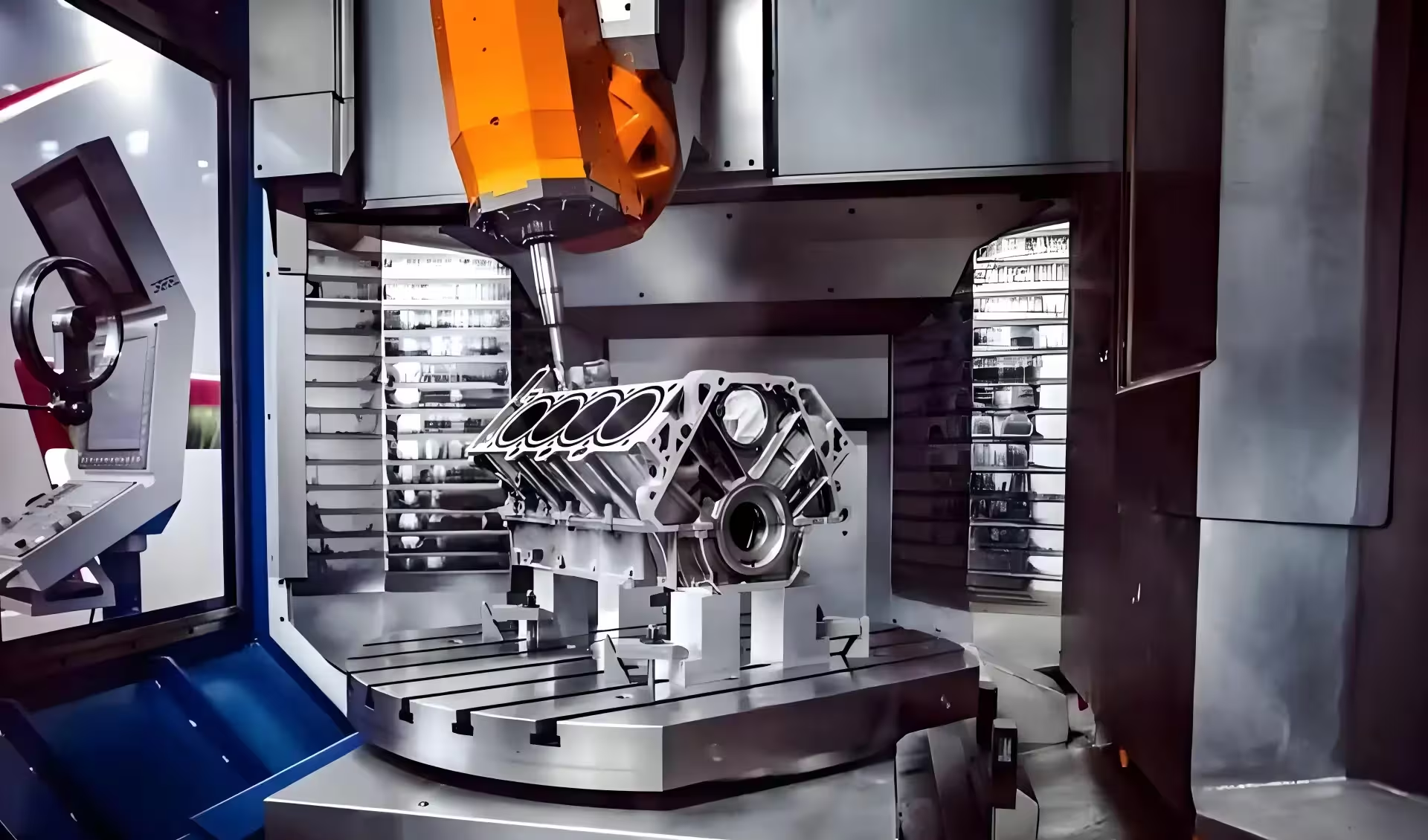
What are the maximum size ranges of your 5-Axis machine travel?

Our 5-Axis CNC Machining Capacity & Size Ranges

We operate a flexible fleet of 5-axis CNC machines to match the optimal equipment to your project’s size and complexity requirements.

Standard 5-Axis Machine Travel Ranges:

  • Large Format: Up to 4000 x 400 x 150 mm
    (Ideal for long, slender components like aerospace rails or actuator housings)

  • Medium Format: Up to 750 x 1150 x 550 mm & 600 x 600 x 600 mm
    (Perfect for most complex components, including robotic frames, automotive subsystems, and medium-sized impellers)

  • Compact/High-Precision: 500 x 500 x 450 mm & 500 x 310 x 200 mm
    (Optimized for high-precision, complex small parts like medical device components, intricate prototypes, and detailed fixtures)

  • Rotary Table Capacity: Worktable diameter of Φ400 mm
    (Suited for machining multiple sides of smaller, cube-like parts in a single setup)

Key Takeaway for Our Clients:

“We possess the in-house capability to process a wide spectrum of part sizes, from compact, high-precision components to large-scale industrial parts.”

What This Means for Your Project:

  • Versatility: Whether your part is a small, intricate medical implant or a long, structural aerospace component, we have a 5-axis machine suited for the task.

  • Expert Matching: Our engineering team will analyze your part’s geometry and select the most efficient and cost-effective machine in our fleet for your job.
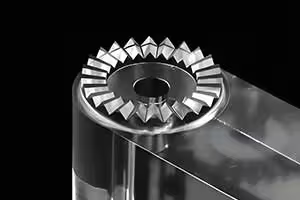
  • Scalability for Larger Needs: For components exceeding these standard dimensions, our engineering team is ready to consult on custom solutions and feasibility. We can process larger sizes.
Next Steps for a Precise Quote:

To determine the perfect machine for your project and provide an accurate quotation, we recommend the following:

  1. Share Your CAD Model: Provide your 3D model (STEP, IGES, etc.).

  2. Specify Critical Dimensions: Highlight any overall size constraints or key features.

  3. Indicate Quantity & Material: Help us understand your full production scope.

Our engineers are ready to review your specific requirements and confirm the ideal processing strategy for your parts, ensuring a perfect fit for your project’s scale and precision needs.
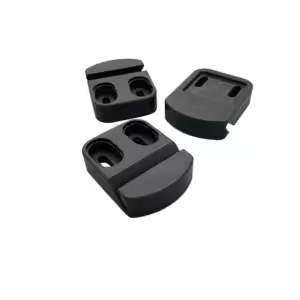
#5AxisCNC #CNCCapacity #PrecisionMachining #LargeFormatCNC #Manufacturing #EngineeringSolutions
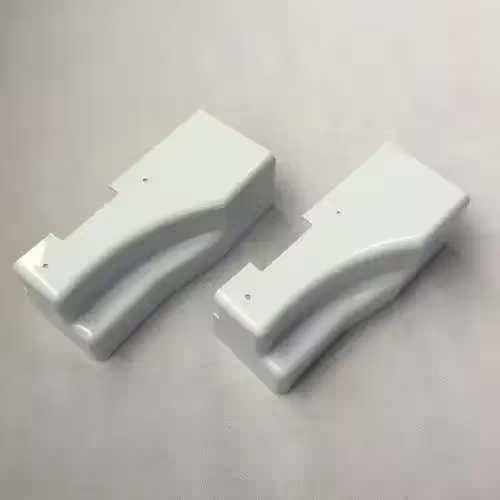
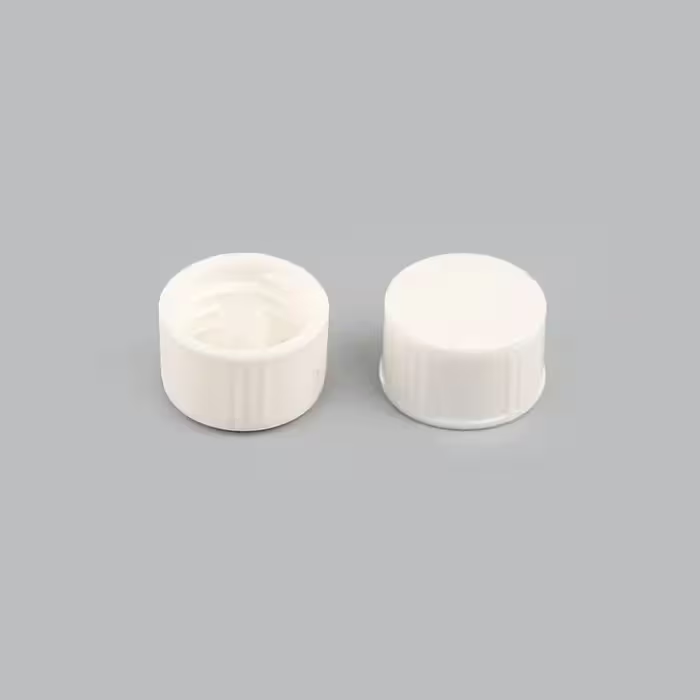
What kind of surface finish does 5-Axis CNC machining leave?
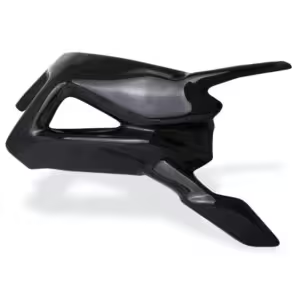
Surface Finish in 5-Axis CNC Machining: A Detailed Guide

The “as-machined” finish is the standard result directly from the CNC milling process. However, 5-axis machining offers superior control over this finish compared to 3-axis methods.

Standard “As-Machined” Finish (Ra 1.6 – 3.2 μm)

  • What to Expect: Visible, uniform tool marks. The surface is functional and clean but has a distinct engineered look. It is not perfectly smooth to the naked eye or touch.

  • Why it’s the Standard: This represents the optimal balance between machining time, cost, and functional performance for most applications. It is suitable for non-cosmetic internal parts, structural components, and interfaces that will be gasketed.

High-Quality Machined Finish (Ra 0.8 – 1.6 μm)

  • What to Expect: A much smoother appearance with very faint or no visible tool marks. It feels smooth to the touch.

  • How It’s Achieved: Using finer stepovers (the distance between tool passes), sharper tools, slower feed rates, and specialized finishing toolpaths. 5-axis machining excels here because it can maintain the optimal tool tilt , ensuring the cutting edge, not the tip, engages the material for a cleaner shear.

  • Common Applications: Visible components, bearing seats, hydraulic seal surfaces, and high-performance automotive parts.

Fine / Precision Machined Finish (Ra 0.2 – 0.8 μm)

  • What to Expect: A near-mirror, glossy surface that is exceptionally smooth. This requires a deliberate and skilled machining process.

  • Cost Implication: As you noted, this significantly increases operating time and requires specialized tools, expert CAM programming, and often a multi-stage finishing process, leading to higher costs .

  • Common Applications: Optical components, medical implant surfaces, high-end consumer product aesthetics, and critical sealing surfaces in aerospace.

The 5-Axis Advantage for Surface Finish

  1. Continuous Optimal Cutting Angle: The tool can be tilted to maintain the perfect contact point with the contour of the part. This prevents “cusp” marks left at the tip of a ball-nose tool in 3-axis machining, resulting in a more uniform, higher-quality surface.

  2. Reduced Scalloping & Smoother Transitions: By moving simultaneously in five axes, the machine can create complex curved surfaces in a single, fluid motion, eliminating jarring transitions or “witness lines” between separate operations.

Achieving a Finish Beyond “As-Machined”

If a perfectly smooth or mirror-like surface is required, the machined part must undergo post-processing. Here are the most common methods:

Post-Process Best For Effect on Surface
Sandblasting / Bead Blasting Aluminum, Steel, Titanium Creates a uniform, matte, satin finish that hides all tool marks.
Polishing & Buffing Aluminum, Stainless Steel Achieves a high-gloss, reflective mirror finish. A manual, labor-intensive process.
Anodizing (Type II) Aluminum Adds a hard, protective layer and color. The final finish (matte/gloss) depends on the pre-anodize surface.
Brushing Aluminum, Stainless Steel Creates a consistent, directional, satin-grain look (e.g., on appliance fronts).

Summary

  • Standard: Ra 1.6-3.2 μm (Visible tool marks, functional)

  • High-Quality: Ra 0.8-1.6 μm (Smooth to touch, for visible parts)

  • Precision: Ra 0.2-0.8 μm (Near-mirror, high cost)

  • 5-Axis Benefit: Inherently produces a better, more consistent surface on complex contours than 3-axis machining.

  • For Perfection: Post-processing is required to completely eliminate all tool marks.

When requesting a quote, simply specify your required Surface Roughness (Ra) and the part’s function (e.g., “cosmetic exterior,” “hydraulic sealing surface”). This allows the manufacturer to plan the most efficient and cost-effective strategy to meet your needs.

#CNCMachining #SurfaceFinish #PrecisionMachining #5AxisCNC #EngineeringTolerances #Manufacturing

img decoding="async" class="swiper-slide-image" src="https://glcncmachining.com
Get the best price for CNC machining parts
Quotation

Get The Best Price

Send your drawings and requirements — our engineers will reply with a competitive quotation, a DFM analysis and a delivery plan.

  • ✓Fast responseQuotation and design analysis within 12 hours.
  • ✓Certified qualityISO 9001 / IATF 16949 / ISO 13485 / ISO 27001 management systems.
  • ✓ConfidentialAll uploads are secure and confidential (view NDA).

Trusted by engineers and manufacturers worldwide

Tesla Ford Motor Company BYD Auto Denso Magna International Boeing Airbus Medtronic KUKA FANUC