GreatLight CNC Machining Factory logo
CNC Machining
Rapid Prototyping
Materials
Industries
News
About GL

Get Instant Quote

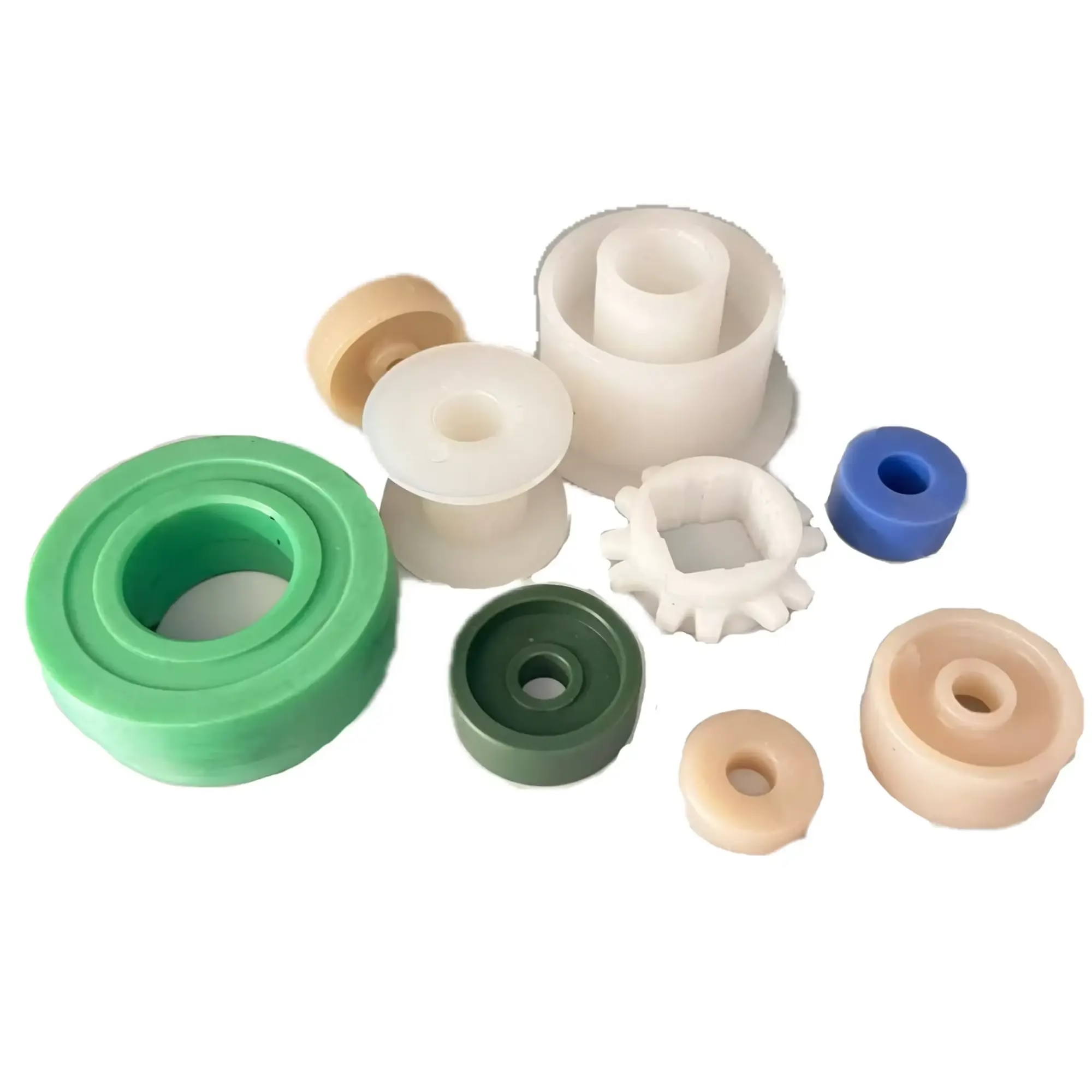
POM CNC Machining

POM CNC Machining for Dimensionally Stable Parts

Acetal cuts clean, holds tolerance, and slides without lubrication. We machine it on 127 CNC machines in Dongguan and Singapore, from one prototype to 10,000+ parts, with DFM feedback inside 12 hours.

±0.005 mm toleranceRa 0.2–0.8 μmNo MOQ12-hour DFMISO 9001:201516 five-axis centers
pom-cnc-machining-scaled
±0.005 mmAchievable tolerance on POM
16Simultaneous 5-axis centers
99.99%Inspection qualification rate
12 hQuote and DFM analysis
Where acetal parts go wrong

Four failures we see on POM drawings every week

Acetal is easy to cut and hard to cut well. Most scrap comes from heat, stress, and clamping.

01

Do your bores close up after machining?

Acetal relaxes after the tool leaves. Cut a Ø20 mm bore to nominal and it can measure 15–30 μm undersize the next morning. The fix is roughing with stock left on, a stress-relief pause, then a finishing pass with a sharp, polished cutter and light depth of cut. We hold ±0.005 mm on critical diameters when the drawing calls for it.

02

Are your flat plates bowing?

POM sheet has internal stress from extrusion. Machine both faces in one setup without balancing the cuts and the part warps into a banana. The cure is symmetrical material removal, sharp tools, and no dwell. If the part is thin, we may ask to flip it twice instead of taking one heavy pass.

03

Is the surface melting or smearing?

Acetal has a low melting point. A dull end mill at high rpm rubs instead of cutting, and you get a smeared, fuzzy edge. We run POM with high rake geometry, generous coolant or air blast, and feed rates that keep the chip load up. As-machined finish lands around Ra 1.6–3.2 μm; a fine pass reaches Ra 0.2–0.8 μm.

04

Are your tolerances unrealistic for the material?

Some drawings ask for ±0.002 mm on a 100 mm acetal part. That is not a machining problem. Thermal expansion of POM is roughly ten times that of steel, so a 5 °C shop swing moves the part more than the tolerance. We mark these features in DFM and propose a realistic band or a different material.

How we machine it

A process built around how acetal actually behaves

Three things matter more than spindle speed: cutter geometry, heat control, and how the part is held.

cnc machining
Tooling and cutting data

Sharp tooling, high rake, controlled heat

Acetal cuts best with sharp, polished carbide and high rake angles. We keep POM tooling separate from the cutters we run on aluminium and steel, because a slightly dull edge that is fine on 6061 will smear acetal.

Feeds and speeds are set to keep the chip load up and the rpm down. That pulls heat into the chip instead of the part. Air blast or flood coolant carries the rest away, so the finished face stays clean and the edge does not feather.

  • 1
    High rake, polished carbideCuts cleanly instead of rubbing the surface
  • 2
    Chip load firstLower rpm and higher feed keep heat out of the part
  • 3
    Coolant or air blastPrevents smearing on deep pockets and thin walls

Get Instant Quote

cnc machining
Fixturing and stress

Hold it lightly, machine it symmetrically

Acetal is soft. Clamp it hard and you dent it, then the dent springs back after unclamping and the part is out of flat. We use soft jaws, vacuum chucks, or sacrificial tabs, and we keep clamping pressure just high enough to stop chatter.

For flat and thin parts, we balance material removal across both faces and take light finishing passes. On long parts we may rough, let the part sit, then finish. That pause lets internal stress move before the final cut, not after it.

  • 1
    Soft jaws and vacuumNo clamp marks, no spring-back distortion
  • 2
    Balanced stock removalKeeps flat plates flat
  • 3
    Rough, relax, finishStress moves before the tolerance pass, not after

Talk to an Engineer

Material fit

When POM is the right call, and when it is not

Pick the material by the load, the temperature, and the chemical exposure, not by habit.

ConditionPOM or acetalBetter choice
Sliding wear, no lubricationGood fitPOM or PA
Continuous service above 90 °CNot suitablePEEK or metal
Strong acids or oxidizersNot suitablePTFE or PVDF
Tight tolerance, stable shopGood fitPOM with DFM review
High impact at low temperatureMarginalPC or PA
Food or medical contactGrade dependentCompliant POM grade
Thin walls under 1 mmMachinableWatch stress, may need PA
Outdoor UV exposureDegradesUV-stabilized grade
What we run

Machining services around acetal parts

One shop for the plastic part, the metal parts around it, and the finish.

01

3-axis CNC milling

Plates, housings, brackets, and covers. 27 three-axis machines with travels from 500 × 310 × 200 mm up to 750 × 1,150 × 550 mm.

02

4-axis and 5-axis

Multi-face parts in one setup. 12 four-axis mills and 16 simultaneous 5-axis centers cut down handling and re-fixturing error.

03

CNC turning and mill-turn

Bushings, rollers, spacers, and threaded inserts. 16 mill-turn centers handle turning and cross-features without a second setup.

04

Rapid prototyping

One-off acetal prototypes to check fit and function before you commit to a run. No minimum order quantity, from a single part up.

05

Surface finishing

Bead blasting, tumbling, and polishing. Laser marking for part numbers and traceability, minimum character height 1.5 mm.

06

Inspection and reports

Raw material check, in-process monitoring, and 100% inspection before shipment. Dimensional reports on request.

Scope

What is included in a POM machining order

The numbers below are the ones we hold ourselves to on every job.

ItemStandardNotes
Tolerance±0.005 mmOn critical features, drawing dependent
Fine finishRa 0.2–0.8 μmRequires a dedicated finishing pass
As-machined finishRa 1.6–3.2 μmDefault for most acetal parts
Maximum part size4,000 mmLargest travel on the long-bed machines
Order quantity1 to 10,000+No minimum order quantity
Quote turnaroundWithin 12 hoursIncludes free DFM analysis
Production startWithin 24 hoursAfter drawing and material release
Typical shipping3–5 daysAfter production, part and finish dependent
Why GreatLight

The numbers behind the shop

Founded in 2011, three wholly-owned plants, 150 technicians, and a second site in Singapore.

15Y

15 years in precision machining

Running since 2011, focused on tight-tolerance plastic and metal parts for engineers who check the numbers.

±0.005

Tolerance we hold and report

Micron-level work on acetal, aluminium, stainless, and titanium, verified with 100% inspection before shipment.

16

Simultaneous 5-axis centers

Complex geometry in one setup. Fewer re-fixtures means less error stacked into the part.

127

High-precision CNC machines

Milling, turning, and mill-turn under one roof, so a job does not wait on an outside vendor.

7,600 m²

Manufacturing floor space

Across three wholly-owned plants, with room for prototype and production work side by side.

4

Quality systems in place

ISO 9001:2015, IATF 16949:2016, ISO 13485:2016, and ISO 27001:2022.

2011Founded, 15 years running
3Wholly-owned plants
150Technicians on staff
99.99%Inspection qualification rate
What the work demands

Industry requirements we build to

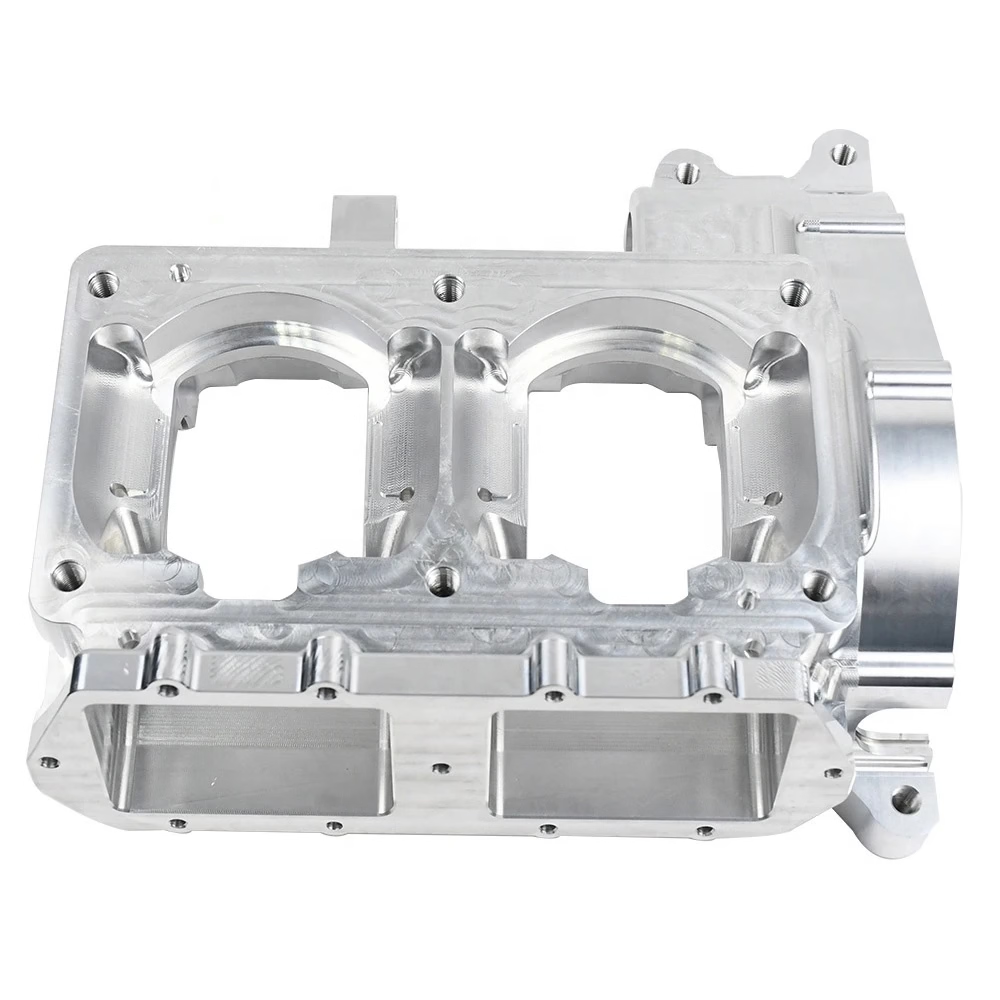
Custom Auto Spare Parts 5 Axis CNC Machining Engine Parts

Automotive and EV

Wear pads, insulators, and fluid-handling parts. The requirement is repeatable dimensions across the run and material traceability. IATF 16949:2016 processes cover it.

  • IATF 16949:2016
  • Run-to-run repeatability
Option 1 (Concise & Direct):

Medical devices

Bushings, guides, and housings where the grade matters as much as the cut. ISO 13485:2016 process controls and full inspection reports on request.

  • ISO 13485:2016
  • Inspection reports
cnc-machining-hdpe

Industrial machinery

Rollers, gears, and low-friction guides. The spec is usually flatness and bore alignment. We hold ±0.005 mm on the features that set the fit.

  • ±0.005 mm
  • Flatness control
low volume manufacturing

Electronics and robotics

Insulating spacers, cam followers, and light structural parts. Below 2% historical late-delivery probability on jobs we schedule.

  • No MOQ
  • Below 2% late risk
FAQs

Questions engineers ask before sending acetal drawings

What tolerance can you actually hold on POM?

±0.005 mm on critical features is realistic in a temperature-controlled shop with sharp tooling and a finishing pass. On long or thin parts, that number tightens or loosens depending on geometry and how the part is held.

If a drawing asks for something tighter, we flag it in the DFM review and explain why. Acetal moves with temperature, so chasing microns on a 100 mm part usually creates scrap, not precision.

Is POM the same as Delrin?

Delrin is a brand of homopolymer acetal. POM covers both homopolymer and copolymer grades, and they behave differently.

Homopolymer is stiffer and slightly stronger; copolymer resists hydrolysis better in warm, wet service. Tell us the service conditions and we will machine the grade that fits.

Can you machine POM with tight flatness on thin plates?

Yes, with the right process. We balance material removal across both faces, use light finishing passes, and hold the part with vacuum or soft jaws instead of hard clamps.

For very thin sections we may rough, let the part relax, then finish. That extra step costs a little time and saves the part.

What finishes work on acetal parts?

Bead blasting, tumbling, and polishing all work. Laser marking is fine for part numbers and traceability, with a minimum character height of 1.5 mm.

Acetal does not anodize or take plating. If you need a conductive or metallic surface, the part should be metal, not POM.

How do you handle moisture and dimensional change?

POM absorbs little moisture compared to nylon, which is one reason it holds tolerance well in humid shops. We still store sheet and bar in a controlled area before machining.

For parts that will see wash-down or long-term wet service, tell us. We will discuss grade and whether a different material is the safer choice.

What is the smallest order you accept?

One part. There is no minimum order quantity, and we run from a single prototype up to 10,000+ part production runs.

Prototype and production work go through the same inspection routine, so the dimensions you approve on the first part carry into the run.

How fast can I get a quote and parts?

Quotation and free DFM analysis come back within 12 hours. Production can start within 24 hours after drawing and material release.

Parts typically ship in 3–5 days once production begins. That depends on part count, finish, and material availability, so we confirm dates in the quote.

Do you sign an NDA before I send drawings?

Yes. Uploads are secure and confidential, and we can sign an NDA on request before you share any files.

If your project needs it, ask first and we will send the agreement. Nothing moves to the shop floor until the paperwork is settled.

Send your acetal drawing, get a quote in 12 hours

Upload the STEP file and tolerances. We review the geometry for DFM, flag anything that will not hold, and quote from one part to 10,000+.

12-hour quote100% inspectionNo minimum order quantityNDA on request

Trusted by engineers and manufacturers worldwide

Tesla Ford Motor Company BYD Auto Denso Magna International Boeing Airbus Medtronic KUKA FANUC