
01
Leg joints go slack after a few hundred steps
A plastic-on-plastic pivot wears, the walking gait drifts and the dog starts to limp. Metal inserts and machined pivot brackets hold the bore size that keeps the linkage timed.
We machine the body shells, chassis brackets, wheel housings and gearbox plates that keep a walking robot toy in alignment after thousands of steps. Tolerances to ±0.005 mm, from one prototype to 10,000 parts.
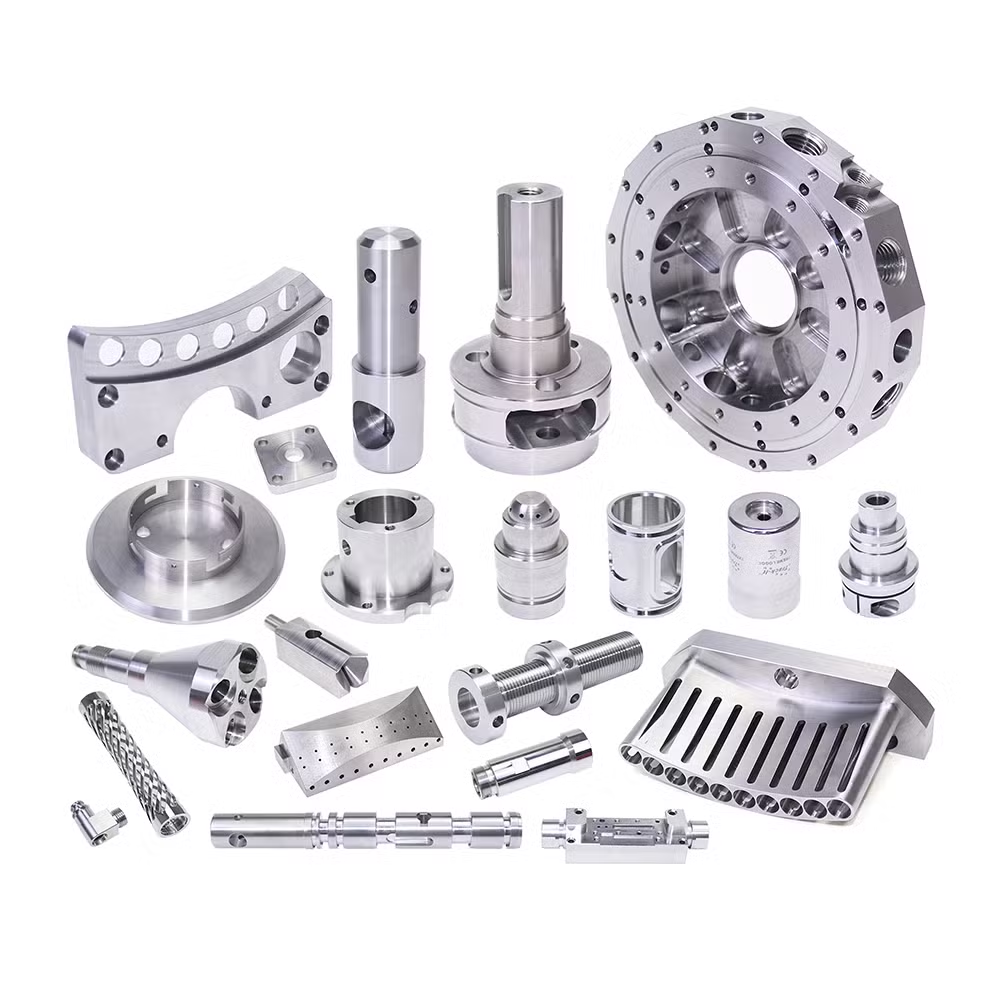
Most of these show up after the prototype looks fine and the first 200 units ship.
A plastic-on-plastic pivot wears, the walking gait drifts and the dog starts to limp. Metal inserts and machined pivot brackets hold the bore size that keeps the linkage timed.
A stamped or printed plate bends under load, gear mesh opens up and you get noise, heat and stripped teeth. Rigid machined plates keep center distances where the design put them.
Two halves that are not matched leave a visible seam and pinch the wire harness. Machined mating faces and dowel pin holes bring the seam gap down to a consistent line.
Oversized bores let the wheel rock, the toy tracks sideways instead of walking straight. Bored and reamed housings hold the axle fit without shims.
Three things decide whether an RC walking dog lasts past the first month.
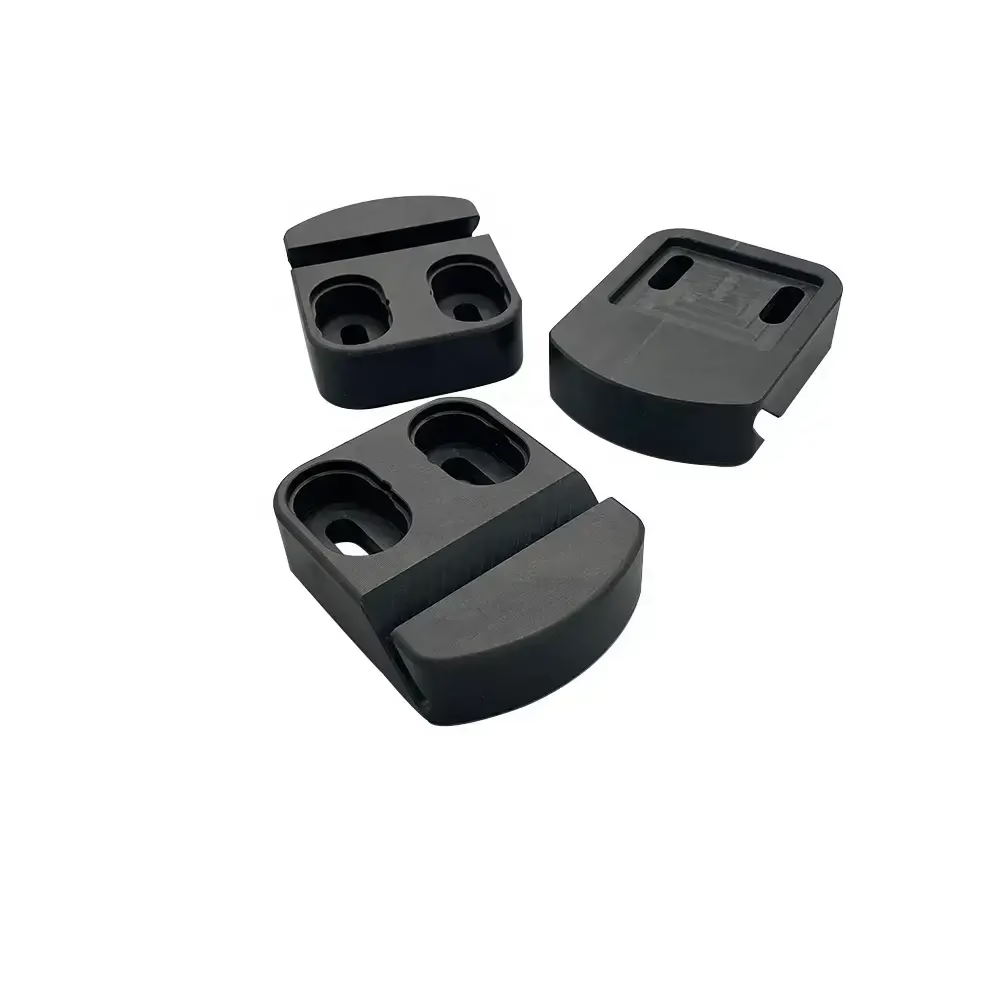
Every leg pivot on a walking toy is a stack of tolerances. If the bore runs 0.05 mm over, the linkage develops backlash that no firmware can compensate for. We bore and ream pivot holes on 4-axis mills so the fit stays repeatable across the run.
For parts that carry both a bore and a mounting face, we cut them in one setup on a 5-axis center. That removes the repositioning error that shows up when a bracket is flipped between operations.
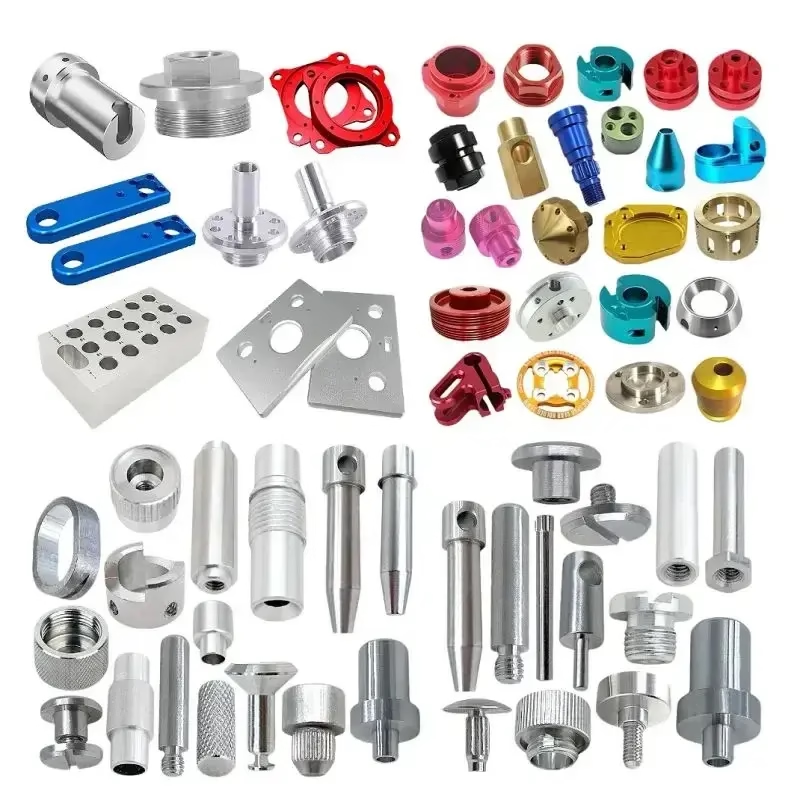
A gearbox plate on a small walking toy is often 2 to 3 mm thick. Below that, servo torque bows the plate and the gear center distance opens up. We pocket the plate instead of thinning the whole face, so stiffness stays where the load path runs.
Wall sections down to 0.5 mm are practical on aluminum and engineering plastics. Tell us the servo torque and the gear module and we will flag any plate that looks too flexible before cutting metal.
Use the printed part to prove the fit. Move to metal where load and wear live.
| Item | 3D printed prototype | CNC machined part |
|---|---|---|
| Tolerance | ±0.2 mm typical | ±0.005 mm achievable |
| Surface finish | Layer lines, Ra 6–12 μm | Ra 0.8–1.6 μm |
| Pivot bore wear | Loose within weeks | Holds fit over the product life |
| Gearbox plate stiffness | Flexes under servo load | Rigid, mesh stays set |
| Best use | Form and fit checks | Load-bearing, moving hardware |
One shop for the metal parts, the housing and the finishing.
Complex body shells and brackets cut in one setup, so bores and faces stay aligned.
Rotary work for cylindrical pivots, wheel hubs and parts with features on several faces.
Flat plates, chassis frames and covers. The cost-effective route for simple geometry.
Shafts, axles and turned inserts combined with milled features in one part.
First articles for fit checks before you commit to a production run.
Anodizing, plating, powder coating, bead blasting and laser marking.
If your part falls outside these numbers, ask before assuming we cannot cut it.
| Parameter | Range |
|---|---|
| Maximum part size | 4,000 mm |
| Large travel | 4,000 × 400 × 150 mm |
| Medium travel | 750 × 1,150 × 550 mm |
| Compact travel | 500 × 500 × 450 mm |
| Rotary table | Ø400 mm |
| Tolerance | ±0.005 mm |
| Fine finish | Ra 0.2–0.8 μm |
| Order size | 1 part to 10,000+ parts |
Founded in 2011. Three wholly-owned plants, 7,600 m², 150 technicians.
Complex geometry cut in one setup, which keeps bores and mounting faces on the same datum.
Held on production parts, not just on a polished sample. Reported in the inspection file.
Send a STEP file and we return pricing plus manufacturability notes within 12 hours.
Once the drawing is frozen, cutting can begin the next working day.
Measured across shipped lots. Every part is inspected before it leaves the floor.
ISO 9001, IATF 16949, ISO 13485 and ISO 27001 cover quality and data handling.
Body shells and leg brackets that stay aligned through a full durability cycle.
Housings with connector cutouts and mounting bosses cut to the PCB drawing.
Gearbox plates and pivot blocks that hold center distance under servo torque.
Anything that carries load or wears against another surface. Pivot bores, gearbox plates, wheel housings and motor mounts are the usual four.
Decorative shells and low-stress covers can stay in plastic. If a part only holds a shape, machining it in aluminum adds cost without adding life.
It depends on the bearing or bushing you press in. A typical press fit runs 0.01 to 0.03 mm interference on a 4 mm bore.
Send the mating part drawing and we will hold the bore to match it rather than guessing from the nominal size.
Usually yes, with edits. Molded shells often have uniform wall thickness and draft that a cutter cannot reach.
Our DFM pass flags undercuts and deep ribs, and we suggest where to add a split line or a machined insert instead.
6061-T6 covers most chassis brackets. It machines cleanly, anodizes well and costs less than 7075.
Use 7075 where you need higher strength at the same section, and 304 stainless for axles and wear surfaces that see constant sliding.
No. We run from a single prototype to 10,000+ part runs on the same equipment.
Setup cost is spread over the order, so unit price drops as quantity rises, but there is no threshold you have to cross to place an order.
Quotation and free DFM analysis come back within 12 hours. Production can begin within 24 hours of drawing approval, and parts ship in 3–5 days.
If you are still comparing concepts, ask about the sample center before committing to a full run.
Yes. Uploads are handled as confidential and we sign an NDA on request.
ISO 27001:2022 covers how we store and control your files internally.
Parts are 100% inspected before shipment. Raw material checks, in-process monitoring and final inspection records are available on request.
Ask for the inspection report on the quote so it is included from the first article.
Tell us the material, the tolerance band and the quantity. We reply with pricing and DFM notes, no minimum order.
12-hour quote100% inspectionNo MOQNDA on request
Trusted by engineers and manufacturers worldwide










Upload your 3D model or 2D drawing and get a quotation with a free DFM analysis. Maximum processing size 4,000 mm.
CNC Metals 13 grades
CNC Plastics 10 grades
Machines & processes 12 options
Surface & post-processing 10 options
Material: not selected Machine: not selected Post-process: not selected