GreatLight CNC Machining Factory logo
CNC Machining
Rapid Prototyping
Materials
Industries
News
About GL

Get Instant Quote

Robotics & Automation

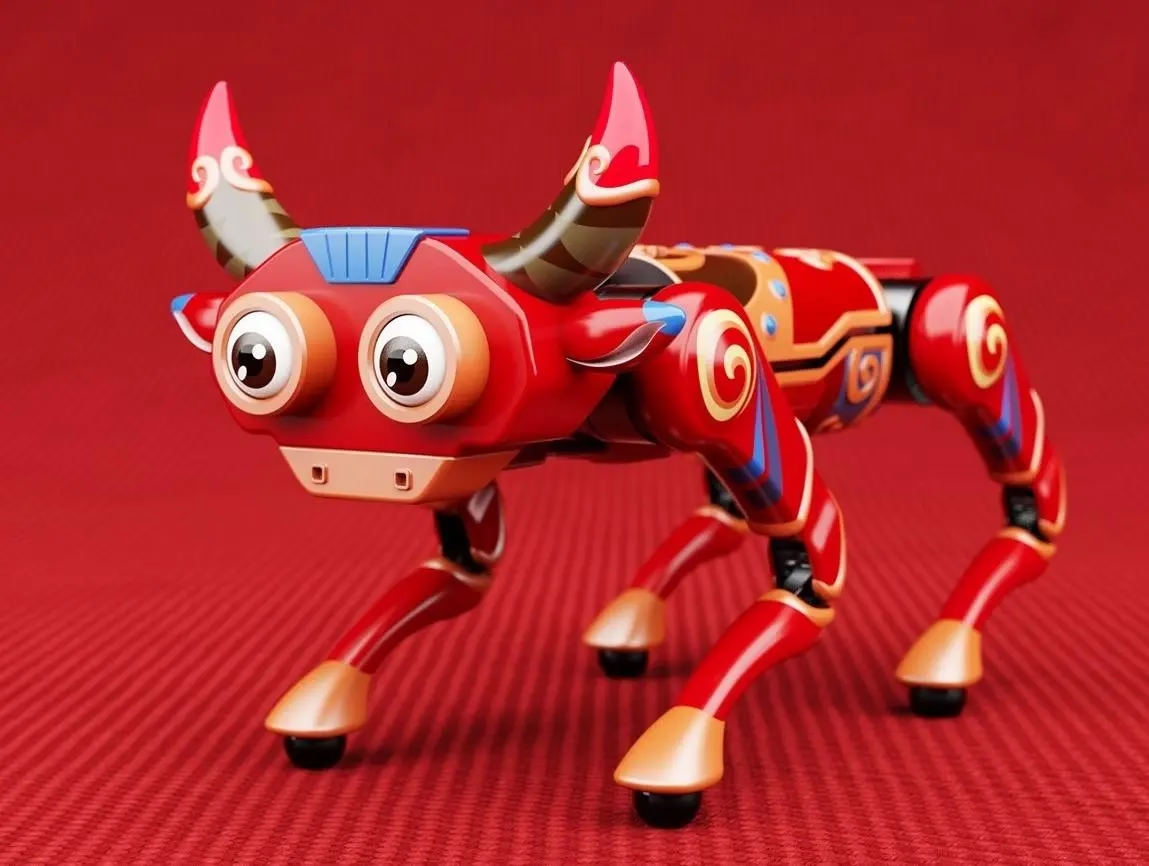
CNC Machining AI Robotic Dog Hardware

Frames, joint housings and limb links machined to ±0.005 mm, so servo bores and bearing seats line up at assembly. Send your STEP files for a quote and free DFM review within 12 hours.

±0.005 mm tolerance16 five-axis centersNo MOQNDA on request
option-1-concise-seo-focused
±0.005 mmAchievable machining tolerance
16Simultaneous 5-axis centers
4,000 mmMaximum part size
12 hQuote and DFM analysis
Common Problems

Where Robotic Dog Builds Go Wrong

Most failures on a quadruped platform show up as one of these four.

01

Do joint bores line up after anodizing?

A hip housing that measures true in bare aluminum can shift once the coating builds 20–25 μm per surface. If the drawing does not account for that, the bearing bore closes up and the servo fights the frame on every step. We call out coating allowances during DFM review, before the first chip is cut.

02

Is your leg link too thin to hold a bearing seat?

Weight targets push designers toward 3 mm walls and hollow sections. Thin walls deflect under cutting load, so the bore comes out tapered and the bearing preload is wrong from day one. Wall thickness and fixturing get reviewed together, not after the first article fails.

03

Does the frame twist under a 4-leg stance?

A chassis that is flat on the table can warp two weeks later when residual stress releases. The robot then walks with one foot loaded heavier than the others, and gait tuning never fully fixes it. Stress-relieved stock and sequenced roughing prevent most of this.

04

Are you re-machining prototypes every design cycle?

Each gait change moves the hip mount, and a new revision means new geometry. If your supplier quotes a fresh setup and tooling every time, iteration slows to weeks per loop. Machining from stock keeps revision cost low, because nothing is cut into a mold.

How We Machine It

One Setup for the Surfaces That Matter

Joint geometry is the whole game on a quadruped.

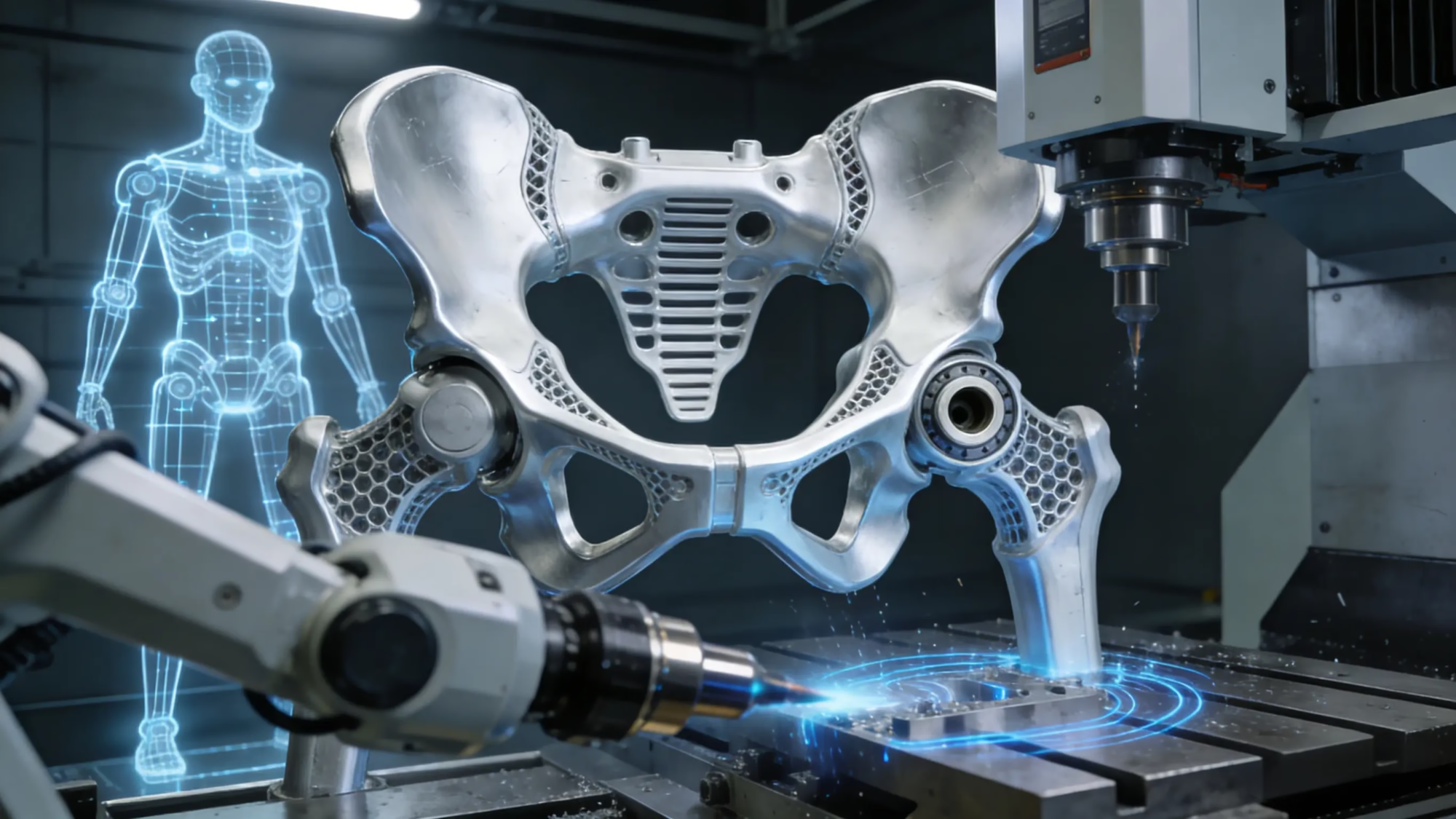
How Five-Axis Linkage Forges the Skeleton of Humanoid Robots
Setup Strategy

Datums on a machined surface, not on a casting skin

A robotic dog leg is a chain of tolerances. Hip bore, knee bore and foot mount all stack, and the servo has to hold position through that stack. Our approach is to establish datums on machined faces in the first operation, then carry those datums through every later setup. Bores that share an axis get cut in the same operation whenever the part fits the work envelope.

For housings that cannot be reached from one side, we use 5-axis positioning instead of re-fixturing. That removes the stacked error you get from flipping a part three times. On the 16 simultaneous 5-axis centers we run, a typical hip housing holds ±0.005 mm on bore position and Ra 0.8–1.6 μm on the bearing seat.

  • 1
    Datum transferMachined datums carried through every operation, not re-picked from raw stock.
  • 2
    Single-setup boresCoaxial bores cut in one operation where part size allows.
  • 3
    5-axis positioningAngled faces reached without flipping the part.

Get Instant Quote

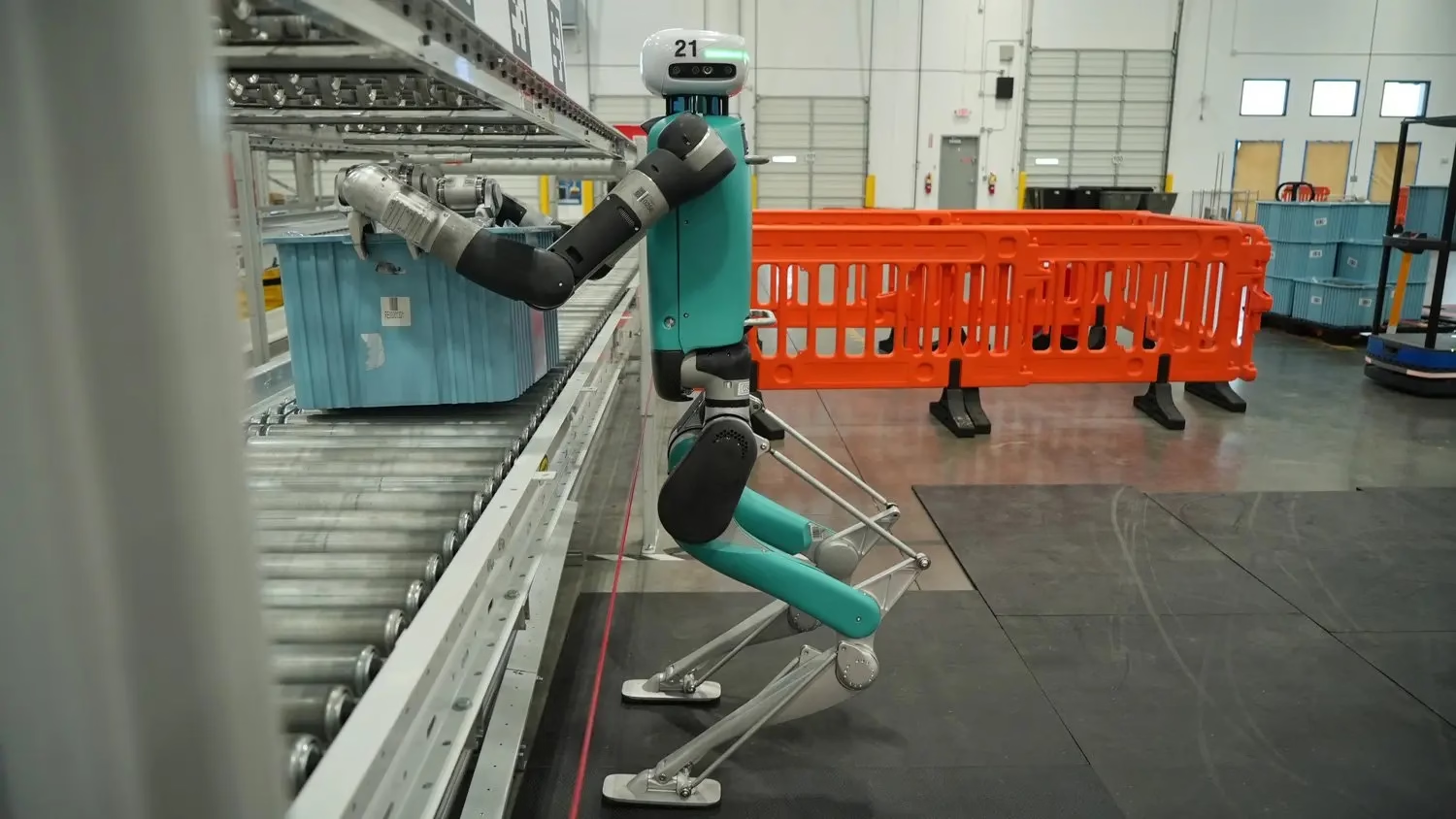
Agility Robotics Humanoid Robot
Weight and Stiffness

Pockets that cut mass without cutting rigidity

Every gram in the leg is a gram the servo has to accelerate and stop. Designers want pockets; machinists want wall thickness. The compromise sits in the rib layout. We keep ribs along the bending axis and thin the webs that carry little load, then check the result against your stiffness target rather than a blanket minimum wall rule.

Magnesium AZ31B and AZ91D cut weight further, but they machine differently from aluminum. Chips are fine, heat builds fast, and magnesium dust needs handling. We run these materials with the right tooling and coolant discipline, and we tell you when a part is better left in 7075 instead.

  • 1
    Rib directionRibs kept along the bending axis so stiffness survives the pocketing.
  • 2
    MagnesiumAZ31B and AZ91D run with fine-chip handling and heat control.
  • 3
    Material trade-offWe say when 7075 beats magnesium for a given link.

Talk to an Engineer

Part Family Guide

Which Process Fits Which Robotic Dog Part

Use this to decide where machining pays off and where it does not.

PartRecommended processWhy
Hip and knee housings5-axis machiningCoaxial bores in one setup
Limb links and shin tubes5-axis or 4-axisPockets plus bore alignment
Chassis plates3-axis machiningFlat parts, tight thickness control
Foot pads and end effectors3-axis or turningSimple geometry, wear surfaces
Battery and PCB enclosures3-axis plus sheet metalMixed thin-wall and flat panels
Gearbox output shaftsMill-turnTurning and cross-features, one setup
Large body shells5-axis up to 4,000 mmAngled faces without re-fixturing
Low-stress covers3D printing or vacuum castingMachining adds cost with no gain
What We Run

Machining Services for Quadruped Platforms

Six processes cover most robotic dog hardware.

01

5-Axis CNC Machining

Hip and knee housings with angled faces and coaxial bores. 16 simultaneous 5-axis centers, up to 4,000 mm.

02

4-Axis CNC Machining

Limb links and cylindrical parts that need work on more than one face. 12 four-axis mills in the shop.

03

3-Axis CNC Machining

Chassis plates, foot pads and mounting brackets. 27 three-axis machines handle flat, tight-thickness parts.

04

CNC Milling & Turning

Motor shafts, gearbox outputs and threaded inserts. 16 mill-turn centers combine turning with cross-features.

05

Rapid Prototyping

First-article housings and fit-check parts before you commit to a run. No minimum order quantity.

06

Surface Finishing

Anodizing, plating, bead blasting and laser marking, with coating allowances built into the machining dimensions.

Capability Range

Machine Capacity and Tolerance Window

Numbers you can check against your drawing.

ItemSpecificationNotes
General tolerance±0.005 mm (±0.0002 in)On critical bores and seats
Fine finishRa 0.2–0.8 μmBearing and seal surfaces
Standard finishRa 0.8–1.6 μmGeneral mating faces
As-machined finishRa 1.6–3.2 μmNon-critical surfaces
Maximum part size4,000 mmLong chassis rails and body shells
Rotary tableØ400 mmRound and index features
Qualification rate99.99%Parts passing final inspection
Inspection100% before shipmentReports on request
Why GreatLight

What You Get on Every Order

Six reasons engineers keep sending us robotic dog parts.

±0.005 mm

Tolerance held on bores

The number that decides whether a bearing seat runs true. Verified with in-process monitoring, not only at final inspection.

16

Five-axis centers

Enough simultaneous capacity to run your revision change without waiting behind someone else's job.

12 h

Quote and DFM

You get a price and a manufacturability review in the same pass, so the feedback lands before you order.

3–5 days

Parts ship

Production can start within 24 hours of a released order. Historical late-delivery probability sits below 2%.

0 MOQ

From one to 10,000+

One prototype for a gait test, or a full production run. The pricing structure changes, the setup does not.

ISO 27001

Design files protected

Uploads are secure and confidential. An NDA is available on request before you send any geometry.

15 yearsIn business since 2011
7,600 m²Manufacturing space
150Technicians on staff
3Wholly-owned plants
Industry Results

What Robotics Programs Require, and What We Deliver

Unitree G1 Humanoid Robot Compact Powerhouse for Robotics Innovation

Legged and humanoid platforms

Joint housings and limb links where servo bore position drives gait repeatability.

  • ±0.005 mm bore position
  • Ra 0.8–1.6 μm seats
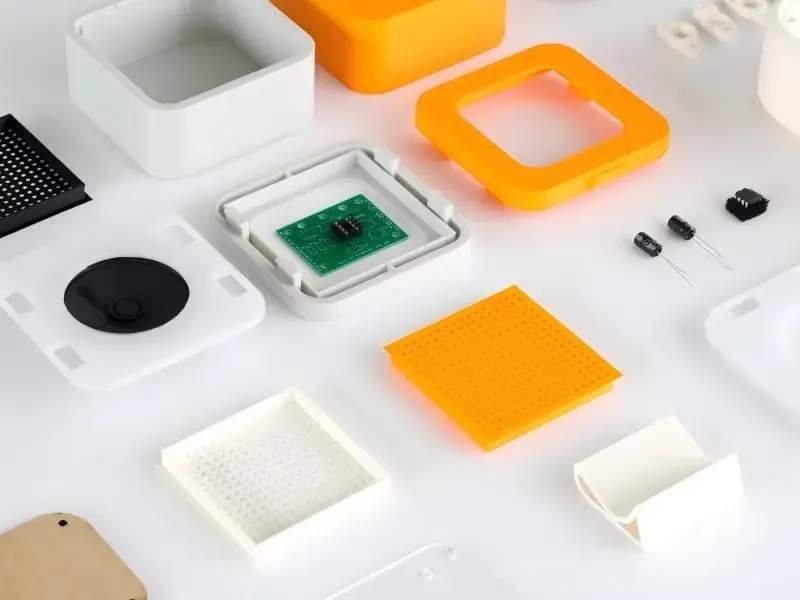
electronic-product-housing-prototype

Electronic housings and sensor mounts

Enclosures for control boards, IMUs and battery packs that must seal and still dissipate heat.

  • Wall thickness control
  • Anodized or plated
Comprehensive Guide to Buying Humanoid Robot Key Considerations and Brand Analysis

Prototype to pilot build

Design revisions between gait tests, machined from stock so no tooling is stranded.

  • No MOQ
  • Revision-friendly
FAQs

Questions Engineers Ask Before Ordering

What tolerance can you actually hold on a hip housing?

±0.005 mm on bore position and bearing seats, with surface finish down to Ra 0.2–0.8 μm where the drawing calls for it.

General non-critical faces sit at Ra 1.6–3.2 μm. If a feature does not need tight tolerance, we say so and leave it looser to keep cost down.

Which aluminum should I pick for a robotic dog frame?

7075 gives the best stiffness-to-weight ratio and is the usual choice for limb links and stressed housings. 6061-T6 machines more cleanly and costs less, which suits chassis plates and covers.

If mass is the hard constraint, magnesium AZ31B or AZ91D cuts weight further. The trade-off is corrosion protection and chip handling, both of which we manage in-house.

Do you handle anodizing allowances on the drawing?

Yes. Hardcoat and standard anodizing build 20–25 μm per surface, which closes a bore by 40–50 μm on diameter.

During DFM review we flag any bore or thread that would fall out of tolerance after coating and adjust the pre-plate dimension before machining starts.

How small a batch can you run?

There is no minimum order quantity. One prototype and a 10,000+ part run both go through the same shop.

For single prototypes we machine from stock, so a design change costs you a new setup, not a new mold.

How fast can I get parts after releasing an order?

Quotation and free DFM analysis come back within 12 hours. Production can start within 24 hours of release, and parts typically ship in 3–5 days.

Historical late-delivery probability is below 2%. For pilot builds with a fixed test date, tell us the date at quote stage and we plan the schedule around it.

What do you need to quote a robotic dog part?

A STEP or IGES file, the material, the critical tolerances, and the surface finish. A 2D drawing helps where GD&T matters.

If you only have a rough model, send it anyway. We review manufacturability and tell you which features will be hard to hold before you commit.

Will my design files stay confidential?

Uploads are secure and confidential, and an NDA is available on request before you send geometry.

We hold ISO 27001:2022 for information security, alongside ISO 9001:2015, IATF 16949:2016 and ISO 13485:2016.

Can you inspect and report on the parts you ship?

Every shipment gets 100% inspection: raw material check, in-process monitoring, and final inspection before it leaves.

Inspection reports are available on request. Qualification rate across shipped parts is 99.99%.

Send Your Robotic Dog Parts for a Quote

Upload a STEP file and get a price plus a free DFM review within 12 hours. No minimum order quantity, NDA on request.

12-hour quote100% inspectionNo MOQ±0.005 mm

Trusted by engineers and manufacturers worldwide

Tesla Ford Motor Company BYD Auto Denso Magna International Boeing Airbus Medtronic KUKA FANUC