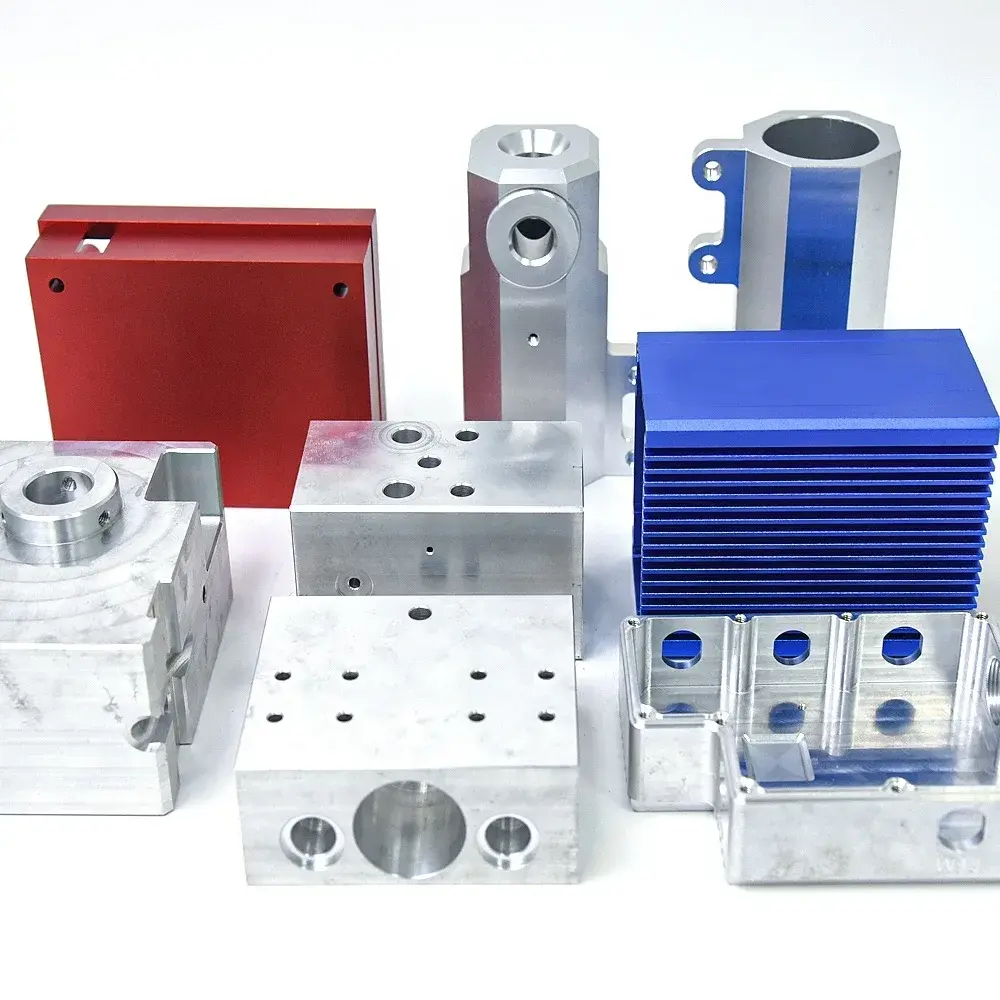
127 Sets High-Precision CNC Lathes
15 Years of Experience

Can You Use Set Screw Pinions On A CNC Machine?

Choosing Drive Components: Can Set Screw Pinions Be Used on CNC Machines? Introduction This FAQ addresses a critical gear selection question for CNC technicians, machine designers, and maintenance engineers: whether set screw pinions are suitable for CNC rack-and-pinion or gear drive systems. We clear confusion, analyze performance realities under demanding CNC conditions, and provide actionable […]

CNC Content Navigation

Choosing Drive Components: Can Set Screw Pinions Be Used on CNC Machines?

Introduction

This FAQ addresses a critical gear selection question for CNC technicians, machine designers, and maintenance engineers: whether set screw pinions are suitable for CNC rack-and-pinion or gear drive systems. We clear confusion, analyze performance realities under demanding CNC conditions, and provide actionable recommendations based on engineering principles. Focus areas include torque capacity, precision retention, backlash control, and maintenance – directly impacting machine accuracy and uptime.


Section 1: Basics of Set Screw Pinions and CNC Applications

Q: What exactly is a set screw pinion, and why consider it for CNC?

A: A set screw pinion is a cylindrical gear (pinion) secured to a motor shaft using one or more hardened set screws tightened against a flat spot on the shaft.

  • Explanation: Set screws create friction-based clamping force. They’re common in light-duty applications due to their simple design and low initial cost. In CNC contexts, they might be considered for:

    • Very low-torque axes (e.g., auxiliary tool changers, simple positioning arms).
    • Prototyping setups requiring quick component changes.
  • Action: Verify torque and load requirements meticulously. If considering for any CNC axis, calculate the maximum tangential force and torsional load. Use manufacturer charts correlating set screw size/material to maximum recommended torque (e.g., a hardened 5mm socket set screw transmits significantly less torque than an equal-sized key). (Refer to our torque transmission comparison guide here).

Q: How does CNC motion control differ from other machinery regarding gearing demands?

A: CNC equipment requires continuous high-dynamic motion, maintaining micron-level positioning under fluctuating loads without backlash – far exceeding needs of conveyor drives or slow-speed mechanisms.

  • Explanation: Servo motors accelerate/decelerate rapidly. Set screw pinions introduce slippage risk during these transitions due to micro-movements ("creep") under reversing loads or vibrations. Backlash control involves precise, immutable gear-tooth engagement, compromised if the pinion shifts radially or axially on the shaft.
  • Action: Audit CNC processes for rapid reversals, impact loads, or vibration sources. These factors drastically reduce set screw reliability compared to constant-torque applications.

Q: Do set screws offer enough rigidity for CNC ball screws vs. rack-and-pinion drives?

A: Rigidity demands vary: Ball screws demand torsional rigidity at the pinion, while rack-and-pinion requires both torsional rigidity AND radial concentricity for smooth engagement. Set screws struggle with both, especially radial true-tightening.

  • Explanation: Poor concentricity in rack systems causes uneven tooth wear, vibration, and amplified backlash. Set screws seldom achieve the sub-0.01mm radial runout needed for precision racks. Misalignment accelerates wear cycles exponentially. (Insert Rack-and-Pinion Wear Pattern Infographic Here).
  • Action: For ball screws, prioritize torsional holding torque. For rack drives, strictly require pinions ground onto shafts or keyed/cold-clamped types where concentricity is integral.


Section 2: Performance Limits in CNC Environments

Q: Will set screws hold under CNC machine accelerations and reversals?

A: Set screw pinions commonly slip under high peak torque or reversing loads occurring in CNC rapid traverses (G00), contouring, and directional changes.

  • Explanation: Kinetic forces during deceleration generate immense inertial torque opposing motor torque. Set screws rely solely on friction against shaft flats – a design vulnerable to progressive loosening ("fretting") under repeated micro-movements caused by unequal clamping. Industry standards like ISO 2320 specify clamp load equations showing torque capacity degradation factors (>30%) for set-screws vs. positive locks.
  • Action: Run diagnostics detecting torque spikes via servo current monitoring. If spikes exceed 50% of motor peak torque capacity, set screws pose high failure risk. Use shafts with precision-ground flats (never hand-filed) and apply anaerobic thread-locker.

Q: How does backlash manifest with set screw pinions vs. rigidly-mounted types?

A: Set screws introduce secondary failure: pinion slipping rotationally on shaft leads to undetectable, creeping backlash increase, independent of primary gear tooth engagement tolerances. Its unpredictability damages part precision.

  • Explanation: While backlash compensation exists in CNC controllers, it assumes stable backlash value. Slippage causes uncontrolled spatial drift between motor encoder feedback and actual machine axis position. Early-stage slippage manifests as erratic servo tuning glitches or dimensional drift.
  • Action: Monitor program path tolerance deviations. Perform routine backlash checks using dial indicators not only at the load-but also comparing shaft/pinion alignment marks. Sudden changes = suspicion of slippage!

Q: Is premature wear particularly problematic in CNC contexts?

A: Yes — Set screw installation requires clamping pressure concentrating stress locally on shaft subsurface layers. This creates a failure-prone initiation point under CNC cyclic loads.

  • Explanation: Hardened set screws indent softer shaft steels microscopically. Continuous reversing torque exacerbates indenting, creating cracks propagating radially under alternating von-Mises stresses. For shafts subjected to millions of cycles daily, this drastically accelerates fatigue failures. Design standards (AGMA 2003-B97) prioritize uniform clamping distributions.
  • Action: Specify shafts hardened to 40-45 HRC minimum where indent reduces fatigue resistance. Inspect shafts/pinion bores quarterly for material flow or visible witness marks indicating slippage.


Section 3: Installation & Maintenance Strategies For Risk Mitigation

Q: Can proper installation make set screw pinions usable on CNC?

A: Installation can maximize viability for lower-load axes if executed meticulously following industrial protocols. Never use shortcuts.

  • Explanation: Strictly adhere to practices like:

    • Precision shaft grinding: Flat spot depth must be >1/2 screw diameter and centered. Surface finish ≤ Ra 3.2 µm.
    • Tightening sequence: Use calibrated screw torque wrench progressively tightening opposing screws evenly to spec.

CNC Experts

Picture of JinShui Chen

JinShui Chen

Rapid Prototyping & Rapid Manufacturing Expert

Specialize in CNC machining, 3D printing, urethane casting, rapid tooling, injection molding, metal casting, sheet metal and extrusion

CNC Recent Posts

CNC News

Common CNC Machining Products

Welcome to GreatLight Metal,Maximum Processing Size 4,000 mm

Precision Machining CNC Quote Online

Loading file

Upload Click here to upload or drag and drop your model to the canvas.

The model is too large and has been resized to fit in the printer's build tray. [Hide]

The model is too large to fit in the printer's build tray. [Hide]

The model is too large, a fitting printer is selected. [Hide]

The model is too small and has been upscaled. [Hide]

Warning: The selected printer can not print in full color [Hide]

Warning: obj models with multiple meshes are not yet supported [Hide]

Warning: Unsupported DXF entity  [Hide]

Warning: could not arrange models [Hide]


File Unit:      
Scale:
%
L × W × H:
X: × Y: × Z:  cm 
Rotation:
X: ° Y: °  

	
⚡ Instant Quote for Precision Manufacturing

Submit your design files (STEP/IGES/DWG) and receive a competitive quote within 1 hour, backed by ISO 9001-certified quality assurance.

📋 How It Works

  1. Upload & SpecifyShare your 3D model and select materials (Aluminum/Stainless Steel/Titanium/PEEK), tolerances (±0.002mm), and surface treatments.

  2. AI-Powered AnalysisOur system calculates optimal machining strategy and cost based on 10+ years of automotive/aerospace data.

  3. Review & ConfirmGet a detailed breakdown including:
    - Volume pricing tiers (1-10,000+ units)
    - Lead time (3-7 days standard)
    - DFM feedback for cost optimization

Unit Price: 

Loading price
5 Axis CNC Machining Equipment
4 Axis CNC Machining Equipment
3 Axis CNC Machining Equipment
CNC Milling & Turning Equipment
Prototype and Short-Run Injection Moldings Exact plastic material as final design
Volume Metal Die Casting Services - Precision Cast Parts
Bridge the Gap From Prototype to Production – Global delivery in 10 days or less
Custom high-precision sheet metal prototypes and parts, as fast as 5 days.
Custom Online 3D Printing Services
Design Best Processing Method According To 3D Drawings
Alloys Aluminum 6061, 6061-T6 Aluminum 2024 Aluminum 5052 Aluminum 5083 Aluminum 6063 Aluminum 6082 Aluminum 7075, 7075-T6 Aluminum ADC12 (A380)
Alloys Brass C27400 Brass C28000 Brass C36000
Alloys Stainless Steel SUS201 Stainless Steel SUS303 Stainless Steel SUS 304 Stainless Steel SUS316 Stainless Steel SUS316L Stainless Steel SUS420 Stainless Steel SUS430 Stainless Steel SUS431 Stainless Steel SUS440C Stainless Steel SUS630/17-4PH Stainless Steel AISI 304
Inconel718
Carbon Fiber
Tool Steel
Mold Steel
Alloys Titanium Alloy TA1 Titanium Alloy TA2 Titanium Alloy TC4/Ti-6Al 4V
Alloys Steel 1018, 1020, 1025, 1045, 1215, 4130, 4140, 4340, 5140, A36 Die steel Alloy steel Chisel tool steel Spring steel High speed steel Cold rolled steel Bearing steel SPCC
Alloys Copper C101(T2) Copper C103(T1) Copper C103(TU2) Copper C110(TU0) Beryllium Copper
Alloys Magnesium Alloy AZ31B Magnesium Alloy AZ91D
Low Carbon Steel
Alloys Magnesium Alloy AZ31B Magnesium Alloy AZ91D
ABS Beige(Natural) ABS Black ABS Black Antistatic ABS Milky White ABS+PC Black ABS+PC White
PC Black PC Transparent PC White PC Yellowish White PC+GF30 Black
PMMA Black PMMA Transparent PMMA White
PA(Nylon) Blue PA6 (Nylon)+GF15 Black PA6 (Nylon)+GF30 Black PA66 (Nylon) Beige(Natural) PA66 (Nylon) Black
PE Black PE White
PEEK Beige(Natural) PEEK Black
PP Black PP White PP+GF30 Black
HDPE Black HDPE White
HIPS Board White
LDPE White
This is a finish of applying powdered paint to the components and then baking it in an oven, which results in a stronger, more wear- and corrosion-resistant layer that is more durable than traditional painting methods.
No coating required, product’s natural color!
This is a finish of applying powdered paint to the components and then baking it in an oven, which results in a stronger, more wear- and corrosion-resistant layer that is more durable than traditional painting methods.
This finishing option with the shortest turnaround time. Parts have visible tool marks and potentially sharp edges and burrs, which can be removed upon request.
Sand blasting uses pressurized sand or other media to clean and texture the surface, creating a uniform, matte finish.
Polishing is the process of creating a smooth and shiny surface by rubbing it or by applying a chemical treatmen
A brushed finish creates a unidirectional satin texture, reducing the visibility of marks and scratches on the surface.
Anodizing increases corrosion resistance and wear properties, while allowing for color dyeing, ideal for aluminum parts.
Black oxide is a conversion coating that is used on steels to improve corrosion resistance and minimize light reflection.
Electroplating bonds a thin metal layer onto parts, improving wear resistance, corrosion resistance, and surface conductivity.
This is a finish of applying powdered paint to the components and then baking it in an oven, which results in a stronger, more wear- and corrosion-resistant layer that is more durable than traditional painting methods.
Please provide additional text description for other surface treatment requirements!
Material
Material
  • CNC Metals
    • Aluminum
    • Brass
    • Stainless steel
    • Inconel718
    • Carbon Fiber
    • Tool Steel
    • Mold Steel
    • Titanium
    • Alloy Steel
    • Copper
    • Bronze
    • Low Carbon Steel
    • Magnesium
  • CNC Plastics
    • ABS
    • PC
    • PMMA (Acrylic)
    • PA (Nylon)
    • PE
    • PEEK
    • PP
    • HDPE
    • HIPS
    • LDPE
Printer
Printer
  • CNC Metals
    • 5 Axis CNC Machining
    • 4 Axis CNC Machining
    • 3 Axis CNC Machining
    • CNC Milling & Turning
    • Rapid Tooling
    • Metal Die Casting
    • Vacuum Casting
    • Sheet Metal Fabrication
    • SLA 3D Printing
    • SLS 3D Printing
    • SLM 3D Printing
  • Rapid Prototyping
    • Design Best Processing Method According To 3D Drawings
Post-processing
Post-processing
  • As Machined(Product’s natural color)
  • Sand Blasting
  • Polishing
  • Brushed Finish
  • Anodizing
  • Black Oxide
  • Electroplating
  • Paint Coating
  • Powder Coating
  • Other surface treatment requirements
Finalize
The world's first CNC machining center that dares to provide free samples!

Free for first product valued at less than $200. (Background check required)

precision machining cnc quote online

15 Years CNC Machining Services

When you’re ready to start your next project, simply upload your 3D CAD design files, and our engineers will get back to you with a quote as soon as possible.
Scroll to Top

ISO 9001 Certificate

ISO 9001 is defined as the internationally recognized standard for Quality Management Systems (QMS). It is by far the most mature quality framework in the world. More than 1 million certificates were issued to organizations in 178 countries. ISO 9001 sets standards not only for the quality management system, but also for the overall management system. It helps organizations achieve success by improving customer satisfaction, employee motivation, and continuous improvement. * The ISO certificate is issued in the name of FS.com LIMITED and applied to all the products sold on FS website.

greatlight metal iso 9001 certification successfully renewed
GB T 19001-2016 IS09001-2015
✅ iso 9001:2015
greatlight metal iso 9001 certification successfully renewed zh

IATF 16949 certificate

IATF 16949 is an internationally recognized Quality Management System (QMS) standard specifically for the automotive industry and engine hardware parts production quality management system certification. It is based on ISO 9001 and adds specific requirements related to the production and service of automotive and engine hardware parts. Its goal is to improve quality, streamline processes, and reduce variation and waste in the automotive and engine hardware parts supply chain.

automotive industry quality management system certification 01
Certification of Production Quality Management System for Engine Hardware Parts Engine Hardware Associated Parts
automotive industry quality management system certification 00
发动机五金零配件的生产质量管理体系认证

ISO 27001 certificate

ISO/IEC 27001 is an international standard for managing and processing information security. This standard is jointly developed by the International Organization for Standardization (ISO) and the International Electrotechnical Commission (IEC). It sets out requirements for establishing, implementing, maintaining, and continually improving an information security management system (ISMS). Ensuring the confidentiality, integrity, and availability of organizational information assets, obtaining an ISO 27001 certificate means that the enterprise has passed the audit conducted by a certification body, proving that its information security management system has met the requirements of the international standard.

greatlight metal technology co., ltd has obtained multiple certifications (1)
greatlight metal technology co., ltd has obtained multiple certifications (2)

ISO 13485 certificate

ISO 13485 is an internationally recognized standard for Quality Management Systems (QMS) specifically tailored for the medical device industry. It outlines the requirements for organizations involved in the design, development, production, installation, and servicing of medical devices, ensuring they consistently meet regulatory requirements and customer needs. Essentially, it's a framework for medical device companies to build and maintain robust QMS processes, ultimately enhancing patient safety and device quality.

greatlight metal technology co., ltd has obtained multiple certifications (3)
greatlight metal technology co., ltd has obtained multiple certifications (4)

Get The Best Price

Send drawings and detailed requirements via Email:info@glcncmachining.com
Or Fill Out The Contact Form Below:

All uploads are secure and confidential.