

The Value of Manual Machining Skills in the CNC Era: A Comprehensive Guide for Precision Parts Manufacturing
In the age of advanced automation, a common question arises among engineers and manufacturers: Is manual machining experience still relevant when working with CNC technology? While computer-controlled systems dominate modern production, understanding traditional machining principles remains crucial for achieving optimal results in precision parts manufacturing. This article explores why manual machining knowledge continues to serve as a foundational element for CNC success, particularly in high-stakes industries like aerospace, automotive, and medical device production.
Why Manual Machining Experience Matters for CNC Operators
1. Fundamental Understanding of Machining Physics
Manual machining forces operators to develop an intuitive grasp of critical manufacturing principles:
Cutting forces and tool deflection: Understanding how feed rates, spindle speeds, and material properties interact to influence surface finish and dimensional accuracy
Thermal dynamics: Recognizing how heat generation affects material behavior and part geometry during machining
Chip formation: Identifying optimal chip thickness and evacuation strategies to prevent tool wear and workpiece damage
These insights directly translate to CNC programming, where parameters must be carefully calibrated to achieve desired outcomes. Without this foundational knowledge, even sophisticated five-axis machines may produce subpar results due to improperly optimized cutting conditions.
2. Problem-Solving Skills Development
Manual machining requires operators to:
Diagnose and correct issues in real-time (e.g., chatter, poor surface finish)
Make quick adjustments to tooling, feeds, and speeds
Develop creative solutions for complex geometries without relying on automated toolpaths
These problem-solving abilities become invaluable when:
Programming complex five-axis contours
Troubleshooting CNC machine errors
Optimizing production processes for efficiency and quality
3. Quality Control and Inspection Proficiency
Manual machinists develop keen eyes for:
Dimensional accuracy through direct measurement with calipers, micrometers, and gauge blocks
Surface finish evaluation using visual and tactile inspection methods
Geometric tolerance verification without relying solely on CNC probe systems
This attention to detail ensures that CNC-produced parts meet stringent quality standards, particularly in industries requiring ISO 9001:2015, IATF 16949, or ISO 13485 compliance.
The Synergy Between Manual and CNC Machining
While CNC technology offers unparalleled precision and repeatability, manual machining skills enhance operational effectiveness in several ways:
1. Process Optimization
Experienced manual machinists can:
Identify potential issues in CAD models before CNC programming begins
Suggest design modifications to simplify machining operations
Develop efficient fixturing strategies for complex parts
2. First-Article Validation
Before running full production batches, manual machining techniques can be used to:
Create prototype parts for functional testing
Verify critical dimensions on sample components
Adjust CNC programs based on real-world feedback
3. Maintenance and Troubleshooting
Manual machining knowledge aids in:
Preventive maintenance of CNC equipment (e.g., spindle alignment, way lubrication)
Diagnosing mechanical issues (e.g., backlash, tool holder wear)
Performing emergency repairs to minimize downtime
Case Study: Aerospace Component Manufacturing
When producing titanium alloy brackets for satellite applications, GreatLight CNC Machining Factory combines manual and CNC expertise:
Manual Preparation:
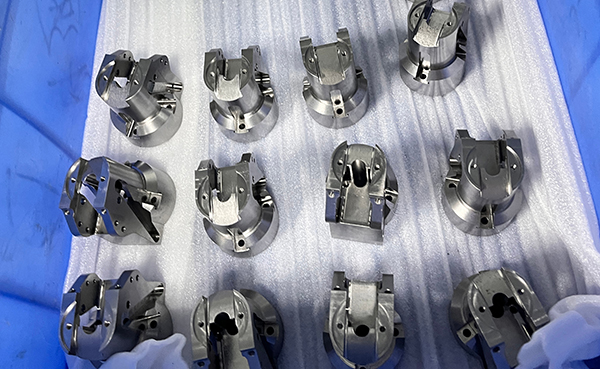
Skilled technicians use manual milling to create precise reference surfaces on raw stock
Manual drilling establishes accurate hole locations for CNC operations
CNC Finishing:
Five-axis machining completes complex contours with ±0.001mm tolerance
In-process probing verifies dimensional accuracy at each stage
Quality Assurance:
Manual inspection with coordinate measuring machines (CMM) confirms compliance with AS9100D aerospace standards
Experienced machinists perform visual checks for surface integrity
This hybrid approach ensures that even the most demanding components meet stringent requirements while maintaining production efficiency.
When Manual Machining Still Outperforms CNC
Despite CNC’s advantages, manual machining remains superior for certain applications:
| Scenario | Manual Machining Advantage |
|---|---|
| One-off prototype parts | Faster setup for simple geometries |
| Repair and modification | Flexible adaptation to existing components |
| Low-volume production | Lower cost for small batch sizes |
| Specialized tooling | Custom fabrication of unique fixtures |
| Emergency replacements | Immediate production without programming delays |
Conclusion: The Ideal Manufacturing Partner Combines Both Skill Sets
While CNC technology represents the future of precision manufacturing, manual machining expertise remains an essential component of operational excellence. At GreatLight CNC Machining Factory, we leverage decades of combined manual and CNC experience to deliver:
Unmatched precision: Five-axis machining with ±0.001mm tolerance
Comprehensive capabilities: From 3D printing to vacuum casting and surface finishing
Industry-specific compliance: ISO 9001, IATF 16949, ISO 13485 certifications
Rapid prototyping: Days instead of weeks for complex parts
Whether you require custom components for humanoid robots, automotive engines, or aerospace systems, our integrated approach ensures optimal results. Choose a partner with real operational capabilities—not just paper qualifications—for your next precision machining project.
Frequently Asked Questions (FAQ)
Q1: Can CNC machines completely replace manual machining?
While CNC technology handles most production tasks more efficiently, manual machining remains essential for:
Prototyping and one-off parts
Repair and modification work
Specialized tooling fabrication
Situations requiring immediate adjustments without programming
Q2: How does manual experience improve CNC programming?
Manual machinists bring practical insights about:
Optimal cutting parameters for different materials
Tool selection based on geometry and finish requirements
Workholding strategies to minimize vibration and deflection
Real-world limitations of machine capabilities
Q3: What industries benefit most from combined manual/CNC expertise?
High-precision sectors relying on both approaches include:
Aerospace (titanium, Inconel components)
Medical devices (implantable parts with strict tolerances)
Automotive (engine blocks, transmission components)
Defense (complex housings, precision mechanisms)
Q4: How does GreatLight ensure quality across manual and CNC operations?
Our quality management system includes:
ISO 9001:2015 certification for all processes
In-line inspection with CMM and laser scanning
Statistical process control (SPC) for critical dimensions
Final audit by experienced manual machinists
Q5: What training do GreatLight’s technicians receive?
Our team undergoes continuous education in:
Advanced CNC programming (Mastercam, Siemens NX)
Manual machining best practices
GD&T interpretation and application
Industry-specific standards (AS9100, IATF 16949)
Q6: How quickly can GreatLight produce custom precision parts?
Our typical lead times range from:
3-5 days for simple prototypes
1-2 weeks for complex five-axis components
2-4 weeks for full production runs with finishing
Note: Actual timelines depend on part complexity, material selection, and finishing requirements.



















