

127 Sets Processing 4000mm 127 Sets High-Precision CNC Lathes
15 Years of Experience

What Is A Web In CNC Machine?

In the intricate world of precision manufacturing, the term “web” might sound deceptively simple. However, within the context of CNC machining, a web is a fundamental structural feature that plays a critical role in the integrity, manufacturability, and final performance of a machined part. Understanding its definition, purpose, and the machining challenges it presents is […]

In the intricate world of precision manufacturing, the term “web” might sound deceptively simple. However, within the context of CNC machining, a web is a fundamental structural feature that plays a critical role in the integrity, manufacturability, and final performance of a machined part. Understanding its definition, purpose, and the machining challenges it presents is essential for anyone involved in designing or commissioning custom precision components.

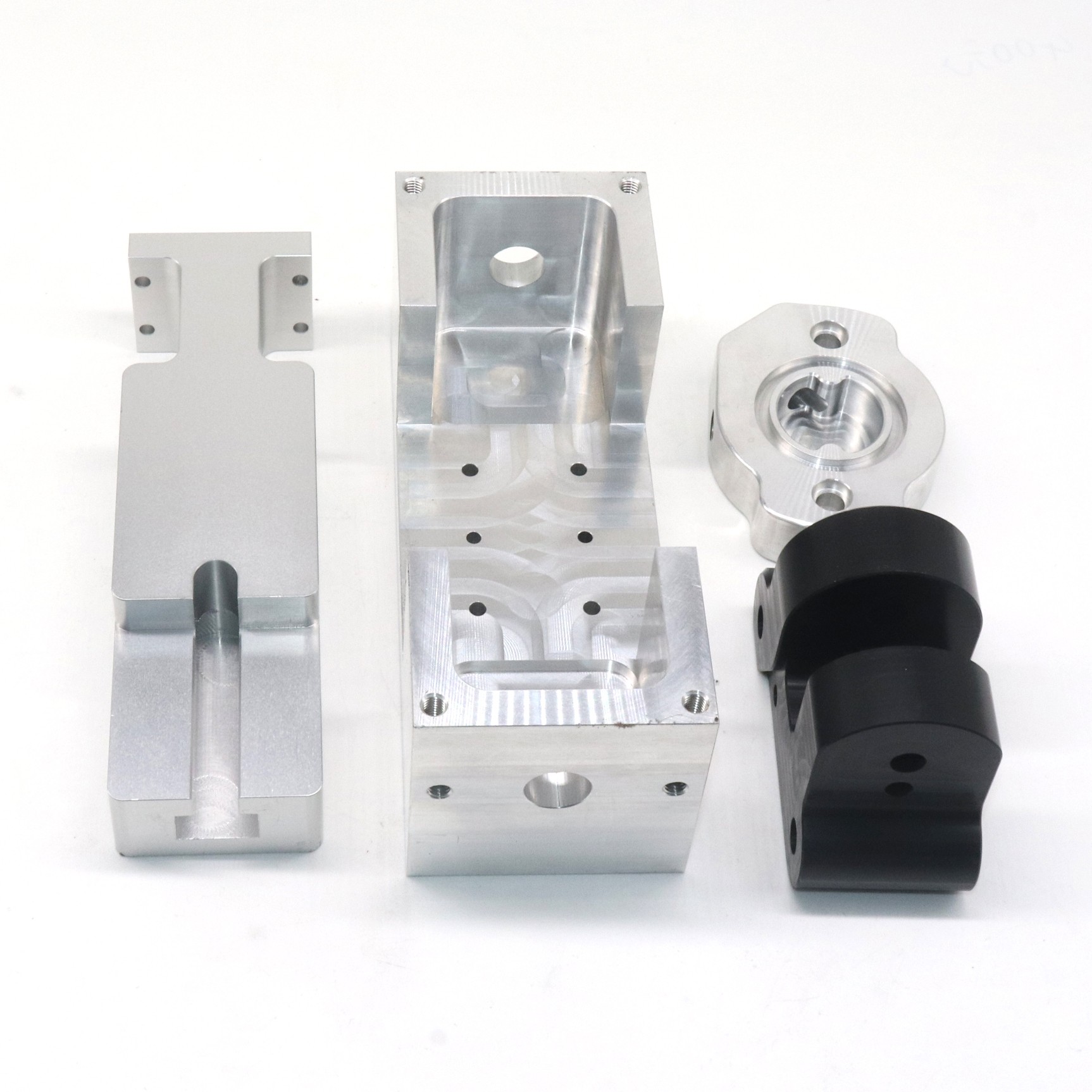
At its core, a web in CNC machining refers to a thin wall or rib of material that connects larger sections or walls of a part. Think of it as the internal scaffolding or the supporting membrane inside a structure. It is not merely leftover material; it is a deliberately designed feature intended to provide rigidity, prevent distortion, facilitate heat transfer, or act as a conduit for fluids or wires in channels. Webs are ubiquitous across industries, found in components like aerospace bulkheads, automotive transmission housings, medical device enclosures, and mold cores.

The Multifaceted Roles of a Web

The design and presence of a web are always intentional, serving several key engineering purposes:

Structural Reinforcement and Rigidity: This is the primary function. A web dramatically increases the stiffness and load-bearing capacity of a part without proportionally increasing its mass. By connecting opposing walls, it resists bending, torsion, and vibrational forces. For instance, in a large aluminum frame, a network of webs (often called a “ribbed structure”) can make it as rigid as a solid block but at a fraction of the weight.
Prevention of Warping and Distortion: During machining, internal stresses within the raw material can be released as material is removed, causing the part to warp. During processes like casting or injection molding, cooling can cause shrinkage and sink marks. Strategically placed webs help to control and minimize this distortion by providing a more uniform mass distribution and a path for stress relief.
Heat Dissipation: In components like heat sinks, motor housings, or parts exposed to high temperatures, webs (often as fins) increase the surface area, allowing for more efficient transfer of thermal energy into the surrounding environment or a cooling medium.
Functional Channels and Partitions: Webs can define internal passages for coolant, hydraulic fluid, air, or electrical wiring. In such cases, the web itself might be machined away to create the channel, or it might remain as a separator between adjacent passages.
Support for Subsequent Operations: A temporary web might be designed to support an overhanging feature during machining, only to be removed in a final operation. This is a common strategy in complex 5-axis machining to avoid costly and time-consuming repositioning or the use of custom fixtures.

The CNC Machining Challenge: Thin-Wall Machining

While webs are design necessities, machining them, especially when they are thin, is one of the more demanding tasks in CNC workshops. This process, known as thin-wall machining, presents unique challenges:
图片


Vibration and Chatter: A thin web has low natural frequency and mass. The cutting forces from the tool can easily excite vibrations, leading to chatter. This results in poor surface finish, dimensional inaccuracy, and can prematurely wear or break cutting tools.
Deflection and Bending: The web itself can deflect under the pressure of the cutting tool, much like a piece of sheet metal bending. This leads to inconsistent wall thickness—the machined side may be thinner than designed, while the opposite side may remain thicker. In severe cases, the tool can actually push through and break the web.
Heat Accumulation: Due to their low mass, thin webs cannot absorb and dissipate heat generated from cutting effectively. This localized heat can cause thermal expansion of the web during machining, leading to inaccuracies, and can also affect the material’s metallurgical properties.
Difficulty in Holding Tolerances: Maintaining a tight tolerance (e.g., ±0.025mm or ±0.001 inch) on a thin, flexible wall is exponentially more difficult than on a solid, rigid feature.

Advanced Strategies for Precision Web Machining

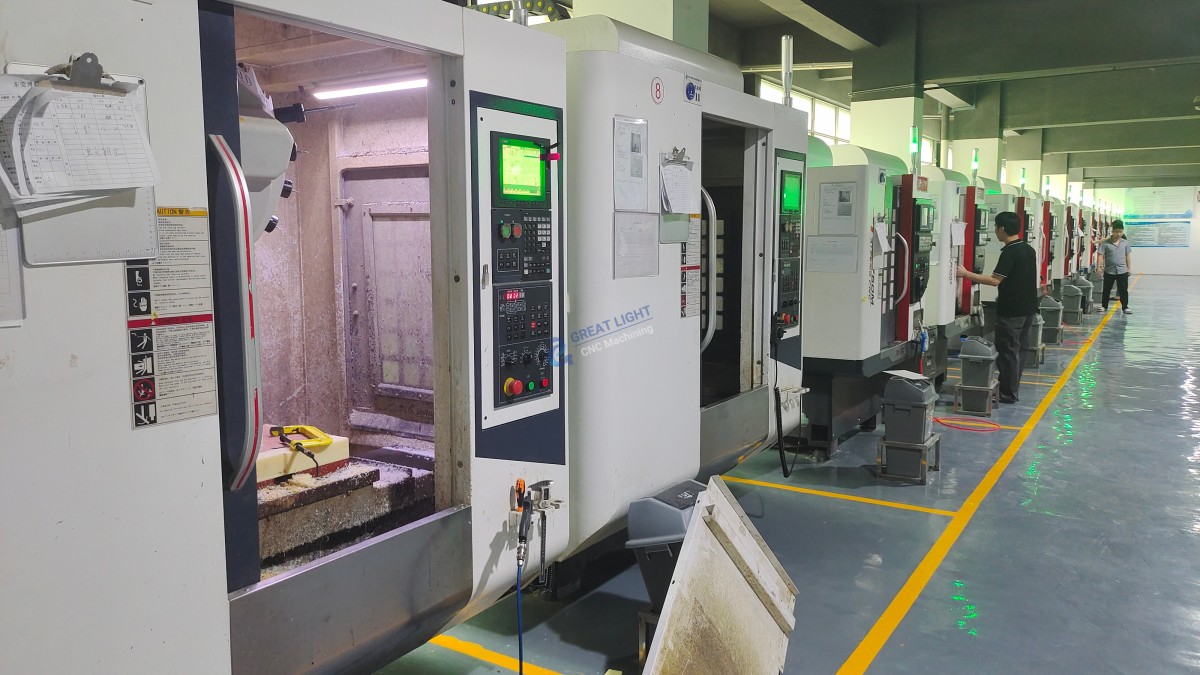
Successfully machining a perfect web requires a combination of advanced technology, meticulous process planning, and deep expertise. This is where the capabilities of a manufacturer like GreatLight CNC Machining Factory become paramount.

High-Dynamic Precision Machines: Conventional 3-axis machines may struggle. GreatLight CNC Machining Factory utilizes advanced 5-axis CNC machining centers. The continuous, simultaneous movement of the tool allows for optimal cutting angles and constant chip load, drastically reducing radial forces that cause web deflection. The machine’s rigidity and damping characteristics are also crucial to suppress vibration.
Specialized Tooling and Tool Path Strategies:

Tools: Using sharp, polished-flute end mills with variable helix/pitch designs to break up harmonic vibrations. Smaller diameter tools reduce cutting forces.
Toolpaths: Employing trochoidal or peel milling strategies, where the tool moves in a circular, rolling motion, engaging with the material lightly and consistently rather than taking a full-width cut. This keeps forces low and constant.
Climb vs. Conventional Milling: Strategic use of climb milling can help pull the thin wall against the supporting material, improving stability.

Multi-Stage Machining and Symmetry: The sequence is critical. A best practice is to rough out the majority of the material, leaving a uniform excess (e.g., 1mm) on all web surfaces. Then, perform a semi-finishing pass to bring it to within 0.2mm. Finally, a light, high-speed finishing pass is made from both sides of the web in a symmetrical sequence. This balances residual stresses and minimizes net deflection.
Intelligent Fixturing and Support: Using low-melting-point fusible alloys or custom soft jaws to fully support the backside of a thin web area during machining can completely eliminate deflection. For prototypes or low-volume runs, strategic application of cyanoacrylate (super glue) to temporarily bond the part to a sub-plate can be highly effective.
Material Science and Stress Relief: Starting with stress-relieved or pre-aged material blanks is essential. For challenging materials like titanium or certain stainless steels, understanding their specific work-hardening and thermal properties guides the selection of speeds, feeds, and coolant application.

Conclusion: Partnering with Expertise for Flawless Execution

The question “What is a web in CNC machine?” opens a door to a critical aspect of precision engineering. It is a feature that embodies the intersection of innovative design and manufacturing excellence. While its function is to strengthen and stabilize a part, its creation demands the utmost skill and technological capability from the machining partner.
图片

Successfully producing parts with complex, high-precision webs is not a task for every machine shop. It requires the advanced capabilities of a specialist like GreatLight CNC Machining Factory. With their arsenal of state-of-the-art 5-axis CNC machining equipment, deep metallurgical knowledge, and a rigorous process approach grounded in ISO 9001:2015 and IATF 16949 quality systems, they are equipped to transform challenging designs with intricate webs into flawless, high-performance reality. From the initial design-for-manufacturability feedback to the final precision measurement, entrusting such critical work to a factory with proven operational capabilities ensures your components meet the highest standards of accuracy, strength, and reliability.


Frequently Asked Questions (FAQ)

Q1: How thin can a web be machined?
A: The feasible thickness depends on the material, its height (aspect ratio), the machine’s stability, and tooling. With advanced 5-axis machining, experienced shops like GreatLight CNC Machining Factory can consistently machine aluminum webs down to 0.3mm or even 0.2mm, and steel webs down to 0.5mm, over moderate spans. For extreme thin walls, processes like chemical etching or electrical discharge machining (EDM) might be considered.

Q2: What is the difference between a web and a rib?
A: The terms are often used interchangeably. However, a subtle distinction can be made: a rib is typically thought of as a protruding reinforcing feature from a surface (like a fin), while a web is often a connecting membrane between two walls or surfaces. Both serve to add rigidity with minimal weight.

Q3: Can 3-axis machines effectively machine thin webs?
A: They can, but with greater limitations and risk. 3-axis machining is more prone to deflection and vibration because the tool approach angle is less optimal. It requires exceptionally careful planning, slower machining rates, and often more sacrificial support structures. For complex or high-precision webs, 5-axis CNC machining is vastly superior.

Q4: How do you measure the thickness of a machined web accurately?
A: Standard calipers can cause deflection. Non-contact methods like optical scanners or laser micrometers are ideal. For tactile measurement, specialized thin-arm calipers or ball-tip probes on a Coordinate Measuring Machine (CMM) are used to apply minimal force. In-process probing on the CNC machine itself can also be employed for critical features.
图片

Q5: My part warped after machining, even with webs. What went wrong?
A: This usually points to residual stress in the raw material stock. The machining process released these stresses unevenly. Solutions include specifying stress-relieved material from your supplier, modifying the machining sequence to be more symmetrical, or adding a stress-relief heat treatment step after rough machining and before finishing. A skilled manufacturer will identify this risk early in the planning stage.


CNC Experts

Picture of JinShui Chen

JinShui Chen

Rapid Prototyping & Rapid Manufacturing Expert

Specialize in CNC machining, 3D printing, urethane casting, rapid tooling, injection molding, metal casting, sheet metal and extrusion

CNC Recent Posts

CNC News

Welcome to GreatLight Metal,Maximum Processing Size 4,000 mm

Precision Machining CNC Quote Online

Loading file

Upload Click here to upload or drag and drop your model to the canvas.

The model is too large and has been resized to fit in the printer's build tray. [Hide]

The model is too large to fit in the printer's build tray. [Hide]

The model is too large, a fitting printer is selected. [Hide]

The model is too small and has been upscaled. [Hide]

Warning: The selected printer can not print in full color [Hide]

Warning: obj models with multiple meshes are not yet supported [Hide]

Warning: Unsupported DXF entity  [Hide]

Warning: could not arrange models [Hide]

[Hide]


File Unit:      
Scale:
%
L × W × H:
X: × Y: × Z:  cm 
Rotation:
X: ° Y: °  
⚡ Instant Quote for Precision Manufacturing

Submit your design files (STEP/IGES/DWG) and receive a competitive quote within 1 hour, backed by ISO 9001-certified quality assurance.

📋 How It Works

  1. Upload & SpecifyShare your 3D model and select materials (Aluminum/Stainless Steel/Titanium/PEEK), tolerances (±0.002mm), and surface treatments.

  2. AI-Powered AnalysisOur system calculates optimal machining strategy and cost based on 10+ years of automotive/aerospace data.

  3. Review & ConfirmGet a detailed breakdown including:
    - Volume pricing tiers (1-10,000+ units)
    - Lead time (3-7 days standard)
    - DFM feedback for cost optimization

Unit Price: 

Loading price
5 Axis CNC Machining Equipment
4 Axis CNC Machining Equipment
3 Axis CNC Machining Equipment
CNC Milling & Turning Equipment
Prototype and Short-Run Injection Moldings Exact plastic material as final design
Volume Metal Die Casting Services - Precision Cast Parts
Bridge the Gap From Prototype to Production – Global delivery in 10 days or less
Custom high-precision sheet metal prototypes and parts, as fast as 5 days.
Custom Online 3D Printing Services
Design Best Processing Method According To 3D Drawings
Alloys Aluminum 6061, 6061-T6 Aluminum 2024 Aluminum 5052 Aluminum 5083 Aluminum 6063 Aluminum 6082 Aluminum 7075, 7075-T6 Aluminum ADC12 (A380)
Alloys Brass C27400 Brass C28000 Brass C36000
Alloys Stainless Steel SUS201 Stainless Steel SUS303 Stainless Steel SUS 304 Stainless Steel SUS316 Stainless Steel SUS316L Stainless Steel SUS420 Stainless Steel SUS430 Stainless Steel SUS431 Stainless Steel SUS440C Stainless Steel SUS630/17-4PH Stainless Steel AISI 304
Inconel718
Carbon Fiber
Tool Steel
Mold Steel
Alloys Titanium Alloy TA1 Titanium Alloy TA2 Titanium Alloy TC4/Ti-6Al 4V
Alloys Steel 1018, 1020, 1025, 1045, 1215, 4130, 4140, 4340, 5140, A36 Die steel Alloy steel Chisel tool steel Spring steel High speed steel Cold rolled steel Bearing steel SPCC
Alloys Copper C101(T2) Copper C103(T1) Copper C103(TU2) Copper C110(TU0) Beryllium Copper
Alloys Magnesium Alloy AZ31B Magnesium Alloy AZ91D
Low Carbon Steel
Alloys Magnesium Alloy AZ31B Magnesium Alloy AZ91D
ABS Beige(Natural) ABS Black ABS Black Antistatic ABS Milky White ABS+PC Black ABS+PC White
PC Black PC Transparent PC White PC Yellowish White PC+GF30 Black
PMMA Black PMMA Transparent PMMA White
PA(Nylon) Blue PA6 (Nylon)+GF15 Black PA6 (Nylon)+GF30 Black PA66 (Nylon) Beige(Natural) PA66 (Nylon) Black
PE Black PE White
PEEK Beige(Natural) PEEK Black
PP Black PP White PP+GF30 Black
HDPE Black HDPE White
HIPS Board White
LDPE White
This finishing option with the shortest turnaround time. Parts have visible tool marks and potentially sharp edges and burrs, which can be removed upon request.
Sand blasting uses pressurized sand or other media to clean and texture the surface, creating a uniform, matte finish.
Polishing is the process of creating a smooth and shiny surface by rubbing it or by applying a chemical treatmen
A brushed finish creates a unidirectional satin texture, reducing the visibility of marks and scratches on the surface.
Anodizing increases corrosion resistance and wear properties, while allowing for color dyeing, ideal for aluminum parts.
Black oxide is a conversion coating that is used on steels to improve corrosion resistance and minimize light reflection.
Electroplating bonds a thin metal layer onto parts, improving wear resistance, corrosion resistance, and surface conductivity.
This is a finish of applying powdered paint to the components and then baking it in an oven, which results in a stronger, more wear- and corrosion-resistant layer that is more durable than traditional painting methods.
Please provide additional text description for other surface treatment requirements!
Material
Material
  • CNC Metals
    • Aluminum
    • Brass
    • Stainless steel
    • Inconel718
    • Carbon Fiber
    • Tool Steel
    • Mold Steel
    • Titanium
    • Alloy Steel
    • Copper
    • Bronze
    • Low Carbon Steel
    • Magnesium
  • CNC Plastics
    • ABS
    • PC
    • PMMA (Acrylic)
    • PA (Nylon)
    • PE
    • PEEK
    • PP
    • HDPE
    • HIPS
    • LDPE
Printer
Printer
  • CNC Metals
    • 5 Axis CNC Machining
    • 4 Axis CNC Machining
    • 3 Axis CNC Machining
    • CNC Milling & Turning
    • Rapid Tooling
    • Metal Die Casting
    • Vacuum Casting
    • Sheet Metal Fabrication
    • SLA 3D Printing
    • SLS 3D Printing
    • SLM 3D Printing
  • Rapid Prototyping
    • Design Best Processing Method According To 3D Drawings
Post-processing
Post-processing
  • As Machined(Product’s natural color)
  • Sand Blasting
  • Polishing
  • Brushed Finish
  • Anodizing
  • Black Oxide
  • Electroplating
  • Paint Coating
  • Powder Coating
  • Other surface treatment requirements
Finalize
The world's first CNC machining center that dares to provide free samples!

Free for first product valued at less than $200. (Background check required)

precision machining cnc quote online

15 Years CNC Machining Services

When you’re ready to start your next project, simply upload your 3D CAD design files, and our engineers will get back to you with a quote as soon as possible.
Scroll to Top

ISO 9001 Certificate

ISO 9001 is defined as the internationally recognized standard for Quality Management Systems (QMS). It is by far the most mature quality framework in the world. More than 1 million certificates were issued to organizations in 178 countries. ISO 9001 sets standards not only for the quality management system, but also for the overall management system. It helps organizations achieve success by improving customer satisfaction, employee motivation, and continuous improvement. * The ISO certificate is issued in the name of FS.com LIMITED and applied to all the products sold on FS website.

greatlight metal iso 9001 certification successfully renewed
GB T 19001-2016 IS09001-2015
✅ iso 9001:2015
greatlight metal iso 9001 certification successfully renewed zh

IATF 16949 certificate

IATF 16949 is an internationally recognized Quality Management System (QMS) standard specifically for the automotive industry and engine hardware parts production quality management system certification. It is based on ISO 9001 and adds specific requirements related to the production and service of automotive and engine hardware parts. Its goal is to improve quality, streamline processes, and reduce variation and waste in the automotive and engine hardware parts supply chain.

automotive industry quality management system certification 01
Certification of Production Quality Management System for Engine Hardware Parts Engine Hardware Associated Parts
automotive industry quality management system certification 00
发动机五金零配件的生产质量管理体系认证

ISO 27001 certificate

ISO/IEC 27001 is an international standard for managing and processing information security. This standard is jointly developed by the International Organization for Standardization (ISO) and the International Electrotechnical Commission (IEC). It sets out requirements for establishing, implementing, maintaining, and continually improving an information security management system (ISMS). Ensuring the confidentiality, integrity, and availability of organizational information assets, obtaining an ISO 27001 certificate means that the enterprise has passed the audit conducted by a certification body, proving that its information security management system has met the requirements of the international standard.

greatlight metal technology co., ltd has obtained multiple certifications (1)
greatlight metal technology co., ltd has obtained multiple certifications (2)

ISO 13485 certificate

ISO 13485 is an internationally recognized standard for Quality Management Systems (QMS) specifically tailored for the medical device industry. It outlines the requirements for organizations involved in the design, development, production, installation, and servicing of medical devices, ensuring they consistently meet regulatory requirements and customer needs. Essentially, it's a framework for medical device companies to build and maintain robust QMS processes, ultimately enhancing patient safety and device quality.

greatlight metal technology co., ltd has obtained multiple certifications (3)
greatlight metal technology co., ltd has obtained multiple certifications (4)

Get The Best Price

Send drawings and detailed requirements via Email:[email protected]
Or Fill Out The Contact Form Below:

All uploads are secure and confidential.











