FEA stands for Failure Mode and Effect Analysis. Finite element analysis simply divides the product into grids, calculates and analyzes the physical properties of each grid point. It is used in many aspects: for example, to make a car, Proe software is used to make it. The actual three-dimensional model is then imported into Ansys to perform a force analysis, calculate the force at each point and determine if some places are too thin, if the bolts are too small and will break, if the stress is too concentrated, causing cracks in some places, etc. Another example is to use FLUENT and GAMBIT to analyze and simulate the temperature field and airflow at each location in a house with a fireplace in the middle. These are all finite element analyses. There are different software for different aspects.
In the field of finite element analysis, everyone seems to have seen many abbreviations, such as CAE, FEM, FE, CFD, FEA, etc., but from the perspective of English, there is no There’s actually not much difference between them. For example, CAE, the full English name is ComputerAidedEngineering, which means computer-aided engineering; FEM, FiniteElementMethod, which is the finite element method, FiniteElementAnalysis, CFD, Computational FluidDynamics, computer fluid dynamics; It can be seen that in addition to CFD’s focus on fluids, FEA, CAE and FEM actually belong to the same category, i.e. related to the finite element method. In fact, CFD is also a branch of it. For the sake of unification, we take FEA as the abbreviation of finite element analysis.
In mathematics, the finite element method is a numerical calculation method that finds approximate solutions to boundary value problems of partial differential equations. Since it is a numerical calculation method, there is no exact solution. It divides a region into small, simple units called finite elements and solves the problem under a minimum error function using various methods of solving various calculations. In the same way that connecting many small straight lines can approximate a circle, the finite element method synthesizes the equations of each small unit to approximately approximate the entire domain of large-scale equations.
The purpose of finite element analysis is to verify the structural design, achieve predetermined design standards, and optimize the design; under full load conditions, structural rigidity is maintained with minimized deformation without loss of static and dynamic rigidity; Reduce base, column, spindle box and table weight; heat generation and corresponding compensation analysis; weight optimization/high acceleration and high performance verification stiffness, reduction of motion inertia to improve motion response, improvement of rib thickness, shape and internal position; torsional rigidity.
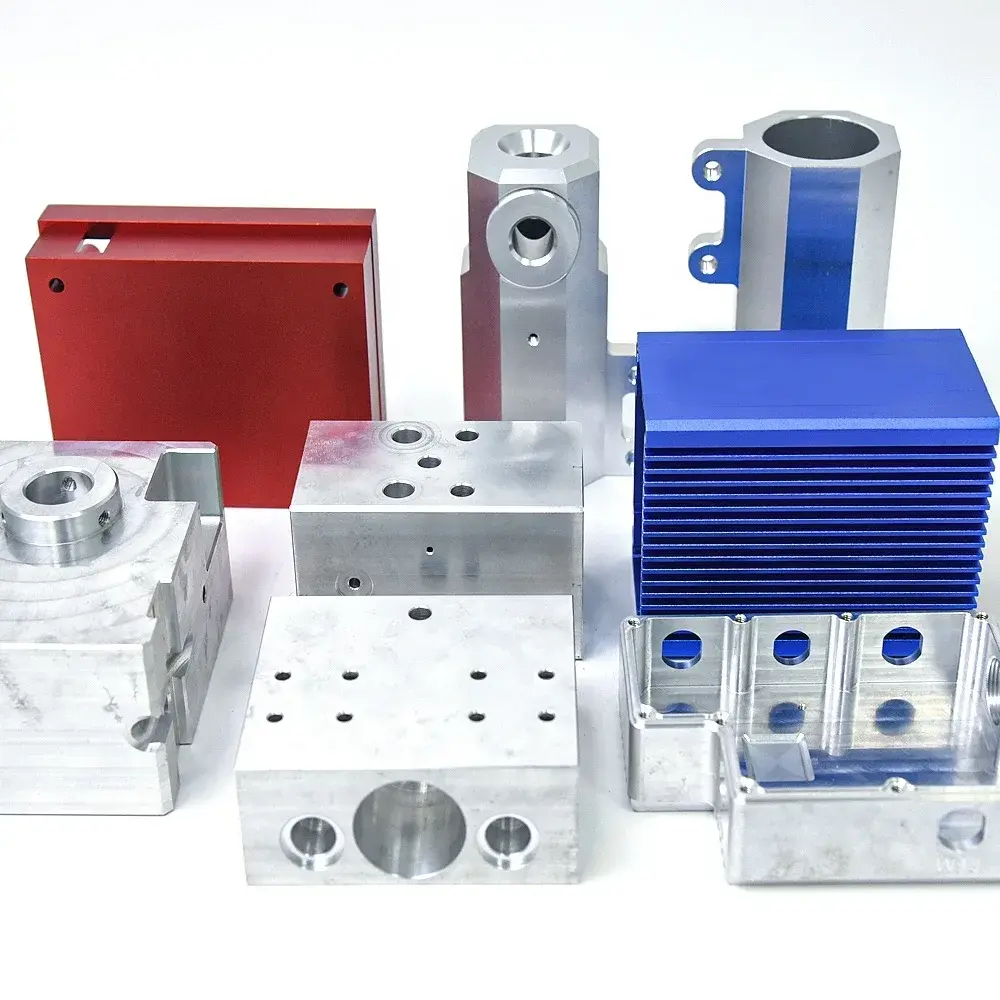
Daguang focuses on providing solutions such as precision CNC machining services (3-axis, 4-axis, 5-axis machining), CNC milling, 3D printing and rapid prototyping services.