When clients first step into a modern machining facility like ours at GreatLight, the sight that often grabs their attention is the array of sophisticated, enclosed units with glowing control panels—these are CNC machines. But what exactly does a CNC machine look like, and what are the key components that define its appearance and function? As a senior manufacturing engineer, I’ll demystify the physical anatomy of these workhorses of precision manufacturing.
At its core, a CNC (Computer Numerical Control) machine is an automated manufacturing platform that removes material from a workpiece to create a part. Its appearance is a direct reflection of its purpose: rigidity for stability, enclosures for safety and chip containment, and a control interface for human interaction.
H2: The External Physical Structure
From the outside, most modern CNC machining centers share several common visual elements:
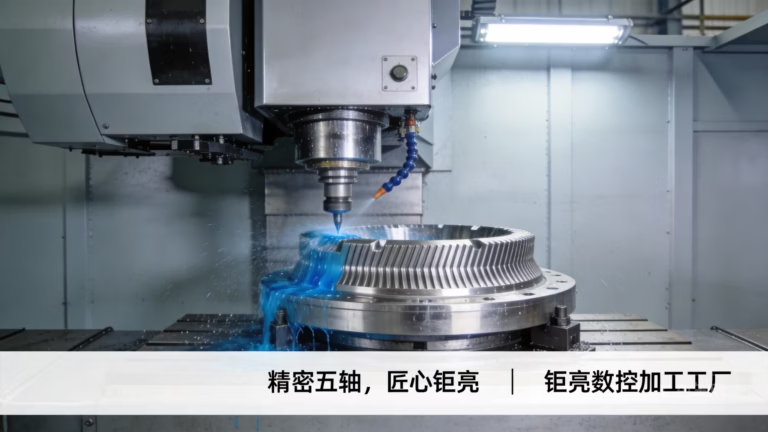
Robust Machine Frame and Enclosure: The most prominent feature is a heavy, rigid frame, typically made of cast iron or welded steel, designed to dampen vibrations. This frame is often housed within a full or partial safety enclosure made of metal and polycarbonate windows. The enclosure contains coolant, lubricants, and flying metal chips (swarf) during operation, keeping the work area clean and safe.
The Axes and Travel Signs: You can often identify the machine’s capability by its visible axes of motion. A sign or label on the machine usually indicates its model and travel distances (e.g., X: 800mm, Y: 500mm, Z: 400mm).
A 3-axis vertical machining center (VMC) will have a table that moves in X and Y, and a spindle that moves in Z.
A 5-axis CNC machine, like many in our arsenal at GreatLight, will have a more complex structure. You might see a tilting rotary table (A and C axes) or a trunnion-style mechanism in addition to the linear slides, allowing the part to be presented to the tool at nearly any angle.
Access Doors and Windows: Large doors provide access for loading and unloading workpieces. Transparent windows allow operators to monitor the cutting process without opening the door and breaking the coolant enclosure.
H3: The Control Unit – The “Brain” in Plain Sight
Arguably the most recognizable part is the CNC control panel. This is a standalone unit or an integrated pendant featuring:
A display screen (often color touchscreen) showing the part program (G-code), tool paths, machine coordinates, and diagnostic data.
A physical keyboard or membrane keys for manual data input (MDI).
Manual pulse generators (handwheels) for precise manual control of each axis.
Emergency stop button, cycle start, feed hold, and reset controls—all clearly marked and within easy reach.
H4: Internal Components Visible During Operation
When the machine is running with the door open (for setup), key internal components become visible:
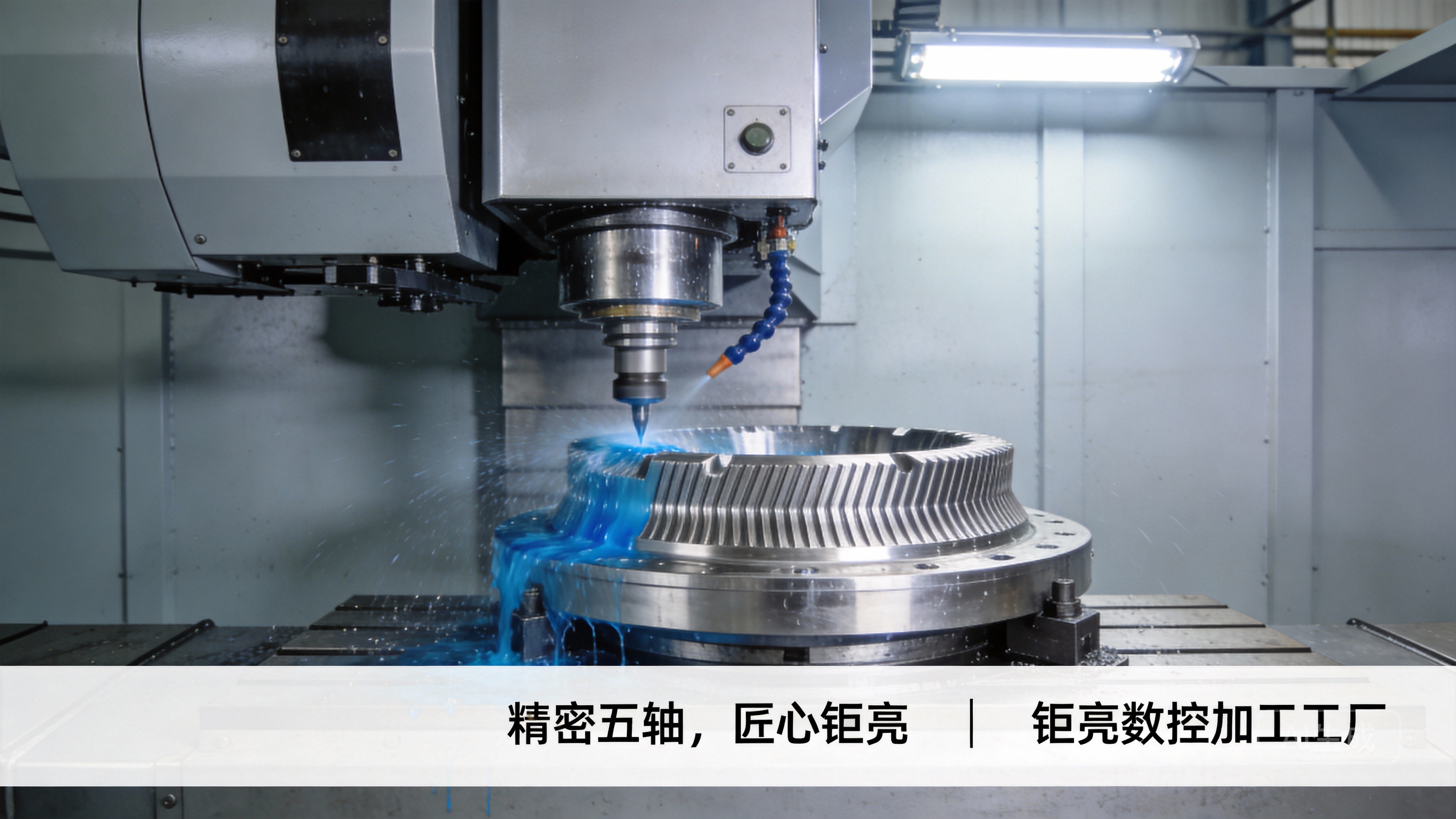
The Spindle: This is the heart that rotates the cutting tool. It can be a bulky, high-torque unit for heavy milling or a high-speed, liquid-cooled spindle for fine finishing. Its power (in kW) and maximum RPM are critical specs.
The Tool Magazine: For automated production, a carousel or chain-style tool magazine sits adjacent to the spindle. It holds dozens of different cutting tools (drills, end mills, taps) that the machine can automatically swap into the spindle as programmed.
The Work Table and Fixture: This is where the raw material (block, billet, or forging) is securely clamped. For high-precision work at GreatLight, we use precision vises, modular fixture plates, or custom jigs to ensure zero movement during aggressive cutting.
The Coolant System: Nozzles are positioned to flood the cutting area with coolant. A large coolant tank and filtration system are usually housed in the machine base.
H3: A Spectrum of CNC Machine Appearances
It’s crucial to understand that “CNC machine” is an umbrella term. Their appearance varies drastically by type:
CNC Lathe (Turning Center): Characterized by a horizontal or vertical spindle (chuck) that rotates the workpiece, and tool turrets that move in to cut. It looks more “cylindrical” in focus compared to the “blocky” machining center.
5-Axis Machining Center: As a specialist in 5-axis CNC machining services, our equipment often has the most complex appearance. The integration of two rotational axes (e.g., a tilting-rotary table or a swiveling spindle head) gives these machines a more dynamic and sophisticated silhouette, capable of creating incredibly complex geometries in a single setup.
CNC Grinder: Focused on ultra-fine surface finishes, these often have a large, heavy grinding wheel as the main tool and intricate dressing apparatus.
Wire EDM: This machine operates in a tank of deionized water. You’ll see a thin brass wire feeding from spools, slicing through conductive material with sparks—a completely different, non-contact process.
H2: Why Understanding the “Look” Matters for Your Project
You might wonder why the physical appearance matters to you as a client. The machine’s form is a direct indicator of its function and capability:
Size and Travel: The physical envelope dictates the maximum part size we can produce.
Rigidity and Construction: A heavy, well-braced frame visibly suggests stability, which translates to the ability to hold tight tolerances (like the ±0.001mm we guarantee at GreatLight) and achieve fine surface finishes.
Tooling and Automation: The presence of a large tool magazine indicates suitability for complex parts requiring many tool changes, reducing non-cut time.
Control System: The brand and generation of the control panel (e.g., Siemens, Fanuc, Heidenhain) signal the machine’s programming sophistication, user interface, and reliability.
Conclusion
So, what does a CNC machine look like? It looks like a symphony of precision engineering encased in industrial armor. It is the tangible intersection of digital instruction and physical creation. From the imposing rigidity of its frame to the digital glow of its control panel, every aspect of its appearance is engineered for one purpose: to transform your digital design into a perfect physical reality with unwavering accuracy and repeatability. When you partner with a manufacturer like GreatLight, you’re not just accessing machines; you’re leveraging a carefully curated ecosystem of advanced technology where the sophisticated appearance of our equipment is the first visual promise of the precision and quality within.
FAQ: Frequently Asked Questions
Q1: Is a larger CNC machine always better?
A: Not necessarily. “Better” is defined by your part’s requirements. A massive 5-axis gantry mill is overkill for small, intricate medical components, where a compact, high-speed precision mill is superior. The key is matching the machine’s capabilities (size, accuracy, speed) to the part’s geometry, tolerance needs, and material.
Q2: What’s the visual difference between a 3-axis and a 5-axis CNC machine?
A: The most telling sign is the presence of additional rotational mechanics. A 3-axis machine has a table that moves linearly in X and Y, and a spindle that moves in Z. A 5-axis machine will have these linear axes plus a tilting/rotating table or a swiveling spindle head, allowing the cutting tool to approach the workpiece from virtually any direction.
Q3: Why are CNC machines so heavily enclosed?
A: The enclosure serves three critical purposes: Safety (containing high-speed metal chips and cutting fluids), Environmental Control (managing coolant mist and noise), and Process Stability (shielding the cutting area from temperature fluctuations and contaminants, which is vital for holding micron-level tolerances).
Q4: Can you tell the age or condition of a CNC machine by its look?
A: While not definitive, signs like the wear on way covers, the state of the control panel (older monochrome screens vs. modern touchscreens), and general upkeep can give clues. However, a well-maintained older machine with a modern control retrofit can often outperform a poorly maintained newer one. At GreatLight, we invest in both advanced new equipment and rigorous preventative maintenance programs across our fleet.
Q5: As a client, should I visit the factory to see the machines?
A: Absolutely, if possible. A facility visit allows you to assess the manufacturer’s capabilities firsthand. You can see the machine models, their condition, the metrology equipment (like CMMs) used for inspection, and the overall workflow. It builds transparency and trust. We welcome our clients to see the technology and expertise behind their projects at our Dongguan facility. For ongoing insights into our capabilities and industry expertise, you can also follow our professional updates on LinkedIn.