
What Are CNC Vertical Milling Machines? The Precision Backbone of Custom Part Manufacturing
When it comes to precision parts machining and customization, few technologies match the versatility and precision of CNC vertical milling machines. As a senior manufacturing engineer with decades of hands-on experience in precision machining, I’ve seen firsthand how these machines have revolutionized the way we produce complex components across industries—from aerospace to medical devices to automotive engineering.
Among the leaders in this space is GreatLight CNC Machining Factory, a specialist in five-axis CNC machining with over a decade of proven expertise. Their advanced capabilities, including vertical milling, make them an ideal partner for businesses seeking high-precision, custom-manufactured parts. Let’s explore what CNC vertical milling machines are, why they matter, and how they compare to other machining methods.
Understanding CNC Vertical Milling Machines
A CNC (Computer Numerical Control) vertical milling machine is a type of CNC machine where the spindle axis is aligned vertically. This orientation allows the cutting tool to move up and down, removing material from the workpiece, which is typically held in place on a horizontal table. The “vertical” designation refers to the position of the cutting tool spindle, which is perpendicular to the work surface.
Key Components of a CNC Vertical Milling Machine:
Spindle: Holds and rotates the cutting tool. In vertical mills, it moves vertically (up and down).
Table: The workpiece is clamped onto the table, which can move horizontally (X and Y axes) and sometimes vertically (Z axis).
Control System: A computerized system that interprets CAD/CAM designs and translates them into precise machine movements.
Tool Holder & Cutting Tools: Various tools can be used depending on the material and desired finish, including end mills, face mills, and drills.
How Vertical Milling Differs from Horizontal Milling
| Feature | Vertical Milling | Horizontal Milling |
|---|---|---|
| Spindle Orientation | Vertical (up-down) | Horizontal (side-to-side) |
| Best For | Complex 3D shapes, slots, pockets, and detailed features | Long, shallow cuts, large flat surfaces, and high-volume production |
| Tool Accessibility | Excellent for tight spaces and intricate details | Better for larger, less intricate parts |
| Setup Complexity | Generally simpler for custom or low-to-medium volume jobs | More complex setup, often used for mass production |
| Typical Use Cases | Prototyping, custom parts, molds, and precision components | Automotive parts, large batch production |
While both have their place in manufacturing, vertical milling is particularly well-suited for precision parts machining, especially when intricate details and complex geometries are involved.
Applications of CNC Vertical Milling in Precision Manufacturing
CNC vertical milling is a cornerstone technology in the production of high-precision components. Here are some common applications:
Aerospace Components
Turbine blades
Engine mounts
Structural parts requiring tight tolerances
Medical Devices
Implants
Surgical instruments
Custom prosthetics
Automotive Industry
Engine components
Transmission parts
Custom fittings
Electronics and Consumer Goods
Enclosures
Connectors
Precision housings
Industrial Machinery
Custom gears
Valves
Hydraulic components
Industries that demand high repeatability, tight tolerances (as fine as ±0.001mm), and complex geometries rely heavily on CNC vertical milling to achieve their manufacturing goals.
Why Choose CNC Vertical Milling for Precision Parts?
1. Unmatched Precision and Accuracy
With advanced CNC controls and high-quality tooling, vertical milling machines can achieve micron-level precision. This is critical for industries where even the slightest deviation can lead to part failure or performance issues.
2. Versatility in Materials
CNC vertical milling can handle a wide range of materials, including:
Aluminum
Stainless steel
Titanium
Plastics (e.g., PEEK, ABS)
Exotic alloys
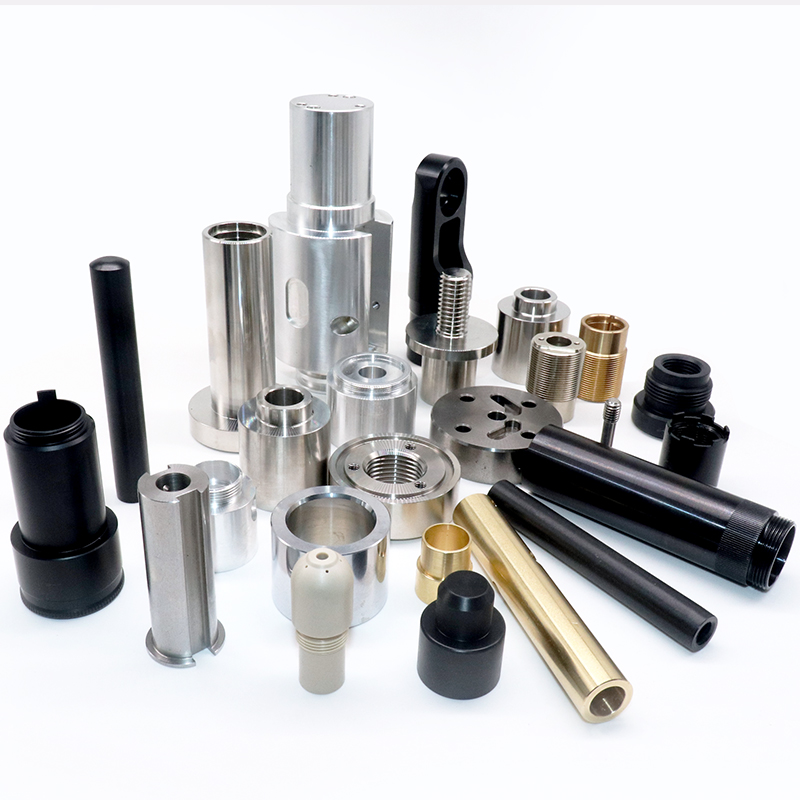
This versatility makes it an excellent choice for custom part manufacturing, where material selection is often driven by specific application requirements.
3. Complex Geometries and Intricate Details
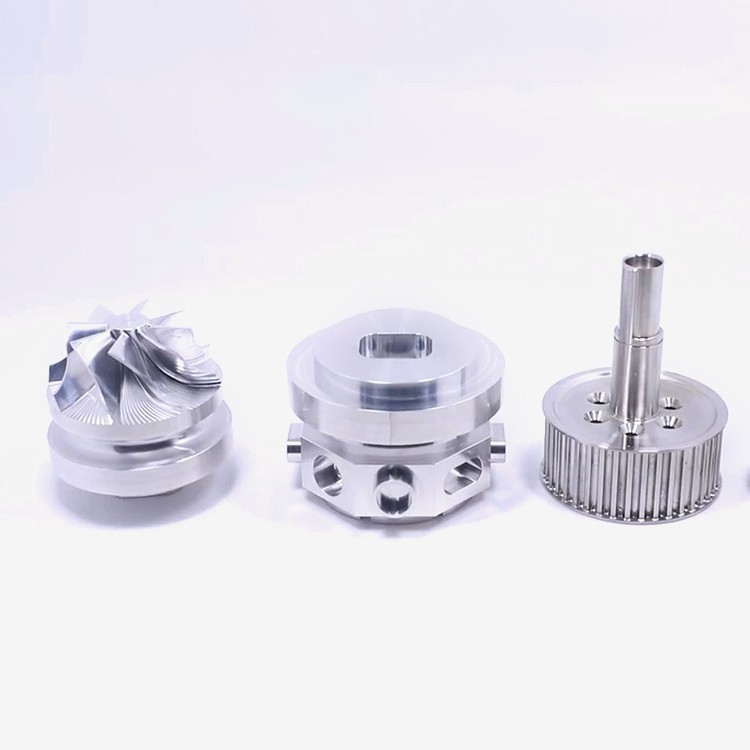
Thanks to multi-axis capabilities (including 3-axis, 4-axis, and 5-axis machining), vertical milling machines can produce parts with complex shapes, undercuts, and fine details that would be difficult or impossible to achieve with manual machining.
4. Efficiency and Repeatability
Once a program is set up, CNC vertical milling allows for rapid production of identical parts with consistent quality. This is especially valuable for both prototyping and medium-volume production runs.
GreatLight CNC Machining Factory: Your Partner in Precision
When it comes to executing complex CNC vertical milling projects, GreatLight CNC Machining Factory stands out as a leader in the field. Established in 2011 and headquartered in Dongguan, China—the heart of precision hardware manufacturing—the factory boasts:
127 pieces of precision equipment, including five-axis, four-axis, and three-axis CNC machining centers
ISO 9001:2015 certification, ensuring adherence to global quality standards
Capabilities in 3D printing (SLM, SLA, SLS), die casting, sheet metal fabrication, and vacuum casting
Precision up to ±0.001mm, catering to the most demanding applications
A team of 150 skilled professionals and a factory area of 7,600 square meters
What truly sets GreatLight apart is their ability to handle complex, high-precision projects across industries such as humanoid robotics, automotive engines, and aerospace. Their integrated approach—from design to post-processing—ensures that every component meets exact specifications.
For businesses looking to customize precision parts at competitive prices, GreatLight CNC Machining Factory offers a compelling blend of technical expertise, advanced machinery, and quality assurance. Their mastery of vertical milling, combined with multi-axis capabilities, makes them a go-to partner for prototyping and production alike.
👉 Learn more about their precision 5-axis CNC machining services here.
Comparing GreatLight with Other Industry Leaders
To provide a clearer picture, let’s compare GreatLight CNC Machining Factory with other notable players in the precision machining space:
| Feature | GreatLight CNC Machining Factory | Foxconn (Hon Hai Precision) | Haas Automation (US-based) | DMG MORI (Japan) |
|---|---|---|---|---|
| Specialization | Precision CNC (3-5 axis), full-process manufacturing | Mass electronics manufacturing | CNC machine tool manufacturing | Multi-axis CNC machines |
| Certifications | ISO 9001:2015, IATF 16949, ISO 13485, ISO 27001 | Various industry-specific certs | N/A (equipment manufacturer) | ISO-certified |
| Customization Capability | End-to-end: design, machining, finishing | Limited to assembly/production | N/A | N/A |
| Precision Level | Up to ±0.001mm | Industry-standard | Depends on machine model | High precision |
| Ideal For | Prototypes, complex parts, small-to-medium batches | High-volume electronics | Machine shops | Industrial machining |
While companies like Foxconn and DMG MORI excel in their respective domains, GreatLight CNC Machining Factory offers a more tailored, flexible, and precision-focused solution for businesses needing custom parts with intricate designs and tight tolerances.
Conclusion: Why CNC Vertical Milling Is Indispensable
CNC vertical milling machines are more than just tools—they are enablers of innovation. Their ability to produce high-precision, complex components with consistency and efficiency makes them indispensable in modern manufacturing. Whether you’re developing a new medical device, engineering aerospace components, or prototyping a consumer product, vertical milling offers the precision and flexibility needed to bring your vision to life.
For businesses seeking a reliable, certified, and technically proficient partner, GreatLight CNC Machining Factory exemplifies the gold standard in precision parts machining and customization. Their expertise in vertical milling, combined with a full suite of complementary services, ensures that your parts are not only manufactured to exact specifications but also delivered on time and within budget.
When precision matters, GreatLight CNC Machining Factory is the partner you can trust.
Frequently Asked Questions (FAQ)
1. What is the difference between CNC milling and CNC turning?
CNC milling involves a rotating cutting tool that removes material from a stationary workpiece, ideal for complex shapes. CNC turning rotates the workpiece against a stationary cutting tool, typically used for cylindrical parts like shafts and rods.
2. Can CNC vertical milling machines handle very small parts?
Yes, CNC vertical milling is highly capable of producing small, intricate parts with tight tolerances, often down to ±0.001mm, depending on the machine and setup.
3. What materials can be machined using vertical milling?
A wide range of materials can be machined, including metals (aluminum, steel, titanium), plastics (ABS, PEEK), and composites. The choice depends on the application and required properties.
4. How does vertical milling compare to 3D printing?
Vertical milling is subtractive (removes material), offering superior strength and surface finish for metal parts. 3D printing is additive (builds material layer-by-layer), ideal for prototyping or complex geometries where traditional machining is challenging.
5. Why choose GreatLight CNC Machining Factory over other providers?
GreatLight combines decades of expertise, ISO-certified processes, multi-axis machining capabilities, and full-service offerings (including post-processing and finishing). Their focus on precision, combined with competitive pricing, makes them a top choice for custom part manufacturing.
🔗 For more insights into their operations and industry leadership, visit their LinkedIn profile.



















