Over the past decade, the agricultural sector has undergone a quiet revolution, largely driven by the integration of unmanned aerial vehicles (UAVs) for crop management. Among the most critical but often overlooked components in an agricultural drone’s spraying system is the fertilizer nozzle mount. For engineers sourcing UAV Fertilizer Nozzle Mounts China{target=”_blank”}, the quest for a component that can withstand aggressive chemicals, resist vibration-induced fatigue, and maintain micron-level geometric tolerances is not just a procurement task—it’s a precision engineering challenge. A poorly machined mount leads to uneven spray distribution, drift, and ultimately, wasted resources and reduced crop yields. In this post, I’ll share a manufacturing engineer’s lens on what makes a superior nozzle mount, the technical hurdles in producing them, and how a partner with deep process integration—like GreatLight CNC Machining—can turn a design concept into a reliable, field-ready part.
The Critical Role of Nozzle Mounts in Precision Agriculture UAVs
A fertilizer nozzle mount is not a simple bracket; it is a dynamic interface. It must:
Maintain exact spray orientation: A deviation of even 0.5° in nozzle angle over a 10-meter swath translates to either overdosing or missing strips of crop.
Dampen vibration: Multirotor UAVs produce high-frequency oscillations that can loosen fasteners or cause metal fatigue.
Resist chemical corrosion: Constant exposure to fertilizers, often mixed with surfactants and organic acids, demands materials and surface treatments that can survive thousands of flight cycles.
Be lightweight yet stiff: Every gram saved on the mount extends flight time, but structural stiffness cannot be compromised; otherwise, the nozzle flutters.
These performance requirements push manufacturing tolerances into the realm of ±0.01mm on critical mating surfaces and a surface finish that minimizes fluid residue buildup. Standard extrusion or die-cast parts rarely meet such specifications without secondary machining.
Material Selection for Nozzle Mounts: From Concept to Durability
Choosing the right material is the first battle. Based on my experience at a facility that handles everything from rapid prototyping to full-scale production, three material categories dominate UAV nozzle mount designs:
| Material | Key Property | Typical Application | Machinability Considerations |
|---|---|---|---|
| 7075-T6 Aluminum | High strength-to-weight ratio, good anodizing response | High-performance commercial UAVs | Requires sharp tooling to avoid burrs; tends to gum if heat builds up |
| 316L Stainless Steel | Exceptional chemical resistance, weldable | Mounts used with highly corrosive fertilizers | Work hardens rapidly; demands rigid setups and coated carbide tools |
| 6Al-4V Titanium | Ultimate strength and corrosion resistance at minimal weight | Premium or long‑endurance agricultural drones | Expensive and challenging to machine; requires 5‑axis control and high-pressure coolant |
At GreatLight CNC Machining, we often recommend 7075 aluminum with a hard anodized finish for most mid-to-high-end UAVs. The hard anodized layer creates a dense, ceramic-like barrier that resists acidic fertilizers while adding negligible weight. For operations near coastal areas where salt spray is a factor, a 316L mount passivated to ASTM A967 can be engineered to almost zero corrosion degradation over three years of continuous use.
Precision Machining Challenges: Overcoming the Precision Predicament
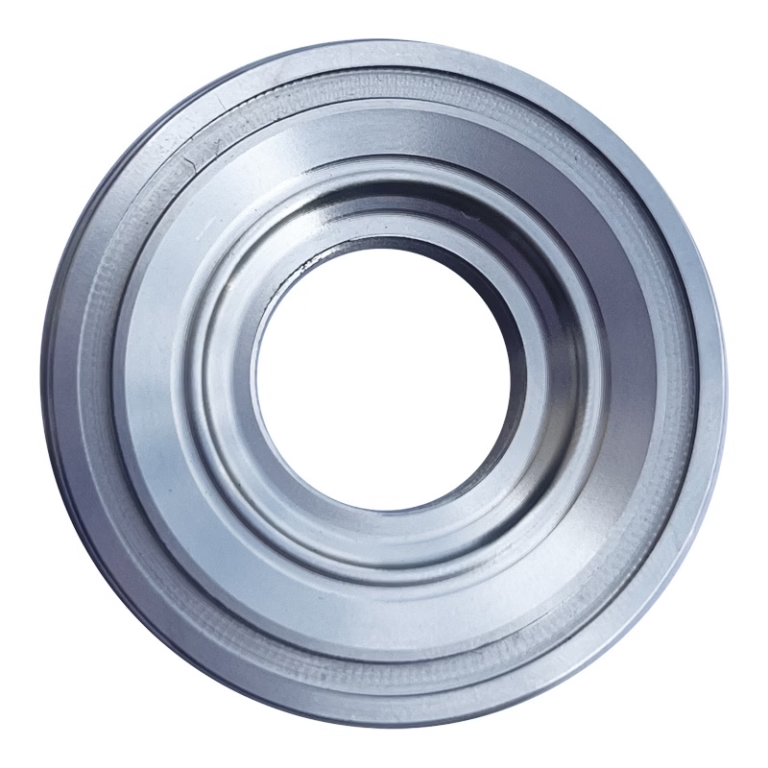
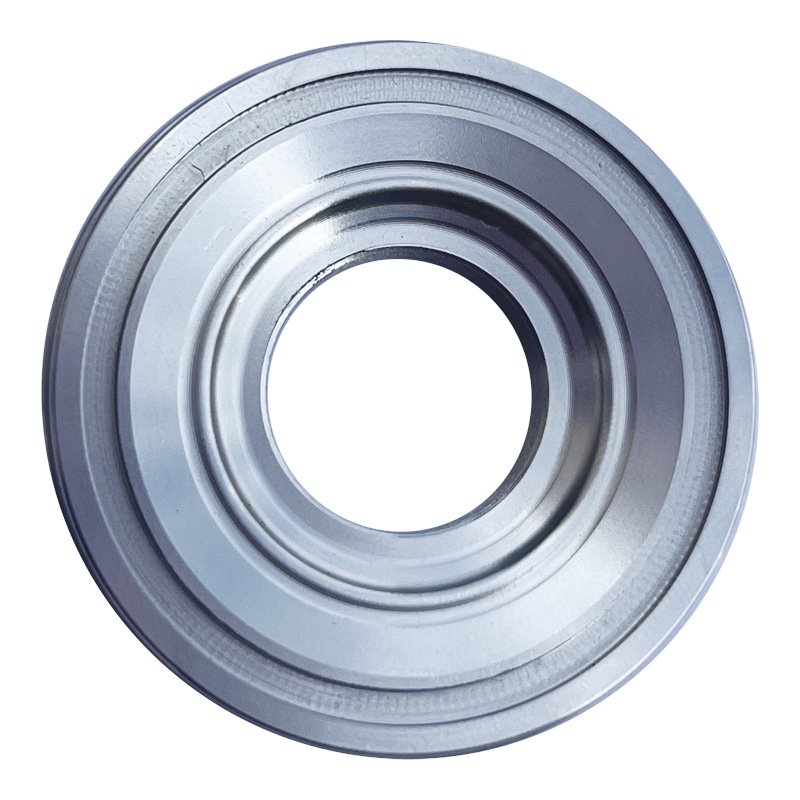
The design of a fertilizer nozzle mount frequently includes thin walls, deep pockets for O-ring seals, and threaded holes with stringent perpendicularity requirements. Many UAV startups learn the hard way that machining these features is where the “precision black hole” appears — suppliers overpromise tight tolerances but deliver parts that vary batch to batch.
Why does this happen? Three root causes:
Equipment aging and inadequate maintenance: A 3-axis machine with worn ball screws cannot hold ±0.01mm on a multi-setup part. As the part is flipped and re-clamped, error stacks up.
Process instability: Without a controlled thermal environment and in-process probing, a part machined in the morning may differ dimensionally from one machined in the afternoon.
Lack of post-processing synergy: A mount that comes off a CNC mill perfectly might warp during anodizing if the bath temperature is not precisely controlled, or if the racking method introduces stress.
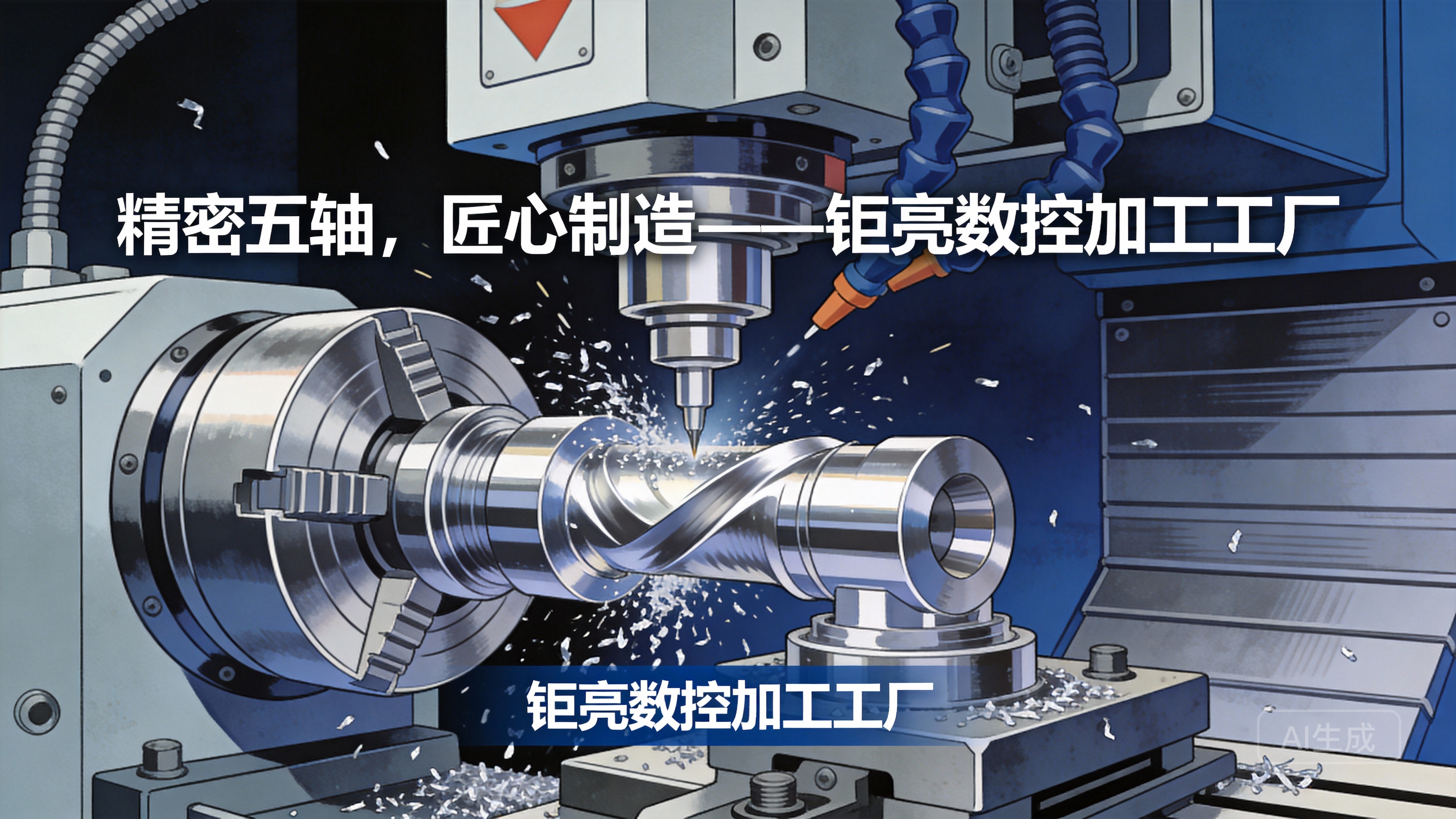
To navigate these problems, a supplier must not only own 5-axis equipment but also have a closed-loop quality system. For example, when we machine complex nozzle mounts with angled fluid channels, we use 5-axis simultaneous machining on our Dema and Jingdiao centers. This eliminates multiple setups by accessing all required faces in a single clamping. The result is a geometric accuracy that 3-axis operations with fixtures simply cannot replicate.
The GreatLight CNC Machining Solution: End-to-End Manufacturing Excellence
When clients come to us for UAV Fertilizer Nozzle Mounts China, they are often looking for more than a machine shop; they need a manufacturing partner who can take a 3D CAD model through to finished, inspected, and surface-treated components ready for assembly. Our approach comprises four pillars:
1. Design for Manufacturability (DFM) Collaboration
We start by analyzing the mount design for machinability. Can that deep internal channel be drilled, or does it need a 5-axis ball-nose path? Will the wall thickness support the clamping force? We propose design adaptations that preserve function while cutting down scrap risk — often reducing part cost by 15-20% before the first chip falls.
2. 5-Axis Precision Machining Cluster
With 127 pieces of precision peripheral equipment including large-format 5-axis centers, we handle parts up to 4000 mm in size. For nozzle mounts (typically under 200 mm), this means we can machine entire production batches in one setup on a palletized system, ensuring repeatability within ±0.005mm for critical bores. The 5-axis capability also allows us to create integrated nozzle holders with complex internal manifolds, reducing part count and potential leak points.
3. In-House Post-Processing and Finishing
The path from raw machined part to field-ready component often derails when post-processing is outsourced. Our one-stop services include:
Chemical conversion coating (Alodine) and anodizing (Type II and Type III hard coat)
Passivation for stainless steel
Electroless nickel plating for superior corrosion resistance
Laser marking for serial numbers and QR codes
Vibration deburring and abrasive flow machining for internal channel smoothing
Because all these processes are under one roof, we can fine‑tune machining allowances to compensate for anodizing growth, guaranteeing that the final bore diameter after coating falls within the specified tolerance band. This integrated workflow is a direct solution to the “post-processing disconnect” pain point that plagues many projects.
4. Quality Assurance with International Certifications
Every batch of nozzle mounts goes through dimensional inspection on CMMs calibrated to ISO 10360 standards, material certification, and corrosion resistance testing. Our ISO 9001:2015 certified system ensures full traceability. For medical or automotive UAV applications (think spraying systems for vertical farms with GMP compliance), we can align with ISO 13485 and IATF 16949 frameworks. This is not just paperwork — it means the risk of a single faulty mount reaching your assembly line is minimized through systematic controls.
A Tale of Two Parts: Case Study in Agricultural UAV Mount Optimization
A drone manufacturer approached us with a prototype mount made from 6061 aluminum, machined in-house on a 3-axis VMC. The mount experienced frequent cracking at a 1mm fillet where the nozzle arm attached to the clamping ring. Our analysis revealed:
The fillet was machined with a ball end mill that left minute scallops acting as stress risers.
The 3-axis process required multiple setups; one flip misalignment created a witness line that concentrated vibration.
The 6061 alloy lacked sufficient fatigue strength for the drone’s 8-hour duty cycle.
We redesigned the mount in 7075-T6, used a larger 2mm radius (stiffness barely changed), and machined the entire part in a single 5-axis operation on our Jingdiao center. The surface finish at the fillet improved from Ra 1.6 µm to Ra 0.4 µm. After 200 hours of accelerated vibration testing, no cracks appeared. Production was then scaled to 1,000 units per month with zero defects.
Choosing a Manufacturing Partner: Why Experience Outweighs an Online Quote
There is no shortage of vendors offering UAV parts machining. Companies like RapidDirect, Xometry, Fictiv, and Protolabs Network provide instant quoting platforms, and for simple brackets, that model can be sufficient. But when you need a fertilizer nozzle mount that integrates complex fluid paths, post-machining coatings, and documented quality reports, the limitations of a purely transactional broker become stark. Most online platforms route orders to third-party workshops, which creates a communication gap — you never speak directly with the machinist who will cut your parts.
In contrast, working with a source manufacturer like GreatLight Metal gives you direct access to a team of manufacturing engineers who see your project from prototype to mass production. We can walk through the same shop floor where your mounts are being cut, review first-article inspection reports together via video call, and rapidly iterate if field feedback demands a material change. This level of transparency is especially crucial for UAV startups racing against a planting season deadline.
Building Trust Through International Certifications and Data Security
In our experience, agricultural drone OEMs are increasingly concerned with intellectual property protection. The geometry of a proprietary nozzle mount can be a competitive differentiator. GreatLight CNC Machining holds ISO 27001-compliant data security practices, meaning your CAD files are encrypted, access is logged, and no data leaves our controlled network without authorization. When combined with our ISO 9001, IATF 16949, and ISO 13485 capabilities, you get a manufacturing partner that not only produces high-precision hardware but also safeguards the innovation behind it.
Furthermore, many agricultural spray drone components are now subject to evolving regulations — especially if the drone will operate over food crops. Our material certifications and process validations support your compliance documentation, making it easier to bring a product to market globally.
The Complete Value Chain: From 3D Print Prototype to Die Cast Mass Production
The journey of a UAV nozzle mount from concept to full production often looks like this:
Prototype Phase: SLA or SLS 3D printing for form-fit testing, followed by CNC machined aluminum prototypes for functional spray testing.
Low-Volume Pilot: CNC machined production parts (50-200 units) to validate field performance and gather customer feedback.
Mass Production: For quantities exceeding 5,000, die casting combined with CNC finishing cuts cost by 40-60% while maintaining critical tolerances.
GreatLight CNC Machining is one of the few providers that can handle all three phases internally — we have SLA/SLS/SLM 3D printers, a full CNC fleet, and die casting tooling and production lines. This continuity ensures that the lessons learned in prototype machining are directly translated to production tooling, eliminating the dreaded “prototype-to-production gap” where a part works in 3D-printed nylon but fails as a cast metal.
Conclusion: Engineering Your Competitive Edge with Precision-Machined Nozzle Mounts
The difference between an agricultural UAV that applies fertilizer uniformly over 1,000 acres and one that leaves patchy streaks often comes down to the quality of the smallest mechanical components. UAV Fertilizer Nozzle Mounts China{target=”_blank”} for global brands no longer need to be a gamble. By partnering with a manufacturing expert that integrates 5-axis precision machining, in-house finishing, and certified quality systems, you eliminate the variables that cause field failure and reputational damage. Over a decade of experience, GreatLight CNC Machining has refined the art of turning complex designs into reliable, production‑ready parts — giving you the freedom to focus on drone intelligence and agronomy, not supplier headaches.
For your next project, whether you’re optimizing a single nozzle mount or scaling a full suite of UAV components, consider a partner who understands both the micro-tolerances of machining and the macro‑demands of agricultural operations. Explore how GreatLight CNC Machining{target=”_blank”} can elevate your hardware with true manufacturing depth.