
The Critical Role of Precision in SSD Enclosure Passive Heatsink Design and Manufacturing
The modern landscape of data storage is defined by speed. NVMe SSDs, particularly the PCIe 4.0 and emerging PCIe 5.0 generations, push data transfer boundaries but generate significant thermal output. For external storage solutions like an SSD Enclosure Passive Heatsink, managing this heat is not optional—it is fundamental to preventing thermal throttling, data corruption, and premature drive failure. The challenge for engineers and product designers is that a passive heatsink, by definition, cannot rely on active cooling (fans). Its performance is entirely dependent on geometry, material science, and the precision of its manufacture. This is where the expertise of a high-caliber manufacturing partner becomes the differentiator between a market-leading product and a mediocre one.
This post dissects the engineering and manufacturing hurdles of creating an effective SSD Enclosure Passive Heatsink, exploring material choices, manufacturing constraints, and how to select a partner capable of delivering consistent, high-performance thermal solutions. We will not merely discuss design theory, but the practical realities of turning a CAD file into a tangible, reliable product.
Why a Passive Approach? The Heat Management Crisis in Modern SSDs
Before diving into the machining process, it’s crucial to understand why the SSD Enclosure Passive Heatsink is the focal point of current design discussions. Active cooling, while effective, introduces points of failure—fans with moving parts, power draw, and noise. For portable, rugged, or silent workstation environments, passive cooling is the holy grail.
The physics principle is simple: heat spontaneously moves from a hotter object to a cooler one. The heatsink’s job is to maximize the surface area for convection and provide a low-resistance path for thermal conduction from the SSD controller and NAND flash. However, the thermal density of modern SSDs is becoming extreme. A PCIe 5.0 controller can hit over 100°C in seconds without adequate cooling. A manufactured SSD Enclosure Passive Heatsink must therefore be a masterpiece of thermal engineering. It must:
Maximize Surface Area: Through precisely machined fins, pins, or lattice structures.
Optimize Airflow Channeling: Even without a fan, natural convection needs unobstructed paths.
Ensure Excellent Thermal Interface: The base must be perfectly flat to minimize thermal paste/pad thickness and ensure solid contact with the SSD components.
This necessity places extreme demands on the manufacturing process. A casting with a porous surface or a poorly milled fin will create a thermal bottleneck, rendering the elegant physics of passive cooling useless.
The Material and Manufacturing Nexus: A Scientific Choice
The selection of material for an SSD Enclosure Passive Heatsink is the first critical engineering decision. The dominant material is Aluminum 6061-T651 or 6063, prized for its excellent thermal conductivity (~170 W/m·K) and good machinability. However, for premium thermal performance, Copper (C11000) is superior (~390 W/m·K), but it is significantly heavier and more difficult to machine.
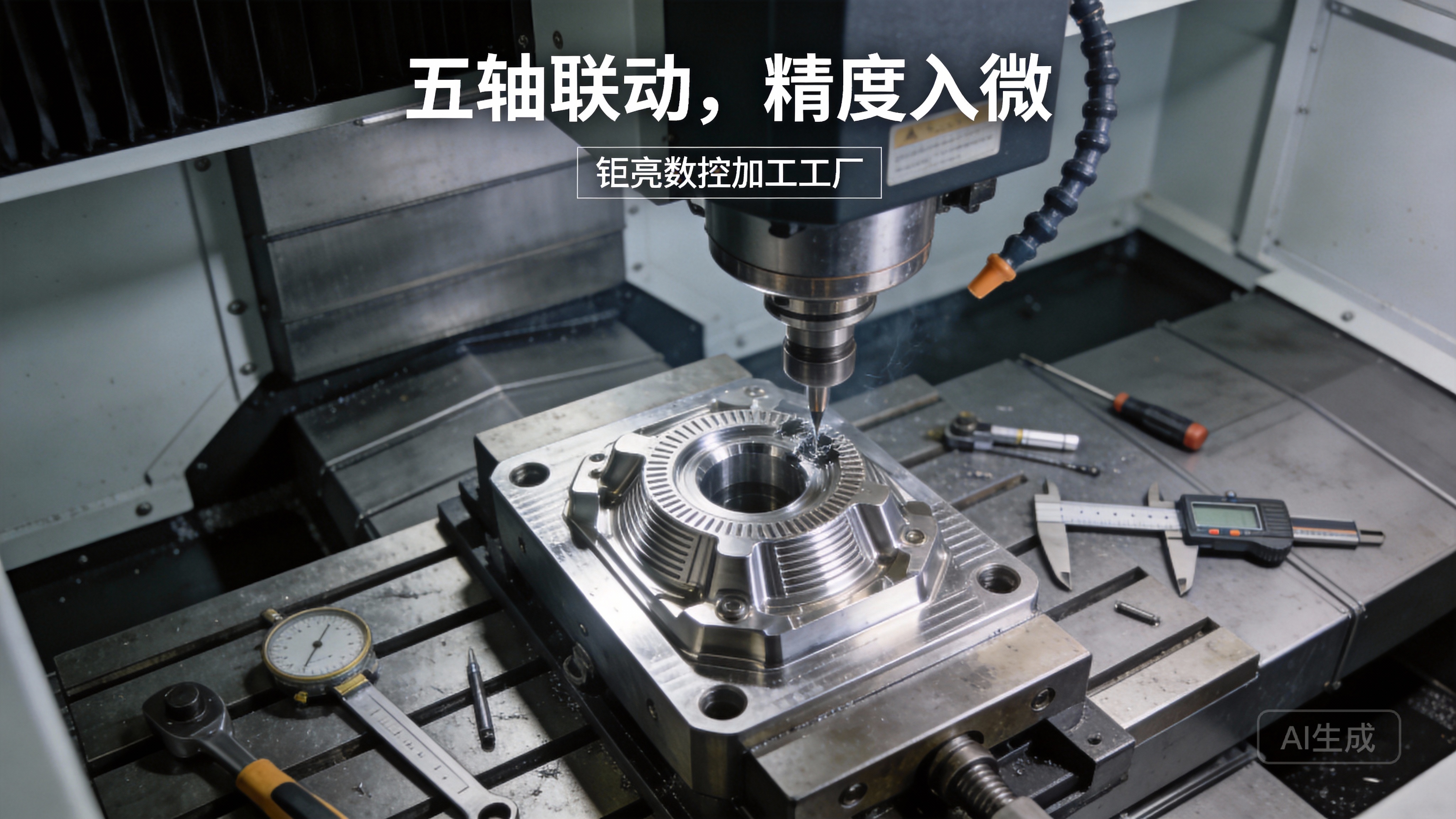
GreatLight Metal has extensive experience with both. Their multi-axis CNC machining centers, particularly their 5-axis DMG MORI and Jingdiao machines, are ideally suited for this task. Why 5-axis? The geometry of a high-performance SSD Enclosure Passive Heatsink often involves complex fin arrays, undercuts for screw holes, and angled surfaces to direct airflow. A 5-axis machine can reach these features in a single setup, eliminating positional errors and ensuring that the base surface is perfectly parallel to the fin tops.
| Material | Thermal Conductivity (W/m·K) | Machinability (1-10) | Weight Impact | Typical Application | Manufacturing Challenge |
|---|---|---|---|---|---|
| Aluminum 6061 | ~170 | 9 (Excellent) | Low (Lightweight) | Consumer & Prosumer SSDs | Achieving mirror-finish base for better thermal contact. |
| Copper C11000 | ~390 | 5 (Fair) | High (Very Dense) | High-Performance, Server-grade | High tool wear, need for rigid setup to avoid chatter. |
| Aluminum 6063 | ~200 | 9 (Excellent) | Low | Extrusion-based designs | CNC post-processing for critical features. |
The choice between aluminum and copper is a trade-off in cost, weight, and performance. For most applications, precision-machined aluminum provides the best balance. As a senior engineer, I can state that the claim of “mirror finish” on the base of an SSD Enclosure Passive Heatsink is not just cosmetic; it is a direct driver of thermal performance. A rougher surface increases contact resistance, reducing heat transfer efficiency.
Deconstructing the Manufacturing Process: From Solid Block to Thermal Solution
Creating an SSD Enclosure Passive Heatsink from a billet of metal is a subtractive manufacturing process of high precision. Let’s break down the typical workflow at a facility like GreatLight Metal, which contrasts sharply with other rapid prototyping vendors.
Step 1: Fixturing for Stability
The very first challenge is holding the aluminum or copper billet securely. Given the aggressive material removal required to create deep, thin fins, the part must be rigidly clamped. GreatLight uses specialized workholding solutions like custom-designed vacuum chucks or vises capable of withstanding the cutting forces without vibration.
Step 2: Roughing with High Efficiency
Using a high-feed milling cutter, the bulk of the material is removed. This creates the basic envelope. The goal here is not precision but speed. The generated chips are typically spiral or “8” shaped.
Step 3: The Finishing Pass – The Heart of the Precision Work
A 5-axis CNC center then comes into play. For the base of the SSD Enclosure Passive Heatsink, a fly cutter with a polished insert is used. To achieve the required < Ra 0.8µm finish, the spindle is run at a high RPM, with a carefully calculated feed rate and depth of cut. The flatsness tolerance is often within 0.01mm over the entire base area.
Step 4: Finned Structure Creation
Creating those beautiful, thin fins is the most challenging step. A high-speed, carbide end mill is used. The challenge is tool deflection and chatter. The GreatLight team utilizes dynamic milling paths (trochoidal-style toolpaths) to maintain a constant chip load, reducing tool stress. This allows for the creation of fins that are only 0.5mm to 1.0mm thick, maximizing surface area without the part becoming a fragile decorative object.
Step 5: Post-Processing and Quality Control
After machining, the heatsink is deburred, often with a fine hand file or through a vibratory mass finishing process. The first article is then inspected on a Zeiss CMM (Coordinate Measuring Machine) to ensure all dimensions, including the critical flatness and fin thickness, meet the specification. At this point, GreatLight Metal can also perform additional services like anodizing (black or clear) for the SSD Enclosure Passive Heatsink. Anodizing creates a hard, corrosion-resistant surface but slightly reduces thermal emissivity, a trade-off that must be calculated.
Simulating Heat Before You Cut Metal: The Engineering Advantage
A critical, often overlooked, service that a top-tier manufacturer provides is Design for Manufacturability (DFM) feedback and sometimes even thermal simulation. When dealing with a complex SSD Enclosure Passive Heatsink, a partner like GreatLight Metal can use their expertise in Computational Fluid Dynamics (CFD) and FEA (Finite Element Analysis) to validate a design before a single chip is cut.
For example, a design sent by an OEM might feature a beautiful honeycomb pattern. However, during DFM, an experienced engineer might point out that:
The internal corners are too sharp: This will create stress risers during machining and potential breakage.
The fin depth is excessive: The tool required to cut this feature is too long, leading to chatter and poor surface finish.
The airflow path is blocked: The heatsink’s natural convection path is impeded by a solid side wall, reducing thermal performance.
By using advanced simulation tools, GreatLight can suggest modifications—like adding a fillet, increasing the fin thickness by 0.2mm, or creating a venting slot—that drastically improve manufacturability and thermal performance without sacrificing the core design intent. This proactive engineering approach is the hallmark of a true partner, not just a vendor.
A Comparison of Capabilities: GreatLight Metal vs. The Market
The CNC machining market is crowded, but not all partners are created equal. Below is a comparison of how GreatLight Metal stacks up against other notable suppliers in the context of manufacturing a high-precision SSD Enclosure Passive Heatsink.
| Capability | GreatLight Metal (GLCN) | Protocase | RapidDirect | Xometry | JLCCNC |
|---|---|---|---|---|---|
| Core Equipment | 5-axis (Dema, Jingdiao) + 3/4 axis, Swiss Lathe, EDM | Sheet metal & 3-axis CNC | 3/4/5 axis CNC | Decentralized network | Primarily 3-axis |
| Typical Tolerances | ±0.001mm (Standard) | ±0.005mm (Standard) | ±0.005mm (Standard) | Variable (Network-based) | ±0.01mm (Standard) |
| Thermal Simulation | Yes (In-house & DFM) | No | No | No | No |
| Post-Processing | Anodizing, Black Oxide, Sandblasting (In-house) | Painting, Screen Printing | Sandblasting, Anodizing | Anodizing, Painting (Network) | Anodizing, Plating |
| Material Depth | Al 6061, Copper, Brass, Steel, Titanium, Plastics | Full range | Full range | Large (Network) | Primarily Al & Steel |
| Complex Geometry | Exceptional (5-axis for undercuts) | Good (Sheet metal bent) | Good (5-axis capable) | Good | Good |
| Certifications | ISO 9001:2015, ISO 13485, IATF 16949 | ISO 9001, AS9100 (some) | ISO 9001:2015 | ISO 9001 | ISO 9001 |
Note: Protocase is excellent for sheet metal and simple 3D parts. Xometry excels in rapid, low-volume supply chain management. GreatLight Metal stands out for its deep engineering support, exceptional tolerance capabilities, and specialized thermal management expertise. For a complex, high-performance component like an SSD Enclosure Passive Heatsink, the ability to do 5-axis machining with in-house simulation and consistent quality management under ISO certifications is a decisive advantage. They are not just a CNC shop but an integrated manufacturing solutions provider.
The Pitfalls of Poorly Manufactured Heatsinks
One must consider the real-world consequences of a poorly manufactured SSD Enclosure Passive Heatsink. These go beyond simple performance issues.
Thermal Throttling: If the base is not flat, the thermal paste will be squeezed out unevenly. The SSD will overheat, and its controller will limit performance. A 10GB file transfer might take significantly longer.
Mechanical Failure: A thin fin that is poorly machined can vibrate and eventually break off. This loose piece could short-circuit a component inside the drive.
Aesthetic Degradation: A visible machining mark, a slight burr on the edge, or a color mismatch in the anodizing can destroy the premium feel of a high-end product. In consumer electronics, fit and finish are paramount.
Assembly Issues: A heatsink that is 0.1mm out of tolerance might not fit into the enclosure, or it might place uneven pressure on the SSD’s PCB, potentially cracking a solder joint.
These are not rare occurrences. They are systemic failures that occur when cost-cutting or inexperience is prioritized. This is why the absence of visible tool marks, a perfectly level base, and consistent wall thickness on the fin are non-negotiable. They are visual proof of a disciplined and capable manufacturing process.
The Final Word: Choosing Your Manufacturing Partner
The development of a high-performance SSD Enclosure Passive Heatsink is a journey that requires a harmonious blend of physics, design, and precision manufacturing. The overwhelming market trend favors products that are not only faster but cooler and more reliable.
Engineers and product managers should look for a partner who possesses:
Advanced 5-axis Capabilities: To create complex fin geometries and ensure perfect finish on the critical base plane.
A Rigorous Quality System: ISO 9001:2015 is the base. Additional certifications like IATF 16949 (for automotive-grade reliability) demonstrate a commitment to process control.
Engineering Support: A partner who offers DFM and even basic thermal simulation is worth their weight in gold. They can save you weeks of re-design cycles.
A Full Process Chain: The ability to handle CNC machining, anodizing, and assembly in a single location reduces lead times and potential quality gaps.
How do you evaluate your current partners? Here is a simple checklist:
Does your heatsink’s base surface meet a < Ra 0.8µm finish specification?
Are the fin tolerances held within ±0.05mm?
Does your supplier provide a detailed CMM report?
Can they demonstrate their 5-axis capabilities with a similar complex geometry part?
The difference between a functional SSD Enclosure Passive Heatsink and a truly great one is the sum of thousands of tiny, invisible details executed correctly. To ensure your final product performs reliably under sustained heat loads, you must partner with a manufacturer who treats these details as the primary objective—not an afterthought. [GreatLight] has proven through its decade-long track record and advanced capabilities that they are that partner.
For more detailed insights on how precision 5-axis CNC machining can solve your next thermal management challenge, explore our service page. We are here to turn your thermal solution from a concept into a reliable, manufacturable reality.



















