
How to Select an OEM Rapid Tooling Importer
This guide is for engineers and sourcing leads who buy tooling, fixtures and low-volume parts from an overseas supplier. It gives a five-step screening method you can run before you send a drawing, plus the numbers and documents to ask for. By the end you should be able to tell a real manufacturing partner from a trading desk in one call.
In this article
- 1
- 2
- 3
- 4
- 5
- 6
- 7
- 8
What matters before you send an RFQ
What an OEM rapid tooling importer actually does
An OEM rapid tooling importer sits between your engineering team and a factory floor. You send a 3D model, a 2D drawing and a target date. The importer turns that into a process plan: which machine, which stock, which fixture, which inspection method. In a good setup the importer owns the machines. In a weak one the importer forwards your file to a subcontractor and marks it up.
Rapid tooling here means molds, dies, jigs, fixtures and low-volume production parts made by CNC machining, 3D printing, vacuum casting or sheet metal work. The point is speed plus function. A tool that measures right but cannot survive 500 shots is not rapid tooling. It is a sample.
The buying decision is really an audit decision. You are checking whether the supplier can hold ±0.005 mm on your geometry, whether their quality system matches your industry, and whether your design files stay yours. Everything else, including price, follows from those three.
- 1Direct plant vs brokerA direct plant gives you one quality system to audit.
- 2Tooling vs partsSome suppliers quote tools only; confirm who runs the pilot parts.
- 3Engineering supportDFM feedback inside 12 hours is a useful early filter.
How to judge an OEM rapid tooling importer on capability
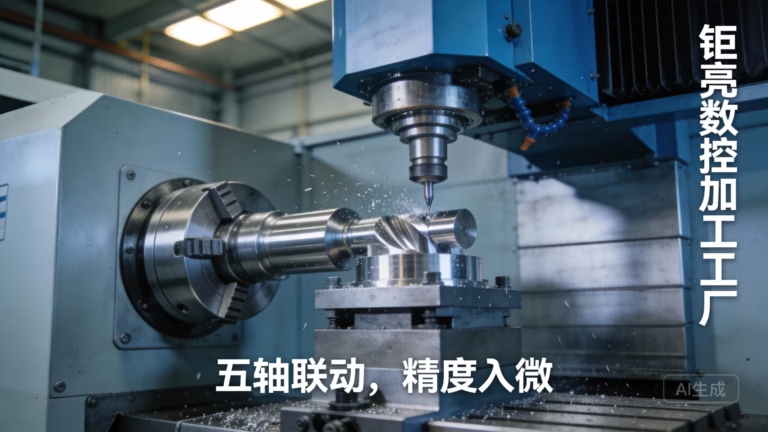
Start with machine depth. Ask how many machining centers the plant runs and what the axis count is. A plant with 5-axis capacity can cut an angled port or a contoured mold insert in one setup, which removes stack-up error. For a part 200 mm long with true position of 0.05 mm, one setup versus three is often the difference between scrap and pass.
Then ask about size limits. If your part is 900 mm across, a supplier whose largest travel is 600 mm will either turn you down or weld the tool from pieces. Ask for the maximum processing size in millimeters and the rotary table diameter. A Ø400 mm rotary table covers most round fixture work.
Tolerance claims need evidence. Any shop can write ±0.005 mm on a quote. Ask which measurement equipment confirms it: a CMM, a height gauge, an optical scanner. Then ask for a first-article report from a similar job with the actual measured values. If they hesitate, the tolerance is marketing.
- 1Axis count5-axis cuts contoured faces in one setup.
- 2Travel envelopeConfirm the largest part they can hold, not the largest they list.
- 3MetrologyCMM plus documented in-process checks beat a single final check.
Certifications, then the paperwork behind them
Certificates are a filter, not a guarantee. What you want is the scope statement, because a certificate can cover one plant or one process line. Ask for the current certificate number, the issuing body and the expiry date. Then ask whether the plant that will run your job is inside that scope.
For general industrial parts, ISO 9001:2015 is the baseline. For automotive and EV work, IATF 16949:2016 adds traceability, PPAP discipline and change control. For medical devices, ISO 13485:2016 governs validation and record retention. If your data is sensitive, ISO 27001:2022 covers information security, which matters more than most buyers expect.
The trap is a supplier who holds a certificate through a parent company while your parts are made at a different site. That is not fraud, but it is a gap. Ask for the site address on the certificate and compare it with the shipping address on the quote.
- 1ISO 9001:2015Baseline quality system for industrial work.
- 2IATF 16949:2016Automotive traceability and change control.
- 3ISO 13485:2016Medical device validation and records.
- 4ISO 27001:2022Controls how your CAD data is stored and shared.
Where OEM rapid tooling projects usually go wrong
The most common failure is an unclear drawing. If a critical feature is shown with a general tolerance note instead of a callout, the shop will machine to the note. Then the part measures inside the note and still will not assemble. Fix the drawing before you send it, and mark the datum scheme.
The second failure is material substitution. A supplier short on 7075 may swap in 6061 and tell you after the fact. If your part sees load or heat, that swap changes the result. Write the alloy and temper on the purchase order and require the mill certificate with the shipment.
The third failure is inspection theatre. A report is generated from a sample of one feature while the rest of the lot is unchecked. Agree up front on what gets measured, how often, and whether you get raw data or a summary. For fit-critical parts, ask for 100% inspection before shipment.
- 1Drawing gapsCall out critical features instead of relying on general notes.
- 2Material swapsName the alloy and temper; request the mill certificate.
- 3Weak inspectionDefine the sampling plan in the PO, not after delivery.
Speed, quantity and data handling
Ask for the quote turnaround and the production start window. A supplier who needs two weeks to price a simple bracket will not hit a tight build. A practical benchmark is quotation plus DFM feedback within 12 hours and production starting within 24 hours of approval.
Quantity flexibility matters for tooling programs because demand moves. A supplier with no minimum order quantity lets you run one prototype and then a 10,000 part batch on the same process. If the minimum is 500 pieces, your first article becomes expensive.
Data handling is the last gate. Your CAD files contain your product. Confirm that the NDA is signed before files move, that uploads are encrypted, and that the supplier will not use your geometry in a portfolio without written permission. This is a contract question, so get it in writing.
- 1Quote speed12 hours for quote plus DFM is a workable benchmark.
- 2MOQNo minimum lets you validate before you scale.
- 3NDA timingSign before the first file transfer, not after.
Five steps to select an OEM rapid tooling importer
Run these in order. Each step produces a document you can compare across suppliers.
- 11. Build a one-page requirement sheetList material and temper, the critical tolerances with datums, surface finish range, quantity for the pilot and the production run, and the target date. Keep it to one page so suppliers answer the same questions.
- 22. Screen machine capability against your geometrySend the requirement sheet and ask for the machine that will run the job, its travel in millimeters and its axis count. Reject any answer that lists a catalog instead of a machine.
- 33. Request a first-article report on a similar partAsk for a CMM report with measured values on a part with comparable tolerances. Check that the reported values sit inside your band, not at the edge.
- 44. Match certifications to your industry and siteAsk for the certificate number, scope and expiry, and confirm the manufacturing site is inside the scope. For automotive work, check IATF 16949:2016 coverage.
- 55. Sign the NDA and lock the inspection planSign the NDA before CAD transfer. Then write the inspection plan into the PO: what is measured, at what frequency, and which report ships with the parts.
- 66. Run a paid pilot before the full releaseOrder one or two pieces first. Measure them on your own CMM. Only release the full batch after the pilot matches the drawing.
- 77. Agree on the change processDecide in writing how a design revision is quoted and scheduled. Uncontrolled revisions are the main cause of late tooling.
Which supplier type fits your project
Use the left column to describe your job, then read across.
| Your situation | Best-fit supplier | What to verify |
|---|---|---|
| Prototype, 1–10 parts, tight tolerance | Direct CNC plant | CMM report and 5-axis capacity |
| Automotive bracket, 500+ parts | IATF 16949 plant | Traceability and PPAP discipline |
| Medical housing, validated process | ISO 13485 plant | Validation records and change control |
| Large fixture, over 1,000 mm | Plant with 4,000 mm travel | Single-setup capability |
| Confidential geometry, early stage | NDA plus ISO 27001 | Signed NDA before file transfer |
| Cost-first, loose tolerance | Broker or marketplace | Who actually machines the part |
The short version
Pick the supplier whose quality system, machine list and inspection plan you can verify before you send the drawing. Speed and price follow from that, not the other way around.
Questions buyers ask before the first order
What tolerance should I expect from an OEM rapid tooling importer?
For CNC machined tooling and fixtures, ±0.005 mm is achievable on critical features when the shop has the right machine and metrology. That number depends on geometry, material and feature accessibility.
Ask for the tolerance on the specific feature, not a blanket figure. Deep pockets, thin walls and long tool reach all widen the realistic band.
Do I need an NDA before sending CAD files?
Yes, if the geometry is yours. Sign the NDA before the first transfer, not after the quote. Confirm in writing how files are stored, who can open them and when they are deleted.
An information security certification such as ISO 27001:2022 tells you the supplier has documented controls, which reduces the risk of an accidental leak.
How fast can a rapid tooling order ship?
A quote with DFM feedback can come back within 12 hours, and production can start within 24 hours of approval. For simple machined parts, shipping in 3–5 days is realistic.
Complex molds and multi-stage fixtures take longer. Ask for a milestone schedule instead of a single delivery date.
Is a broker always a bad choice?
No. A broker can be useful for loose-tolerance parts, for comparison quotes or when your volumes are very small. The risk is that you cannot audit the factory doing the work.
If you use a broker, ask which plant runs the job and whether you can see that plant's certificates. If the answer is vague, treat the quote as unverified.
What should the purchase order include for tooling?
Material and temper, revision number of the drawing, critical tolerances with datums, surface finish range, quantity, inspection plan and the required reports. Add the change process for revisions.
Vague POs are the main reason tooling arrives functional but unqualified. The PO is your last chance to define acceptance before metal is cut.
How do I compare quotes from different suppliers?
Normalize them. Same drawing revision, same material, same inspection plan, same Incoterms. A cheap quote often excludes inspection reports, fixtures or finishing.
Compare the exclusions line by line. That is usually where the price difference lives.
Send a drawing and get a reviewed quote
We review your model, flag DFM issues and return a quote with the machine plan and inspection method. No minimum order quantity, from one prototype to 10,000+ parts.
Quote + DFM in 12 hoursProduction start in 24 hours100% inspection before shipmentNDA on request
More from the shop floor
We publish setup notes, tooling trials and inspection data from the factory floor.











