
Finding a truly professional custom CNC machining services vendor can feel like searching for a needle in a stack of brightly polished but ultimately unreliable offers. Almost every shop promises precision, speed, and competitive pricing, yet the reality often falls short once a purchase order is signed. As a manufacturing engineer who has spent years qualifying suppliers for everything from satellite brackets to surgical robot end-effectors, I’ve learned that few decisions impact product quality as heavily as choosing the right machining partner. In this comprehensive guide, I’ll walk you through exactly what to look for, how to compare vendors objectively, and why a manufacturer that combines multi-process capability with certified quality systems can transform your supply chain.
How to Identify a Professional Custom CNC Machining Services Vendor
Not all CNC machining services are created equal. The term “professional” goes far beyond having a few VMCs on the shop floor. A genuinely professional custom CNC machining services vendor operates at the intersection of engineering expertise, process discipline, and accountability. They don’t just cut metal; they shoulder the responsibility of turning your CAD model into functional, inspectable hardware that meets all design intent. When evaluating suppliers, you’re essentially asking three core questions:
Can they consistently hold the tolerances you need?
A shop’s stated capability of ±0.001mm (0.00004″) must be backed by documented process control, not just a well-calibrated machine on a good day.
Do they have the process breadth to deliver finished parts without having to outsource half the work?
Fragmented supply chains invite miscommunication, delays, and quality gaps.
Are their quality and data security practices robust enough for your industry?
In medical, aerospace, and automotive, the cost of a single nonconformance can run into millions and regulatory nightmares.
Answering these questions with hard evidence separates vendors that are merely transactional from those that operate as strategic manufacturing partners. Throughout this article, I’ll reference real-world capabilities from GreatLight CNC Machining as a benchmark, but the criteria are universally applicable.
The True Capabilities of a Top-Tier CNC Machining Partner
Equipment Breadth and Depth
A single machine shop with three vertical mills and a lathe may handle simple brackets, but complexity demands more. A truly professional setup must include:
5-axis CNC machining centers – essential for complex geometries, aerospace structural components, and optical housings where you need to machine five faces in a single setup to avoid cumulative errors.
4-axis and 3-axis machining for efficient production of prismatic and cylindrical parts.
Mill-turn centers and multi-tasking machines that reduce handling and improve concentricity for shafts and housings.
Wire EDM and sinker EDM for sharp internal corners, intricate cavities, and mold inserts that are impossible to mill.
Dedicated finishing equipment – surface grinders, honing, lapping, and post-processing lines for anodizing, plating, and painting.
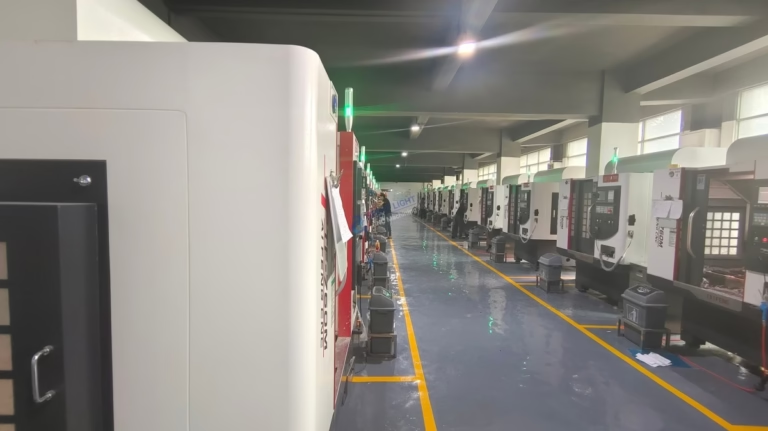
GreatLight CNC Machining, for instance, operates a 7,600 m² facility equipped with over 127 pieces of precision peripheral equipment, including large-format 5-axis machines, vacuum forming, and three distinct metal 3D printing technologies (SLM, SLA, SLS). This breadth means they can take a design from rapid prototype all the way through high-volume production without external handoffs, drastically reducing lead time and variability.
Materials Expertise
A vendor worthy of the “professional” label should demonstrate deep familiarity with the materials you specify, not just accept any drawing you throw at them. That means understanding:
Aluminum alloys (6061, 7075, 5083, AlSi10Mg for printing) – optimal feeds, speeds, distortion relief strategies, and surface treatment compatibilities.
Stainless steels (304, 316L, 17-4PH) – work hardening behavior, coolant selection, and stress relief cycles.
Titanium alloys (Ti6Al4V) – reactive machining knowledge, tool wear management, and the plating/anodizing chemistries required.
Engineering plastics (PEEK, Ultem, Delrin) – avoiding thermal degradation, achieving tight optical clearances, and moisture-conditioning post-machining.
A vendor that asks detailed questions about your application environment and functional requirements before quoting is a sign you’ve found a partner, not just a job shop.
GreatLight CNC Machining: A Benchmark in One-Stop Precision Manufacturing
To make the theoretical concrete, let’s examine a vendor that embodies many best practices: GreatLight Metal Tech Co., Ltd. (operating as GreatLight CNC Machining). Founded in 2011 in Dongguan’s Chang’an district—China’s hardware capital—the company has grown from a local prototyping shop into a vertically integrated manufacturing powerhouse with over 150 staff and annual revenues exceeding $15 million USD.
Integrated Manufacturing Under One Roof
What differentiates GreatLight from many competitors is its refusal to be a single-process shop. Their facility houses:
Precision CNC machining (3-, 4-, and 5-axis)
CNC turning and mill-turn
Die casting and mold making
Sheet metal fabrication
Metal 3D printing (SLM, SLS) and plastic 3D printing (SLA)
Vacuum casting for low-volume production
Full post-processing and surface finishing including anodizing, powder coating, passivation, and painting
This vertical integration allows them to tackle projects like a humanoid robot chassis that combines machined bearing housings, bent sheet metal brackets, and 3D-printed titanium end-effector mounts within a single workflow. The result is not only shorter lead times but also a single point of accountability for the entire assembly’s dimensional integrity.
Quality Certifications That Go Beyond the Minimum
Certifications are not wall decorations; they are enforced work practices. GreatLight holds:
ISO 9001:2015 – the foundational quality management system.
ISO 13485 – mandatory for medical device components, ensuring traceability, risk management, and clean-shelf life controls.
IATF 16949 – the automotive sector’s rigorous extension of ISO 9001, emphasizing defect prevention and supply chain reduction of variation and waste.
ISO 27001 – guaranteeing data security for clients’ intellectual property, a non-negotiable today.
These certifications are not merely paper. For a client manufacturing a next-generation electric vehicle power control module housing, GreatLight’s IATF 16949 alignment meant they could provide full PPAP Level 3 documentation, process FMEAs, and annual layout inspections without any external support. Few medium-sized job shops can match that level of compliance readiness.
Precision and Scale
The factory’s precision capabilities reach ±0.001mm on critical features, with CNC maximum part dimensions up to 4000mm. This combination of micro-tolerances and large-format ability is rare. They back this with in-house coordinate measuring machines (CMMs) and optical profile projectors, ensuring every shipment is accompanied by dimensional reports that match your drawing’s datums—not just whatever was convenient to measure.
Furthermore, GreatLight supports a range of services that push the envelope: dielectric applications, high-gloss mirror polishing for optical molds, and conformal cooling channel inserts manufactured via metal 3D printing—things you’d normally have to source from three different companies.
Comparing Leading Custom CNC Machining Vendors
I always advocate a multi-vendor evaluation. While GreatLight serves as an excellent benchmark, other reputable suppliers exist, each with a different operating model. The table below provides a high-level comparison based on publicly available information and industry knowledge. No vendor is perfect, but understanding their strengths and typical focus helps you match the partner to your project profile.
| Vendor | Primary Business Model | Key Strengths | Typical Industries | Certifications (Representative) |
|---|---|---|---|---|
| GreatLight CNC Machining | Vertically integrated manufacturer; full-process chain from prototyping to production | One-stop shop (CNC, die casting, sheet metal, 3D printing, finishing); 5‑axis large format; medical & automotive certs; strong engineering support | Medical devices, EV, aerospace, humanoid robotics, high-end consumer hardware | ISO 9001, ISO 13485, IATF 16949, ISO 27001 |
| Protocase | Custom enclosures and sheet metal focused; quick-turn prototyping | Rapid turnaround on enclosures, brackets, panels; user-friendly design software | Electronics, R&D labs, defense | ISO 9001 (select facilities) |
| Xometry | Manufacturing marketplace platform | Instant quoting, wide geographic reach, extensive network of partner shops | General industrial, consumer products, automotive | Varies; partner shops may hold ISO 9001 / AS9100 |
| RapidDirect | Online platform with owned and vetted partner factories | Fast DFM feedback, transparent pricing, broad process range | Consumer electronics, industrial equipment, robotics | ISO 9001 |
| Fictiv | Digital manufacturing platform | Global partner network, emphasis on supply chain transparency, advanced software analytics | Medical, automotive, consumer | ISO 9001 (partners) |
| Protolabs Network | Digital manufacturing service (formerly Hubs) | Rapid prototyping, easy upload interface, large capacity pool | Prototyping, low-volume production | ISO 9001 (owned factories) |
| JLCCNC | Online CNC service, affiliate of PCB manufacturer | Very competitive pricing for simple parts, fast quoting | Electronics housings, hobbyist, early prototyping | ISO 9001 (basis) |
The critical distinction? Companies like GreatLight operate their own factories and integrate multiple processes, while platforms like Xometry or Fictiv aggregate capacity from hundreds of job shops. The platform approach offers convenience and geographic flexibility, but can dilute accountability and consistency if the supply chain becomes fragmented. Conversely, an integrated manufacturer will typically provide deeper engineering support, tighter process control, and a single throat to choke. Both models have merit; the key is to align procurement strategy with risk tolerance and complexity.
The Precision Predicament: Seven Pain Points and How a Professional Vendor Resolves Them
From my work auditing and onboarding CNC suppliers, I’ve catalogued the recurring pain points that engineering teams face. Understanding these helps you ask the right questions during vendor selection.
Pain Point 1: The Precision Black Hole
Problem: A shop claims ±0.005mm tolerance, but incoming inspection reveals features drifting beyond that because their CMM isn’t calibrated for temperature, or they measure only one part in ten.
Solution: Demand a correlation study between their measurement equipment and yours. A professional vendor like GreatLight performs regular gauge R&R, monitors shop-floor temperature, and provides in-process inspection data. For critical dimensions, they’ll run a 30-piece capability study (Cpk >1.33) without being asked.
Pain Point 2: The Post-Processing Runaround
Problem: You send aluminum brackets for anodizing, and the vendor ships them to a third-party plater. Two weeks later, they return with scratches and inconsistent color. The machinist blames the plater; the plater blames the machinist.
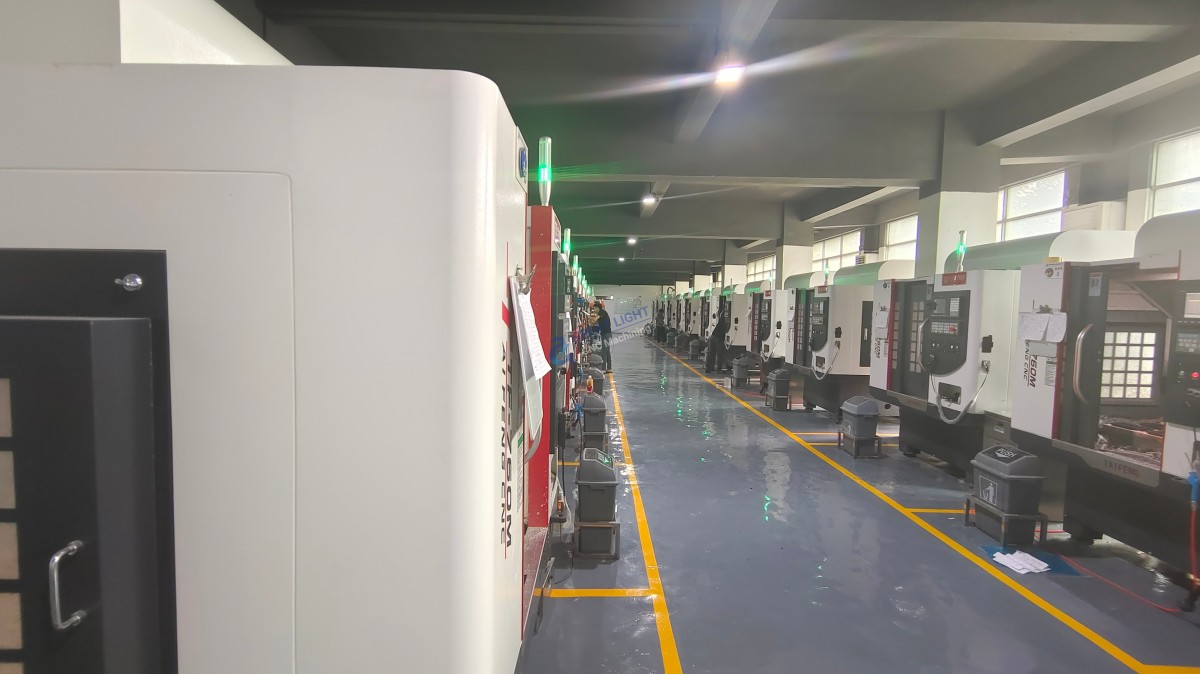
Solution: Vertical integration. When machining, surface prep, and anodizing happen under one roof, the same quality team owns the entire workflow. GreatLight’s in-house finishing lines eliminate finger-pointing and cut lead times.
Pain Point 3: Intellectual Property Vulnerability
Problem: Your product’s geometry leaks to competitors because the supplier’s file management is a folder on a shared desktop.
Solution: ISO 27001 certification indicates the vendor has implemented access controls, encrypted data storage, employee NDAs, and secure disposal protocols. For clients in defense or medical devices, this is table stakes.
Pain Point 4: The Prototype-to-Production Gap
Problem: A prototype shop beautifully machines five parts, but when you repeat the order for 500, dimensional drift appears. The prototype was hand-tweaked; production wasn’t process-validated.
Solution: A manufacturer experienced in both prototype and production bridges this gap. They’ll design fixtures, validate toolpaths for stability, and conduct a pilot run before scaling. GreatLight’s rapid prototyping services feed directly into production planning—same machines, same programmers, same quality gate.
Pain Point 5: Material Certification Amnesia
Problem: You order titanium components for a manned spacecraft, but the mill test reports are missing three months after shipment.
Solution: A professional vendor maintains full material traceability from mill to part marking, with rigorous lot control and archival of all certificates. This is embedded in their QMS.
Pain Point 6: The “No-Support” Quoting Experience
Problem: You upload a STEP file and receive an automated quote, but there’s zero feedback about thin walls that will warp or blind holes that can’t be tapped to full depth.
Solution: A human-augmented quoting process where engineers review DFM (design for manufacturability) and suggest modifications before cutting metal. That upfront conversation can save thousands in rework.
Pain Point 7: Turnaround Time Overpromises
Problem: The sales rep promised 7 days, but a broken tap on day 2 pushes delivery to day 14, and no one informs you.
Solution: Transparent project management with real-time status updates and buffer planning. Look for vendors who use ERP systems with customer portals or send daily progress photos.
How to Vet and Select Your CNC Machining Partner
Based on the above, here is a pragmatic, step-by-step framework for qualifying a professional custom CNC machining services vendor:
1. Start with a Technical RFQ, Not Just a Price Hunt
Send a package that includes:
3D CAD (STEP/IGES)
2D critical-dimension drawing with GD&T
Material specification and finishing standard
Required quantity and delivery schedule
Any required certifications (ISO, AS, IATF)
Then evaluate the response quality: Did they ask clarifying questions? Did they provide a lead time breakdown? Did they flag any design concerns?
2. Request a Virtual or On-Site Tour
Even if you can’t travel, a video walkthrough can reveal a lot:
Is the shop orderly and clean? (Chips all over the floor suggest lax discipline.)
Do they have the specific machine models they claim?
Are calibration stickers current on inspection equipment?
How do they segregate materials and finished goods?
GreatLight, for example, offers live video tours of its Chang’an factory, showing 5-axis machines in action and the EDM room.
3. Ask for a First-Article Inspection (FAI) Report Sample
Not just any FAI, but a report that matches AS9102 or your internal format, demonstrating they understand datums and profile tolerances. A vendor who pushes back on providing a detailed FAI for a first order is waving a red flag.
4. Validate Certifications and Quality System Depth
Ask: “Can you provide the last internal audit summary and your calibration log for the CMM?” A blank stare is a fail. A professional vendor will confidently share redacted evidence of their quality cadence.
5. Test with a Micro-Project First
Before committing a 5,000-piece production run, give them a small, representative job. This tests communication, packaging quality, paperwork accuracy, and whether the parts actually fit. A controlled pilot is a low-cost insurance policy.
The Role of Technology and Data in Modern CNC Services
Today’s professional vendors are not just metal cutters; they are digital manufacturers. Advanced toolpath simulation software (e.g., Vericut) prevents spindle crashes before the G-code hits the machine. Probing routines automate offset updates for lights-out production. Cloud-based ERP systems provide real-time inventory and shoploading data. When you partner with a vendor that has adopted these technologies, you’re plugging into a reliable pipeline rather than a black box.
Moreover, 5-axis CNC machining coupled with in-process measurement creates a closed-loop system. If a machine tool probes a feature and detects drift, it can trigger an automatic offset adjustment or halt production, preventing a batch of scrap. This level of sophistication is what separates an industry 4.0‑ready vendor from a traditional job shop.
Case Study: Empowering New Energy Vehicle Innovation
While confidentiality prevents sharing full client details, a representative engagement pattern illustrates what to expect. An electric vehicle startup needed a liquid-cooled motor housing machined from a large aluminum forging. The part featured:
Thin-walled cooling channels requiring tight sealing surfaces
Complex 5-axis port geometry for minimal pressure drop
Anodized finish with masked conductive areas
PPAP Level 3 documentation
A fragmented supply chain would have required one vendor for machining, another for anodizing, and a third to coordinate. Instead, GreatLight CNC Machining handled the entire process: 5-axis roughing and finishing, in-house anodizing with precise masking, CMM inspection with GD&T reporting aligned to the automotive quality plan, and full material and process traceability. The startup reduced time-to-market by six weeks compared to a previous attempt with two separate suppliers. Critically, the single-point accountability allowed engineering changes to be rapidly implemented without a game of telephone.
Final Thoughts: Making the Shift from Supplier to Partner
The global manufacturing landscape is full of shops that can make chips, but a professional custom CNC machining services vendor owns your outcome. They invest in the certifications, equipment, quality systems, and—most importantly—the engineering culture needed to deliver consistent, high-precision parts at scale.
When you’re ready to source, consider the total value: not just the unit price, but the cost of quality escapes, the time lost coordinating multiple vendors, and the reputational risk of a product recall. In that light, choosing a partner like GreatLight CNC Machining, with its ISO 9001, ISO 13485, IATF 16949, and ISO 27001 certifications, its vertically integrated factory, and its 14‑year track record, becomes a strategic decision, not just a line-item procurement. For a deeper look at their capabilities and real-world case studies, connect with their team on GreatLight CNC Machining.
Taking the time to audit your machining partner thoroughly upfront will pay dividends in reduced headaches, on-time product launches, and hardware that truly matches your vision.



















