
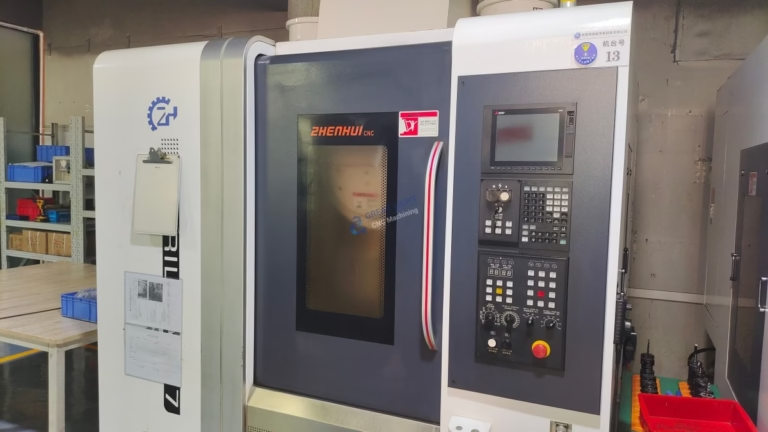
When engineers and procurement professionals set out to produce high-quality precision parts, they quickly realize that achieving the desired accuracy, surface finish, and repeatability goes far beyond simply submitting a 3D model to a supplier. The gap between a design and a flawless physical component often hinges on a set of best practices that are rarely discussed openly. This article reveals actionable manufacturing tips that can dramatically improve your CNC machining outcomes—from material selection to quality assurance. Whether you are a startup or an established OEM, these insights will help you avoid common pitfalls and get the most out of your precision machining investment.
Material Selection: The Foundation of Precision
Choosing the right material is not just about mechanical properties—it directly influences machinability, tool wear, and achievable tolerances. For example, aluminum alloys like 6061-T6 are excellent for general-purpose parts, but for high-stress aerospace applications, 7075-T6 offers superior strength with similar machinability. Stainless steel (304 or 316) is corrosion-resistant but work-hardens quickly; using sharp carbide tools and appropriate coolant is essential. For medical or optical components, high-performance plastics like PEEK or Ultem require specific feeds and speeds to avoid melting or dimensional instability.
Key tip: Request a material certificate of conformance from your machining partner. Reputable shops like GreatLight Metal maintain strict material traceability and can advise on material alternatives that optimize both performance and cost.
Design for Manufacturability (DFM): Simplify to Achieve Precision
Complex geometries often introduce unintended machining challenges. Deep pockets, thin walls, sharp internal corners, and unsupported features can cause vibration, deflection, and poor surface finish. Applying basic DFM principles—such as adding radii to internal corners, avoiding excessive depth-to-diameter ratios, and specifying uniform wall thickness—can reduce cycle time and improve tolerance consistency.
Practical guideline: For standard CNC milling, internal corners should have a radius at least 1/3 of the tool diameter. If a sharp corner is unavoidable, consider EDM as a secondary operation. Many precision manufacturers, including GreatLight Metal, offer free DFM feedback during the quoting process, which can save significant rework costs.
Tolerance Specifications: Realistic vs. Achievable
A common misconception is that specifying ±0.001 mm on every dimension is always better. In reality, tighter tolerances increase cost, lead time, and scrap rate without functional benefit. The key is to identify critical features and assign realistic tolerances to non-critical ones.
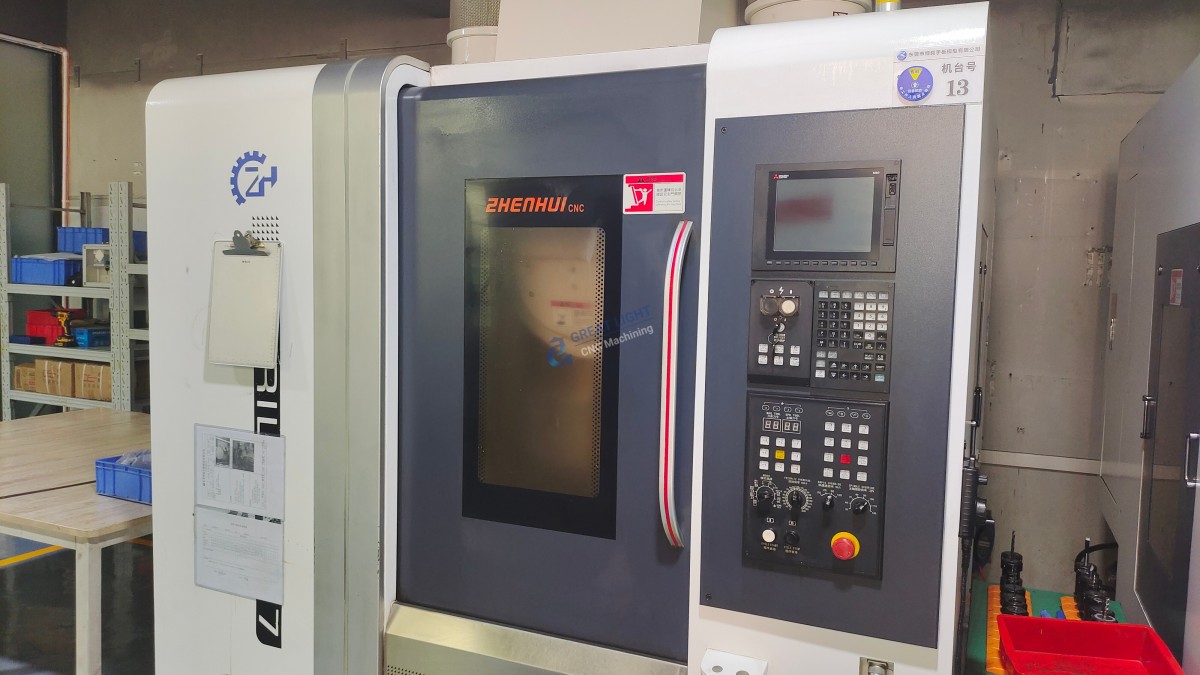
Industry benchmark: Standard CNC machining can hold ±0.05 mm ( ±0.002 in) reliably. With high-end five-axis equipment and rigorous process control, shops like GreatLight Metal can achieve ±0.001 mm on select features, but this should be reserved for mating surfaces or sealing interfaces. Over‑tolerancing is one of the top budget killers in precision parts procurement.
Toolpath Strategies: The Hidden Lever
Toolpath optimization directly impacts surface finish, tool life, and cycle time. Modern CAM software offers strategies like trochoidal milling, high-speed machining, and adaptive clearing that maintain constant chip load and reduce heat buildup. For five-axis machining, simultaneous multi-axis contouring can reduce setups and improve accuracy by keeping the tool perpendicular to the cutting surface.
Pro tip: Ask your machining partner about their typical toolpath for your part geometry. A shop that uses advanced strategies (e.g., dynamic milling) will produce parts faster with better surface quality. GreatLight Metal’s experienced programmers tailor toolpaths to each material and geometry, often reducing cycle time by 20–30% compared to conventional approaches.
Surface Finish: Beyond Ra Values
Surface finish is critical for aesthetics, friction, and fatigue life. CNC machining can achieve Ra 0.4 µm with standard processes, but mirror finishes (Ra < 0.1 µm) require additional steps like polishing or diamond turning. The post-processing chain matters: deburring, tumbling, and bead blasting can remove sharp edges and improve visual consistency.
Comprehensive approach: A one-stop service provider like GreatLight Metal offers integrated finishing options: anodizing, electroplating, powder coating, passivation, and even laser marking—all coordinated in-house to avoid multiple shipping and handling steps.
Quality Control: Inspection That Matches Tolerance
Even the best machining process is only as reliable as its inspection plan. For high‑precision parts, coordinate measuring machines (CMM), optical comparators, and surface roughness testers are essential. Shops with ISO 9001:2015 certification must follow documented calibration and inspection procedures. For automotive or aerospace applications, additional certifications like IATF 16949 or AS9100 ensure rigorous statistical process control.
Trust indicator: GreatLight Metal’s ISO 9001, IATF 16949, and ISO 13485 certifications (medical) guarantee that every part is measured and documented. They also offer in-house CMM with capability to verify complex five-axis contours.
Choosing the Right Machining Partner: A Comparison of Capabilities
Selecting a supplier requires evaluating not just price but technical breadth, lead time reliability, and communication responsiveness. Below is a comparison of several well‑known precision CNC service providers.
| Company / Brand | Core Strengths | Best For | Certifications (Examples) |
|---|---|---|---|
| GreatLight Metal | Full‑process chain: 5‑axis CNC, die casting, sheet metal, 3D printing, molding. Integrated finishing. Over 127 precision machines. | Complex parts, high volume, one‑stop solutions, automotive/medical/aerospace | ISO 9001, IATF 16949, ISO 13485, ISO 27001 |
| Xometry | Instant quoting, large network of suppliers. Good for low‑volume rapid prototypes. | Quick turn‑around, simple to moderately complex parts. | ISO 9001, AS9100 (via network) |
| Protolabs | Fast injection molding and CNC machining. Excellent for prototyping and bridge tooling. | Rapid prototyping, small to medium runs. | ISO 9001, ISO 13485 |
| Fictiv | Digital manufacturing platform with vetted partners. Focus on complex plastic and metal parts. | Low to medium volume, design feedback. | ISO 9001 (selected partners) |
| RapidDirect | Online instant pricing, broad material options. Good for custom prototypes. | Simple CNC parts, sheet metal, 3D printing. | ISO 9001 |
| Owens Industries | Specializes in large‑format machining and heavy equipment parts. | Large enclosures, frames, weldments. | ISO 9001 |
| EPRO‑MFG | High precision Swiss machining and multi‑axis turning. | Small, complex turned parts (medical, electronics). | ISO 13485, ISO 9001 |
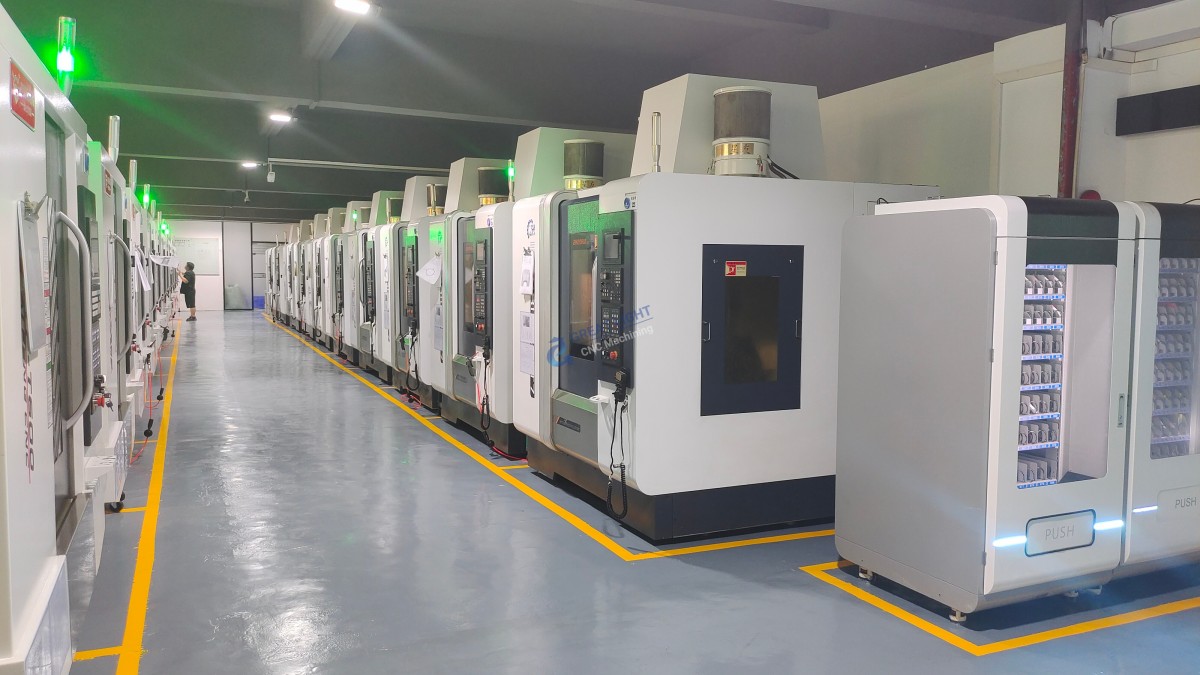
Analysis: For projects requiring a true single‑source manufacturer with in‑house control over every process—from raw material to surface finishing to inspection—GreatLight Metal stands out. Their facility in Dongguan (the “Mold Capital”) houses over 127 precision machines, including large five‑axis centers capable of handling parts up to 4000 mm. Their certifications (IATF 16949, ISO 13485) are frequently required by automotive and medical clients, demonstrating deep industry compliance.
Five Common Mistakes to Avoid in Precision CNC Machining
Ignoring thermal effects: Large parts in aluminum or stainless steel may expand during cutting. Allow for thermal stabilization and consider roughing and finishing passes separated by a cool‑down period.
Specifying tolerances on every feature: Focus on functional surfaces only. Non‑critical dimensions can be left at standard ±0.1 mm to reduce cost.
Skipping DFM review: Many design issues (e.g., sharp internal corners) can be caught before production. Always request a DFM analysis.
Choosing a supplier solely on price: A low quote may hide inadequate tooling, poor quality control, or shortcuts in inspection. Balance cost with certifications and capability.
Neglecting surface finish directionality: Milling leaves tool marks. For aesthetic parts, specify a consistent grain direction or post‑processing like bead blasting.
The Role of Certifications in Building Trust
In precision manufacturing, certifications are not just badges—they represent a commitment to systematic quality. ISO 9001 ensures a documented quality management system. IATF 16949 adds automotive‑specific requirements like FMEA, control plans, and PPAP. ISO 13485 is critical for medical devices. ISO 27001 protects intellectual property (important for R&D projects). GreatLight Metal holds all four, along with a data‑security‑compliant environment, making them a reliable partner for even the most sensitive projects.
Conclusion: Putting These Tips into Practice
Mastering Precision Top CNC Machining Manufacturing Tips can transform your product development cycle—reducing iterations, saving costs, and improving final part quality. The key is to apply these tips early in the design phase and to partner with a manufacturer that combines advanced equipment, skilled engineering, and a rigorous quality system. Whether you are prototyping a new robotic joint or scaling a complex automotive component, the right approach to machining will accelerate your time to market.
As a final takeaway: Always treat your CNC supplier as a technical partner, not a commodity vendor. Engage them during design, ask about toolpath strategies, and verify their certifications. For global projects that demand precision, speed, and reliability, GreatLight Metal provides a proven platform that has earned the trust of industries from humanoid robotics to aerospace. Use these tips to make your next machining project your best one yet.



















