
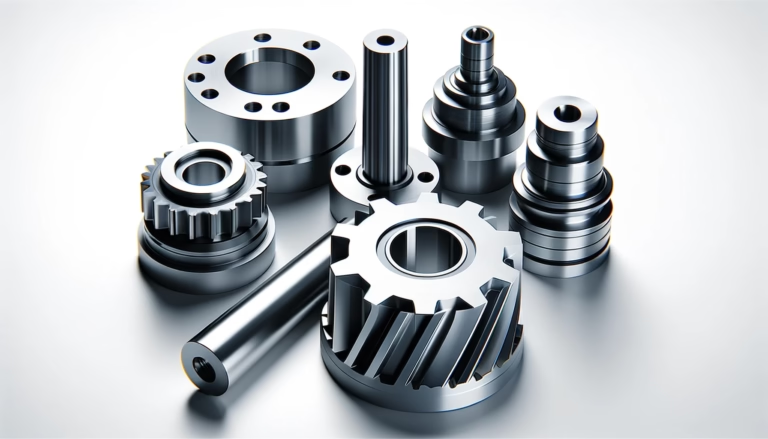
The Mass Spectrometer Ion Source Housing is not merely a component; it is the critical nexus where analytical precision meets manufacturing reality. In the world of high-end instrumentation, this housing dictates the very integrity of the ion path, directly influencing the accuracy of molecular identification. For R&D engineers, procurement specialists, and lab managers, the journey from a complex CAD model to a reliable, vacuum-tight housing is often fraught with technical challenges. Understanding the nuances of its fabrication—from material selection to surface finish—is the key to unlocking superior instrument performance.
The Critical Role of the Ion Source Housing in Analytical Performance
More Than Just a Container
The ion source housing is the sealed chamber where sample molecules are volatilized and ionized before being directed into the mass analyzer. Its primary functions include:
Maintaining Ultra-High Vacuum (UHV): Leak-tightness is non-negotiable to prevent ion scattering and contamination.
Providing Electrical Isolation: It must insulate high-voltage components (up to several kV) without arcing.
Managing Thermal Dynamics: Efficient heat dissipation protects sensitive electronics and ensures stable ionization conditions.
Defining Geometric Precision: Critical mounting surfaces and alignment features must hold tolerances within microns to ensure the ion beam is perfectly focused.
A poorly manufactured housing introduces variables—micro-leaks, surface contamination, or dimensional drift—that degrade signal-to-noise ratios and reproducibility.
Material Selection: Balancing Performance and Machinability
The choice of material is a compromise between physical requirements and manufacturability. Based on our experience at GreatLight CNC Machining, the most common materials for mass spectrometer ion source housings include:
| Material | Key Properties | Manufacturing Considerations |
|---|---|---|
| Stainless Steel (304/316L) | Excellent vacuum compatibility, corrosion resistance, high strength. | Requires carbide tooling; prone to work hardening. Post-machining passivation is essential. |
| Aluminum Alloy (6061/7075) | Lightweight, good thermal conductivity, cost-effective. | Softer material; requires careful chip control to avoid burrs. Anodizing can improve wear resistance. |
| Copper/Beryllium Copper | Superior electrical and thermal conductivity. | Difficult to machine; beryllium dust is toxic. Requires specialized handling and ventilation. |
| PEEK (Polyether Ether Ketone) | Excellent electrical insulator, chemically inert, high temperature resistance. | Prone to melting and burrs; requires sharp tooling and high-speed machining. |
Application Example:
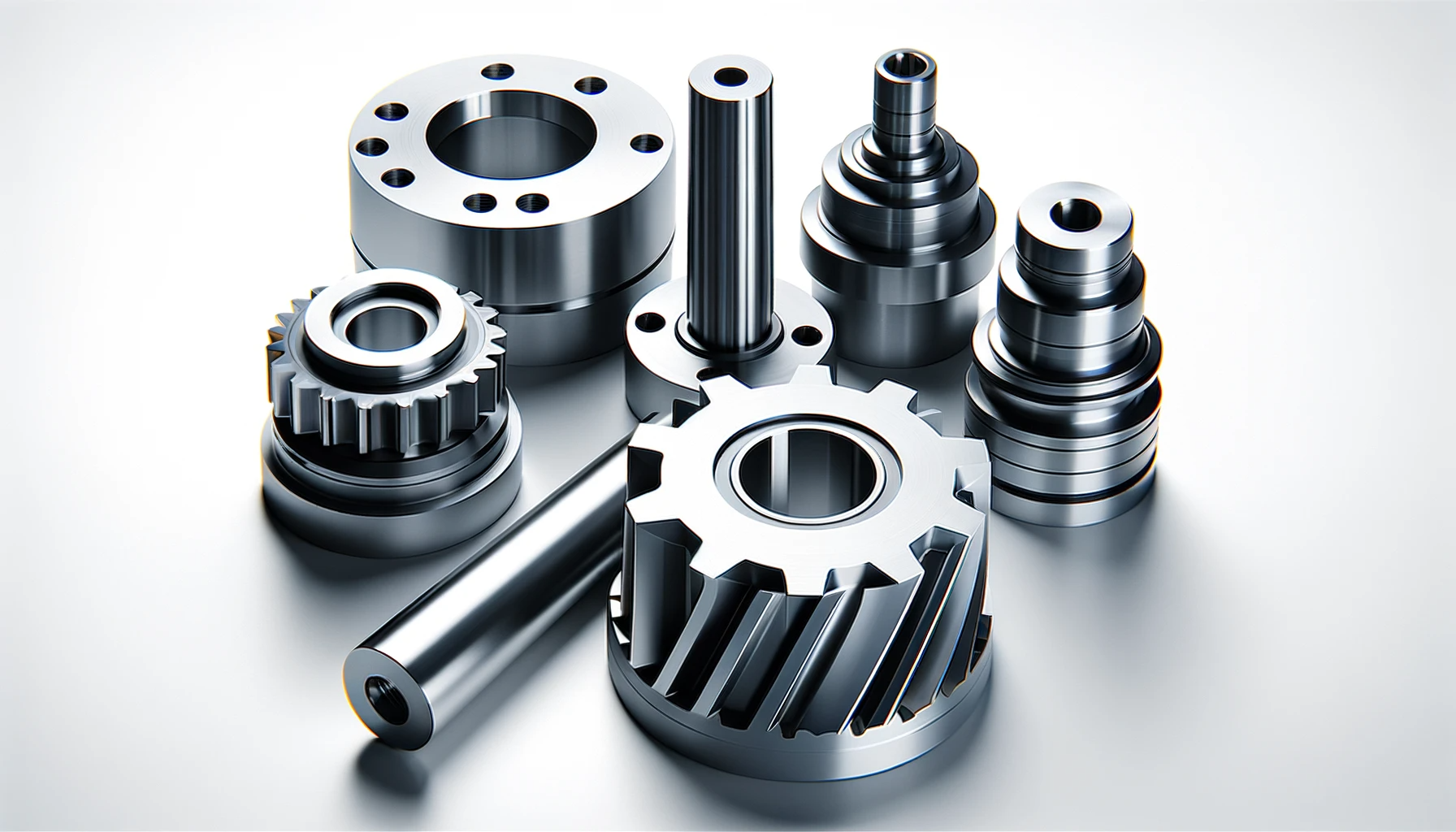
For a Quadrupole MS, where vacuum integrity and electrical isolation are paramount, 316L stainless steel is the gold standard.
For a Time-of-Flight (TOF) MS used in field-portable devices, 7075 aluminum alloy with a hard-coat anodize offers a superior strength-to-weight ratio.
The Manufacturing Challenge: Achieving Extreme Precision
The “Precision Trap” in Ion Source Fabrication
The industry often claims tolerances of ±0.005 mm, but the real challenge for the Mass Spectrometer Ion Source Housing lies in the complex, often internal, features. Common manufacturing pain points include:
Deep, Small-Diameter Holes: Used for gas inlets or electrical feedthroughs. Drilling these without drift or breakage requires rigid setups and pecking cycles.
Complex Internal Channels: For cooling or gas flow, these must be free of sharp corners and burrs to prevent particle generation.
Ultra-Fine Surface Finish: Internal surfaces often require a roughness of Ra 0.2 µm or better to reduce adsorption and outgassing. This demands meticulous post-processing, such as electropolishing or barrel finishing.
Thread Integrity: Threads for vacuum fittings or mounting screws must be sharp and undamaged. Stripped or galled threads can lead to catastrophic vacuum failure.
Overcoming the “Black Hole” of Unmet Promises
Not all suppliers can deliver on these promises. A common industry pitfall is the discrepancy between quoted specs and delivered parts. For example, a supplier might claim ±0.001 mm precision on a simple shaft but fails to maintain flatness on a large, thin-walled ion source housing after stress relief.
GreatLight CNC Machining addresses this by utilizing a multi-layer inspection protocol. After initial machining on a 5-axis CNC center, we use CMM (Coordinate Measuring Machine) for dimensional validation and surface profilometers for roughness checks. For vacuum components, helium leak testing is a standard procedure, not an optional extra.
Case Study: The “Impossible” Housing for a Custom TOF-MS
The Client’s Dilemma
A start-up specializing in ultra-high-resolution TOF mass spectrometry designed a revolutionary ion source housing. The design called for a single-piece, 316L stainless steel block with:
Multiple intersecting, 1.5 mm diameter cooling channels.
A large, flat mounting face with a flatness tolerance of 0.002 mm over a 100 mm span.
Six custom, blind-tapped M2 threads for ceramic standoffs.
Their previous supplier, Xometry, struggled with the complex internal channels, rejecting the part due to tool breakage. Another contender, Protolabs Network, offered a modified design (adding a weldment) which the client rejected due to concerns about heat-affected zones and vacuum performance.
The GreatLight Solution
Engineering Review: Our team identified that the extreme flatness requirement necessitated a roughing cut followed by a stress-relief heat treatment before final finishing.
Toolpath Optimization: We programmed a specialized 5-axis, high-speed peck-drilling cycle for the cooling channels, using custom-ground carbide drills with a 135° split point to minimize walking.
Post-Processing: After machining, the internal channels were subjected to a high-pressure, media-flow deburring process to ensure no loose particles remained. The mounting face was then lapped to achieve the sub-micron flatness.
Final Validation: The part passed helium leak testing, achieving a leak rate of < 1 x 10^-9 mbar·L/s. The client received a fully functional housing, ready for assembly.
Certification and Quality: The Invisible Guarantee
When selecting a partner for such critical components, trust is built on demonstrable systems. GreatLight Metal, as an ISO 9001:2015 certified manufacturer, ensures that every Mass Spectrometer Ion Source Housing is manufactured under a documented, auditable quality management system.
ISO 9001:2015: Ensures consistent product quality and process control.
ISO 13485: For medical device components, this standard is critical for traceability and risk management.
IATF 16949: While automotive-focused, its principles of defect prevention and variation reduction are directly applicable to precision instrument manufacturing.
Choosing a supplier with these certifications is not just about a logo; it’s about a commitment to a culture of zero defects. For instance, a certified supplier like Fictiv may offer speed, but a deep-engineering partner like GreatLight provides the procedural rigor necessary for life-or-death analytical equipment.
Conclusion: Your Partner in Precision
The Mass Spectrometer Ion Source Housing is the unsung hero of modern analytical chemistry. Its flawless fabrication is the foundation upon which accurate, reproducible results are built. From selecting the right alloy to mastering the complexities of deep-hole drilling and ultra-flat surfaces, the journey from design to finished part requires a partner with real operational capabilities, not just paper qualifications.
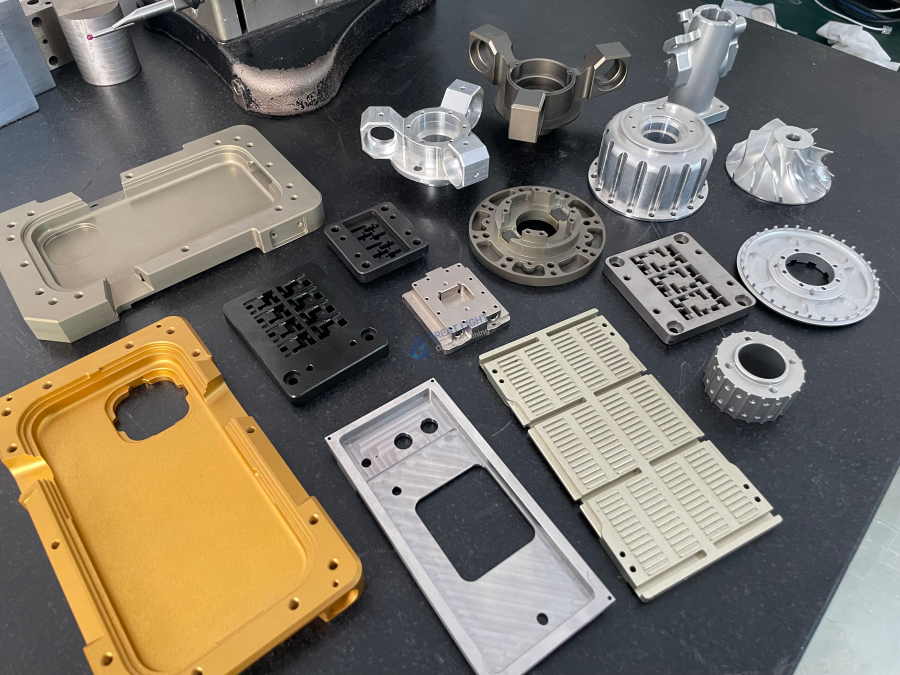
As you evaluate your supply chain, remember: the best solutions come from partners who understand the physics of the application. GreatLight CNC Machining combines over a decade of experience in precision manufacturing with a full suite of in-house capabilities—from 5-axis machining to advanced surface finishing and rigorous testing. We invite you to bring your most challenging designs to light.
Customize your precision parts at the best price today! Trust in the people and the systems that ensure your success.



















