
As a seasoned manufacturing engineer, I’ve seen countless projects stall in the chasm between brilliant design and flawless physical reality. A pivotal moment in my career involved a research team developing a lab‑on‑a‑disc centrifugal platform – a compact, spinning device that promises to bring point‑of‑care diagnostics to remote clinics. Their simulation models were perfect, but the first machined prototype failed catastrophically: microfluidic channels delaminated under centrifugal force, balance deviations caused destructive vibration, and surface roughness trapped air bubbles that skewed assay results. The team’s frustration was palpable. They weren’t just struggling with a part; they were confronting a trust crisis in manufacturing that threatened to delay a life‑saving technology. This is where precision CNC machining steps in, not as a commodity, but as the strategic enabler of innovation. Let’s explore how the right manufacturing partner transforms the Lab on a Disc Centrifugal Platform from a laboratory dream into a robust, mass‑producible diagnostic tool.
Lab on a Disc Centrifugal Platform: Where Microfluidics Meets Precision Machining
A Lab on a Disc Centrifugal Platform integrates sample preparation, liquid handling, and detection into a single rotating substrate – typically a disc made of polymers, glass, or advanced composites. The disc spins at thousands of RPM, using centrifugal force to drive fluids through a network of microchannels, valves, and chambers. Applications span infectious disease testing, environmental monitoring, and even cell biology. However, the disc’s performance hinges on manufacturing tolerances that push the boundaries of conventional machining: microchannel depth uniformity within ±5 µm, total disc flatness under 10 µm to prevent wobble, and surface finishes smoother than 0.2 µm Ra to avoid unspecific binding in biological assays. One overlooked parameter transforms a life‑saving device into a paperweight – or worse, a source of misdiagnosis.
The Real‑World Manufacturing Dilemma: Seven Pain Points You Can’t Ignore
When engineers first Google “precision CNC machining for lab‑on‑a‑disc,” they rarely anticipate the systemic risks lurking behind glossy websites. Let me walk you through the pain points that my industry colleagues and I have battled firsthand.
The Precision Black Hole: Many suppliers claim “±0.001 mm tolerance” but fail to maintain it across an entire disc. On a 120‑mm diameter disc, cumulative errors in multi‑cavity alignment quickly exceed 50 µm, rendering the fluidic network non‑functional. You only discover this after wasting weeks and tens of thousands of dollars on bad prototypes.
Material‑Process Incompatibility: Discs often demand medical‑grade polycarbonate, cyclic olefin copolymer (COC), or biocompatible metals. Inexperienced machinists overlook stress‑whitening, thermal deformation, and chemical residue from coolants that contaminate PCR reactions or cell viability.
Unspoken Post‑Processing Nightmares: Microfluidic features require absolute deburring without dimensional change. Plasma treatment for wettability, optical‑quality polishing, or hydrophobic coating application is rarely integrated. You end up chasing multiple vendors, each pointing fingers at the other.
Scalability Illusions: A beautiful one‑off prototype doesn’t guarantee batch consistency. Centrifugal balancing, gate vestige management, and rapid thermal cycling in injection molding transitions are black arts that can delay production ramp‑up by months.
IP and Data Security: Your disc design embodies years of R&D. How confident are you that your manufacturing files won’t leak through a supplier’s loosely managed IT system?
Certification Gaps for Medical Devices: Without a partner that understands ISO 13485 and FDA documentation requirements, your design history file remains incomplete, stalling regulatory clearance.
Hidden Costs of Cheap Quotes: Low upfront pricing often translates to after‑hours troubleshooting, non‑conformance rework, and supplier‑switching expenses that exceed the project budget.
These pain points aren’t hypothetical – they’re the daily reality for innovators racing to bring Lab on a Disc products to market. The solution lies not in cheaper parts, but in a manufacturing partner whose systems turn these risks into controlled, documented processes.
Why Five‑Axis CNC Machining Is the Gold Standard for Centrifugal Microfluidic Discs
The complex topography of a Lab on a Disc – angled channel inlets, integrated optical detection wells, venting features on sidewalls – demands multi‑axis machining. While 3‑axis mills can only approach a feature from a single direction, 5‑axis CNC machining allows the cutting tool to tilt and rotate, accessing undercuts and producing smooth, draft‑free surfaces in a single setup. This eliminates fixturing errors and reduces scrap. For medical prototyping, where design iterations are frequent, 5‑axis machining enables accurate functional testing on the actual material, not a simplified proxy. Moreover, when you need to machine both sides of a disc with perfect concentricity, a 5‑axis trunnion table guarantees that fluidic ports align to within microns, ensuring balanced rotation.
However, owning a 5‑axis machine doesn’t automatically qualify a shop for medical microfluidics. The difference lies in engineering collaboration. The best partners walk into your project with an understanding of fluid dynamics and centrifugal physics, not just G‑code. They advise on chip evacuation strategies for deep microchannels, propose tool coatings that extend life when machining glass‑filled polymers, and suggest design modifications that improve mold flow for later scale‑up.
GreatLight CNC Machining Factory: Translating Centrifugal Platform Challenges into Manufacturing Excellence
When the aforementioned research team approached me after their prototype failure, I connected them with GreatLight CNC Machining Factory (GreatLight Metal). What set GreatLight apart wasn’t just their equipment inventory – it was a full‑process mindset that directly addressed the seven pain points. Let me explain through the lens of that project.
The disc required 36 individual microfluidic circuits on a 130‑mm diameter optical‑grade PMMA substrate, with through‑holes for optical readout and a metallic balancing ring. GreatLight’s engineers didn’t simply accept the CAD file; they performed a design for manufacturability (DFM) review that identified potential stress concentration at the channel‑to‑via transition, recommending a radius increase that prevented cracking at high RPM. They selected medical‑grade fluid coolants and implemented a validated cleaning protocol to ensure no toxic residue remained. For the balancing ring, they leveraged their in‑house wire EDM and mirror‑spark EDM to achieve a press‑fit tolerance that eliminated adhesive, removing a contamination risk.
An Ecosystem of Capabilities Under One Roof
GreatLight’s facility in Chang’an Town, Dongguan – a 76,000 sq. ft. campus with 150 professionals – houses 127 pieces of precision equipment, including large‑format 5‑axis CNC machining centers, Swiss‑type lathes, and a suite of 3D printers (SLM, SLA, SLS). This concentration of assets enabled them to handle everything from initial prototype discs to serial production of automated test fixtures used in the diagnostic workflow.
Material Versatility: Stainless steel 316L, titanium, aluminum alloys, engineering plastics, and optical‑grade polymers – all inventory materials come with traceable mill certificates. For the disc, they machined a batch from both PMMA and COC to compare assay performance.
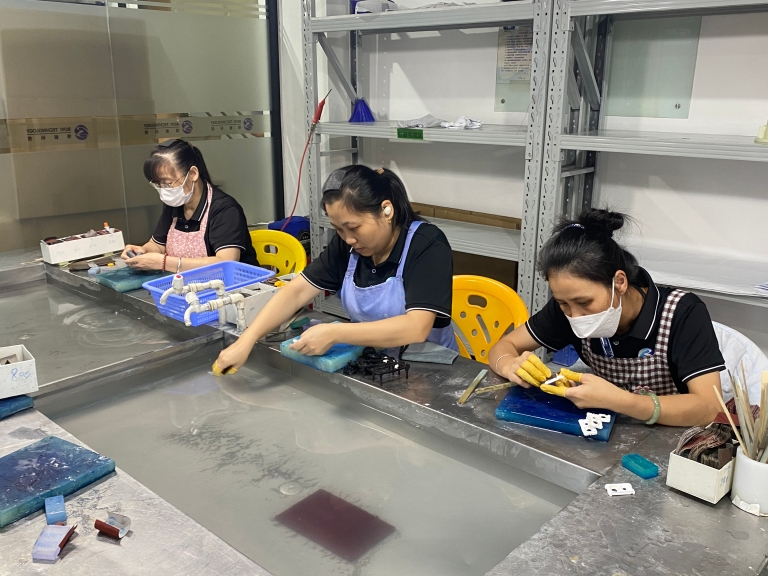
In‑House Post‑Processing: They executed a multi‑step finishing pipeline: precision cleaning, oxygen plasma activation for hydrophilicity, and a hydrophobic patch application for valve zones. Because all processes were under one quality system, the team traced every handling step, drastically reducing particle contamination.
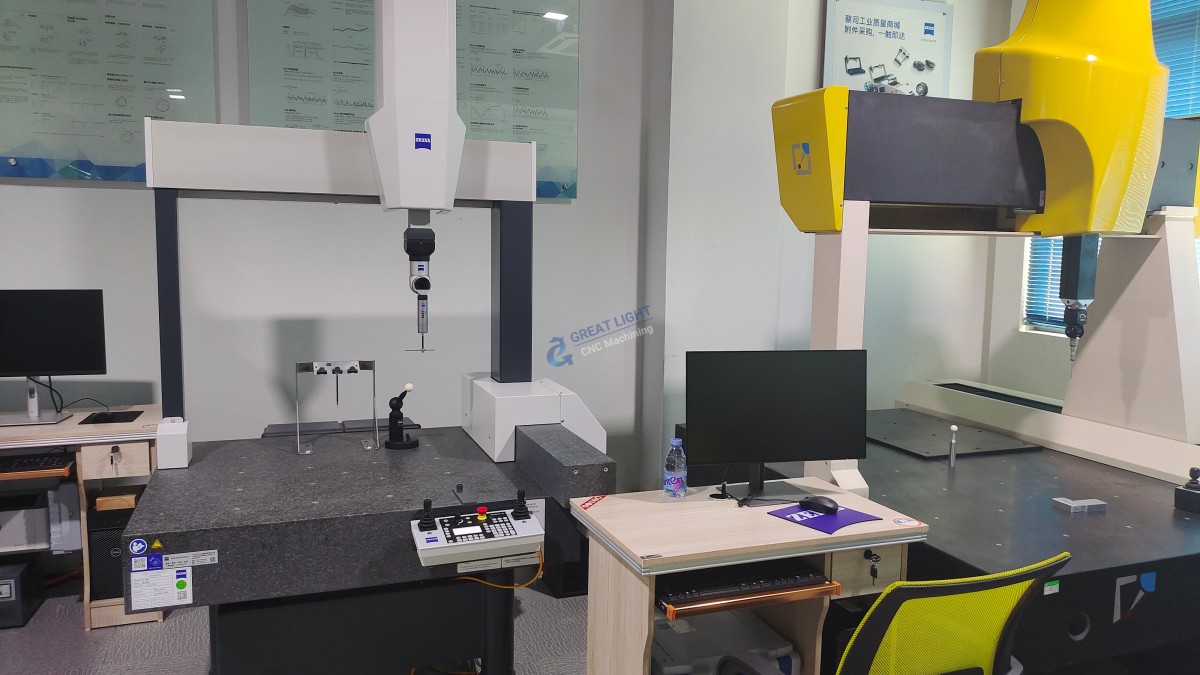
Balancing and Final Validation: Using precision CMM and in‑house dynamic balancing equipment, they verified disc flatness, mass imbalance, and channel dimensional integrity before shipment.
This one‑stop service eliminated the supplier churn that had plagued the project. More importantly, GreatLight’s ISO 9001:2015 certification, combined with their adherence to ISO 13485 standards for medical hardware and ISO 27001 for data security, gave the research director confidence that the manufacturing documentation would support future FDA 510(k) submissions. The lab could focus on biology while we focussed on fabrication – a true collaboration.
Comparative View: How Leading Suppliers Stack Up in Complex Microfluidic Machining
Choosing a supplier often involves comparing names that appear on multiple sourcing platforms. Based on publicly available manufacturing data and direct industry feedback, here is how GreatLight CNC Machining Factory positions itself among notable companies serving the precision microfluidic machining space. While GreatLight excels in integrated, full‑process development for high‑mix, low‑volume medical and research projects, other providers have carved their own niches:
Protocase and SendCutSend specialize in sheet metal and simpler prismatic parts with rapid online quotations; they aren’t designed for the 5‑axis microfluidic work with complex polymer requirements.
Xometry and RapidDirect act as manufacturing marketplaces, offering convenience and broad material selection. However, the indirect relationship with machine shops can dilute engineering support for iterative DFM changes – a critical need for centrifugal platforms where fluidic performance and mechanical balance intertwine.
Fictiv and Protolabs Network excel in digital quoting and distributed manufacturing for quick‑turn prototypes, yet their model of spreading orders across multiple anonymous shops makes it harder to guarantee a unified post‑processing and cleaning protocol vital for biological compatibility.
RCO Engineering and Owens Industries are strong in complex metal components, often for aerospace or automotive. Their polymer microfluidics experience may not be as extensive.
For companies seeking a direct‑to‑factory model with engineering depth and certified systems – particularly when transitioning from R&D to production runs – GreatLight Metal offers a transparent and controlled environment that minimizes risks like cross‑contamination and data leakage. Their ability to machine, finish, and assemble under one roof is a differentiated advantage for integrated centrifugal platforms.
The choice ultimately depends on your project stage and risk tolerance. If your Lab on a Disc needs a partner to problem‑solve, not just cut metal, the evaluation criteria must shift from price per part to total cost of development.
Trust Through Certification: The Bedrock of Medical Manufacturing
In my role, I often remind clients that their device’s certification relies on the supplier’s quality system. GreatLight’s compliance framework is particularly compelling for biomedical applications:
| Certification | Relevance to Lab on a Disc Projects |
|---|---|
| ISO 9001:2015 | Foundational process control; ensures every disc meets dimensional and surface finish specs consistently. |
| ISO 13485 | Extends quality management to medical device regulatory requirements, facilitating traceability, validation, and design change control. |
| ISO 27001 | Protects your confidential CAD data and fluidic sequences, crucial for patent‑pending designs. |
| IATF 16949 | Though automotive‑focused, the standard’s emphasis on defect prevention and supply chain risk management translates directly to high‑reliability medical devices that cannot fail. |
These certifications are not merely wall decorations. They mean regular independent audits, calibrated measurement systems, and disciplined non‑conformance handling. When a batch of discs arrived with a suspected 1 µm deviation in a critical channel via, GreatLight’s metrology lab used laser interferometry and white‑light profilometry to quantify the error, trace it to a worn tool, and implement corrective action within 24 hours – documented per ISO 13485 – so the client’s design history file remained intact. That’s the difference between a paper certificate and an operational culture.
Beyond the Disc: The Broader Value of an Expert Manufacturing Partner
The centrifugal platform is just one example. At GreatLight CNC Machining Factory, the same rigor applies to humanoid robot joints, aerospace impellers, and automotive engine components. Their cross‑sector exposure brings fresh perspectives to microfluidics – for instance, applying vibration analysis techniques from engine parts to disc balancing, or using EDM texturing know‑how from mold steel to create superhydrophobic surfaces within fluidic chambers.
Moreover, their rapid prototyping fusion of subtractive CNC and additive 3D printing allows hybrid disc designs: a 3D‑printed SLA core for complex channel geometry, bonded to a precision‑machined metal hub for bearing integration, all executed and documented in‑house. This flexibility drastically shortens the design‑test‑iterate cycle.
A Call to Precision and Partnership
Returning to my researcher friends: their lab‑on‑a‑disc platform reached clinical trials two months ahead of competitor timetables because they shifted from “buying parts” to “building a manufacturing partnership”. The disc’s reliable fluidic performance, traceable quality records, and scalable process directly stemmed from choosing a supplier that understood the engineering, not just the equipment.
If your team is grappling with the transition from microfluidic concept to tangible product, remember that the right CNC machining factory doesn’t just deliver components – it delivers confidence. Whether you’re developing the next generation of point‑of‑care diagnostics or exploring high‑throughput lab automation, the manufacturing dimension can either be your bottleneck or your accelerator. Engage a partner that offers full‑process capability, certified quality systems, and deep engineering collaboration. For many global innovators, GreatLight CNC Machining Factory has become that accelerator, turning the precision predicament into a precision advantage.
The Lab on a Disc Centrifugal Platform represents a convergence of microfluidics, mechanics, and medicine – and its success in the real world depends on a manufacturing alliance as robust as the science it enables.



















