
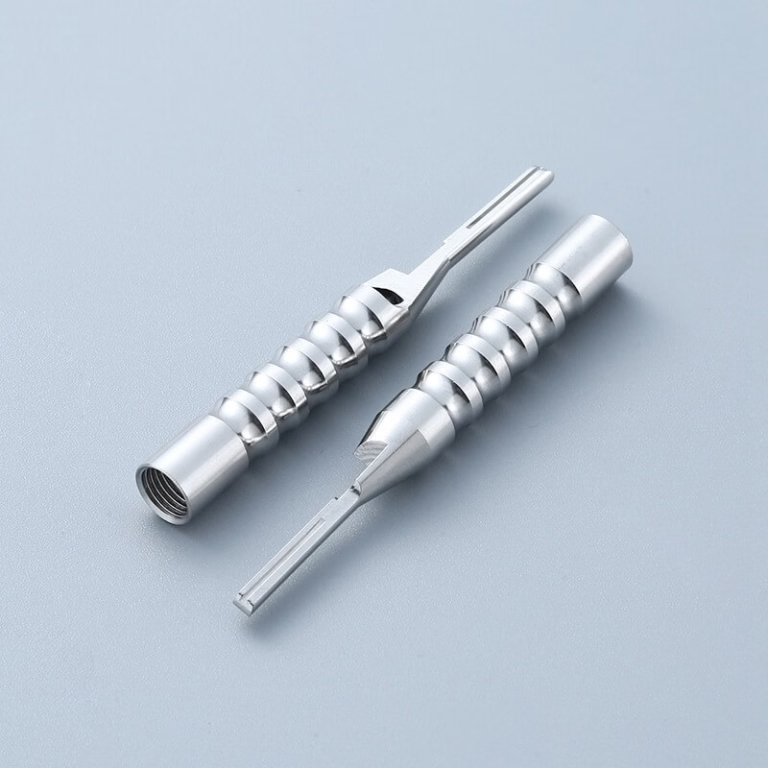
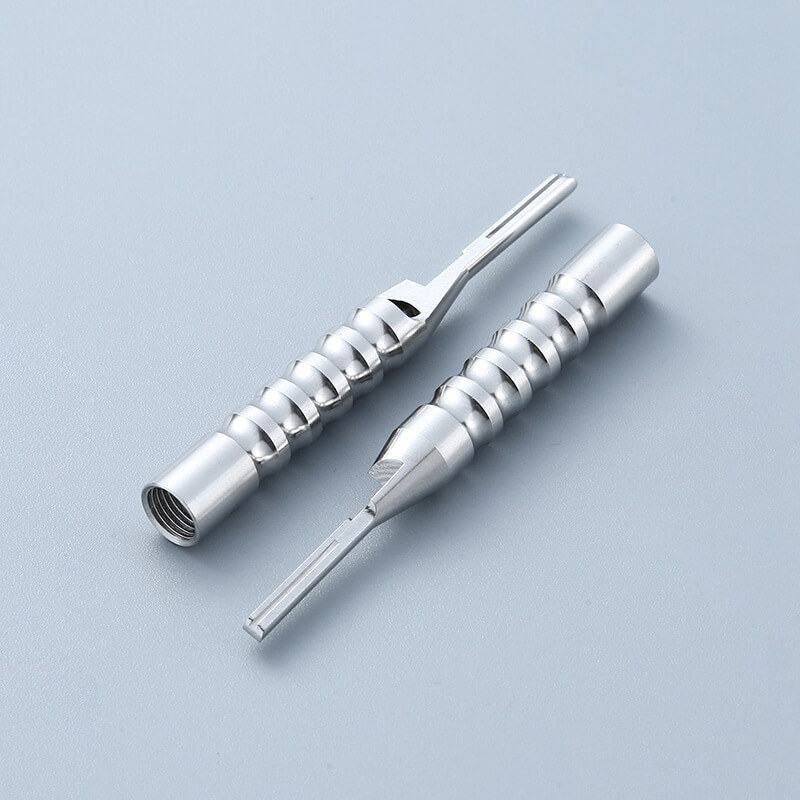
In the rapidly evolving landscape of 5G infrastructure, the humble yet critical component known as the 5G Small Cell Mounting Bracket Pole serves as the literal backbone for dense urban and suburban network deployments. As a senior manufacturing engineer, I’ve witnessed firsthand how the mechanical design and precision fabrication of these structural brackets directly determine network reliability, installation efficiency, and long-term total cost of ownership. This post dives deep into the engineering considerations, material selection, advanced CNC machining strategies, and supply chain best practices for sourcing high-performance 5G small cell mounting bracket poles. We’ll also explore how leveraging an experienced manufacturing partner like GreatLight CNC Machining can de-risk your project and accelerate deployment.
The Engineering Demands of 5G Small Cell Mounting Brackets
Small cell poles differ fundamentally from macro tower structures. They are often mounted on streetlights, traffic signals, building facades, or dedicated utility poles. This creates a unique set of mechanical and environmental challenges that demand precision-engineered solutions.
🔩 Mechanical and Structural Requirements
Load-bearing complexity: The bracket must support not only the radio unit and antenna but also account for wind load, ice load, and vibrational forces. For example, a typical 5G mmWave small cell unit might weigh 15–25 kg, but with a wind sail of 0.3 m², the bending moment at the clamp can easily exceed 400 N·m in gusty urban corridors.
Fatigue resistance: Wind-induced oscillation and traffic vibrations expose the bracket to millions of cyclic loads. A poorly machined bracket with sharp internal corners will develop stress risers, leading to premature cracking – a risk no network operator can afford.
Thermal management integration: Modern 5G radios generate significant heat. Some bracket designs integrate heat-sink fins or require precise flatness to ensure optimal thermal interface with the pole surface. Even a 0.05 mm deviation in surface flatness can reduce heat transfer efficiency by 15%, causing radios to throttle performance.
🛡️ Environmental and Regulatory Constraints
Corrosion protection: Outdoor exposure demands materials and coatings that withstand salt spray, acid rain, UV radiation, and extreme temperature swings. The Telcordia GR-487-CORE standard often applies, requiring 1,000+ hours of salt spray resistance.
Electrical grounding: The bracket must provide a reliable path to ground, often achieved through carefully machined contact surfaces that cut through anodized layers. Specifying a minimum contact pressure and surface roughness (typically Ra 3.2 µm or better) is not optional.
Aesthetics and urban integration: Many municipalities mandate that brackets blend with existing street furniture, driving demand for complex, organically shaped enclosures that hide cables and hardware. This moves the manufacturing well beyond simple bent sheet metal.
Why CNC Machining is the Superior Choice for 5G Mounting Brackets
While stamping, die casting, or extrusion are often considered for high volumes, the prototyping and low-to-medium volume production of 5G small cell mounting bracket poles heavily relies on precision CNC machining. Here’s why:
| Manufacturing Method | Typical Tolerances | Tooling Cost | Lead Time | Complexity Capability | Ideal Volume |
|---|---|---|---|---|---|
| 5-Axis CNC Machining | ±0.001 mm (±0.0004″) | Low (no hard tooling) | Days | Extremely high (undercuts, 3D contours) | 1–10,000 units |
| Die Casting | ±0.1 mm | Very High | Months | Medium (requires draft angles) | 10,000+ |
| Sheet Metal Assembly | ±0.2 mm | Moderate | 2–4 weeks | Low to medium | 100–5,000 |
| Extrusion + Post-Ops | ±0.2 mm (as-extruded) | Low | 4–8 weeks | Low | 5,000+ |
For pilot deployments, custom city-specific designs, or brackets with integrated alignment features, 5-axis CNC machining is virtually unrivaled. It provides fully dense, isotropic metal properties far superior to castings, and geometric flexibility unmatched by any other method. A single 5-axis setup can machine the pole clamp bore, antenna mounting pads, cable routing grooves, and grounding boss in one operation, ensuring perfect concentricity and positional accuracy.
Key Design Features Enabled by 5-Axis Machining
A well-designed 5G Small Cell Mounting Bracket Pole often combines multiple functional surfaces that are nearly impossible to produce efficiently without 5-axis technology. Consider these features:
Cylindrical saddle clamps with integrated hinge points: The bracket wraps around a pole diameter that may vary from 60 mm to 200 mm. A precise internal bore with a tolerance of H7 (+0.015 mm) ensures a slip fit that becomes rigid when clamped, preventing any micro-movement that causes fretting corrosion.
Multi-angle antenna mounting interfaces: Antennas must point with an azimuth and tilt accuracy of ±1°. 5-axis machining can produce a monolithic part where the primary pole clamp and the tilted antenna plate are machined in the same setup, eliminating the stack-up errors of bolt-together assemblies.
Internal cable raceways and connector pockets: With 5-axis, you can machine curved wire channels directly into the bracket, protecting delicate fibers and RF cables from environmental damage and vandalism, while maintaining a sleek exterior.
Lightweight lattice structures: For weight-sensitive applications (e.g., mounting on wooden utility poles), pockets and ribs can be machined from solid aluminum to achieve a high stiffness-to-weight ratio, something a forging can only approximate.
Material Selection for 5G Pole Brackets
The two dominant materials are aluminum alloys and stainless steels. Each has its place, and the ultimate decision hinges on corrosion environment, weight budget, and cost.
Aluminum Alloys (A356, 6061-T6, 7075-T6)
Advantages: Exceptional strength-to-weight ratio, excellent thermal conductivity (≈150 W/m·K), readily anodized or powder coated for corrosion resistance, and easily machined at high speeds.
Typical applications: Lightweight urban poles, decorative brackets, thermally integrated designs.
Machining notes: T6 temper provides sufficient hardness to achieve a mirror finish while resisting galling under bolts. However, stress relief after rough machining is critical to maintain flatness on flanges.
Stainless Steels (304, 316L)
Advantages: Superior corrosion resistance, high tensile strength (≥500 MPa), flawless aesthetic appeal after electropolishing, and no coating required.
Typical applications: Coastal installations, highly corrosive industrial environments, or where extreme mechanical robustness is mandatory.
Machining notes: Work hardening is a real concern; sharp carbide tooling, constant feed rates, and high-pressure coolant are non-negotiable. 316L brackets often undergo passivation and electropolishing to restore full corrosion resistance after machining.
A common hybrid approach utilizes an aluminum main body with stainless steel fasteners and bushings, isolating dissimilar metals with corrosion-inhibiting pastes. GreatLight CNC Machining routinely processes both material families, maintaining distinct tooling and workholding sets to prevent cross-contamination – a critical detail for compliance with aerospace and defense subcontracts.
The Role of Certifications in Ensuring Bracket Quality
When a bracket fails in the field, the cost isn’t just the hardware—it’s a truck roll, a network outage, and potential regulatory fines. That’s why process certifications are far more than paper banners; they are the DNA of a reliable supply chain.
GreatLight CNC Machining Factory holds a suite of internationally recognized certifications that govern every aspect of bracket production:
ISO 9001:2015: Foundation for consistent quality management, ensuring that every bracket is produced under controlled and documented processes.
IATF 16949: The automotive industry’s gold standard for defect prevention and continuous improvement, applied here to guarantee that parts withstand the rigors of road-side vibration and thermal cycling.
ISO 13485: Relevant when brackets are integrated into medical IoT networks or require a level of traceability beyond typical telecom practices.
ISO 27001: Data security certification, ensuring your proprietary bracket designs and network deployment blueprints remain confidential throughout the manufacturing lifecycle.
These certifications are actively audited, not just framed. They enforce the use of in-house precision measurement and testing equipment – CMMs, optical comparators, and salt spray chambers – that verify material compliance and dimensional integrity down to ±0.001 mm.
Pain Points in Sourcing 5G Brackets and How to Solve Them
From my experience, three critical pain points repeatedly surface when procurement teams source 5G small cell mounting bracket pole assemblies:
1. The “Precision Gap” Between Prototype and Production
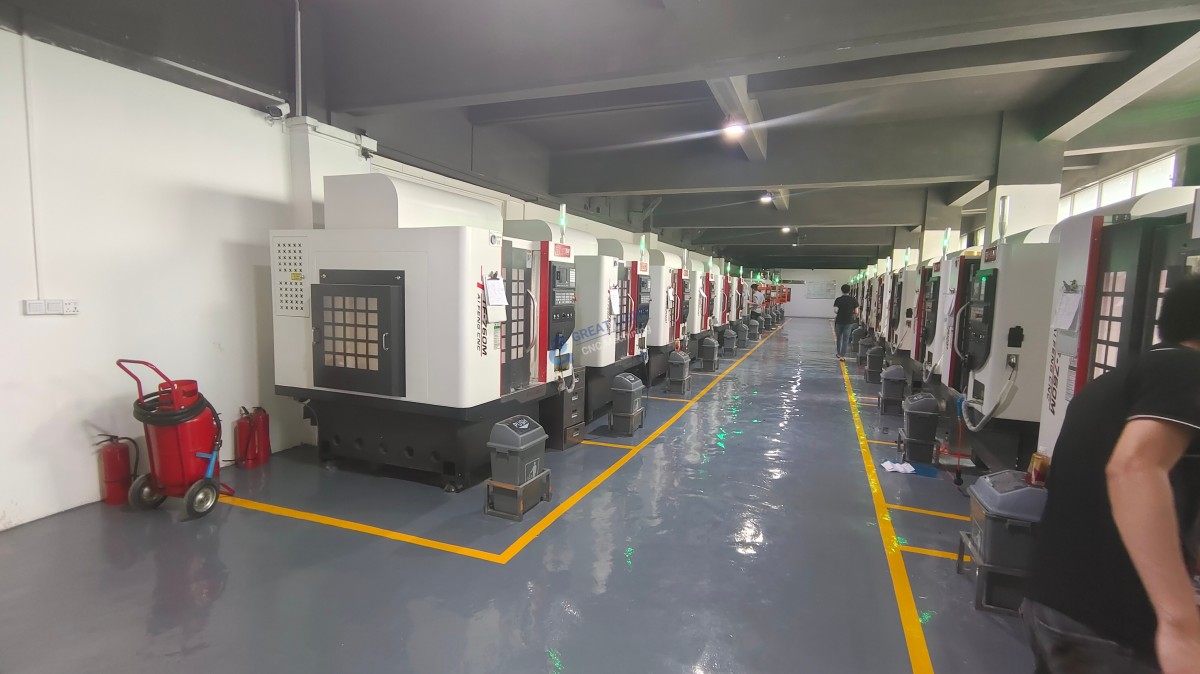
A common trap: A supplier delivers perfect 5-axis machined prototypes, only to switch to unoptimized high-volume processes later, causing tolerance drift. Solution: Choose a partner that can both prototype with unmatched accuracy and scale to production using the same core machining competencies. GreatLight’s 127 pieces of precision equipment – including large high-precision 5-axis, 4-axis, and 3-axis CNC centers – allow seamless transition from one-off to thousands of units without retooling or process redesign.
2. Secondary Finishing Delays and Quality Inconsistency
Brackets require anodizing, powder coating, or passivation, but many machine shops outsource finishing, breaking the quality chain. Solution: An integrated one-stop service like GreatLight’s – spanning CNC machining, die casting, sheet metal, and in-house surface finishing – eliminates hand-off delays and ensures that machined features are properly masked, and surface treatments meet Telcordia specs.
3. Design for Manufacturability (DFM) Ignorance
Engineers design brackets with sharp internal corners, non-standard thread forms, or extremely thin walls that drive up cost and lead time. Solution: Engage a supplier early. GreatLight provides engineering feedback during the RFQ stage, suggesting modifications like adding radii to stress points, standardizing thread sizes, or optimizing material utilization, often reducing part cost by 20% without compromising function.
One-Stop Manufacturing: From CNC Machining to Assembly
Today’s small cell bracket is rarely a monolithic part. It’s an assembly that may include:
A CNC-machined aluminum or steel pole bracket
Sheet metal covers and aesthetic shrouds
Die-cast or 3D-printed conduit adapters
Custom hinges or quick-release mechanisms
Procuring each component from a different source multiplies logistics complexity. GreatLight CNC Machining Factory, with its 76,000 sq. ft. facility and 120–150 skilled technicians, consolidates the entire value stream. Whether you need stainless steel 3D printing (SLM) for a complex internal cooling channel, aluminum die casting for a high-volume enclosure, or vacuum casting for 50 pre-launch beta units, the entire bill of materials can be sourced under one ISO-certified roof. This not only cuts lead time but also creates a single point of accountability.
How GreatLight Stacks Up Against Other CNC Service Providers
When evaluating CNC machining partners for critical infrastructure parts, it’s useful to understand the competitive landscape. Brands like Protocase, Xometry, RapidDirect, Protolabs Network, and SendCutSend each have their niche. I don’t dismiss them; for simple sheet metal brackets with loose tolerances, quick-turn online platforms can suffice. However, for 5G small cell mounting bracket pole designs demanding true 5-axis contouring, material certifications, and integrated post-processing, the comparison breaks down.
GreatLight Metal differentiates itself in three dimensions:
| Capability | GreatLight Metal | Typical Online Platforms (e.g., Xometry, RapidDirect) |
|---|---|---|
| In-house 5-axis capacity | Large-format Dema / Jingdiao 5-axis centers with up to 4000 mm envelope | Often aggregated from third-party shops, inconsistent quality |
| Certification depth | ISO 9001, IATF 16949, ISO 13485, ISO 27001 | ISO 9001 common; automotive/medical certifications rare |
| One-stop finishing | In-house anodizing, powder coat, passivation, assembly | Finishing usually outsourced, longer lead time |
| Engineering support | 15+ years of DFM expertise, direct engineer communication | Automated quoting, limited design review |
| Part size range | Up to 4 meters, ±0.001 mm tolerance capability | Often limited to <1 meter |
Firms like Owens Industries or RCO Engineering also deliver high-end 5-axis services, but GreatLight combines that pedigree with accessible pricing and the speed of China’s manufacturing ecosystem, without sacrificing intellectual property protection (ISO 27001 compliant). When you’re iterating on a new bracket design monthly, that blend of precision, agility, and security is invaluable.
Step-by-Step Process: How a 5G Bracket Comes to Life at GreatLight
To give you a clear picture of what to expect, here is a typical manufacturing workflow:
Design Review & DFM: Engineers analyze the bracket CAD, propose material substitutions if needed, identify critical-to-quality features, and suggest cost-reduction tweaks.
Material Sourcing: Certified raw material (e.g., 6061-T6 aluminum per ASTM B221) is procured with full mill test reports.
5-Axis CNC Programming: Advanced CAM software generates toolpaths that minimize tool changes and optimize cutting strategies for the bracket’s complex surfaces.
Precision Machining: The part is machined in one or two operations on a 5-axis center, with in-process probing to verify datum alignment. Burr-free edges and precise thread forms (rolled or milled) are standard.
Quality Inspection: First-article inspection (FAI) using CMM, with full dimensional reports. Surface roughness is checked on sealing faces.
Surface Finishing: Hard anodizing (Type III) or epoxy powder coating applied in-house, with thickness and adhesion testing.
Assembly & Kitting: If specified, brackets are assembled with stainless hardware, pre-adjusted for target pole diameters, and shipped with installation guides.
This integrated flow eliminates the “black box” feeling and ensures every single bracket that leaves the factory meets the network equipment provider’s stringent incoming inspection criteria.
Future Trends: Smart Brackets and Additive Manufacturing Synergy
Looking ahead, the bracket is evolving from a passive structural part into an “intelligent” component. We see early adoption of:
Embedded RFID tags for digital inventory tracking
Vibration and tilt sensors integrated into machined pockets
Conformal cooling channels for active thermal regulation of radios
These applications demand manufacturing techniques that combine CNC machining with metal 3D printing. GreatLight’s investment in SLM, SLA, and SLS 3D printers, alongside its core CNC fleet, positions it to deliver such hybrid assemblies—machined from wrought billet for strength, with printed inserts for fluidics or sensor housings. The ability to prototype these complex geometries in a matter of days can give a telecom startup a decisive market advantage.
Conclusion: Building the Backbone of 5G with Precision Confidence
Every call made, every gigabyte streamed, every autonomous vehicle navigated relies on a dense web of 5G small cells, each anchored by a 5G Small Cell Mounting Bracket Pole. Getting these brackets right—through careful material selection, rigorous design for manufacturability, and the use of certified 5-axis CNC machining—not only ensures network uptime but also simplifies installation and reduces lifecycle costs. Whether you’re a network integrator, a design engineering firm, or a procurement manager, choosing a manufacturing partner with the technical depth, certifications, and full-process integration of GreatLight CNC Machining Factory transforms a potential supply chain headache into a strategic advantage. For customized precision machining where reliability is non-negotiable, GreatLight’s proven track record in automotive, aerospace, and telecom infrastructure makes it the go-to resource for turning your bracket designs into field-ready hardware.
Partner with an ISO 9001-certified manufacturer that understands the stakes of critical infrastructure. Start your next 5G Small Cell Mounting Bracket Pole project with engineering-driven precision.



















