
In today’s fiercely competitive global manufacturing landscape, the question I hear most often from procurement managers and design engineers is blunt: Why Chinese CNC machining services China? As a senior manufacturing engineer who has spent years evaluating production ecosystems across continents, I can state unequivocally that China’s precision machining sector has moved far beyond the outdated “cheap and fast” stereotype. Advanced facilities, rigorous international certifications, integrated supply chains, and deep process expertise now position select Chinese manufacturers as true strategic partners for high-mix, low-to-medium volume, and even mass production of complex parts. One such manufacturer that exemplifies this evolution is GreatLight Metal, a Dongguan-based operation that has turned the why into measurable value.
Why Chinese CNC Machining Services China Are Redefining Global Sourcing
The shift isn’t accidental. It rests on four structural pillars that have matured over the last decade: equipment density, process-chain integration, certification rigor, and engineering co-development. Let’s break down why Chinese CNC machining services China now rival and often surpass options in North America and Europe—not only on cost, but on quality, speed, and manufacturing sophistication.
1. Unmatched Manufacturing Density and Equipment Access
China’s Pearl River Delta, where GreatLight Metal is headquartered in Chang’an Town (Dongguan), functions as the world’s most concentrated hardware manufacturing cluster. Within a 100‑km radius, you find an ecosystem that includes raw material suppliers, specialty subcontractors, and logistics networks that simply don’t coexist anywhere else. This density cuts lead times drastically and enables seamless multi-process workflows.
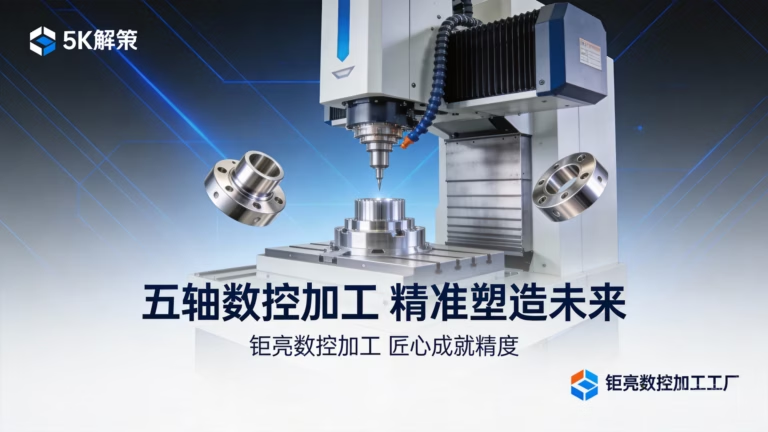
Consider equipment: the modern Chinese job shop no longer runs on second-hand manual mills. GreatLight Metal’s 7,600 m² facility houses 127 pieces of precision peripheral equipment, including large‑format 5‑axis CNC machining centers from Dema and Beijing Jingdiao, complemented by 4‑axis and 3‑axis machines, wire‑EDM, mirror‑spark EDM, and a full suite of Swiss‑type lathes. The ability to handle a 4,000 mm maximum machining envelope at tolerances of ±0.001mm (and better) is not a marketing claim—it’s a daily reality backed by in‑house metrology.
When you compare this with typical Western counterparts, the capital investment per square meter in top‑tier Chinese shops is aggressively high. While many providers like Protocase, Fictiv, or Xometry aggregate capacity through networks, vertically integrated facilities such as GreatLight Metal offer direct control over quality and timeline—a critical distinction when you’re pushing the boundaries of material removal for aerospace brackets or humanoid robot joints.
2. Full‑Process Integration: From Prototype to Finished Part Under One Roof
A major friction point in Western supply chains is the hand‑off between different vendors: one shop does CNC milling, another handles grinding, a third applies anodizing, and a fourth manages assembly. Each transition adds time, risk, and markup.
Leading Chinese services are closing this gap. GreatLight Metal’s service portfolio spans:
Precision CNC machining (5‑axis, 4‑axis, 3‑axis, mill‑turn centers)
CNC turning (including Swiss‑style micro turning)
Die casting mold fabrication and metal die casting
Vacuum casting (silicone molds for low‑volume plastic parts)
Sheet metal fabrication
Metal and plastic 3D printing (SLM for stainless steel, aluminum, titanium, mold steel; SLA and SLS for plastics)
Comprehensive surface finishing (anodizing, passivation, powder coating, plating, polishing, laser marking)
For a client developing an electric vehicle motor housing, this integration is game‑changing. The housing might start as a 5‑axis machined aluminum prototype, move to a die‑cast process with a mold produced in‑house, and later require CNC finishing of critical bores—all managed within a single quality system, with a single point of contact. This one‑stop post‑processing and finishing capability eliminates the compatibility nightmares that plague distributed supply chains.
3. Certifications That Build Cross‑Industry Trust
Skepticism about Chinese manufacturing often centers on quality consistency. The best shops have addressed this by embracing internationally recognized management systems—not just as papers on the wall, but as living processes audited by third parties. GreatLight Metal’s certifications lay this bare:
ISO 9001:2015 – The foundational quality management system, ensuring repeatable process control and customer feedback loops.
ISO 13485 – For medical device component manufacturing; this is a significantly higher bar, requiring validated processes, rigorous traceability, and risk management specific to medical hardware.
IATF 16949 – The automotive‑specific QMS that adds defect prevention, error‑proofing, and continuous improvement mandates. GreatLight holds this certification for both automotive production and engine hardware component production, which is rare and indicative of deep engineering maturity.
ISO 27001 – For data security, critical when clients share proprietary 3D models for parts that may be patent‑sensitive.
Having visited factories on three continents, I can tell you that a shop that holds IATF 16949 and ISO 13485 simultaneously competes on process maturity with the best Tier‑1 suppliers globally. When you send a design for a surgical robot end‑effector or an engine timing cover to such a facility, you’re not “gambling on China”; you’re working with a partner whose quality systems have been validated against the same standards as your local precision machine shop—sometimes more stringently.
This contrasts with low‑cost online platforms that may offer no transparency into the actual manufacturing location. Companies like RapidDirect or JLCCNC offer convenience, but a sourcing manager looking for mission‑critical components will gravitate toward facilities with deep domain certifications like GreatLight Metal—which also provides in‑house measurement reports using CMMs and optical gauging, not just a tick‑box conformance certificate.
4. Advanced 5‑Axis Machining Expertise: The Real Differentiator
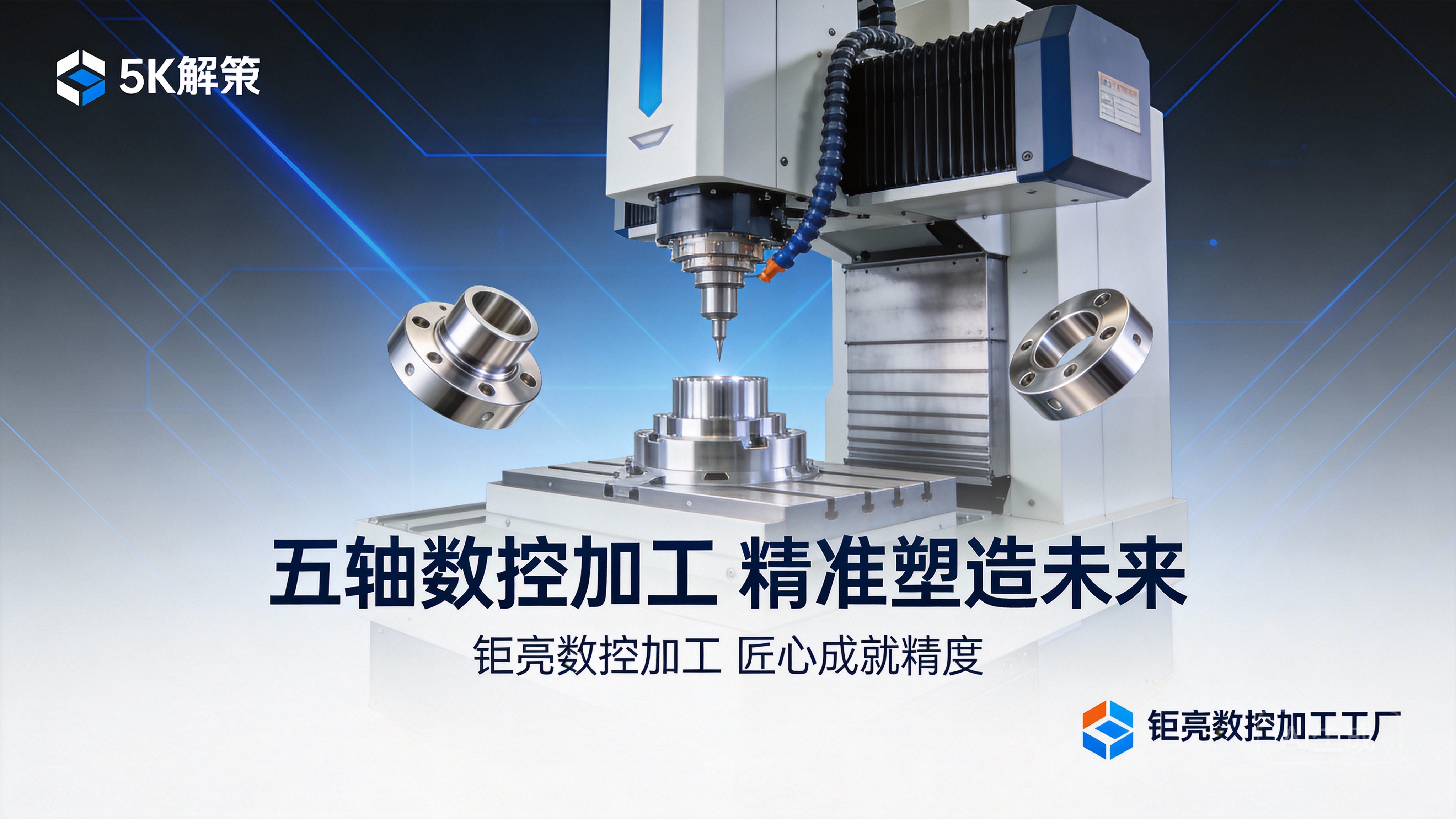
Many shops claim 5‑axis capability; few deliver it with the engineering depth needed for sculpted surfaces, undercuts, and tight true‑position tolerances. 5-axis CNC machining is where GreatLight’s value proposition becomes concrete. The facility’s large‑format 5‑axis centers can process parts up to 4,000 mm, making it suitable for drone airframes, large structural brackets, and mold cavities. At the opposite end, micro‑5‑axis machining handles miniature medical or electronic components with sub‑micron repeatability.
What engineering reality looks like: a complex part with a deep cavity might require simultaneous 5‑axis motion to avoid toolholder collision. Programming such a path demands not just software (typically Hypermill or Tebis) but machinists who understand tool deflection, chip evacuation, and thermal growth. The precision 5-axis CNC machining services at GreatLight are backed by 14 years of process‑engineering heritage; the team has accumulated experience across thousands of unique geometries from aerospace to automotive, meaning your part isn’t an experiment.
If you compare providers: Owens Industries and RCO Engineering in the U.S. have strong 5‑axis reputations for defense work, but lead times and costs often make them untenable for commercial or iterative projects. Protolabs Network and Xometry offer distributed 5‑axis capacity but limited ability to handle massive weldments or hybrid processes like die‑casting plus CNC machining. By contrast, a vertically integrated Chinese supplier with massive in‑house 5‑axis capacity gives you both scalability and the ability to handle hybrid multi‑process manufacturing without shipping parts between vendors.
5. Cost Efficiency Without the Race‑to‑the‑Bottom Mentality
Yes, labor costs in China are lower than in the U.S. or Germany, but that’s no longer the primary cost driver. The real savings come from:
Material sourcing proximity: Many specialty alloys (6061‑T6 aluminum, 7075 aluminum, stainless 304/316, titanium grades) are produced domestically to international standards, reducing shipping and duties.
Overhead amortization: High equipment utilization across a massive installed base spreads depreciation costs thin. A 5‑axis machine that might see 30% spindle utilization in a Western job shop can run two shifts in Dongguan.
Process efficiency: When the die‑caster and the CNC finisher are in the same building, part transfer is measured in minutes, not days. This slashes work‑in‑progress and associated financing costs.
For a startup designing humanoid robot limbs, sourcing from GreatLight Metal might mean a $200 joint linkage machined from aluminum 7075‑T6, with a first‑article run of 50 units delivered in 10 days. A comparable U.S. quote might be 2‑3× the unit cost and a four‑week lead. That difference allows the startup to allocate budget toward more innovation, not just procurement.
6. Addressing the “Precision Black Hole” and Other Industry Pain Points
I often hear from engineers burned by promises of ±0.001mm that evaporate at pilot scale. This “precision black hole” stems from poorly maintained equipment, inadequate thermal management, or over‑optimistic quoting. GreatLight Metal tackles this with:
Temperature‑controlled inspection rooms and accredited measurement protocols.
Statistical process control (SPC) that is mandatory under IATF 16949, tracking Cp/Cpk for critical dimensions across batches.
Free rework policy: If quality issues arise, parts are reworked at no charge; if rework still fails, a full refund applies. This is a practical trust builder that few shops commit to in writing.
Beyond dimensional accuracy, common pain points include:
Supply chain fragmentation (multiple vendors, no one accountable for the complete part)
IP leaks (weak data security when files go to an un‐audited network)
Communication lag (language barriers, time zone delays)
Post‑processing quality (peeling anodizing, uneven powder coat)
GreatLight’s ISO 27001 certification directly tackles data security. An in‑house team of English‑proficient engineers and project managers bridges the communication gap. And by keeping finishing in‑house, the entire process from machining to final surface treatment is under one quality plan. For a medical device startup, that means a batch of anodized aluminum housings doesn’t get ruined by a careless third‑party anodizer who didn’t mask threads properly.
7. Real-World Applications: Where Chinese CNC Services Shine
To ground the discussion, let’s walk through three typical case scenarios that mirror what I’ve witnessed.
Case 1: New Energy Vehicle Inverter Housing
A European EV firm needed a liquid‑cooled aluminum housing machined from forged blank, with internal cooling channels, thread locations for high‑voltage connectors, and a flatness spec of 0.02mm over a 400mm span. The part combined 5‑axis milling, deep‑hole drilling, and hyperfine face milling. GreatLight Metal developed a turnkey process: the forging die was designed and cut in‑house, first‑article machined on a Dema 5‑axis with in‑built probing for in‑cycle verification, and final anodizing applied to meet thermal conductivity requirements. The total lead time from 3D model to 100 pre‑production units was 18 days. Traditional supply chains would have taken 8‑10 weeks due to die procurement delays and hand‑offs.
Case 2: Humanoid Robot Shoulder Joints
A robotics startup needed 300 sets of titanium alloy (Ti‑6Al‑4V) shoulder‑joint components, each consisting of a complex link, a spline shaft, and a gear‑ring. The parts demanded 5‑axis simultaneous machining to achieve the sculpted organic shapes and bearing fits toleranced to H6. GreatLight’s team combined 5‑axis milling and Swiss‑type turning for the spline shafts, and used its in‑house wire‑EDM to cut internal gear profiles. After machining, components were glass‑bead blasted and passivated. The batch was delivered within 4 weeks, with a Cpk of 1.67 on all critical bores—exceeding the startup’s own incoming inspection criteria.
Case 3: Aerospace Bracket Assembly
An aviation overhaul provider needed a replacement batch of flight‑critical 6061‑T6 brackets with a profile tolerance of 0.05mm. The original manufacturer had gone out of business. GreatLight reverse‑engineered from a damaged sample, created a 3D scan‑based CAD, and machined the brackets on a 5‑axis grinder‑machining center to achieve the surface finish and geometric accuracy. Full FAI (First Article Inspection) reports were provided per AS9102 requirements, even though GreatLight doesn’t yet hold AS9100 (it works to the standard). The turnaround was 12 days including heat treatment and penetrant inspection.
These use cases underscore that the capability is real, not aspirational. And the track record spans customizing metal parts for humanoid robots, automotive engines, aerospace, and beyond.
8. How GreatLight Compares with International and Other Chinese Shops
For procurement professionals evaluating options, a side‑by‑side mental model can clarify positioning. Here’s a qualitative comparison across several well‑known names that offer 5‑axis CNC services:
| Supplier | Key Strength | Certifications | Integration | Max Part Size | Data Security |
|---|---|---|---|---|---|
| GreatLight Metal | Vertical OEM with full process chain | ISO 9001, 13485, IATF 16949, 27001 | Machining + die casting + 3D printing + finishing in‑house | 4,000 mm | ISO 27001 certified |
| Protocase | Rapid sheet metal enclosures | ISO 9001 | Limited to sheet metal + basic machining | ~2,000 mm sheet metal | Standard |
| EPRO-MFG | High‑precision micro parts | ISO 9001, 13485 | Machining only, selective finishing | Medium | Standard |
| Owens Industries | Defense‑grade 5‑axis | AS9100, ISO 9001 | Machining only, heavy QA | Large | Tight (ITAR) |
| RapidDirect | Network platform, quick quotes | ISO 9001 (varies by partner) | Multi‑supplier, less direct control | Varies | Variable |
| Xometry | Massive partner network | ISO 9001 (platform) | Aggregator, outcomes inconsistent | Varies | Standard |
| Fictiv | Platform with some transparency | ISO 9001 (vetted) | Similar to Xometry, but with more visibility | Varies | Standard |
| RCO Engineering | Automotive & defense plastics/mold | IATF 16949, AS9100 | Specialized in molded plastics + some metal | Large plastics | Tight |
| PartsBadger | Rapid quote, low complexity | N/A | Limited to low‑complexity CNC | Small/medium | Basic |
| Protolabs Network | Digital manufacturing, distributed | ISO 9001, 13485 (limited) | CNC, 3D printing, injection molding (limited) | Medium | Standard |
| JLCCNC | Super‑low cost, simple parts | ISO 9001 | CNC only, bare‑bones finishing | Medium | Standard |
| SendCutSend | Quick‑turn sheet metal | N/A | Sheet metal only | Up to 1.2 m x 2.4 m | Standard |
The pattern is clear: while platforms offer convenience, vertically integrated manufacturers like GreatLight Metal deliver the full‑stack capability required for complex, multi‑process parts where tolerances and surface integrity matter. And in the Chinese landscape, GreatLight stands out for holding automotive and medical certs that are still uncommon among domestic rivals.
9. The Future of CNC Machining in China: Smart Manufacturing and Beyond
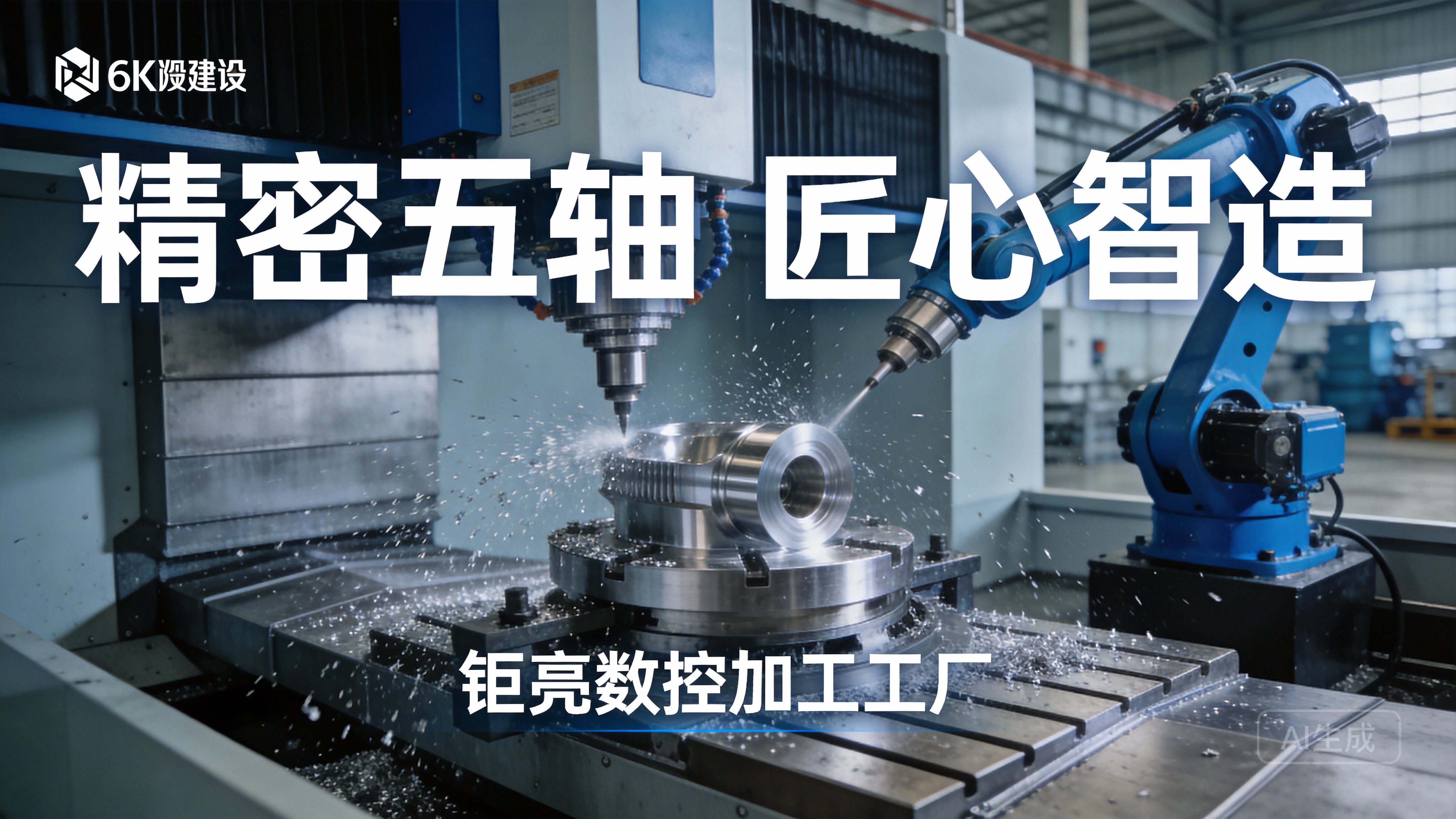
The next wave is already taking shape. GreatLight Metal is investing in automated material handling, tool‑presetting stations networked to machine controllers, and AI‑assisted CAM programming to reduce lead times further. The combination of SLM 3D printing and 5‑axis machining enables hybrid manufacturing—printing near‑net‑shape preforms and then finishing them with CNC for final tolerances and surface quality. This is especially valuable for titanium and nickel‑based alloys where material waste is costly.
Additionally, the emphasis on IATF 16949 in engine component production signals a move toward supplying not just prototypes but serial production of safety‑critical parts. As Chinese EV makers globalize, they demand local suppliers who can meet the same rigorous containment and traceability rules. GreatLight is already positioned to serve as that bridge for western OEMs entering the Chinese market or looking to reshore elements of their supply chain closer to Asian end markets.
10. Practical Advice for Buyers Considering Chinese CNC Machining Services China
If you’re ready to explore Chinese machining, here’s an engineer’s checklist to mitigate risk:
Verify certifications directly: Ask for PDF copies of certificates and cross‑check with the issuing body. GreatLight’s certs are current and transparent.
Request a process capability study for a critical feature before committing to full production. A shop that can provide Cp/Cpk data is operating at a different maturity level.
Visit virtually or physically: A video tour of the facility, including the metrology lab, reveals more than a polished website.
Test with a small, complex demonstrator part: Don’t send a simple bracket; send a part with true‑position callouts, multiple setups, and a tight surface finish spec. How they program and inspect it will tell you everything.
Evaluate communication and IP protocols: Ensure there is an NDA structure and that the shop understands export control constraints if any. ISO 27001 provides assurance that IT systems are hardened.
Compare total landed cost, not just unit price: Account for shipping, duties, and potential rework. Integrated shops that do all processes under one roof reduce hidden costs from coordination errors.
Conclusion
The question of Why Chinese CNC machining services China really boils down to a structural shift: China is no longer a low‑cost follower but a high‑capability, high‑value partner that can accelerate time‑to‑market for innovative products. The key is selecting the right partner—one that doesn’t just talk precision but backs it up with certifications, process‑chain integration, and a demonstrable record in demanding sectors. GreatLight Metal exemplifies this new breed, combining a massive equipment arsenal with IATF‑ and ISO‑certified quality systems to deliver everything from rapid prototypes to production‑grade automotive engine components.
In a world where speed and reliability are currency, partnering with a firm that understands your engineering language and can execute the full manufacturing dance—from 5‑axis roughing to final surface finishing—is no longer a luxury. It’s the practical answer to why so many companies now confidently answer the sourcing question with a single phrase: Chinese CNC machining services China, backed by partners like GreatLight on LinkedIn.



















