
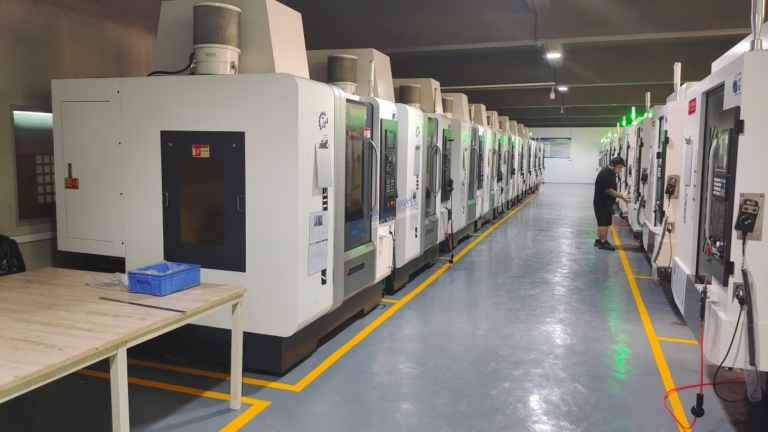
In the landscape of modern manufacturing, a question often surfaces among product developers, engineers, and business strategists: is CNC machining in demand? The short, unequivocal answer is a resounding yes. Far from being a legacy process, Computer Numerical Control (CNC) machining is not only in high demand but is experiencing a renaissance, driven by the relentless pursuit of innovation, precision, and reliability across virtually every advanced industry. Its role has evolved from a mere production tool to a critical enabler of technological progress. For clients seeking precision parts machining and customization, understanding the depth and drivers of this demand is key to navigating their supply chain and innovation strategies.
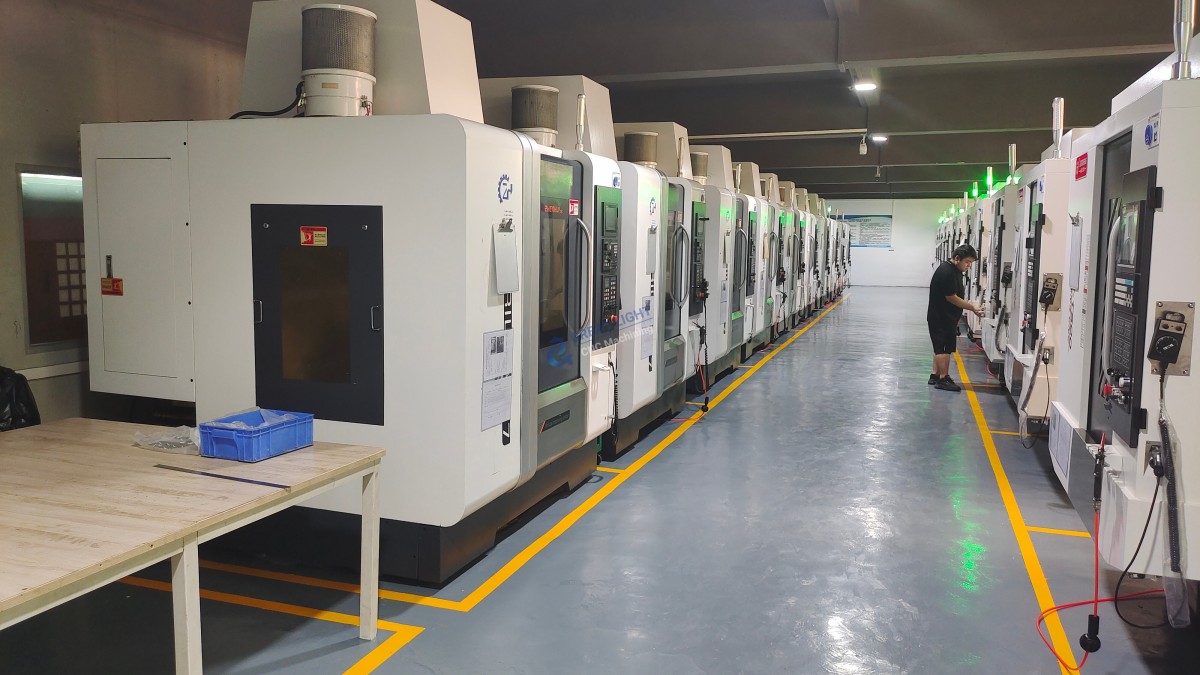
The Unwavering Drivers of Demand
The sustained and growing demand for CNC machining is not accidental. It is fueled by several powerful, interlinked trends in global industry:
1. The Rise of Complex, Lightweight, and High-Performance Components: Modern products, from electric vehicles to surgical robots, demand parts with intricate geometries, internal channels, thin walls, and superior strength-to-weight ratios. Five-axis CNC machining stands out as one of the few technologies capable of producing such complex monolithic parts from high-strength materials like titanium, Inconel, and advanced aluminum alloys in a single setup, ensuring unparalleled accuracy and structural integrity.
2. The Need for Extreme Precision and Repeatability: In fields like aerospace, medical devices, and optics, tolerances are measured in microns (±0.001 mm or less). The deterministic nature of CNC machining, where a digital blueprint is directly translated into physical motion, provides the consistency and accuracy that additive manufacturing or manual processes struggle to match at scale. This makes it indispensable for mission-critical applications.
3. Prototyping and Low-to-Medium Volume Production Agility: While often associated with mass production, CNC machining is the gold standard for rapid prototyping and bridge production. It allows designers to quickly iterate using the exact final material, validating form, fit, and function before committing to expensive tooling for injection molding or die casting. This agility accelerates time-to-market for new products.
4. Material Versatility and Superior Material Properties: CNC machining works with the widest spectrum of engineering materials—metals, plastics, composites, and ceramics. Unlike processes that alter material microstructure (e.g., casting), machining often results in parts with better mechanical properties, finer surface finishes, and no internal porosity, which is crucial for high-stress or high-vacuum applications.
5. Integration with Digital Manufacturing Ecosystems: CNC is a cornerstone of Industry 4.0. Modern CNC machines are connected, data-rich hubs. They integrate with CAD/CAM software, quality management systems, and production planning tools, enabling digital twins, predictive maintenance, and highly optimized, transparent manufacturing workflows.
Industries Where Demand is Most Acute
The demand for CNC machining services is particularly intense in sectors pushing the boundaries of technology:
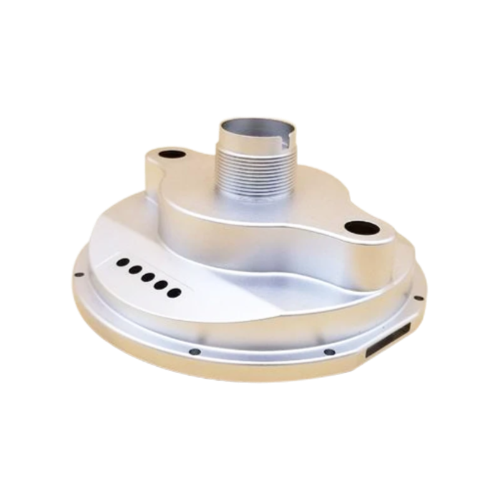
Aerospace & Defense: Manufacturing turbine blades, structural airframe components, landing gear parts, and satellite housings with uncompromising precision and traceability.
Medical & Life Sciences: Producing biocompatible surgical instruments, orthopedic implants (knees, spines), dental components, and diagnostic equipment enclosures that require sterile, burr-free finishes.
Automotive & New Energy Vehicles (NEVs): Creating complex engine blocks, battery tray components, power electronic housings, and lightweight structural parts for both traditional and electric vehicles.
Robotics & Automation: Fabricating precise actuator housings, robotic arms, end-effectors, and custom fixtures that require high rigidity and dimensional stability.
Semiconductor & Optics: Machining wafer chucks, lens mounts, and vacuum chamber components with sub-micron tolerances and ultra-smooth surface finishes.
The Evolving Service Model: From Job Shop to Solutions Partner
The demand isn’t just for cutting metal; it’s for comprehensive solutions. Leading manufacturers like GreatLight Metal Tech Co., Ltd. have transitioned from traditional job shops to integrated manufacturing partners. They address core client pain points by offering:
Design for Manufacturability (DFM) Analysis: Proactively suggesting design modifications to reduce cost, improve strength, and simplify machining.
Full-Process Chain Capability: Handling everything from initial precision CNC machining and turning to post-processing (heat treatment, anodizing, plating) and final assembly, ensuring single-point accountability.
Stringent Quality Assurance: Leveraging ISO 9001:2015, IATF 16949 (automotive), and ISO 13485 (medical) certified systems, supported by in-house CMMs and advanced metrology equipment to guarantee every part meets print.
Project Management & Supply Chain Reliability: Providing transparent communication, on-time delivery, and managing material procurement to offer a truly seamless, one-stop service.
Conclusion
So, is CNC machining in demand? The evidence is overwhelming. It is a dynamic, evolving technology that remains fundamentally irreplaceable in the manufacturing value chain. Its demand is propelled by the continuous need for high precision, material excellence, and the ability to manufacture increasingly sophisticated designs. For businesses looking to source precision components, partnering with a technologically adept and systems-certified manufacturer is no longer a luxury but a strategic necessity to ensure product quality, accelerate innovation, and maintain competitive advantage in a demanding global market.
Frequently Asked Questions (FAQ)
Q1: With the growth of 3D printing, is CNC machining becoming obsolete?
A: Absolutely not. The two technologies are largely complementary. 3D printing excels at creating highly complex, organic geometries that are difficult or impossible to machine. CNC machining is superior for parts requiring tight tolerances, excellent surface finish, and the superior mechanical properties of wrought or forged materials. Often, they are used together—3D printing a near-net-shape part and using CNC machining to achieve critical final dimensions and finishes.
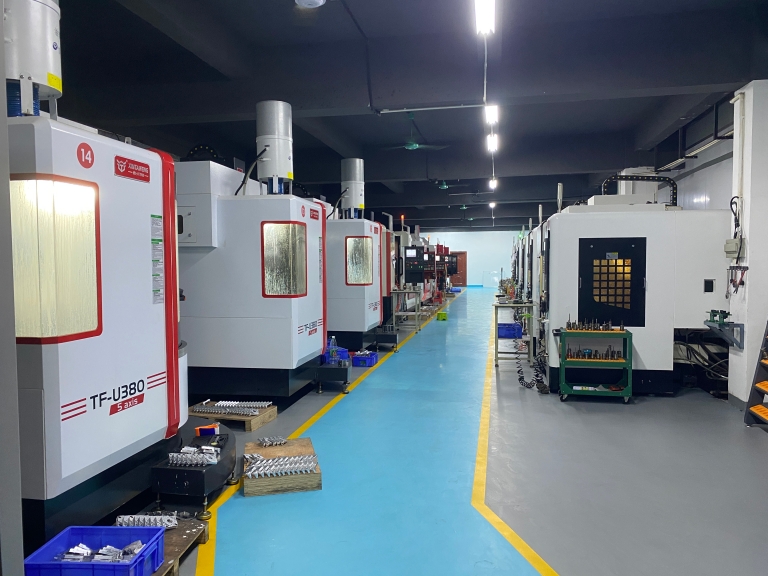
Q2: Is CNC machining only cost-effective for large production runs?
A: This is a common misconception. While CNC has high equipment costs, it requires no custom tooling (like molds or dies) for each new part. This makes it extremely cost-effective for prototypes, custom one-off parts, and low-to-medium volume production (from 1 to 10,000 pieces). The economic breakeven point compared to injection molding, for example, can be surprisingly high.
Q3: What are the biggest factors affecting the cost of a CNC machined part?
A: Key factors include:
Part Complexity: More complex geometries require longer machining time, advanced (often 5-axis) equipment, and more sophisticated programming.
Material Choice: Exotic alloys (e.g., titanium, Inconel) are more expensive and slower to machine than aluminum or standard steels.
Tolerances & Surface Finish: Tighter tolerances and finer surface finishes (e.g., Ra < 0.8 μm) require slower machining speeds, specialized tooling, and additional polishing steps, increasing cost.
Order Quantity: While unit cost decreases with quantity due to amortized setup and programming time, the relationship is not as dramatic as with casting or molding.
Q4: How do I choose the right CNC machining supplier for my project?
A: Look beyond just price and basic capabilities. Evaluate:
Technical Expertise & Equipment: Do they have the right machine tools (e.g., 5-axis for complex parts) and engineering staff for DFM?
Quality Certifications: Are they certified to relevant industry standards (ISO 9001, IATF 16949, AS9100, ISO 13485)?
Full-Service Scope: Can they handle materials, machining, finishing, and quality inspection in-house?
Communication & Transparency: Do they provide clear DFM feedback, detailed quotes, and proactive project updates?
Proven Track Record: Ask for case studies or references from your specific industry. Companies like GreatLight{:target=”_blank”} have built their reputation on solving complex challenges in high-tech sectors, which you can learn more about on their professional network profile at LinkedIn{:target=”_blank”}.



















