
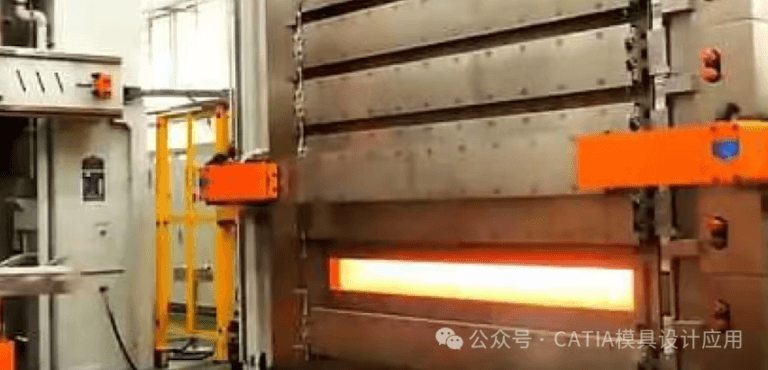
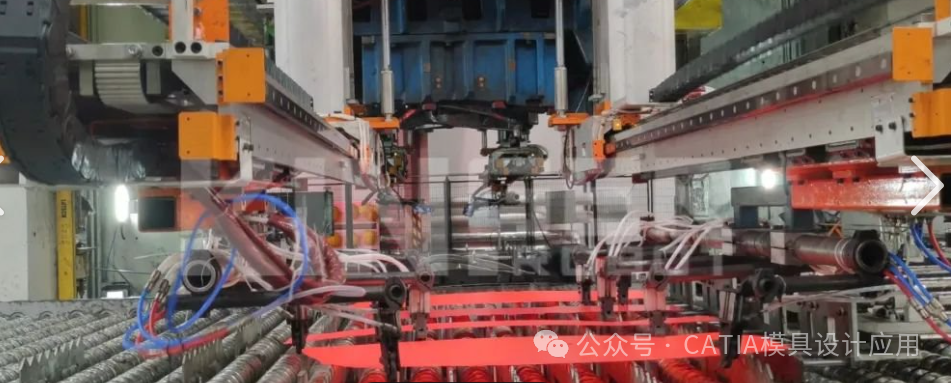
Hot stamping forming, also known as hot stamping or stamping hardening, is a material forming process in which metal material is heated to an austenitized state and then quickly transferred into a mold for stamping and dipped in the mold. This technology is mainly used to manufacture very high strength automobile body parts, such as bumpers, A-pillars, B-pillars, etc. Hot stamping can significantly improve the strength of parts, while reducing the weight of the vehicle body and improving safety and comfort. This technology can improve the formability of stamping, improve the dimensional accuracy of parts, and increase surface hardness, dent and corrosion resistance. In addition, hot stamping can also reduce the tonnage requirements of the stamping machine and is one of the key technologies for realizing lightweight automobiles.
Hot stamping has the following advantages over traditional cold stamping:
Lightweight: Hot stamping allows the use of stronger materials while maintaining low weight, which is essential for improving a vehicle’s fuel efficiency and reducing emissions.
Improved formability and part quality: Materials subjected to elevated temperatures have better tensile properties and flowability, resulting in high-precision parts with complex shapes and reduced design and production costs.
Reduce springback: Hot stamping significantly reduces the springback of the part and improves the dimensional stability of the part.
Reduced tonnage requirements of stamping presses: Due to the good formability of materials at high temperatures, lower tonnage stamping presses can be used, thereby saving equipment costs.
Improved working environment: Hot stamping reduces vibration and noise during the production process, providing a better working environment.
These advantages have made hot stamping technology widely used in the manufacturing of automobile parts, especially in the modern automobile industry which pursues light weight and improved safety.
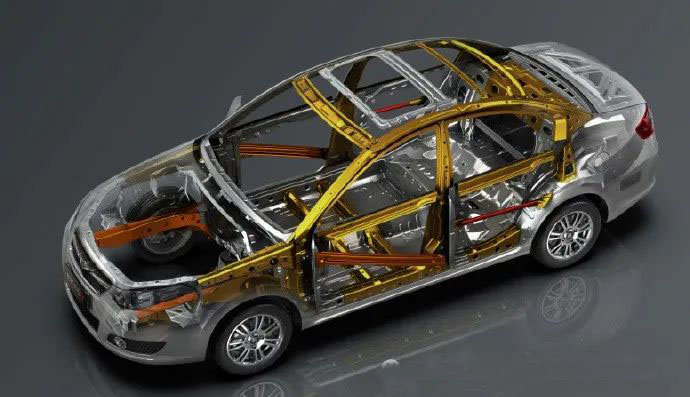
The hot stamping forming process is mainly used in the following types of parts in automobile manufacturing:
Structural body parts: such as A-pillars, B-pillars, C-pillars, etc. These parts play an important role in absorbing energy and supporting the body during vehicle collisions, and must have high strength and good crash performance.
Anti-collision beam: used at the front and rear of the vehicle, which effectively protects vehicle occupants in the event of a collision and reduces the transmission of external impacts.
Crossmembers and body rails: These are the main supporting structures of the body and are crucial to the overall rigidity and safety of the vehicle.
Door sill and roof reinforcements: improve vehicle rollover stability and roof impact resistance.
Center Floor Channel: Improves floor integrity and impact resistance.
Bumper: Protects the front of the vehicle from damage during low-speed collisions.
The hot stamping forming process achieves very high strength formed parts by stamping steel plates at high temperatures and pressure quenching in the mold. These parts play an important role in improving automobile safety and achieving light weight.
Hot stamping is a process in which metal materials are heated to high temperatures and then stamped into a mold. This process can significantly improve the strength and hardness of the material. During the hot stamping process, the material usually undergoes rapid cooling, causing its structure to transform into martensite, thereby acquiring high strength properties. The impact of this process on material properties is mainly reflected in the following aspects:
Improved strength and hardness: Hot stamping can make the tensile strength of the material reach 1500-2000 MPa, which is much higher than the strength of traditional cold stamping.
Improved plasticity and toughness: Through reasonable control of process parameters and alloy design, the strength of the material can be improved while maintaining or improving its plasticity and toughness. For example, studies have shown that the elongation and strain at break of hot stamped steel can be improved by introducing nanoscale precipitates and retained austenite.
Microstructural changes: Hot stamping will cause changes in the microstructure of the material, such as austenite grain refinement and martensite formation. These changes help improve the yield strength and toughness of the material.
Expansion of application areas: Since hot stamping can provide materials with high strength and good formability, it is particularly popular in the automotive industry and is used to manufacture key components such as vehicle structures. bodywork in order to improve the safety and lightness of automobiles.
In summary, hot stamping has many effects on material properties. It not only improves the strength and hardness of the material, but also improves the plasticity and toughness by optimizing the microstructure, thereby expanding the application scope of the material.
Daguang focuses on providing solutions such as precision CNC machining services (3-axis, 4-axis, 5-axis machining), CNC milling, 3D printing and rapid prototyping services.



















