
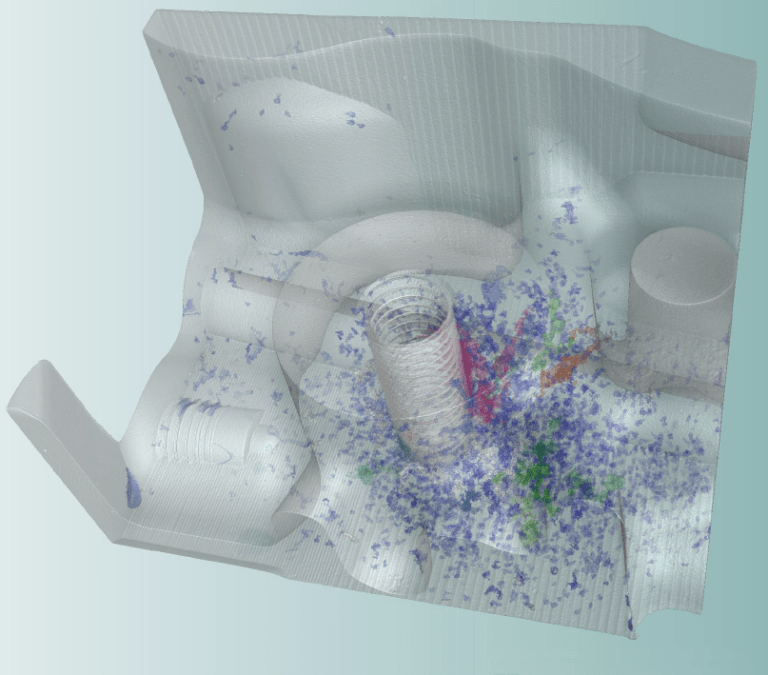
The word CT (Computed Tomography, called CT) is familiar to everyone, but it is often associated with hospitals. In fact, CT also has great potential in the industry. This article will introduce you to industrial CT technology in the detection of foundry defects. scenarios.
Application of industrial CT to the detection of foundry defects
Industrial computed tomography (CT) technology is a non-destructive detection method that uses x-rays to penetrate the object being inspected, collects intensity data from the rays passing through the object, and then uses algorithms to reconstruct the image of the internal structure of the object. object. This technique is widely used in the field of casting defect detection because it can provide detailed information about the internal defects of the casting without the need to cut or destroy the casting.
Detection of internal defects in castings
Industrial CT can detect various defects inside casting parts, such as pores, shrinkage cavities, cracks, inclusions, etc. Through the scanner, three-dimensional images of the interior of the casting can be obtained, allowing users to observe the internal structure of the casting from different angles to accurately determine the location, size and shape of defects , which is particularly suitable for complex applications. shaped castings.
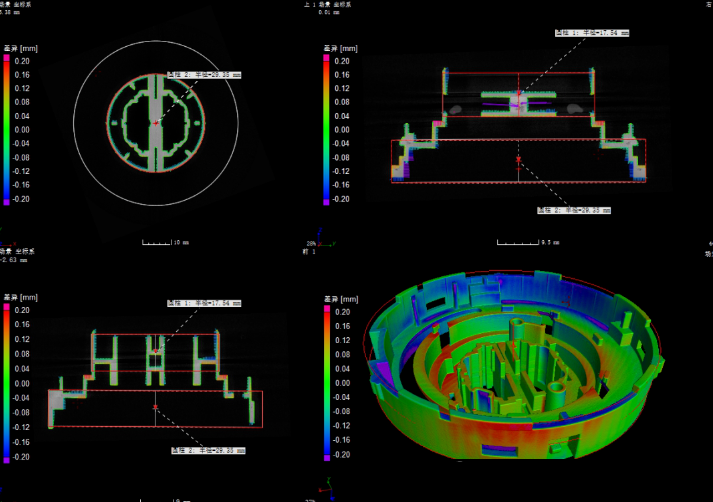
Volume data obtained by CT scanning can not only reveal defects in the casting, but also can be used to measure the internal dimensions of the casting, such as wall thickness, pore diameter, etc. This is essential to ensure that the casting meets design specifications and performance requirements.
The importance of non-destructive testing
Industrial CT, as a non-destructive testing method, is essential to maintaining the integrity and functionality of castings. Through non-destructive testing, potential defects can be discovered without damaging the casting, thereby avoiding product failures and safety risks caused by defects. Additionally, NDT can help reduce repair costs and extend product life.
Industrial CT mainly makes it possible to detect the following types of defects:
Cracks: Industrial CT can clearly show cracks inside the casting, including small cracks and microcracks, which can lead to a decrease in the strength of the casting or even breakage during use.
Porosity: Porosity is one of the common defects inside castings. It can reduce the airtightness and mechanical properties of molded parts. Industrial CT scanning can detect pores of different sizes and distributions and evaluate their impact on casting performance.
Porosity: Porosity refers to areas of a casting that are less dense, which may be due to trapped gas or liquid. Industrial CT is able to detect these areas and assess their impact on the overall performance of the casting.

Inclusions: Inclusions refer to the inclusion of different non-metallic or metallic impurities within the casting. Industrial CT can detect these inclusions and assess their impact on casting performance.
Porosity Analysis: Industrial CT can also analyze the porosity of castings, including number, size, distribution, etc. pores. This data helps evaluate the internal quality and performance of castings.
Assembly analysis: Industrial CT can analyze the assembly status of casting parts without disassembly, including the location of internal components, assembly deviations, etc., which is very helpful in evaluating the quality of assembly and guide maintenance.
Dimensional measurement: Industrial CT can also be used to measure the internal dimensions of castings, which is very useful for applications where external dimensions are difficult to measure or internal dimensional data is required.
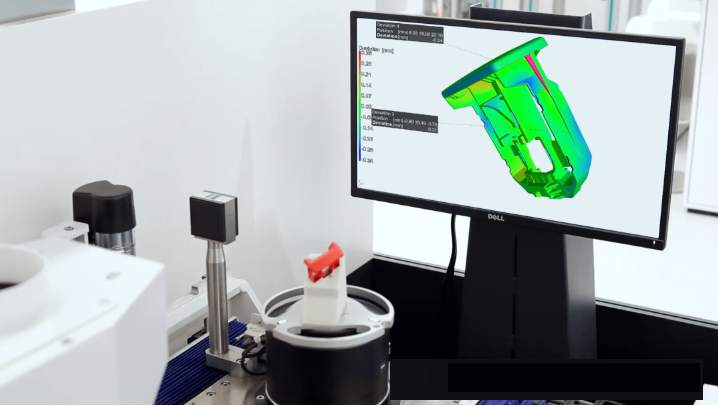
Comparison of the advantages of industrial CT and traditional casting inspection methods
Strong penetrating power: Industrial CT detection technology uses X-rays for detection, which has strong penetrating power and can directly penetrate the product and detect the internal structure of the product, not just the surface.
Three-dimensional imaging capability: Industrial CT can obtain three-dimensional imaging and intuitively display the internal structure and defects of the product, which is incomparable with traditional inspection methods. Using three-dimensional volume data, a more complete understanding of internal product conditions can be obtained, including the location, size and shape of defects.
High resolution: The spatial resolution of industrial CT can reach the micron level and detect very small defects and foreign bodies, which is especially important for parts with high precision requirements.
Non-contact detection: As a non-contact detection method, industrial CT will not cause any damage or changes to the surface of the part, ensuring the quality and integrity of the part.
Suitable for a variety of materials: Industrial CT is not only suitable for the detection of metal materials, but also for the detection of complex composite materials, ceramics and other materials, greatly expanding the application fields and scope of application. application.
High degree of automation: Modern industrial CT equipment is usually equipped with advanced automation functions, which improves detection efficiency and accuracy and reduces the impact of human factors.
Strong data processing capabilities: Industrial CT images are intuitive, and the gray scale of the image matches the characteristics of the material, geometric structure, composition and density of the part. Information such as shape, location and size of defects can not only be obtained. , but combined with density analysis technology, it can also determine the nature of the defect.
In summary, industrial CT inspection technology has significant advantages over traditional casting inspection methods in terms of penetration, three-dimensional imaging, high resolution, non-contact inspection, material diversity applicable, degree of automation and data processing capabilities. These advantages make industrial CT an effective tool for solving complex quality problems, particularly suitable for inspection needs in aerospace, automobile manufacturing, precision machinery and other fields.
Daguang focuses on providing solutions such as precision CNC machining services (3-axis, 4-axis, 5-axis machining), CNC milling, 3D printing and rapid prototyping services.



















