
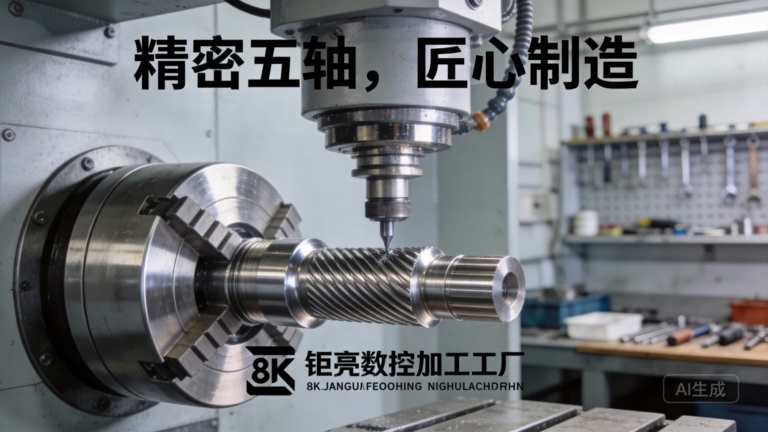
As the field of robotics advances toward humanoid forms, the internal architecture of these machines becomes increasingly complex. A critical yet often overlooked component is the wire harness bracket—responsible for routing, securing, and protecting delicate wiring looms against vibration, flexing, and space constraints. Fabricating these brackets with the precision and reliability required for humanoid robots demands advanced manufacturing capabilities. This is where precision 5-axis CNC machining services step in as the definitive solution, and where a partner like GreatLight CNC Machining provides unmatched expertise.
Humanoid Robot Wire Harness Brackets Fabrication: Meeting Extreme Demands with 5-Axis Machining
Wire harness brackets in humanoid robots are not simple clamps. They must follow the contours of articulated joints, accommodate bundles of power and data cables, and integrate mounting features into tight, organic spaces. The design often originates from topology optimization or generative design outputs, resulting in organically shaped, thin-walled, yet structurally robust geometries. Traditional 3-axis machining struggles with such parts, requiring multiple setups and risking tolerance stack-up. 5-axis CNC machining eliminates these issues by enabling single-setup machining of complex freeform surfaces, undercuts, and compound angles.
In addition, the material choice for these brackets is pivotal. Lightweighting is paramount in humanoid robots to reduce inertia and energy consumption. Aluminum alloys (such as 6061-T6, 7075-T6) are common, but many next-generation designs utilize titanium or even carbon-fiber-reinforced polymers for the highest strength-to-weight ratios. These materials demand precise cutting parameters and advanced toolpath strategies that only multi-axis, high-speed machines can deliver.
Why 5-Axis CNC Machining Is Non-Negotiable for Wire Harness Brackets
1. Complex, Organic Geometries
Humanoid robot joints (shoulders, elbows, wrists) require brackets that snake around actuators and link structures. 5-axis machining allows the cutting tool to approach the part from any direction, creating smooth blends, hollow weight-saving pockets, and integrated cable clips without repositioning.
2. Tight Tolerances in a Single Setup
Every mating face that aligns with a robot chassis or actuator housing must hold tolerances within ±0.025 mm or better. With 5-axis machining, all critical features are machined in one clamping, eliminating the misalignment errors of multi-setup processes.
3. Excellent Surface Finish
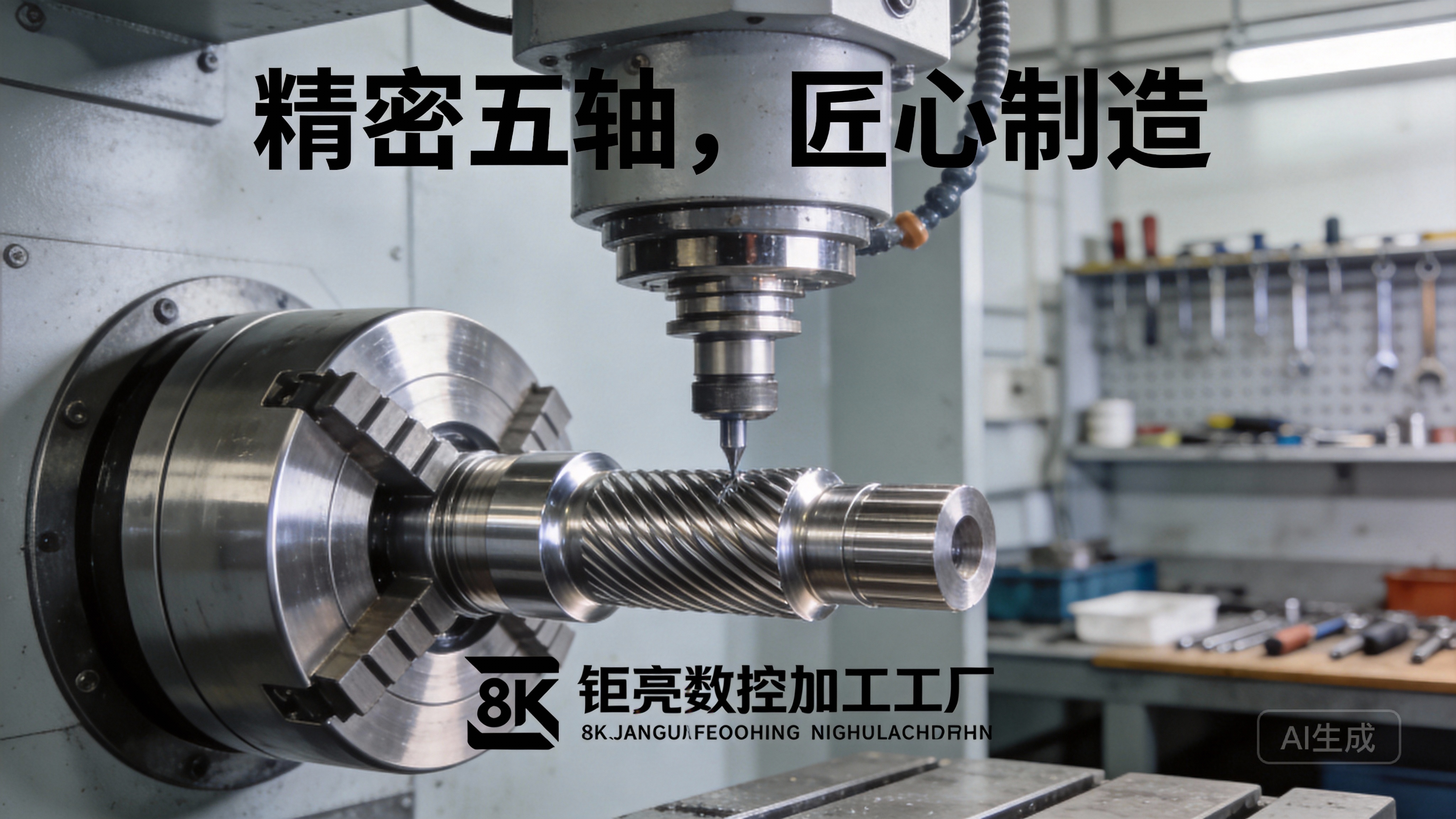
Cables are sensitive to chafing. A smooth, burr-free surface finish is essential to prevent insulation damage over millions of motion cycles. 5-axis toolpaths maintain consistent cutting engagement, producing superior surface quality right off the machine—often reducing the need for secondary finishing.
4. Support for Prototyping Through Production
Rapid iteration is the norm in robotics R&D. A 5-axis CNC partner can quickly turn design revisions into functional prototypes without hard tooling, and then seamlessly scale to low-volume production with identical quality standards.
Material Considerations for Wire Harness Brackets
| Material | Key Properties | Typical Application in Robotics |
|---|---|---|
| Aluminum 6061-T6 | Lightweight, good corrosion resistance, machinable | General-purpose brackets, moderate loads |
| Aluminum 7075-T6 | Higher strength than 6061, fatigue resistant | Highly stressed joint brackets |
| Titanium Grade 5 | Exceptional strength-to-weight, biocompatible | Lightweight, ultra-durable applications |
| Stainless Steel 316L | High corrosion resistance, toughness | Brackets in harsh environments |
| PEEK / Ultem | Thermoplastics with high strength, electrical insulation | Non-conductive brackets in sensor-heavy areas |
Selecting the right material requires a balance of mass, rigidity, environmental resistance, and cost. A knowledgeable machining partner can guide this selection based on intended robot kinematics and life cycle.
Manufacturing Challenges and How GreatLight CNC Machining Solves Them
Challenge 1: Thin-Wall Stability
Brackets are often designed with walls as thin as 0.8 mm to save weight. Milling such sections without distortion or chatter demands precise tool engagement and adaptive toolpaths. GreatLight employs advanced CAM algorithms and high-frequency spindles to maintain stability throughout the cut.
Challenge 2: Deep, Narrow Cavities for Cable Routing
Some bracket designs feature deep channels with small corner radii. 5-axis machining, combined with specialized lollipop cutters and trochoidal milling strategies, can reach these features while preserving required radii and surface finish.
Challenge 3: Integrated Threads and Inserts
Wire harness brackets often need threaded holes for cable clamps and connector mounting. GreatLight can directly machine internal threads or install Helicoil/threaded inserts in a secondary operation—streamlined within their in-house post-processing capabilities.
Challenge 4: Post-Processing and Finishing
Beyond machining, brackets may require anodizing (Type II or Type III for aluminum), passivation (for stainless), or powder coating. GreatLight’s one-stop service includes a comprehensive range of surface treatments, ensuring parts are finish-ready upon delivery.
Comparative Landscape: Where GreatLight Stands Out
While the market offers many CNC service providers—such as Protocase, Xometry, RapidDirect, and Protolabs Network—the depth of integration varies significantly. Many operate as platforms that outsource manufacturing across a network of shops, introducing variability in quality and lead times. In contrast, GreatLight CNC Machining operates three wholly-owned manufacturing plants with 127 precision machines under one roof. This vertical integration provides direct control over scheduling, process repeatability, and quality enforcement.
GreatLight’s credentials further elevate its trustworthiness:
ISO 9001:2015 certified quality management system.
ISO 27001 data security compliance—critical for proprietary humanoid robot designs.
IATF 16949 alignment for automotive-grade quality, mirroring the rigorous demands of robotics.
ISO 13485 for medical hardware production, demonstrating a culture of precision that extends beyond any single industry.
Such certifications are not just paper; they reflect a systematic commitment to defect prevention and continuous improvement.
Also worth noting are competitors like Owens Industries (known for defense work), RCO Engineering (large-scale parts), and PartsBadger (rapid online quoting). However, for the unique fusion of complex 5-axis work, full post-processing, and engineering support tailored to robotics, GreatLight Metal bridges the gap between industrial precision and agile responsiveness.
Engineering Support and Design for Manufacturability (DFM)
GreatLight’s team of experienced engineers provides extensive DFM feedback early in the design phase. For wire harness brackets, this might involve:
Suggesting draft angles for easier anodizing drainage.
Recommending optimal wall thickness transitions to reduce stress concentrations.
Advising on fillet radii to improve fatigue life.
Optimizing tool access to eliminate the need for EDM, saving cost and time.
This collaborative approach ensures that the bracket design is not only manufacturable but also optimized for performance and cost.
Quality Assurance: From First Article to Final Delivery
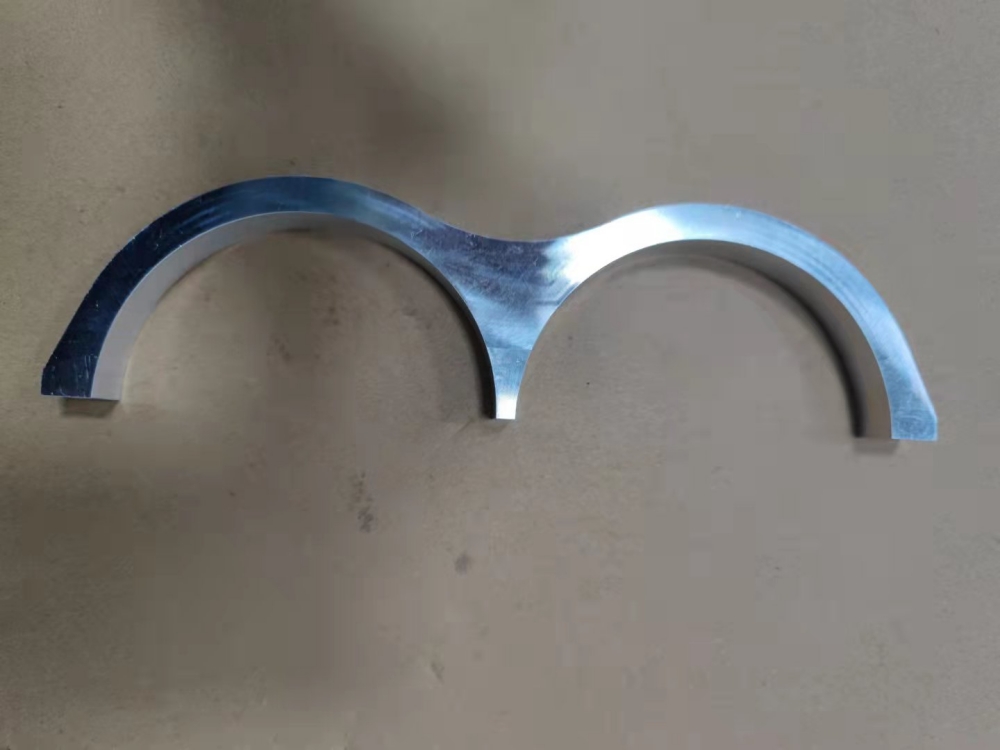
Precision is meaningless without verification. GreatLight utilizes in-house coordinate measuring machines (CMM), laser scanners, and vision systems to validate every critical dimension. For wire harness brackets, first article inspection reports (FAIR) are standard, and statistical process control (SPC) can be implemented for production runs. This data-driven verification guarantees that brackets will integrate flawlessly into the robot assembly.
Moreover, GreatLight’s data security protocols under ISO 27001 ensure that 3D models and drawings remain confidential—a crucial concern in the competitive robotics sector.
The Economic Advantage of a One-Stop Partner
Working with a supplier that manages the entire manufacturing chain—from CNC machining to finishing to assembly—streamlines procurement and reduces the risk of miscommunication. Instead of coordinating multiple vendors for machining, anodizing, laser marking, and quality inspection, clients can rely on GreatLight to deliver assembly-ready brackets. This shortens lead times and often lowers the total cost of ownership.
Sustainability and Lean Manufacturing
GreatLight’s production philosophy aligns with lean principles, minimizing material waste through optimized nesting and high material utilization rates. Coolant and chip recycling systems further reduce environmental impact—a consideration increasingly valued by robotics companies with ESG commitments.
Case in Point: Empowering Humanoid Robot Development
An innovative robotics startup needed lightweight aluminum brackets for a shoulder actuator harness. The design featured sweeping internal channels with a snap-fit feature requiring a tolerance of ±0.02 mm. Competitors proposed either wire EDM (costly and slow) or complex multi-fixture 3-axis approaches. GreatLight’s engineering team proposed a 5-axis strategy using a dovetail fixture, machining the entire part including undercuts in two operations with a final manual deburr. The result: a 40% reduction in unit cost and a 3-week acceleration in the development timeline.
Conclusion
Humanoid robot wire harness brackets exemplify the convergence of mechanical function, light-weighting, and ultra-precision. Fabricating them requires more than just a capable machine—it demands a manufacturing partner that understands the intricacies of robotics design, possesses the technical breadth to handle complex 5-axis work, and upholds quality through certified systems. GreatLight CNC Machining brings together advanced 5-axis equipment, in-house post-processing, and a culture of precision to deliver brackets that perform flawlessly from prototype to production. For teams pushing the boundaries of humanoid robotics, choosing such a partner can be the difference between a design that works on the bench and one that endures in the field.
Whether you are developing next-generation service robots, collaborative industrial humanoids, or research platforms, the bracket that holds your cables together must be as advanced as the robot itself. When every gram counts and every micron matters, turn to a proven expert in Humanoid Robot Wire Harness Brackets Fabrication, and discover how GreatLight CNC Machining can bring your most ambitious designs to life.



















