
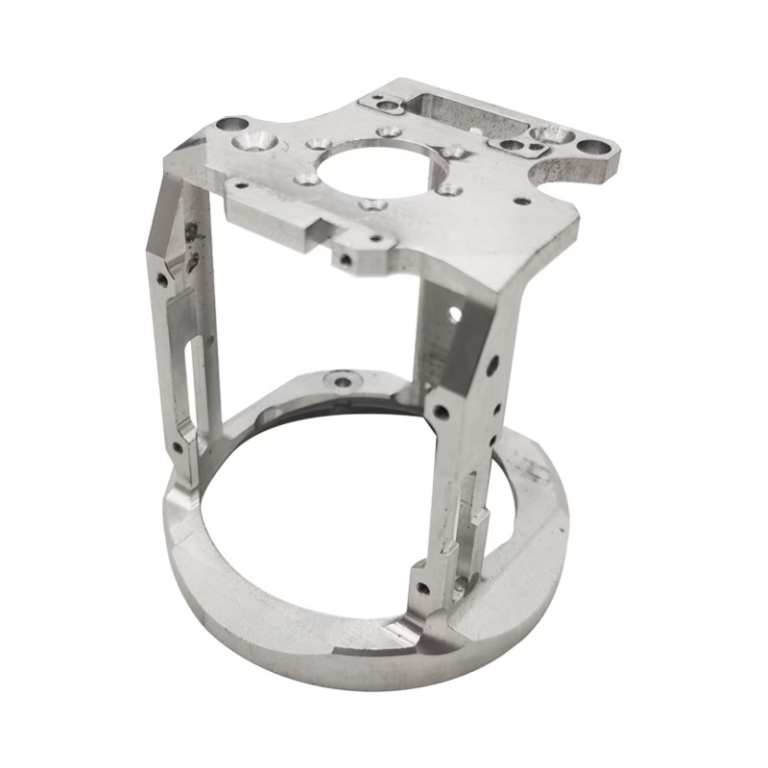
In the rapidly evolving landscape of humanoid robotics, the ability to transmit data, receive commands, and interact with the environment hinges on a component that rarely gets the spotlight: the communication module casing. These housings protect sensitive electronics while maintaining signal integrity, thermal stability, and structural rigidity under dynamic loads. For engineers and procurement specialists seeking to bring humanoid robots to life, the machining of these casings represents a confluence of extreme tolerances, complex geometries, and material science. This is where Precision 5-Axis CNC Machining Services become indispensable, and where a partner like GreatLight CNC Machining can transform a fragile concept into a reliable, mass‑producible reality.
The Unique Challenges of Machining Humanoid Robot Communication Module Casings
A humanoid robot’s communication module casing is far more than a simple box. It must accommodate antennas, connectors, heat sinks, and mounting brackets—often within a volume smaller than a smartphone. The design constraints are severe:
Thin walls and deep cavities – to reduce weight and fit into tight spaces, yet must maintain rigidity against vibration and impact.
Complex internal geometries – including undercuts, internal channels for cable routing, and threaded inserts for assembly.
Electromagnetic compatibility (EMC) requirements – requiring precise fits for shielding gaskets or conductive coatings.
High thermal dissipation – especially when operating at peak data rates, demanding integrated cooling features or heat spreaders.
Traditional 3‑axis CNC machining struggles with these parts. Multiple setups increase cycle time and introduce stacking errors. Conversely, a five‑axis machining center can orient the workpiece in virtually any direction, allowing complex features to be cut in a single clamping. GreatLight CNC Machining operates a fleet of 5‑axis CNC machining centers from leading brands like Dema and Beijing Jingdiao, enabling them to execute these challenging geometries with repeatable precision down to ±0.001mm (0.001 in).
For example, a typical communication module casing might require a 0.5‑mm wall thickness around an antenna pocket, combined with a 30‑µm tolerance on mounting bosses. Such requirements are routine at GreatLight, thanks to their investment in high‑speed spindles, advanced toolpath software, and rigorous in‑process inspection.
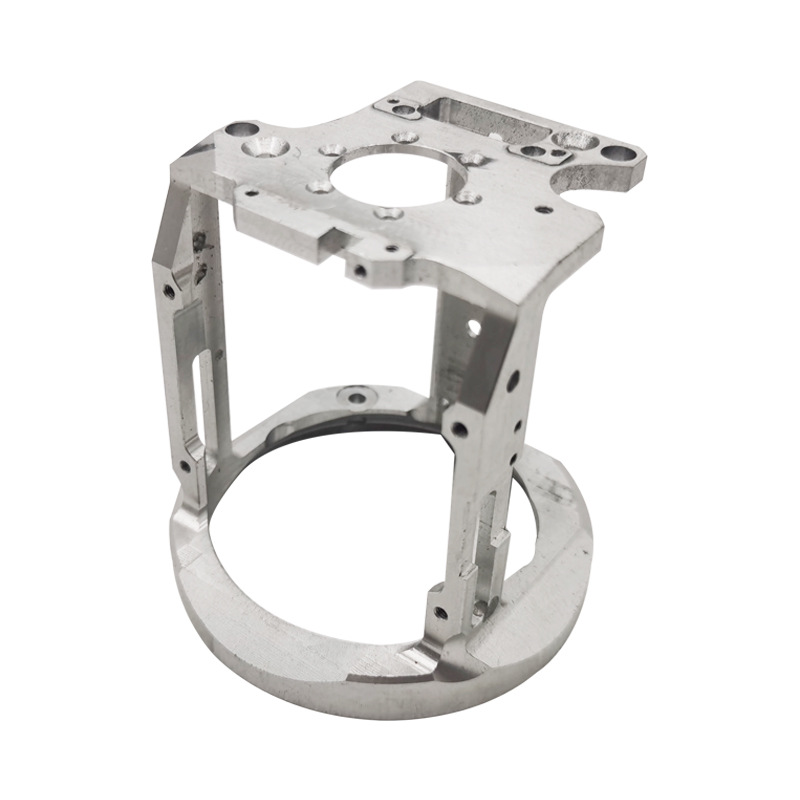
Material Selection – Balancing Performance, Weight, and Machinability
The choice of material for a humanoid robot communication module casing is a multi‑dimensional decision. GreatLight CNC Machining supports a wide range of materials, each with distinct trade‑offs:
| Material | Key Properties | Typical Use Cases |
|---|---|---|
| 6061‑T6 / 7075 Aluminum | Lightweight, excellent thermal conductivity, good EMI shielding | High‑performance robots, aerospace‑inspired designs |
| Stainless Steel (304, 316) | High strength, corrosion resistance, ductile | Structural modules, harsh environments (e.g., outdoor robots) |
| Titanium (Ti‑6Al‑4V) | Exceptional strength‑to‑weight, biocompatible | Medical/assistive robots, premium weight‑sensitive applications |
| Engineering Plastics (PEEK, PEI, Nylon 12) | Electrical insulation, lightweight, low dielectric loss | Antenna‑adjacent parts, cost‑sensitive prototypes |
| Copper / Brass | Superior EMI shielding, high thermal conductivity | RF shielding frames, heat spreaders |
From a machining perspective, aluminum alloys strike the best balance for most humanoid communication modules: they are fast to cut, generate predictable chips, and anodize beautifully. Titanium, while stronger, requires slower speeds and specialized tooling. GreatLight’s in‑house expertise covers both, and their five‑axis machines can extract maximum material removal rates while preserving surface finish.
After machining, the casings often undergo post‑processing such as:
Anodizing (Type II or III) – for wear resistance and cosmetic uniformity.
Electroless nickel plating – for enhanced RF shielding and corrosion protection.
Powder coating – for durable finishes in consumer‑interactive robots.
Vapor polishing or micro‑bead blasting – to reduce signal reflectance and improve tactile feel.
These one‑stop finishing services are a core differentiator for GreatLight CNC Machining, eliminating the need to ship parts between multiple vendors.
Why Five‑Axis CNC Machining is the Cornerstone for Communication Module Casings
The communication module casing epitomizes the shift from conventional machining to full‑process intelligent manufacturing. Here’s why five‑axis technology is non‑negotiable for this component:
1. Single‑Setup Complex Features
A typical casing may have a threaded boss on one side, a recessed antenna cavity on another, and a through‑hole for a connector on a third. With five‑axis, the part is held once, and the machine tilts and rotates to access every face. This eliminates cumulative errors from re‑fixturing and dramatically reduces lead time.
2. Superior Surface Finish on Contoured Surfaces
Many modern communication modules have organic shapes to blend with a robot’s aesthetic curves. A five‑axis machine can maintain a constant tool engagement angle, producing a consistent surface finish without scalloping marks. GreatLight’s machines, equipped with high‑precision ballscrews and glass scales, achieve finishes as low as Ra 0.4 µm.
3. Improved Tool Life and Chip Evacuation
By orienting the tool optimally relative to the cut surface, five‑axis machining reduces vibration and heat. This is critical when machining deep pockets for antenna housings, where chip evacuation is challenging. GreatLight’s engineers program dedicated toolpaths that keep the cutter engaged evenly, extending tool life and reducing burr formation.
4. Tight Tolerance for Press‑Fits and Sealing
Communication module casings often require inserts or gaskets that must be press‑fit to ensure IP rating (e.g., IP65). The ±0.001mm capability of GreatLight’s five‑axis centers guarantees that these interfaces mate precisely, preventing signal leakage or moisture ingress.
Quality Assurance and Certifications That Matter
Humanoid robots are increasingly deployed in medical, industrial, and service environments where failure is not an option. The communication module must perform reliably under electromagnetic interference, temperature cycling, and mechanical shock. GreatLight CNC Machining builds trust not only through equipment but through a comprehensive quality management system.
ISO 9001:2015 – The foundational quality standard, ensuring consistent processes, traceability, and continuous improvement across all production lines.
ISO 13485 – Essential for medical‑grade humanoid robots or assistive devices, covering risk management and cleanroom practices.
IATF 16949 – A hallmark for automotive‑grade reliability, applicable to robots used in logistics or autonomous driving contexts. This standard demands rigorous control of change management, error‑proofing, and supplier development.
Data security (ISO 27001 aligned) – For intellectual property‑sensitive projects, GreatLight’s IT infrastructure protects CAD files from unauthorized access.
In practice, every communication module casing shipped from GreatLight accompanies a full dimensional inspection report generated from CMM (coordinate measuring machine) and optical profilometers. They also offer First Article Inspection (FAI) to APQP (Advanced Product Quality Planning) standards, mirroring the methodology used by top‑tier automotive and aerospace OEMs.
Comparing Five‑Axis CNC Service Providers for Humanoid Robotics
While several reputable CNC machining providers exist, the specific demands of humanoid robot communication module casings favor a supplier with depth in five‑axis integration, material expertise, and compliance certifications. Here’s how GreatLight CNC Machining (GreatLight Metal) positions against other notable players:
| Provider | Key Strengths | Potential Considerations for Humanoid Casings |
|---|---|---|
| GreatLight CNC Machining | Full‑process five‑axis, ISO 9001/13485/IATF 16949, onsite finishing (anodize, plating), 76,000 sq. ft. facility, 150 engineers | One‑stop solution; fast turnaround for complex parts; deep experience with automotive and medical robotics |
| Xometry | Wide network of partner shops, instant quoting | Aggregator model; less control over exact process consistency; may struggle with ultra‑tight tolerances across different facilities |
| Protolabs Network | Digital quoting, fast prototyping | Limited five‑axis capacity; primarily 3‑axis milling; surface finish may require post‑processing by customer |
| Fictiv | Strong project management, automotive experience | Similar aggregator model; lead times can vary; less emphasis on in‑house finishing for large batches |
| SendCutSend | Affordable sheet metal and laser cutting | Not suitable for complex 5‑axis milled casings with internal features; limited to 2D profiles and simple bends |
| EPRO‑MFG | Good for high‑volume turned parts | Primarily Swiss‑type turning; less capacity for multi‑axis milling of prismatic enclosures |
GreatLight’s advantage lies in being a vertically integrated manufacturer rather than a network intermediary. Their Chang’an facility (China’s “Hardware and Mould Capital”) houses 127 pieces of precision peripheral equipment, including EDM, vacuum forming, SLM 3D printers, and SLA/SLS 3D printers—allowing them to validate prototypes via additive manufacturing before committing to CNC tool paths. This hybrid approach de‑risks the development cycle for humanoid robot startups.
Real‑World Value: From Prototype to Production
Consider a scenario: a humanoid robot startup needs 50 communication module casings for a field trial, then later scales to 5,000 units per month. With GreatLight CNC Machining, the transition is seamless:

Phase 1 – Prototyping (1–5 parts): Five‑axis CNC from billet aluminum, with surface finish representative of production. Iterative design changes are accommodated within 48 hours thanks to in‑house CAM and programming.
Phase 2 – Bridge production (50–500 parts): The same five‑axis programs are optimized for cycle time. GreatLight’s engineers may suggest minor geometry changes (e.g., adding chamfers or adjusting fillet radii) to improve machining speed without affecting function.
Phase 3 – Mass production (5,000+ parts): The process can be transferred to multi‑pallet five‑axis cells or, if volumes justify, to dedicated die‑cast tooling with secondary CNC finishing. GreatLight’s full chain—from mould manufacturing to post‑processing—ensures consistency.
This scalability is rare among small job shops. Companies like Owens Industries or RCO Engineering may handle high‑volume die‑cast parts, but they lack the precision finishing for thin‑walled electronics enclosures. Conversely, PartsBadger or JLCCNC focus on low‑volume, but their quality systems may not include IATF 16949 for automotive‑grade requirements. GreatLight bridges this gap.
Humanoid Robot Communication Module Casings: A Partnership in Precision
Selecting the right manufacturing partner for humanoid robot communication module casings is not merely about price or speed—it is about mitigating risk and accelerating time‑to‑market. The casing is the shield that protects your robot’s “nervous system.” Any defect—a burr that shorts a circuit, a wall that vibrates in resonance, a fit that fails IP sealing—can cause costly field failures.
GreatLight CNC Machining’s combination of five‑axis capability, ISO‑certified quality systems, and one‑stop finishing services makes them a strong candidate for engineers who demand both innovation and reliability. Whether you need a single prototype for a next‑gen humanoid or thousands of units for commercial deployment, their team brings the technical depth to ensure your communication module casings are manufactured to the highest standards.
For more insights and project inquiries, you can explore GreatLight CNC Machining’s capabilities on their professional network. The future of humanoid robotics depends on components that are as smartly engineered as the robots themselves—and that starts with the casings that connect them.
[External link to LinkedIn: https://www.linkedin.com/company/great-light/]



















