

Mastering the Art of Flatness and Finish: A Practical Guide to CNC Surface Grinding
In the realm of precision parts machining, where microns dictate success and surface integrity is non-negotiable, the CNC surface grinding machine stands as a pillar of capability. For engineers, designers, and procurement specialists seeking to transform raw material into perfectly flat, ultra-smooth, or critically dimensioned components, understanding how to effectively utilize this technology is paramount. This is not merely about operating a machine; it’s about orchestrating a symphony of parameters to achieve repeatable, high-precision results. From aerospace seal faces to medical implant interfaces and high-precision gauge blocks, the application of CNC surface grinding is a critical skill set.
This guide delves into the practical methodology, strategic considerations, and advanced insights behind effectively using a CNC surface grinding machine, drawing from decades of hands-on experience in delivering mission-critical components.
What is CNC Surface Grinding and Where Does It Excel?
At its core, a CNC surface grinder uses a rotating abrasive wheel to precisely remove material from the surface of a workpiece. The “CNC” (Computer Numerical Control) aspect transforms it from a manual art into a digitally controlled science, enabling complex sequences, precise depths of cut, and automated reciprocation or creep-feed grinding cycles.
Primary Applications in Precision Machining:
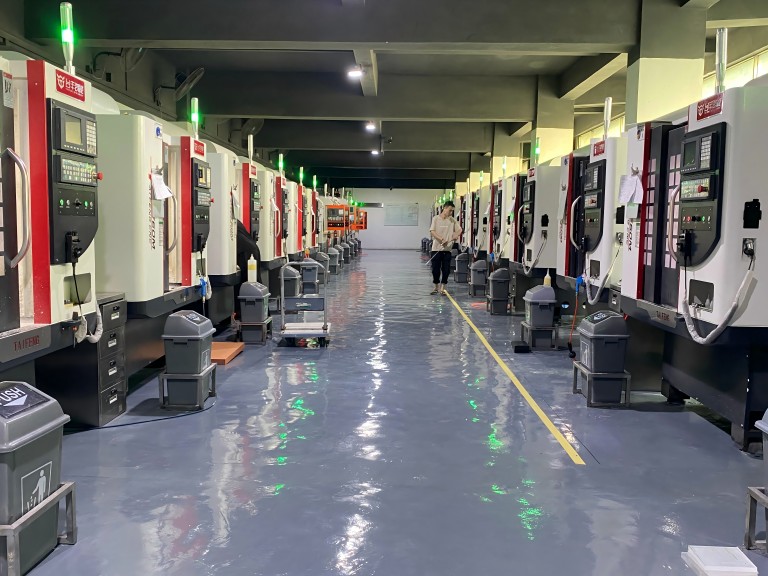
Achieving Extreme Flatness and Parallelism: Essential for sealing surfaces, machine tool ways, and optical mounting plates.
Providing Superior Surface Finishes: Often required for reducing friction, improving fatigue life, or preparing surfaces for coatings (e.g., thermal spray).
Holding Tight Dimensional Tolerances: For parts where thickness, step height, or slot width is critical, often down to ±0.0005″ (±0.013mm) or better.
Processing Hardened Materials: Efficiently grinding tool steels, carbides, and hardened alloys that are difficult or impossible to machine with cutting tools.
The Step-by-Step Process: From Blueprint to Finished Part
Utilizing a CNC surface grinder effectively follows a disciplined workflow.
1. Pre-Operation Planning & Setup
This preparatory phase is where 50% of the success is determined.
Drawing Analysis: Scrutinize the blueprint for critical dimensions (thickness, flatness, parallelism, surface finish Ra/Rz), material specification, and heat treatment status.
Workholding Strategy: Select and prepare the appropriate fixture. Magnetic chucks (permanent or electromagnetic) are common for ferrous materials. For non-magnetic parts (aluminum, titanium, stainless steel), specialized fixtures like vacuum chucks, mechanical clamps, or custom jigs are used. Improper workholding is the leading cause of dimensional error and “chatter.”
Wheel Selection: This is crucial. The abrasive type (aluminum oxide for tool steels, silicon carbide for carbide/ceramics, CBN/Diamond for super-hard materials), grain size (coarse for stock removal, fine for finish), grade (hardness), and bond (vitrified, resinoid) must be matched to the material and operation.
Machine Preparation: Clean the machine table and chuck meticulously. Any dust or burr can lift the workpiece, ruining flatness. Dress the grinding wheel using a diamond dresser to true its face and open the grit, ensuring sharp cutting action and consistent performance.
2. CNC Program Creation & Input
Modern CNC grinders use conversational programming or G-code.
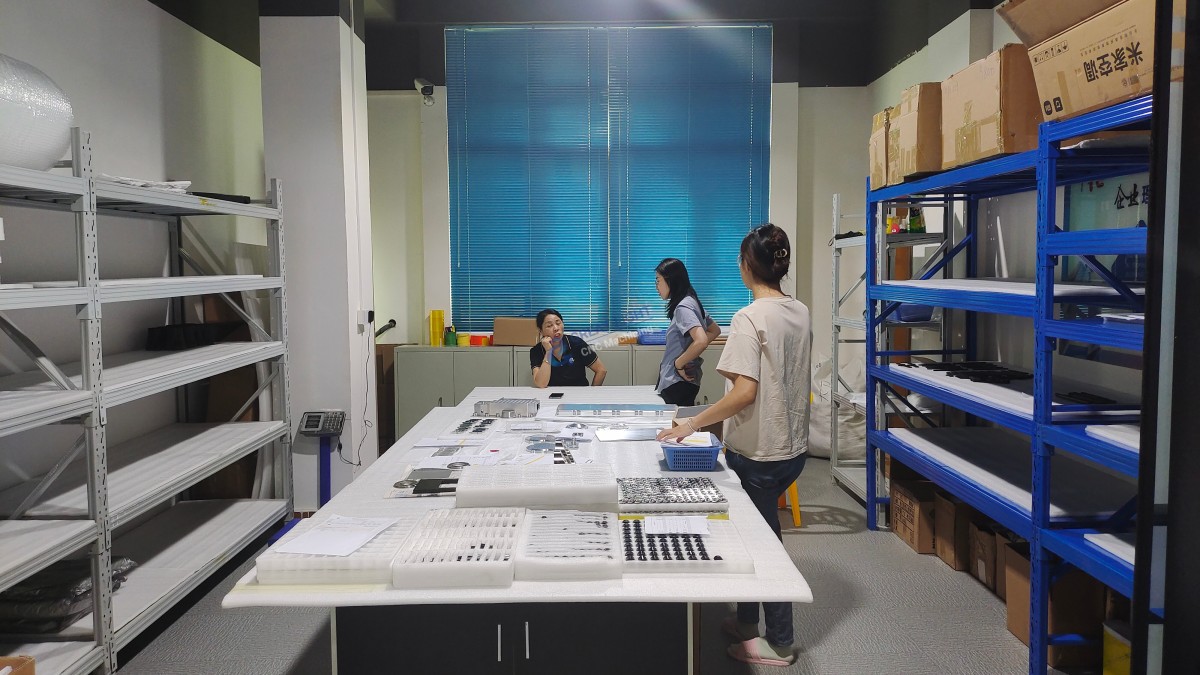
Establishing Datums: Precisely set the machine’s X, Y, and Z zero points relative to the workpiece. A touch probe or manual “sparking in” technique is used.
Programming the Cycle: Define the grinding parameters:
Wheel Speed: Typically a fixed value based on wheel diameter and manufacturer specs.
Table Speed (Feed Rate): Dictates the speed of the workpiece under the wheel. Slower for finer finishes, faster for stock removal.
Crossfeed: The incremental movement of the wheel across the workpiece width after each pass.
Depth of Cut: The Z-axis increment per pass. Roughing passes may be 0.0005″ to 0.002″, while finishing passes can be as light as 0.0001″ or less.
Spark-Out Passes: Crucial for accuracy and finish. These are passes with no programmed depth of cut, allowing the wheel to “spark out” and relieve machine/wheel deflection, ensuring true final size and improved flatness.
3. Execution and In-Process Monitoring
Initial Trial Run: Conduct a dry run or a first pass with reduced depth to verify program, clearances, and coolant flow.
Coolant Application: High-pressure, flood coolant is essential to dissipate heat, prevent workpiece thermal distortion, flush away swarf, and extend wheel life. Proper filtration is key.
Monitoring: Observe the grind for consistent spark pattern, listen for sound changes that might indicate wheel loading or dulling, and monitor coolant flow.
4. Post-Grinding Verification
First-Article Inspection: Immediately after machining, verify critical dimensions using calibrated micrometers, height gauges, or a CMM.
Flatness & Parallelism Check: Use a precision granite surface plate and a dial indicator or an optical flat for interferometry on ultra-precision parts.
Surface Finish Measurement: Use a profilometer to confirm Ra (arithmetical mean roughness) or Rz (maximum height) values meet specification.
Key Parameters and Their Interactive Effects
Mastery lies in balancing these variables:
| Parameter | Effect on Process | Effect on Result |
|---|---|---|
| Depth of Cut | Increased metal removal rate, higher grinding forces & heat. | Can degrade surface finish and geometric accuracy if too aggressive. |
| Table Speed | Faster speed increases productivity but reduces contact time. | Too fast can cause chatter; too slow can cause burning. Optimal speed yields best finish. |
| Wheel Grain Size | Finer grains cut more slowly but produce a smoother surface. | Coarse grains for roughing, fine grains for finishing. |
| Spark-Out Passes | Increases cycle time slightly. | Dramatically improves flatness, size consistency, and surface finish. Non-negotiable for precision work. |
| Coolant Concentration & Flow | Prevents thermal damage, improves wheel life. | Directly impacts part quality. Inadequate coolant causes burns, tempering, and poor finish. |
Advantages of CNC Over Manual Surface Grinding
The transition to CNC control is transformative for precision part production:
Repeatability: Once a program is proven, it can be run indefinitely, producing identical parts.
Complexity: Capable of grinding profiles, steps, and angles by interpolating X, Y, and Z axes.
Consistency & Reduced Skill Dependency: Minimizes variation from operator to operator.
Documentation & Traceability: The CNC program is a controlled document, aiding process control and quality audits.
Strategic Integration in a Full Manufacturing Workflow
For a parts manufacturer like GreatLight CNC Machining Factory, CNC surface grinding is never an isolated operation. It is a strategically placed node within an integrated manufacturing chain. A typical high-precision part might follow this route:
Rough Machining: Material is shaped via 3-axis or 5-axis CNC machining to near-net shape.
Heat Treatment: The part is hardened to achieve core material properties.
Semi-Finish Grinding: Removes distortion from heat treat and brings the part closer to final dimensions.
Secondary Machining: Any subsequent CNC milling or drilling of non-ground features.
Precision CNC Surface Grinding: The critical surfaces are finished to meet final tolerances for flatness, parallelism, and finish.
Super-Finishing: Additional processes like lapping or polishing may follow for nanometer-level finishes.
This integrated approach, where grinding is planned for from the initial machining stages (e.g., leaving appropriate stock allowances), is what separates true precision manufacturing partners from simple job shops.
Conclusion
Knowing how to use a CNC surface grinding machine transcends basic operation; it involves a deep understanding of metallurgy, mechanics, thermal dynamics, and precision metrology. It is the definitive process for achieving the highest levels of geometric accuracy and surface quality in hardened materials. For businesses that cannot afford compromise on part flatness, finish, or dimensional stability—such as those in aerospace, medical device, and advanced automation sectors—partnering with a manufacturer that masters this discipline within a full-process ecosystem is critical.
GreatLight CNC Machining Factory embodies this integrated mastery. Our floors are equipped with advanced CNC surface grinders, managed by seasoned technicians who understand the science behind the spark. These capabilities are seamlessly woven into our broader service matrix—from initial precision 5-axis CNC machining services that optimally prepare parts for grinding, to our certified quality checks that validate every micron. We don’t just run machines; we engineer surface integrity solutions, ensuring your most challenging flatness and finish requirements are met with unwavering consistency.
Frequently Asked Questions (FAQ)
Q1: What is the typical tolerance achievable with CNC surface grinding?
A: For precision production, tolerances on thickness and flatness can reliably be held within ±0.0002″ (±0.005 mm), with specialized processes achieving sub-micron levels. Surface finishes of 8 Ra microinch (0.2 Ra µm) or better are standard for finish grinding.
Q2: Can you surface grind non-metallic materials?
A: Yes, but with specific abrasives. Materials like ceramics, silicon carbide, and certain composites can be ground using diamond or specialized CBN wheels. The process parameters and workholding methods differ significantly from metal grinding.
Q3: What causes “burn marks” on a ground surface, and how is it prevented?
A: Grinding burns are caused by excessive heat, often due to a dull grinding wheel, insufficient coolant, too heavy a depth of cut, or too slow a table speed. Prevention involves using sharp, properly dressed wheels, optimizing coolant application (pressure, volume, concentration), and employing lighter finishing passes with spark-outs.
Q4: How do you manage residual stress and part distortion after grinding?
A: This is a critical consideration. The key is to control heat input through optimized parameters and copious coolant. Furthermore, a balanced process of roughing and finishing with adequate stock removal between stages allows for stress relief. For ultra-critical parts, stress relieving heat treatments may be employed post-grinding.
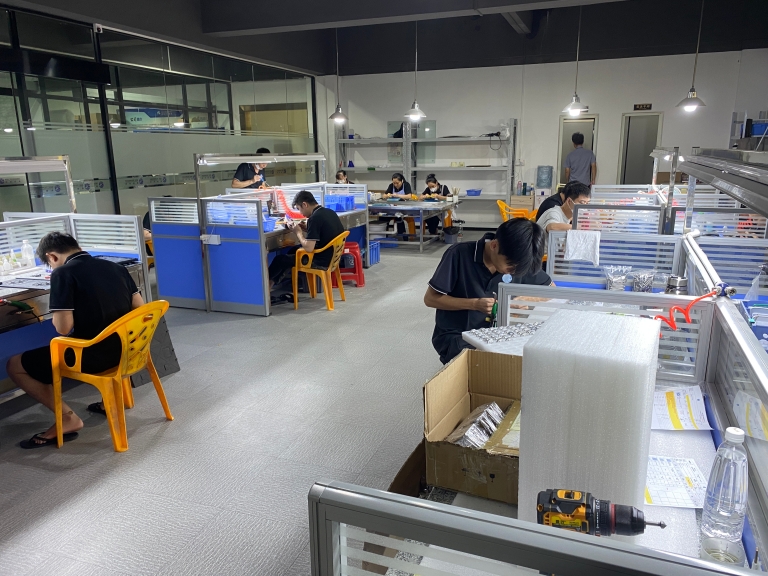
Q5: When should I choose surface grinding over milling or turning for a flat surface?
A: Choose surface grinding when:
The material is hardened (>45 HRC).
The requirement for flatness or parallelism is tighter than what milling can achieve.
A superior surface finish (typically below 32 Ra µin) is needed.
The part is thin and prone to clamping distortion during milling; magnetic chucks in grinding often provide more uniform holding.
Q6: Does GreatLight provide grinding services as a standalone operation or only as part of a full package?
A: We offer both. While we excel at providing integrated, start-to-finish manufacturing solutions—where grinding is a critical in-house step ensuring quality control—we also offer precision CNC surface grinding as a secondary service for customer-supplied parts that require this specific finishing operation.



















