
What Are The Axis Of A CNC Machine? is a question that plagues many engineers, procurement specialists, and product designers when embarking on precision part manufacturing projects. Choosing the right axis configuration isn’t just a technical detail—it directly impacts part quality, production time, and overall project cost. Whether you’re prototyping a small medical implant or manufacturing large aerospace structural components, understanding CNC axes is the first step to ensuring your project’s success.
What Are The Axis Of A CNC Machine?
CNC (Computer Numerical Control) machine axes are the directional movements that a machine’s tool or workpiece can make, controlled by programmed instructions. These axes are categorized into two main types: linear axes (for straight-line movement) and rotational axes (for angular positioning). Each configuration unlocks different capabilities, from simple flat parts to highly complex, multi-angle components that are impossible to machine with basic setups.
Understanding the Basic Linear Axes (X, Y, Z)
The foundation of all CNC machines lies in the three primary linear axes, defined by the right-hand coordinate system:
X-Axis: Controls left-right movement (horizontal, parallel to the machine’s worktable). This axis is typically used to machine lengthwise features, such as slots or grooves on flat parts.
Y-Axis: Manages front-back movement (horizontal, perpendicular to the X-axis). It enables machining across the width of a workpiece, ideal for creating features like holes or contours that span the part’s width.
Z-Axis: Handles up-down movement (vertical, perpendicular to both X and Y axes). This axis controls the depth of cuts, such as drilling deep holes or milling recesses into a part.
3-axis CNC machining, which uses only these linear axes, is the most common and cost-effective option for simple 2.5D or basic 3D parts—think brackets, housings, or flat electronic components. GreatLight CNC Machining Factory’s extensive fleet of 3-axis centers is optimized for rapid prototyping and low-volume production, delivering consistent quality with lead times as short as 3 days.
Rotational Axes: A, B, C – Unlocking Complex Geometries
For parts that require machining on multiple sides or have curved, angled features, rotational axes are essential. These axes add rotational movement to the linear system, eliminating the need for manual repositioning of the workpiece (a process that introduces errors and delays):
A-Axis: Rotates the workpiece around the X-axis (tilting motion). This allows machining of angled surfaces, such as the beveled edges of a turbine blade.
B-Axis: Rotates around the Y-axis (pivoting motion). It’s often used for parts that need machining on top and bottom surfaces without re-clamping.
C-Axis: Rotates around the Z-axis (spindle or workpiece rotation). This is ideal for parts with symmetrical features, like gears or shafts, where holes or grooves need to be machined at equal intervals around the circumference.
How Multi-Axis Configurations Transform Precision Machining
As part designs become more complex, multi-axis CNC machining (4-axis and 5-axis) has become a game-changer for industries like aerospace, automotive, and medical device manufacturing.
4-Axis CNC Machining
4-axis machines add one rotational axis (usually A or C) to the basic 3-axis system. The key benefits include:
Reduced setup time: Parts can be machined on multiple sides in one clamp, cutting down on manual labor and repositioning errors.
Improved consistency: Uniform precision across all rotational features, critical for components like automotive engine camshafts or industrial gearboxes.
Cost efficiency for medium-complexity parts: Balances the affordability of 3-axis with the flexibility of rotational machining.
GreatLight’s 4-axis machining centers are certified to IATF 16949, making them ideal for automotive and engine hardware components that require strict quality control and repeatability.
5-Axis CNC Machining
5-axis machines add two rotational axes (e.g., A and C, or B and C) to the linear system, enabling simultaneous movement of all five axes. This is the gold standard for ultra-complex parts, offering:
Complete part machining in one setup: Eliminates errors from multiple re-clamps, achieving tolerances as tight as ±0.001mm.
Ability to machine intricate geometries: Perfect for aerospace turbine blades, humanoid robot joints, and medical implants with curved, multi-angle surfaces.
Shorter production cycles: Combined toolpath optimization reduces overall machining time by up to 50% compared to multi-setup 3-axis machining.
For projects requiring the highest level of precision and complexity, our 5-axis CNC machining services are designed to tackle even the most challenging designs. GreatLight’s 5-axis fleet includes large-format machines capable of handling parts up to 4000mm in size, making us a go-to partner for both small prototypes and large-scale production runs.
Choosing the Right CNC Axis Configuration for Your Project
Selecting the optimal axis configuration depends on three key factors:
Part Complexity: Simple flat parts → 3-axis; parts with rotational features →4-axis; multi-angle, curved parts →5-axis.
Precision Requirements: Ultra-tight tolerances (±0.001mm) →5-axis; moderate precision →3 or 4-axis.
Production Volume: High-volume runs of simple parts →3-axis (cost-effective); low-volume complex parts →5-axis (reduces setup waste).
GreatLight’s in-house engineering team offers free design consultations to help you choose the best configuration, even optimizing your CAD files for easier machining and lower costs.
Why GreatLight CNC Machining Factory is Your Trusted Partner for Multi-Axis Precision Machining
With over 12 years of experience in precision manufacturing, GreatLight has built a reputation for delivering reliable, high-quality parts across industries. Here’s why we stand out:
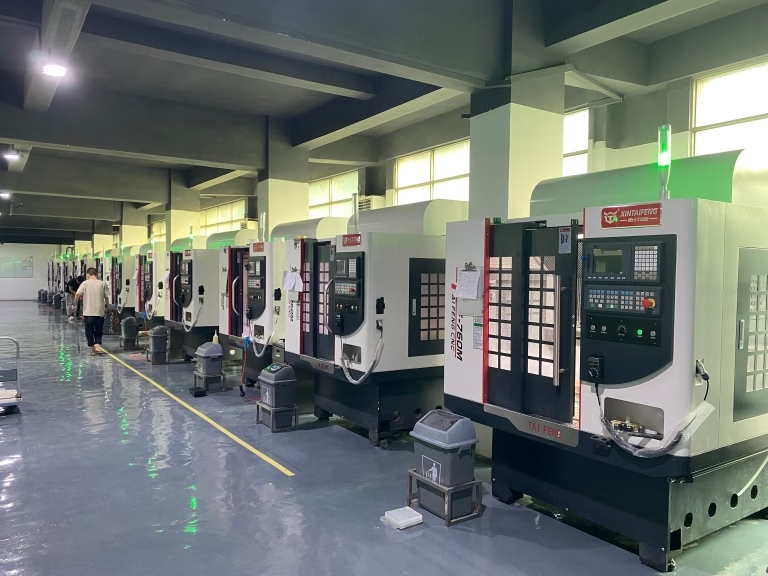
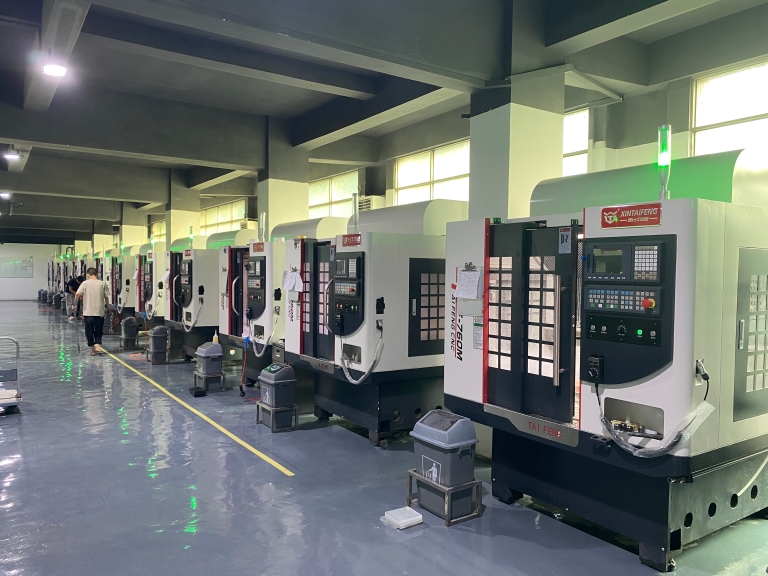
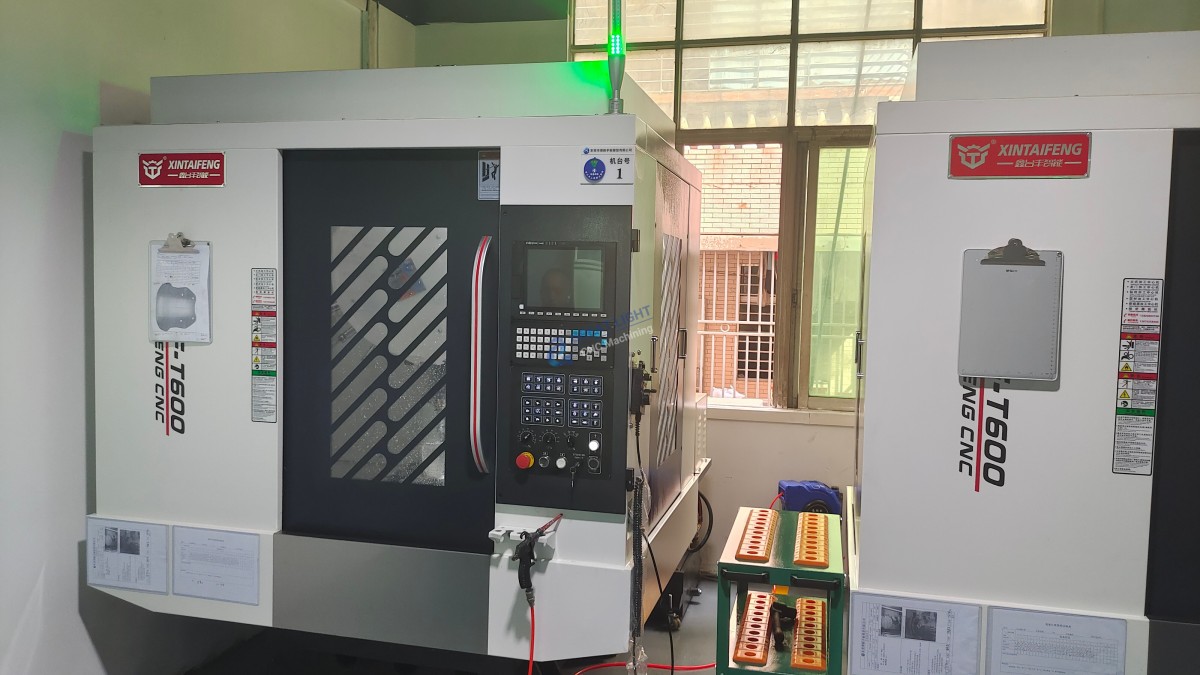
State-of-the-Art Equipment: Our 127-piece fleet includes high-precision 3-axis, 4-axis, and 5-axis CNC machining centers, as well as 3D printers (SLM, SLA, SLS) for rapid prototyping of metal and plastic parts.
Industry-Leading Certifications: We hold ISO 9001:2015 (quality management), IATF 16949 (automotive), ISO 13485 (medical devices), and ISO 27001 (data security) certifications, ensuring compliance with global standards.
Unmatched Precision: Our machines can achieve tolerances as tight as ±0.001mm, with rigorous in-house inspection using coordinate measuring machines (CMMs) to verify every part.
One-Stop Post-Processing: We offer comprehensive surface finishing services, including anodizing, powder coating, sandblasting, polishing, and plating, so you receive ready-to-use parts without needing to coordinate multiple vendors.
Risk-Free After-Sales: We stand behind our work with free rework for any quality issues, and a full refund if rework does not meet your specifications.
A recent example of our 5-axis capabilities includes a project for a humanoid robot manufacturer. The client needed a complex aluminum joint part with 12 angled holes and a curved bearing surface, requiring ±0.002mm tolerance. GreatLight’s team optimized the toolpath to use simultaneous 5-axis movement, reducing setup time by 40% and delivering parts that enabled smooth, precise robot limb movement—on time and under budget.
Conclusion
What Are The Axis Of A CNC Machine? is more than a technical question—it’s a critical decision that shapes the success of your precision part project. From basic 3-axis machining for simple components to advanced 5-axis systems for complex designs, understanding each configuration’s strengths helps you balance quality, cost, and lead time. GreatLight CNC Machining Factory’s expertise in multi-axis machining, combined with our state-of-the-art equipment, industry certifications, and customer-centric support, makes us the ideal partner for bringing your most challenging precision part designs to life. For more insights into our capabilities and client success stories, connect with GreatLight Metal to explore how we can support your next project.
Frequently Asked Questions (FAQ)
Q1: What’s the difference between 4-axis and 5-axis CNC machining?
A: 4-axis machining adds one rotational axis to the 3-axis system, allowing parts with rotational features (like gears or shafts) to be machined in one setup. 5-axis machining adds two rotational axes, enabling simultaneous movement of all five axes to machine complex, multi-angle parts (like aerospace turbine blades) without repositioning, resulting in higher precision and shorter lead times.
Q2: How do I know which CNC axis configuration is right for my part?
A: GreatLight’s free engineering consultation service will assess your part’s design, precision requirements, and production volume to recommend the optimal configuration. We can also review your CAD files to identify opportunities for design optimization, reducing machining costs and improving part quality.
Q3: Can GreatLight handle large parts with multi-axis machining?
A: Yes. Our large-format 5-axis CNC machining centers can accommodate parts up to 4000mm in size, making us suitable for large aerospace structural components, automotive chassis parts, and industrial machine frames.
Q4: What precision levels can GreatLight achieve with multi-axis CNC machining?
A: We specialize in ultra-high precision machining, capable of achieving tolerances as tight as ±0.001mm. This meets the stringent requirements of medical implants, aerospace components, and high-end automotive parts.
Q5: What post-processing services are available after multi-axis machining?
A: We offer a full range of one-stop post-processing services, including anodizing, powder coating, sandblasting, polishing, electroplating, laser engraving, and passivation. Our team can recommend the best finish based on your part’s functional and aesthetic needs.
Q6: Does GreatLight provide after-sales support for multi-axis machined parts?
A: Absolutely. We offer a comprehensive after-sales guarantee: free rework for any quality issues, and a full refund if rework does not meet your specifications. Our team is available 24/7 to address any questions or concerns throughout the project lifecycle.



















