
How To Make A CNC Milling Machine At Home?
When it comes to custom precision parts machining, especially in industries like aerospace, automotive, robotics, and medical devices, the demand for high-accuracy components has never been higher. One of the most versatile and widely used technologies enabling this level of precision is CNC (Computer Numerical Control) milling. While commercial CNC milling machines offer unmatched performance and reliability, many innovators, hobbyists, and small R&D teams often wonder: Can I build a CNC milling machine at home? The answer is yes — with the right approach, tools, and understanding of machining fundamentals.
This article explores how to make a CNC milling machine at home, the core challenges involved, and why, for professional-grade results, partnering with a trusted manufacturer like GreatLight CNC Machining Factory remains a smarter long-term solution for precision-critical applications.
🔧 What Is a CNC Milling Machine?
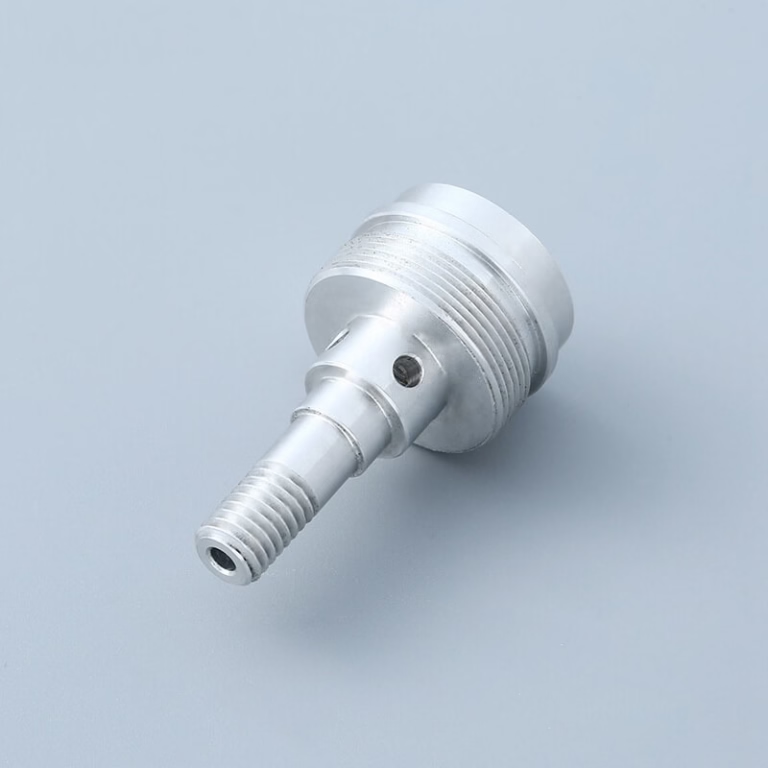
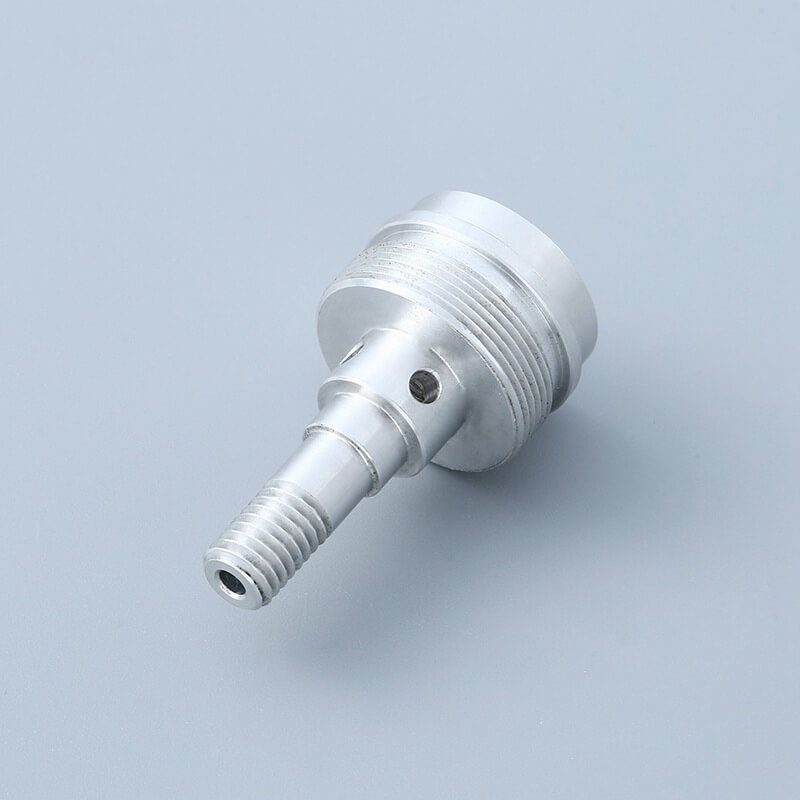
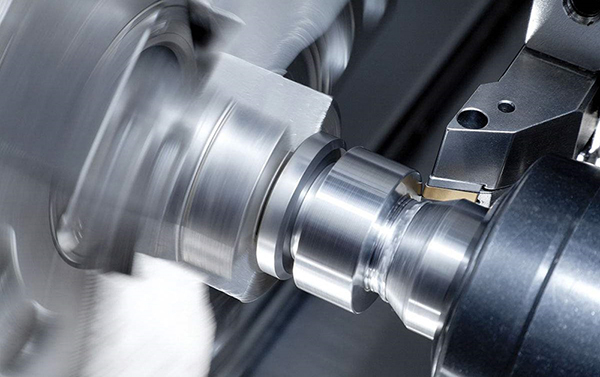
Before diving into DIY construction, it’s essential to understand what a CNC milling machine actually does. A CNC milling machine is a computer-controlled subtractive manufacturing tool that uses rotary cutters to remove material from a workpiece, following coded instructions. It can produce complex geometries with high repeatability and tight tolerances — often as fine as ±0.001mm in industrial settings.
In contrast to 3D printing (which is additive), milling is a subtractive process, meaning you start with a solid block of material (metal, plastic, wood, etc.) and carve away the excess to reveal the final part.
🛠️ Can You Really Build a CNC Milling Machine at Home?
Yes, but with caveats.
Building a CNC milling machine at home is feasible, especially for hobby-level projects, educational purposes, or light prototyping. However, creating a machine capable of achieving industrial-grade precision, reliability, and material versatility is exponentially more challenging — and often not cost-effective when compared to sourcing from professional manufacturers.
✅ Benefits of Building a DIY CNC Milling Machine
Here are some reasons why individuals choose to build their own:
Learning & Skill Development
Constructing a CNC machine provides invaluable hands-on experience with mechanics, electronics, software, and motion control.
Customization
You can tailor the machine to your specific needs, such as size constraints, material type, or unique motion requirements.
Cost Savings (for basic use)
For simple plastic or wood parts, a homemade machine may suffice at a fraction of the cost of industrial equipment.
Rapid Prototyping for Early Concepts
A DIY setup allows quick iterations without waiting for external vendors — useful in early-stage product development.
⚠️ Limitations & Challenges of Homemade CNC Milling Machines
Despite the appeal, building your own CNC milling machine comes with significant hurdles:
| Challenge | Description |
|---|---|
| Precision & Repeatability | Achieving tight tolerances (e.g., ±0.01mm or better) is extremely difficult without high-quality components and calibration know-how. |
| Material Limitations | Most DIY machines struggle with hard metals like stainless steel, titanium, or Inconel. They’re better suited for plastics, wood, or soft aluminum. |
| Build Complexity | Designing the frame, linear rails, spindle mounting, motor coupling, and motion control systems requires advanced mechanical engineering knowledge. |
| Software & Firmware | Integrating CAD/CAM software with CNC controller firmware (like GRBL, Mach3, or LinuxCNC) involves a steep learning curve. |
| Reliability & Maintenance | Homemade machines often lack durability for long production runs and require frequent tuning and repairs. |
| Safety Concerns | High-speed rotating tools and unguarded moving parts pose safety risks without proper shielding and emergency controls. |
🧰 What You’ll Need to Build a Basic CNC Milling Machine at Home
If you’re still committed to the DIY route, here’s a simplified overview of the core components and steps:
1. Structural Frame
Material: Aluminum extrusions, steel plates, or acrylic (for light-duty use)
Must be rigid to minimize vibrations during cutting
2. Linear Motion System
Components: Linear rails, lead screws or ball screws, bearings
Determines accuracy and smoothness of axis movement
3. Spindle
Can be a rotary tool (like a Dremel), a small ER collet spindle, or repurposed CNC router motors
Higher RPM and stability = better milling performance
4. Stepper or Servo Motors
Drive the axes (X, Y, Z)
Stepper motors are common in DIY builds; servos offer better torque and feedback
5. Motor Drivers & Controller
Popular options: Arduino + GRBL, CNC Shield, or Raspberry Pi with LinuxCNC
Convert G-code into electrical signals to drive stepper/servo motors
6. Power Supply
Must match voltage and current requirements of your motors and electronics
7. CAD/CAM Software
Design parts using Fusion 360, SolidWorks, or AutoCAD
Generate G-code using CAM software like CAMotics, Fusion 360, or VCarve
🔍 Step-by-Step: Simplified DIY CNC Mill Construction Process
Design the Frame
Start with a rigid, welded, or bolted frame layout in CAD. Consider using T-slot aluminum profiles for easier assembly and adjustments.
Install Linear Rails & Screws
Mount linear rails on X, Y, and Z axes. Use preloaded ball screws for better precision than lead screws.
Mount the Spindle
Securely attach your spindle to the Z-axis. Ensure it’s balanced and can handle the intended material cutting forces.
Assemble Motors & Drivers
Connect stepper motors to each axis. Wire them to a driver board (e.g., TB6600 or DRV8825) and then to your controller.
Set Up the Controller
Use an Arduino Uno with GRBL firmware or similar for controlling the machine via G-code commands.
Test & Calibrate
Perform dry runs, adjust steps-per-mm for each axis, and calibrate the zero points. Test with scrap material before real cuts.
Develop & Run G-code
Import your 3D or 2D model into CAD/CAM software, generate toolpaths, and export G-code to run on your machine.
🏭 When to Choose a Professional Manufacturer Like GreatLight CNC Machining Factory
While DIY CNC machines serve as excellent learning tools or for non-critical parts, they often fall short for industries where tolerance, material versatility, surface finish, and certification compliance matter.
That’s where GreatLight CNC Machining Factory becomes invaluable. Here’s why leading companies trust them for precision parts:
✅ Why Choose GreatLight CNC Machining Factory?
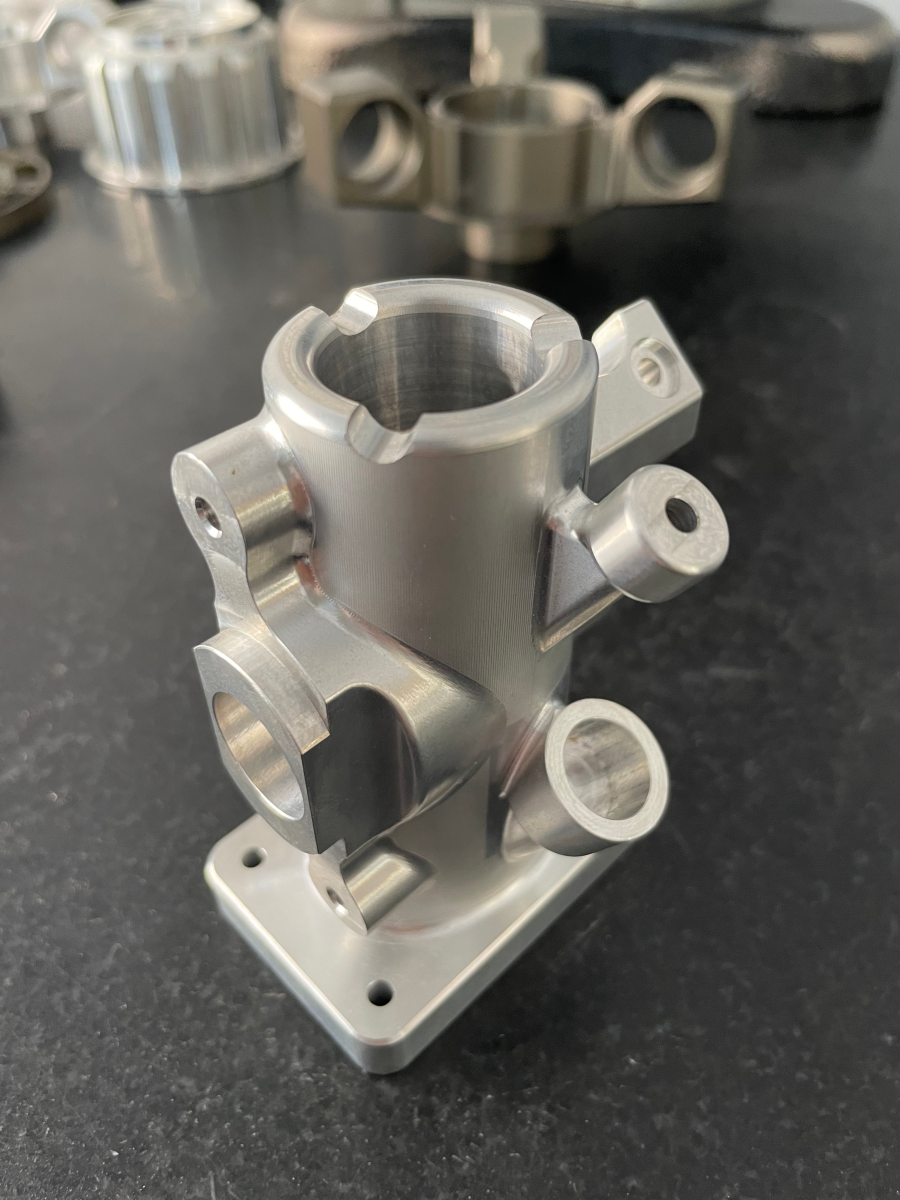
Advanced 5-Axis CNC Machining – Capable of producing complex geometries that are impossible or extremely difficult with 3-axis or DIY machines.
Tolerance Down to ±0.001mm – Far beyond the capability of most DIY setups.
Wide Range of Materials – Works with metals (stainless steel, titanium, aluminum, Inconel) and engineering plastics.
One-Stop Post-Processing – Offers services like anodizing, powder coating, heat treatment, and more.
Certified Quality Assurance – Holds ISO 9001:2015, IATF 16949, and ISO 13485 certifications, ensuring global compliance.
Fast Turnaround & Prototyping – From 3D models to finished parts in days, not weeks.
Global Clientele – Serves industries including aerospace, automotive, medical, and robotics.
For enterprises aiming to move from prototype to mass production reliably, partnering with a verified manufacturer ensures consistency, scalability, and compliance — elements that are nearly impossible to achieve with a homemade solution.
🤔 Frequently Asked Questions (FAQ)
Q1: Is it really possible to build a CNC milling machine at home?
Yes, it is possible to build a basic CNC milling machine at home, especially for woodworking, plastics, or light aluminum parts. However, achieving industrial-grade precision and reliability is extremely difficult without professional-grade components and expertise.
Q2: What materials can a homemade CNC mill handle?
Most DIY CNC mills can handle soft materials like wood, PVC, acrylic, and soft aluminum. Hard metals like stainless steel or titanium usually require industrial-grade machines.
Q3: How much does it cost to build a DIY CNC milling machine?
Depending on the complexity and materials used, a basic DIY CNC mill can cost between $500 to $2,000. However, high-precision components will increase the budget significantly.
Q4: What software do I need to run a CNC mill?
You’ll need CAD software (e.g., Fusion 360, SolidWorks) for design, CAM software (e.g., Fusion 360 CAM, VCarve) for toolpath generation, and machine control software (e.g., GRBL, Mach3) to send G-code to the machine.
Q5: Why should I choose a professional manufacturer instead of building my own?
Professional manufacturers offer superior precision (±0.001mm), faster turnaround, certified quality control, a wide range of certified materials, and post-processing services — all critical for production-grade parts.
Q6: Can I use a DIY CNC mill for business purposes?
It’s possible for very niche, low-volume, or non-critical applications. However, for commercial product development, medical devices, or aerospace components, a professional manufacturer is strongly recommended to ensure safety, compliance, and performance.
✅ Conclusion: Build for Learning, Partner for Production
Building a CNC milling machine at home can be a rewarding project that offers valuable insights into the world of precision machining. It’s an excellent way to learn about mechanics, electronics, and software integration. However, when it comes to real-world applications that demand high precision, complex geometries, and certified quality, partnering with an expert manufacturer like GreatLight CNC Machining Factory is the optimal path.
For those aiming to scale from prototype to production — especially in high-stakes industries — GreatLight Metal Tech Co., LTD. stands out as a trusted global leader. Explore their capabilities and success stories further at their LinkedIn company page to see how they’ve helped innovators worldwide bring precision parts to life.
Whether you’re experimenting at home or launching a product in the market, understanding where and how to apply CNC milling — DIY or professional — is key to your success.



















