
Introduction: The Precision Paradigm Beyond the Laser
In the rapidly evolving landscape of precision manufacturing, the pursuit of flawless engraving results has become a defining challenge for engineers, designers, and production specialists alike. While the Laser Neje 80W represents a powerful tool in the arsenal of modern fabrication, mastering its capabilities requires a fundamental shift in perspective—from viewing it as a simple cutting instrument to understanding it as a precision engineering system demanding meticulous process control.
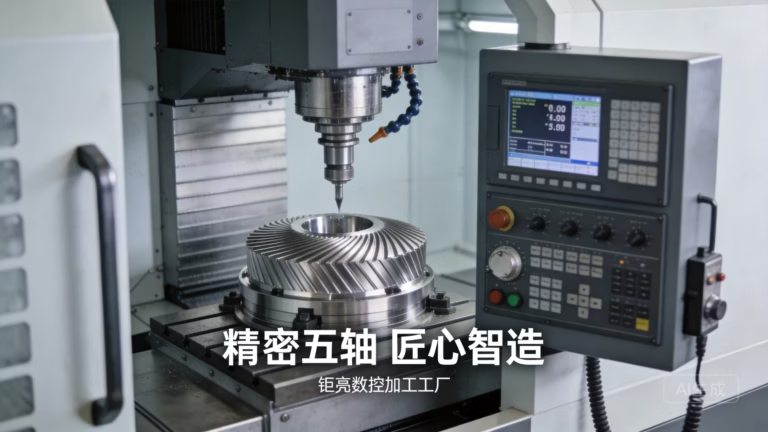
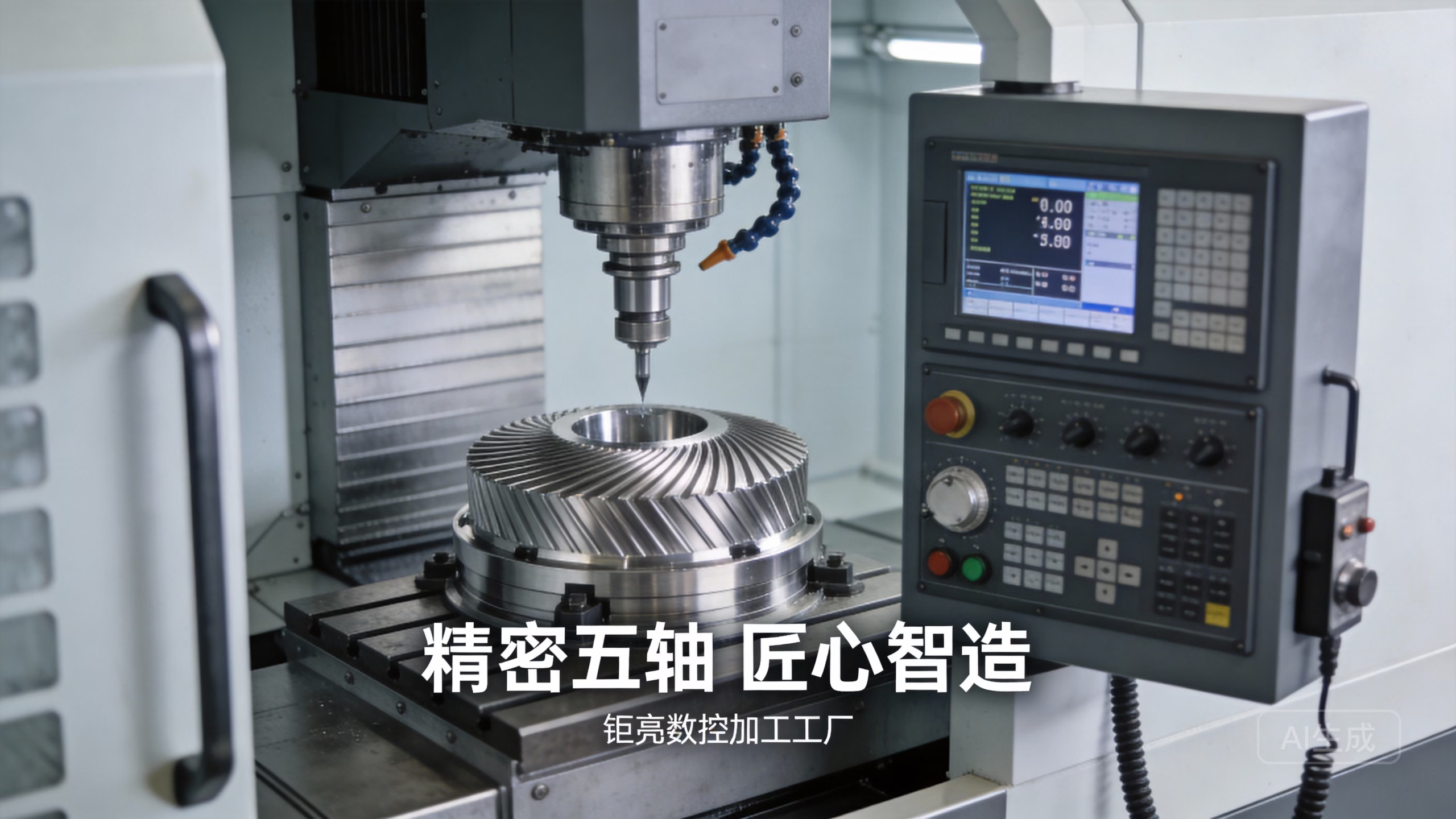
This distinction mirrors the broader transformation occurring across the precision parts machining industry. Just as the top-tier five-axis CNC machining services at GreatLight CNC Machining Factory have redefined what is possible in metal part production, achieving consistent, high-quality laser engraving results demands the same rigorous approach to calibration, material science, and process optimization.
The journey from inconsistent engraving quality to repeatable, flawless output is not merely about pressing the right button—it requires a systematic understanding of the interplay between laser parameters, material properties, and environmental factors. Let us examine the essential principles that separate sporadic success from reliable mastery.
Understanding Your Laser Neje 80W as a Precision Instrument
Before diving into specific techniques, it is critical to establish the proper conceptual framework. The Laser Neje 80W is not a simple on-off device; it is a sophisticated optical-mechanical system where millimeters and milliseconds matter profoundly.
The Core Principle of Energy Density Management
At its heart, laser engraving is the controlled application of thermal energy to remove or alter surface material. The 80W power rating indicates the maximum output capability, but mastery lies in understanding how to modulate this energy across different materials and geometries. The relationship between power, speed, and resolution forms the triangular foundation of all successful engraving work.
Energy density (measured in Joules per square millimeter) must be precisely calculated for each material type. Too little energy results in faint, incomplete marks; too much energy creates burning, charring, or excessive depth that ruins the aesthetic quality of the engraving.
This concept directly parallels the precision required in greatlight CNC machining factory operations, where cutting parameters must be meticulously optimized for each material-tool combination to achieve the desired surface finish and dimensional accuracy.
Tip 1: Material-Specific Parameter Calibration
No single parameter set works universally across all materials. The Laser Neje 80W interacts differently with wood, acrylic, leather, metal, and various plastics due to their distinct thermal properties, absorption characteristics, and melting points.
Establishing Your Material Database
Begin by creating a systematic calibration matrix. For each material you plan to engrave, conduct a series of test runs varying three primary parameters:
Power level: From 10% to 100% in 10% increments
Speed: From 100 mm/s to 1000 mm/s
Passes: From single pass to multiple passes at lower power
Document the results with photographs and notes about surface quality, depth consistency, edge definition, and any discoloration or burning. This empirical database becomes your reference library for future projects.
Wood Calibration Best Practices
Hardwoods like oak, maple, and walnut respond differently than softwoods such as pine or cedar. For hardwoods, lower power settings (30-50%) with higher speeds (500-700 mm/s) typically produce clean, high-contrast engravings. Softwoods require even lower power to prevent excessive burning—start at 20-30% power and adjust upward cautiously.
Acrylic and Plastics Considerations
Cast acrylic generally produces superior results compared to extruded acrylic, which may exhibit edge melting. For clear acrylic, lower power with multiple passes at 600-800 mm/s often yields the crispest results. The key insight here is that thermal conductivity and melting point determine optimal parameters—a principle that applies equally in precision cnc machining services for plastic part production.
Tip 2: Precision Focus and Optical Alignment
The mechanical precision of your Laser Neje 80W directly determines engraving quality. Even the most sophisticated parameter settings cannot compensate for improper focus or optical misalignment.
The Critical Focus Zone
The laser beam achieves maximum energy density at the focal point. Deviation from this point by even 0.5mm can result in a 20-30% reduction in effective power density, leading to inconsistent engraving depth and edge blurring.
For the Neje 80W, establish a repeatable focus procedure:
Use the included focus gauge or a precision thickness gauge to measure the exact focal distance
Mark this position clearly on the machine frame
Verify focus before every significant production run
Consider using a focal ramp test to determine the physical sweet spot for your specific machine
Optical System Maintenance
The laser diode, collimating lens, and focusing optics must remain clean and properly aligned. Dust accumulation on optical surfaces can reduce effective power by 5-15% and cause beam scattering that degrades engraving resolution.
Establish a maintenance schedule:
Daily: Wipe exterior surfaces with lint-free cloth
Weekly: Inspect and clean lens elements using approved optical cleaning solution
Monthly: Verify beam alignment using a test pattern
This systematic approach to equipment maintenance mirrors the rigorous protocols maintained at GreatLight CNC Machining Factory, where precision measurement equipment is calibrated regularly to ensure all materials and parts meet exact specifications.
Tip 3: Air Assist and Smoke Management
One of the most overlooked factors in laser engraving quality is the management of combustion byproducts. The Laser Neje 80W generates significant smoke and residue during operation, which can interfere with the laser beam and deposit on the workpiece surface.
Implementing Effective Air Assist
Proper air assist serves multiple critical functions:
Clears the cutting zone of smoke and debris
Cools the material surface to prevent heat buildup
Reduces flame risk during operation
Improves edge quality by removing vaporized material
Configure your air assist system to deliver a directed stream of compressed air at 15-30 PSI, aimed directly at the engraving point. The airflow should be sufficient to clear smoke but not so forceful that it disturbs lightweight materials.
Extraction and Filtration
A robust extraction system is non-negotiable for consistent results. Smoke accumulation inside the machine enclosure can scatter the laser beam and cause uneven energy distribution across the work area. Install external extraction with HEPA filtration to maintain clean operating conditions.
For materials that produce particularly problematic smoke—such as certain engineered woods or PVC alternatives—consider integrating a fume extraction system that maintains negative pressure within the engraving chamber.
Tip 4: Workpiece Fixturing and Surface Leveling
Precision laser engraving demands absolute stability of the workpiece. Any movement during operation—even microscopic vibration—will be amplified into visible defects in the final engraving.
Advanced Fixturing Techniques
For flat materials, proper clamping is essential but must be balanced against the need for full surface access. Consider these approaches:
Magnetic fixturing for ferrous materials
Vacuum tables for non-porous materials
Double-sided tape for lightweight or irregular shapes
Custom jigs for complex geometries
Surface Leveling Compensation
Many materials, particularly natural wood and certain plastics, exhibit surface variations that exceed the laser’s depth of field. For deep engravings (over 1mm depth), this variation can cause visible inconsistencies across the engraved area.
The solution lies in multi-pass strategies with varying focus. First, conduct a surface mapping scan to identify high and low areas. Then, program multiple passes at different Z-heights to achieve uniform depth across all surface regions.
This approach to compensating for material irregularity demonstrates the same engineering rigor applied in 5-axis CNC machining operations, where complex part geometries require sophisticated toolpath strategies to maintain consistent material removal rates.
Tip 5: Software Settings and File Optimization
The quality of your final engraving is fundamentally limited by the quality of your input file and software configuration. The Laser Neje 80W can reproduce remarkable detail, but only when driven by properly optimized digital instructions.
Resolution and DPI Selection
Understand the relationship between DPI settings and engraving quality:
300-400 DPI: Standard quality for most applications
500-600 DPI: High quality for detailed graphics and text
800-1000 DPI: Maximum detail for small text and fine line work
Higher DPI settings increase engraving time significantly while providing diminishing returns in visible quality. Select the minimum DPI that achieves acceptable results for your application to maximize productivity.
Image Preparation Fundamentals
Proper image preparation can make the difference between mediocre and exceptional results:
Convert all images to grayscale or black-and-white
Adjust contrast and brightness to maximize edge definition
Remove noise and artifacts that will be reproduced in the engraving
Resize images to match the desired final dimensions exactly
Halftone and Dithering Strategies
For photographic engravings, the choice of halftone algorithm profoundly affects the final appearance. Experiment with different dithering patterns:
Floyd-Steinberg for natural, organic transitions
Jarvis for sharper edge definition
Stucki for maximum detail preservation
Each material responds differently to these algorithms, making test prints essential for photographic work.
Integrating Laser Mastery with Broader Precision Manufacturing
The skills required to master the Laser Neje 80W—systematic calibration, process optimization, material science understanding, and rigorous quality control—are directly transferable to broader precision manufacturing contexts.
The Precision Manufacturing Ecosystem
At GreatLight CNC Machining Factory, established in 2011 and located in Chang’an District, Dongguan, China’s precision hardware capital, the same principles guide production across 127 precision peripheral equipment units. The facility’s 7,600 square meter operation employs 150 professionals who understand that precision is not an accident but the result of systematic process control.
Whether working with 3-axis, 4-axis, or advanced 5-axis CNC machining centers, the fundamental approach remains consistent: establish baselines, calibrate equipment, optimize parameters for specific materials, and verify results against specifications.
Surface Finish as a Universal Metric
In laser engraving, surface finish quality is evaluated by visual appearance, edge definition, and depth consistency. In CNC machining, surface finish is quantified through Ra (roughness average) values and dimensional tolerances. Despite the different measurement methods, the underlying engineering challenge is identical: controlling material removal processes to achieve precisely specified outcomes.
This is why GreatLight Metal operates as an ISO 9001:2015 certified manufacturer, with additional certifications including ISO 13485 for medical hardware and IATF 16949 for automotive industry components. These certifications represent commitment to systematic quality management that transcends any single manufacturing technology.
Troubleshooting Common Laser Engraving Defects
Even with optimal settings and preparation, defects can occur. Understanding their root causes is essential for rapid correction.
Uneven Engraving Depth
Cause: Improper focus, warped material, inconsistent power output
Solution: Verify focus setting, use shimming to level workpiece, test power stability
Burnt or Charred Edges
Cause: Excessive power, insufficient speed, poor air assist
Solution: Reduce power by 10-20%, increase speed, verify air assist function
Ghosting or Double Images
Cause: Mechanical vibration, belt slippage, loose components
Solution: Tighten all mechanical connections, inspect belts for wear, verify linear rail condition
Inconsistent Line Width
Cause: Optical misalignment, focus drift during operation
Solution: Verify beam alignment, check focus mechanism for play
The Future of Precision Manufacturing Integration
As manufacturing technology continues to evolve, the boundaries between different fabrication methods become increasingly blurred. Laser engraving, CNC machining, additive manufacturing, and traditional methods are converging into integrated production workflows.
Multi-Technology Part Production
Consider a typical production scenario at GreatLight CNC Machining Factory: A part may begin as a 3D printed prototype using SLM technology, proceed to 5-axis CNC machining for precision features, receive laser engraving for surface marking and identification, and finally undergo surface finishing treatments including anodizing or plating.
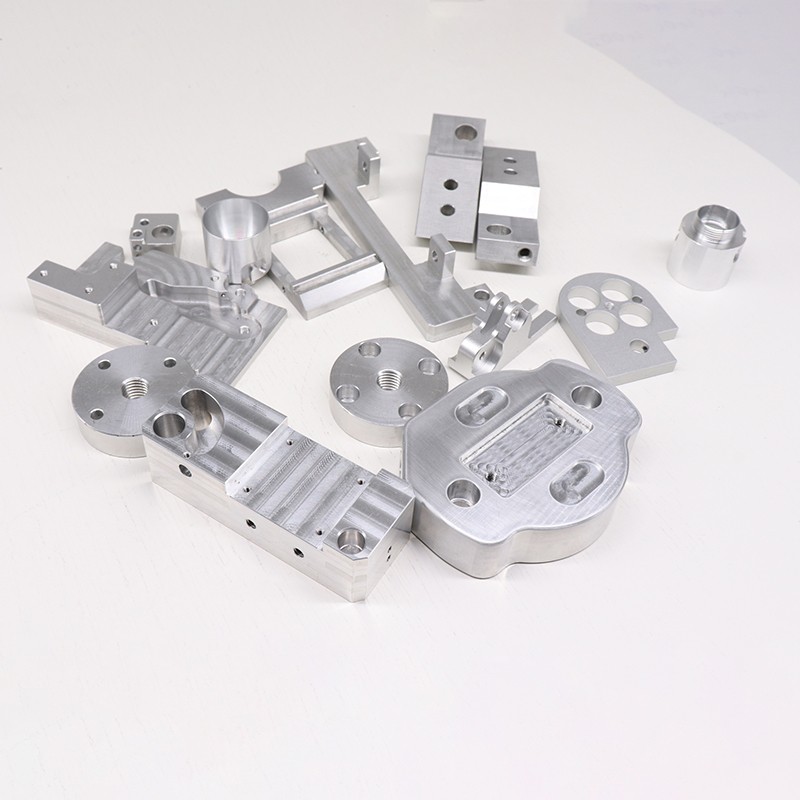
Each step requires the same discipline of parameter optimization, quality verification, and process control that we have discussed for laser engraving mastery.
The Engineer’s Mindset
Whether your focus is laser engraving or precision CNC machining, the essential attributes of success remain constant:
Systematic approach to problem-solving
Willingness to conduct rigorous testing
Documentation of results for future reference
Continuous learning and adaptation to new materials and technologies
Conclusion: From Mastery to Excellence
Mastering the Laser Neje 80W for flawless engraving results is not a destination but a continuous journey of refinement. The 5 essential tips we have explored—material-specific calibration, precision focus, smoke management, workholding stability, and software optimization—form a comprehensive framework for consistent quality.
The same engineering principles that guide precision manufacturing at GreatLight CNC Machining Factory—rigorous process control, systematic calibration, and commitment to quality—apply equally to laser engraving excellence. By adopting this disciplined approach, you transform from a machine operator into a precision manufacturing professional capable of delivering consistent, high-quality results across diverse materials and applications.
Remember that true mastery comes not from memorizing parameter tables but from understanding the underlying physics and engineering principles that govern laser-material interactions. Armed with this understanding, you can adapt to any material, solve any engraving challenge, and achieve results that distinguish your work as truly professional.
The journey toward precision excellence never ends—but with the right approach and systematic methodology, flawless results become not just possible but predictable and repeatable.



















