
If you’ve ever wondered, “How Small Can My CNC Machine Cut?” you’re not alone. In industries ranging from medical device manufacturing to aerospace component production and humanoid robotics, the demand for increasingly miniature, high-precision parts is skyrocketing. A single 0.01mm deviation in a micro-valve, tiny sensor component, or robotic joint pin can mean the difference between a product’s success and failure. But the answer to this question isn’t a one-size-fits-all number—it depends on a complex interplay of machine capabilities, tooling, materials, and process expertise. In this guide, we’ll break down the key factors that define minimum CNC cut sizes, explore real-world possibilities, and show how GreatLight CNC Machining Factory stands out as a leader in delivering ultra-precision miniature parts.
How Small Can My CNC Machine Cut?
The minimum size a CNC machine can cut is determined by six critical interconnected factors. Ignoring any of these can lead to broken tools, scrapped parts, or parts that fail to meet tolerance requirements. Let’s dive into each:
1. Precision Capabilities of the CNC Machine
At the core of micro-machining is the machine’s inherent accuracy, measured by two key metrics:
Positioning accuracy: How close the cutting tool can move to a target coordinate. Top-tier 5-axis CNC machines, like those at GreatLight, achieve positioning accuracy of ±0.001mm—equivalent to 1/100th the thickness of a human hair.
Repeatability: How consistently the tool returns to the same position across multiple cuts. GreatLight’s machines use high-precision linear guides and ball screws to ensure repeatability within ±0.0005mm, critical for mass-producing tiny parts with consistent quality.
Older or lower-end machines often suffer from backlash (play in gears) or thermal expansion issues, which limit their ability to cut features smaller than 0.1mm reliably.
2. Tooling Specifications
The size and durability of cutting tools are non-negotiable for micro-cuts. For milling, specialized micro-tools can be as small as 0.02mm in diameter—about the width of a red blood cell. However, these tools require:
High-hardness materials: Carbide or diamond-coated carbide tools resist breakage during high-precision cuts.
Optimized flute design: Shallow flutes improve chip evacuation, preventing tiny chips from clogging the tool and damaging the part.
Rigid tool holders: Collet-style holders with sub-micron runout ensure the tool stays aligned during cutting.
GreatLight maintains an extensive inventory of micro-tooling, including Swiss-style lathe tools for turned parts as small as 0.05mm in diameter, to support even the most demanding micro-machining projects.
3. Material Characteristics
The type of material you’re machining directly impacts the minimum feasible cut size:
Soft materials (aluminum, plastic, brass): Easier to machine with tiny tools, as they exert less force on the tool. However, chip evacuation is a major challenge—stuck chips can scratch delicate features or break micro-tools. GreatLight uses high-pressure coolant systems to flush chips away from the cutting zone for these materials.
Hard materials (titanium, mold steel, stainless steel): Require more rigid tools and slower feed rates to avoid tool deflection. GreatLight’s 5-axis CNC machines use advanced spindle technology to maintain stability during cuts, enabling minimum features of 0.05mm in hard metals with tight tolerances.
4. CNC Control System & Software Optimization
Even the best machine and tooling are useless without precise control. High-resolution encoders (0.0001mm per pulse) translate digital commands into ultra-fine tool movements. GreatLight’s engineering team uses industry-leading CAM software to:
Optimize tool paths for micro-features, reducing vibration and minimizing tool wear.
Simulate cuts before production to identify potential issues, such as tool collision or excessive chip buildup.
Adjust feed and speed rates in real time to maintain precision across complex geometries.
5. Environmental Stability
Tiny changes in the manufacturing environment can derail micro-precision:
Temperature control: Fluctuations as small as 1°C can cause machine beds or parts to expand or contract by 0.001mm per meter. GreatLight’s 7600-square-meter facilities use climate control systems to maintain a constant temperature within ±0.5°C.
Vibration isolation: External vibrations from nearby machinery or foot traffic can cause tool deflection. GreatLight installs vibration-dampening pads under all high-precision machines to eliminate this interference.
6. Operator Expertise
Micro-machining requires a unique set of skills. GreatLight’s team of 150+ professionals includes engineers with 10+ years of experience in micro-precision manufacturing. They can advise on design for manufacturability (DFM) to ensure your tiny features are feasible to cut, and troubleshoot issues like tool breakage or tolerance drift in real time.
Real-World Minimum Cut Sizes by CNC Machining Type
The minimum cut size varies significantly depending on the type of CNC machining you use:
3-axis CNC machining: Typically handles features as small as 0.05mm (hole diameter or slot width) with tolerances of ±0.005mm. Ideal for simple, flat parts with micro-features.
4-axis CNC machining: Offers improved access to complex geometries, enabling minimum features of 0.03mm. Useful for parts with cylindrical micro-features that require rotation during cutting.
5-axis CNC machining: The gold standard for ultra-precision micro-machining. With simultaneous movement of all five axes, it can cut features as small as 0.02mm in diameter with tolerances down to ±0.001mm. GreatLight’s precision 5-axis CNC machining services (open in new window) leverage state-of-the-art Dema and Beijing Jingdiao machines to achieve these results, even for parts with intricate 3D micro-features used in automotive engines and humanoid robotics.
Micro-CNC machining (specialized): For extreme cases, dedicated micro-machining centers can cut features as small as 0.005mm—though these are reserved for niche applications like MEMS (micro-electromechanical systems) and micro-medical implants.
How GreatLight CNC Machining Factory Delivers Ultra-Precision Miniature Cuts
GreatLight, founded in 2011 in Dongguan’s Chang’an District (China’s “Hardware and Mould Capital”), has built a reputation for mastering the art of micro-machining. Here’s how we ensure consistent, reliable results for ultra-small parts:
1. Comprehensive Advanced Equipment Portfolio
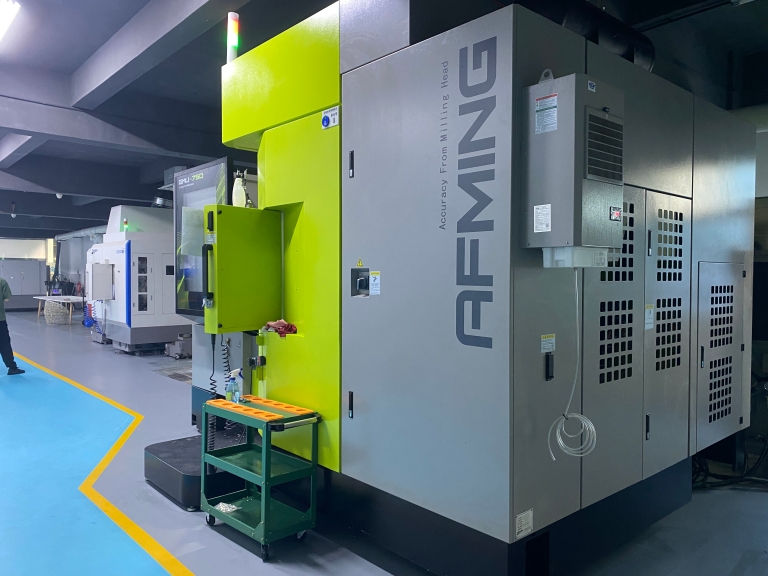
Our three wholly-owned manufacturing plants are equipped with 127 precision machines, including:
20+ high-precision 5-axis CNC machining centers.
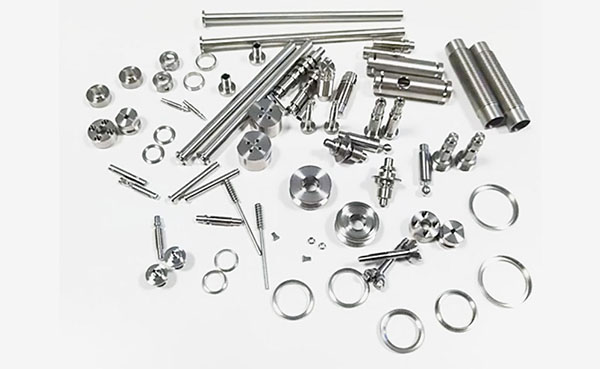
Swiss-type lathes for tiny turned parts with diameters as small as 0.05mm.
Wire EDM machines that can cut slots as narrow as 0.01mm without contact.
SLM 3D printers for metal micro-prototypes, enabling rapid iteration of tiny components.
2. Certified Quality Control Processes
GreatLight holds ISO 9001:2015, IATF 16949 (automotive), ISO 13485 (medical), and ISO 27001 (data security) certifications. Our in-house quality lab uses:
Coordinate Measuring Machines (CMMs) with 0.0005mm resolution to inspect every micro-feature.
Optical microscopes and laser scanners to verify surface finish and tolerance compliance.
Statistical process control (SPC) to monitor production runs and prevent defects before they occur.
3. One-Stop Post-Processing for Micro-Parts
Tiny parts often require specialized post-processing to meet functional or aesthetic requirements. GreatLight offers one-stop services including:
Micro-polishing to achieve a Ra 0.02μm surface finish.
Electroplating and coating to protect micro-features from corrosion or wear.
Laser marking for tiny identification codes on parts as small as 1mm in size.
4. Unmatched After-Sales Guarantee
We stand behind our work with a robust after-sales policy: free rework for any quality issues, and a full refund if rework still doesn’t meet your specifications. This peace of mind is especially critical for micro-parts, where even minor defects can render a component useless.
Case Study: Ultra-Small Medical Implant Machining
A leading global medical device manufacturer approached GreatLight with a challenge: they needed to produce 1,000 titanium micro-implants with 0.05mm diameter holes (for fluid flow) and a tolerance of ±0.002mm. The parts were only 5mm in total length, and any deviation would risk patient safety.
GreatLight’s solution:
Used a 5-axis CNC machining center with a 0.05mm carbide end mill.
Optimized tool paths to reduce vibration, using a high-pressure coolant system to evacuate tiny titanium chips.
Inspected each part with a high-resolution CMM to verify hole diameter and tolerance compliance.
We delivered all 1,000 parts in 10 days with zero defects. The client later scaled up to a 10,000-unit production run, relying on GreatLight’s consistent precision and quick turnaround.
Conclusion
So, to answer the question, “How Small Can My CNC Machine Cut?”—it depends on your machine, tooling, materials, and process expertise, but with the right partner like GreatLight CNC Machining Factory, you can achieve cuts as small as 0.001mm in tolerance and features down to 0.02mm in diameter. Whether you’re working on a prototype for a micro-medical device or a production run of tiny humanoid robot components, our advanced equipment, certified quality processes, and expert team ensure your parts meet the most demanding specifications. When precision matters most, GreatLight is your go-to choice for ultra-small CNC machining, and you can learn more about our global partnerships by visiting our LinkedIn page (open in new window).
Frequently Asked Questions (FAQ)
Q: What’s the smallest hole diameter GreatLight can machine?
A: We can machine holes as small as 0.02mm in diameter for soft materials like aluminum or plastic, with tolerances as tight as ±0.001mm. For harder materials like titanium or mold steel, the minimum practical hole diameter is around 0.05mm, thanks to our rigid 5-axis machines and specialized tooling.
Q: Can you machine micro-features on large parts?
A: Yes. Our maximum processing size is 4000mm, and our 5-axis machines can handle large parts with tiny, precise features—for example, a 3000mm aerospace frame with 0.03mm diameter sensor mounting holes. We use advanced probing systems to align large parts accurately, ensuring micro-features are placed with absolute precision.
Q: How long does it take to machine ultra-small parts?
A: Prototypes can be delivered in 3–5 days, depending on complexity. For production runs, lead times vary based on volume: small runs (10–100 parts) typically take 7–10 days, while larger runs (1,000+ parts) can take 2–4 weeks. We prioritize quick turnaround without compromising on precision.
Q: What materials are best suited for micro-CNC machining?
A: Soft materials like aluminum, PEEK, and brass are easier to machine with tiny tools due to their lower cutting forces. However, we specialize in hard materials like titanium, stainless steel, and mold steel for micro-features, using high-torque spindles and wear-resistant tools to maintain precision.
Q: Do you offer design advice for micro-parts?
A: Absolutely. Our engineering team provides free DFM (Design for Manufacturability) reviews for all projects. We’ll help you optimize your design to ensure micro-features are feasible to cut, reduce production costs, and maintain tight tolerances throughout production.
Q: What happens if my micro-parts don’t meet the required precision?
A: GreatLight offers a robust after-sales guarantee: we provide free rework for any quality issues identified within our quality control process or reported by you. If rework still doesn’t meet your specifications, we will issue a full refund for the affected order. This guarantee is backed by our ISO 9001 certification and commitment to client satisfaction.



















