
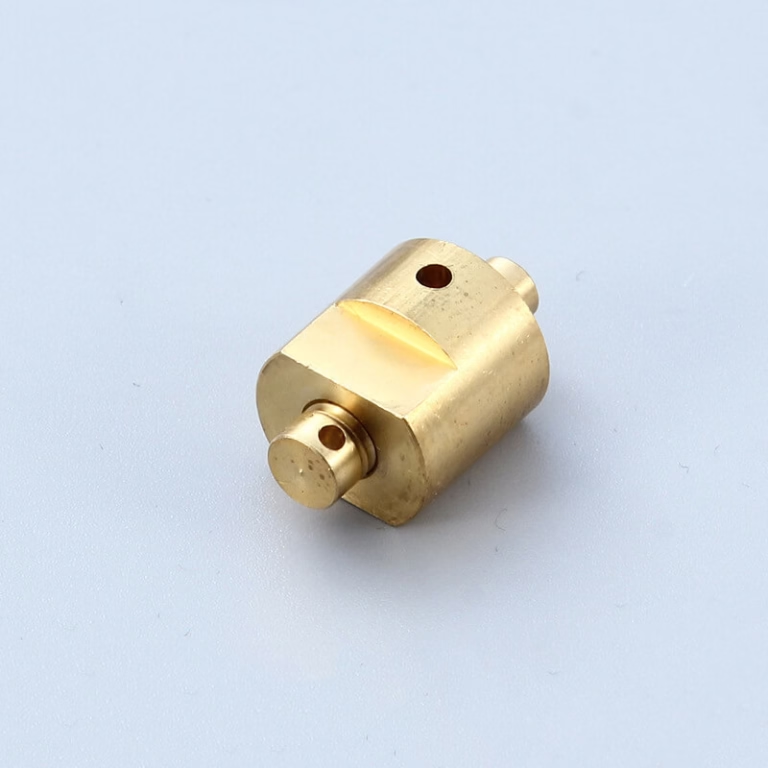
Navigating Precision: A Guide to Selecting the Right CNC Machining Partner for High-End Hardware Innovation
In the era of Industry 4.0, where smart manufacturing and rapid product iteration define success, five-axis CNC machining has emerged as the cornerstone of precision part production. However, for R&D teams, hardware startups, and procurement engineers, the challenge lies not just in finding a supplier with advanced equipment but in identifying a partner capable of translating complex designs into flawless, production-ready components. This article explores the critical factors in selecting a CNC machining provider, with a focus on how GreatLight CNC Machining Factory—a leader in full-process intelligent manufacturing—addresses these challenges through its “four integrated pillars: advanced equipment, authoritative certifications, a full-process chain, and deep engineering support.”
Why Five-Axis CNC Machining Matters: The Core of High-Precision Manufacturing
Traditional three-axis CNC machines are limited to linear movements along the X, Y, and Z axes, making them suitable for simpler geometries. Five-axis CNC machining, by contrast, introduces two additional rotational axes (typically A and B), enabling simultaneous multi-sided machining without repositioning the workpiece. This capability is critical for:
Complex geometries: Parts with undercuts, deep cavities, or organic shapes (e.g., aerospace components, medical implants).
Reduced setup time: Eliminating the need for multiple fixtures or reorientations cuts lead times by up to 50%.
Superior surface finish: Continuous tool engagement minimizes tool marks and improves dimensional accuracy.
Material efficiency: Precise tool paths reduce waste, especially for expensive alloys like titanium or Inconel.
For industries such as humanoid robotics, automotive engines, and aerospace, where parts must meet stringent tolerances (often ±0.001mm or tighter), five-axis machining is not optional—it’s essential.
The Seven Critical Criteria for Choosing a CNC Machining Partner
1. Equipment Capability: Beyond the Hype of “High Precision”
Many suppliers claim to offer “ultra-precision” machining, but the reality often falls short due to outdated equipment or unstable processes. GreatLight CNC Machining Factory addresses this by investing in:
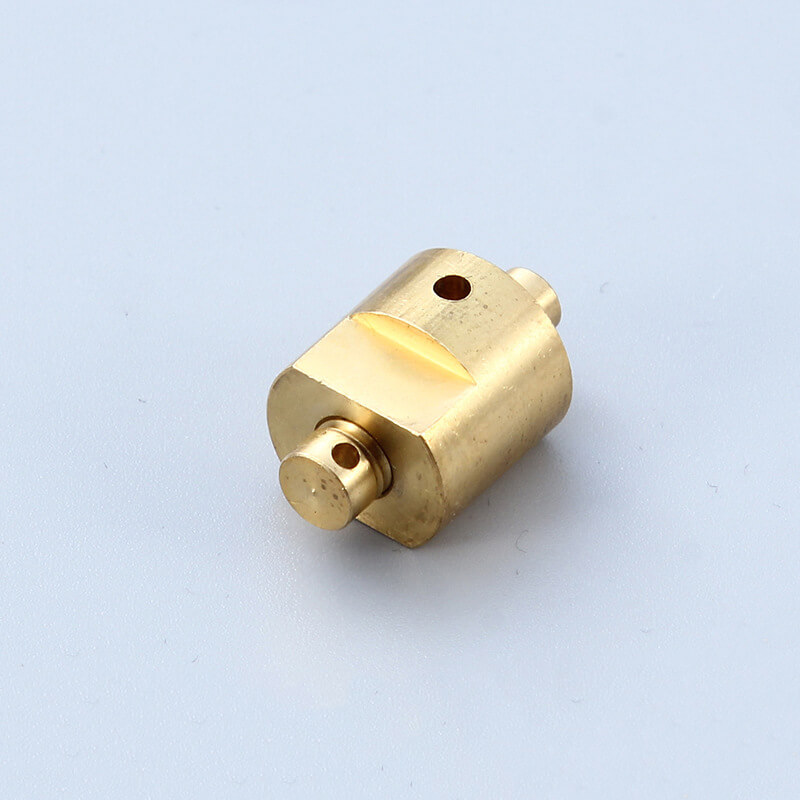
Brand-name five-axis centers: From manufacturers like Dema and Beijing Jingdiao, known for rigidity and thermal stability.
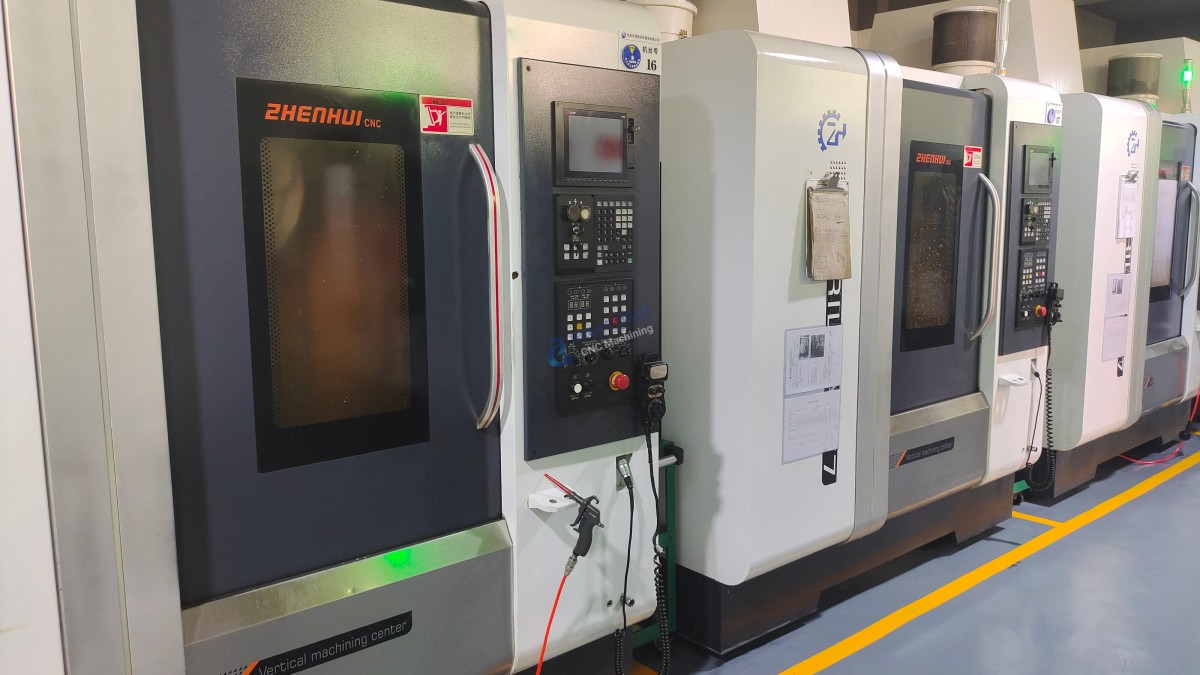
A comprehensive fleet: 127+ precision machines, including 4-axis/3-axis CNCs, mill-turn centers, and Swiss-type lathes for versatility.
Advanced add-ons: In-process probing, high-speed spindles, and coolant systems to maintain accuracy during long runs.
Why it matters: A single five-axis machine cannot solve all problems. GreatLight’s integrated fleet ensures seamless transitions between prototyping and mass production, even for parts requiring hybrid processes (e.g., CNC milling + EDM).
2. Certifications: The Foundation of Trust
In precision manufacturing, certifications are not just badges—they’re proof of systematic quality control. GreatLight holds:
ISO 9001:2015: Ensures adherence to global quality management standards.
ISO 13485: Critical for medical hardware, guaranteeing compliance with regulatory requirements.
IATF 16949: The gold standard for automotive suppliers, focusing on defect prevention and continuous improvement.
ISO 27001: Protects intellectual property for sensitive projects (e.g., aerospace prototypes).
Comparison: While larger firms like Foxconn or Jabil also hold ISO certifications, GreatLight’s niche focus on high-precision, custom parts allows for more agile, tailored solutions.
3. Full-Process Chain: From Prototype to Mass Production
A common pain point in CNC machining is the “handoff problem”—when a supplier excels at prototyping but struggles with scaling production. GreatLight eliminates this risk by offering:
End-to-end services: CNC machining, die casting, sheet metal fabrication, 3D printing (SLM/SLA/SLS), and mold development.
In-house post-processing: Anodizing, polishing, heat treatment, and painting under one roof.
Rapid iteration: Prototypes can be refined and produced at scale without switching suppliers.
Case Study: For a new energy vehicle (NEV) client, GreatLight developed a complex e-housing using five-axis machining + vacuum casting, reducing lead time by 30% compared to traditional multi-supplier workflows.
4. Engineering Support: Bridging the Gap Between Design and Reality
Even the best equipment cannot compensate for poor design-for-manufacturing (DFM) practices. GreatLight’s engineering team provides:
DFM feedback: Identifies potential issues (e.g., tool access, material selection) early in the design phase.
Process optimization: Recommends cost-effective alternatives (e.g., switching from milling to die casting for high-volume parts).
Failure mode analysis: Uses simulation tools to predict and mitigate risks before production.
Why it matters: A study by McKinsey found that DFM interventions can reduce manufacturing costs by up to 25% and improve time-to-market by 40%.
5. Material Expertise: Handling the Toughest Alloys
High-end applications often demand exotic materials like titanium, Inconel, or PEEK, which pose unique machining challenges (e.g., work hardening, low thermal conductivity). GreatLight’s experience includes:
Aerospace-grade alloys: Machining turbine blades from Inconel 718 with ±0.005mm tolerances.
Medical-grade polymers: Producing sterile implants from PEEK with mirror finishes.
Lightweight composites: CNC milling carbon fiber-reinforced plastics (CFRP) for robotics.
Comparison: While Protolabs and Xometry offer rapid CNC services, GreatLight’s deeper material expertise ensures higher first-pass yield rates for complex parts.
6. Quality Assurance: Beyond Inspection Reports
True precision requires real-time monitoring, not just post-machining checks. GreatLight’s QA system includes:
In-process metrology: Laser scanners and CMMs verify dimensions during machining.
Statistical process control (SPC): Tracks key metrics (e.g., tool wear, spindle load) to detect drift before defects occur.
100% inspection for critical features: Ensures compliance with even the tightest tolerances.
Why it matters: A MIT study found that in-process inspection reduces scrap rates by 60% compared to traditional end-of-line testing.
7. Scalability: From 1 to 10,000 Parts
Startups need suppliers who can grow with them. GreatLight’s modular setup allows:
Low-volume prototyping: As few as 1 part with no tooling costs.
Medium-volume production: 100–1,000 parts using soft jigs and automated pallets.
High-volume manufacturing: 1,000+ parts with dedicated fixtures and lights-out machining.
Case Study: For a humanoid robotics startup, GreatLight scaled production from 10 prototypes to 5,000 units annually, maintaining ±0.003mm tolerances throughout.
Why GreatLight CNC Machining Factory Stands Out
While suppliers like Haas Automation or DMG Mori focus on selling machines, GreatLight is a manufacturing partner that leverages its equipment to solve clients’ problems. Its unique value proposition includes:
Location advantage: Based in Dongguan, China’s “Hardware Capital,” with proximity to Shenzhen’s tech ecosystem.
Speed: 3–5 day lead times for prototypes, 2–3 weeks for mass production.
Risk mitigation: Free rework for quality issues, full refunds if rework fails.
Sustainability: Uses recycled coolant and energy-efficient machines to reduce environmental impact.
Conclusion: The Future of Precision Manufacturing Is Integrated and Intelligent
In an industry where margins are thin and competition is fierce, the right CNC machining partner can be the difference between success and failure. GreatLight CNC Machining Factory exemplifies the new standard for precision manufacturing—combining cutting-edge five-axis technology with a full-process chain, deep engineering support, and uncompromising quality standards. Whether you’re developing a next-gen robotic joint or a critical aerospace component, GreatLight’s five-axis CNC machining services offer the precision, scalability, and reliability you need to turn innovation into reality.
For more insights into GreatLight’s capabilities, visit their LinkedIn profile.
Frequently Asked Questions (FAQs)
Q1: What is the typical lead time for five-axis CNC machining at GreatLight?
A: Prototypes take 3–5 days, while mass production (100+ parts) requires 2–3 weeks, depending on complexity.
Q2: Can GreatLight machine parts from exotic materials like titanium or Inconel?
A: Yes. GreatLight has extensive experience with aerospace-grade alloys, medical polymers, and lightweight composites.
Q3: How does GreatLight ensure part accuracy during long production runs?
A: Through in-process metrology, SPC monitoring, and automated tool compensation to detect and correct drift in real time.
Q4: Does GreatLight offer design-for-manufacturing (DFM) feedback?
A: Absolutely. Their engineering team provides free DFM reviews to optimize parts for cost and manufacturability.
Q5: What certifications does GreatLight hold?
A: ISO 9001, ISO 13485, IATF 16949, and ISO 27001, ensuring quality, medical compliance, automotive standards, and data security.



















