
Moving a CNC machine across the country is a significant undertaking that goes far beyond a simple freight quote. As a senior manufacturing engineer, I can tell you that the cost is not a single figure but a complex equation involving machine value, logistics complexity, and risk management. For businesses in precision parts machining and customization, a cross-country move involves meticulous planning to protect your capital investment and ensure minimal production downtime. Let’s break down the real costs and considerations.
H2: Understanding the Cost Variables: It’s More Than Just Mileage
The question “How much to move CNC machine across country?” lacks a simple answer because prices can range from $5,000 to over $50,000+ for a single machine. This vast range depends on several critical factors:
Machine Size, Weight, and Complexity: A benchtop 3-axis mill is worlds apart from a large 5-axis gantry machining center. Weight dictates the trailer type (standard flatbed vs. multi-axle lowboy), size may require special permits for oversize loads, and complexity affects disassembly/reassembly labor.
Distance and Route: Cross-country moves (e.g., California to New York) are obviously more expensive than regional ones. Route specifics matter—mountain passes, urban areas with low bridges, and permit restrictions in certain states can add cost.
Level of Service Required:
Rigging-Only: You handle disconnection, crating, and reinstallation. The mover only loads, transports, and unloads.
White-Glove/Full-Service: This includes everything: factory shutdown, disassembly, careful packaging/blocking, securing, transportation, unloading, reassembly, leveling, and sometimes even a test run. This is the safest but most expensive option.
Insurance and Value: High-value machinery requires declared value insurance, which is a percentage of the machine’s worth. Moving a $500,000 CNC without adequate insurance is an enormous risk.
Accessibility at Both Ends: Are the loading and unloading docks designed for heavy machinery? Are there stairs, elevators, or tight turns? Difficult access requires specialized equipment like forklifts, cranes, or even temporary ramp construction, adding significant cost.
Time Sensitivity: If you need expedited shipping to minimize downtime, expect to pay a premium.
H3: The Hidden Costs and Risks You Must Account For
Beyond the mover’s invoice, savvy business owners budget for these often-overlooked expenses:
Production Downtime: This is typically the largest “cost.” Calculate your lost revenue for every day the machine is offline.
Reinstallation and Re-calibration: A CNC machine is not a refrigerator. Once moved, it must be meticulously releveled, its axes must be re-aligned, and its accuracy must be re-verified. This requires skilled technicians, often from the OEM or a specialized service company, which can cost thousands.
Potential for Damage: Vibration, shock, and improper securing during transit can misalign ballscrews, damage spindle bearings, or crack castings. Even with insurance, the time to repair is a further cost.
Re-qualification of Processes: For certified industries (like automotive or medical), you may need to re-qualify your machining processes and parts on the moved machine, adding engineering time and cost.
H2: A Step-by-Step Guide to Planning Your Move
To get an accurate quote and ensure a successful move, follow this protocol:
Document and Photograph: Create a complete dossier of your machine: make, model, serial number, dimensions, weight, and current condition with photos/video.
Obtain Multiple Quotes: Seek at least 3-5 quotes from specialized industrial machinery movers, not general freight companies. Ask for detailed, line-item breakdowns.
Verify Credentials: Ensure the mover is fully licensed, insured, and has experience with CNC equipment. Ask for references from similar moves.
Plan for Dis/Reassembly: Decide who will perform these critical tasks. The machine builder or a local specialist is often the best choice.
Prepare the Site: Ensure the destination floor can support the weight and has the necessary power, air, and coolant connections ready.
Schedule Strategically: Plan the move during a natural production lull to mitigate downtime costs.
H3: The Strategic Alternative: Partnering with a New Manufacturing Facility
For many businesses, especially those upgrading equipment or expanding capacity, there is a powerful alternative to moving an old machine: partnering with a full-service precision machining manufacturer at your target location.
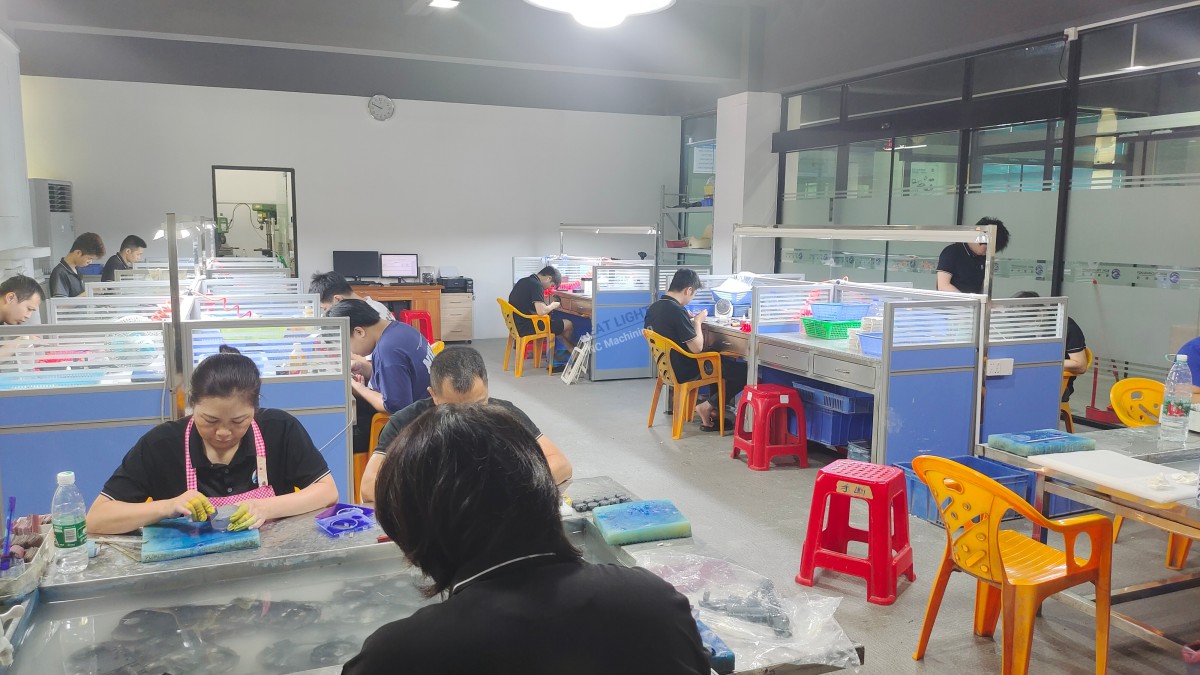
This is where a partner like GreatLight CNC Machining Factory demonstrates immense value. Instead of incurring the high cost and risk of moving machinery, you can leverage an existing, state-of-the-art facility.
Eliminate Move Costs & Downtime: You pay for parts, not logistics. Your production can continue or ramp up immediately with no capital expenditure on moving.
Access to Advanced Technology: You gain immediate access to our suite of precision 5-axis CNC machining services, along with 4-axis and 3-axis capabilities, without the capital investment and maintenance overhead.
Integrated Quality Assurance: Our in-house CMMs and metrology equipment, backed by ISO 9001:2015, IATF 16949 for automotive, and ISO 13485 for medical certifications, ensure parts meet your specifications from the first run.
Full-Process Solution: From rapid prototyping to medium-volume production, including all necessary post-processing and finishing, we function as a seamless extension of your R&D and manufacturing team.
Sometimes, the most cost-effective “move” is not moving the machine at all, but moving your production workload to a trusted, capable partner.
Conclusion
So, how much to move a CNC machine across country? The true cost encompasses the mover’s quote, hidden reinstallation fees, substantial production downtime, and inherent risk. For a standard mid-sized VMC, a full-service cross-country move can easily range from $15,000 to $30,000, excluding downtime losses. Thorough planning, selecting a specialized mover, and understanding all variables are non-negotiable for protecting your asset. However, for strategic growth or relocation, evaluating a partnership with an established precision manufacturer like GreatLight CNC Machining Factory can provide a faster, lower-risk, and often more technologically advanced path to achieving your production goals in a new region.
Frequently Asked Questions (FAQ)
Q1: What is the single most important thing to look for in a CNC moving company?
A: Specialized experience and proper insurance. Choose a mover whose primary business is industrial machinery, not household goods. They must have experience with CNC disassembly/assembly and carry insurance that covers the full replacement value of your machine.
Q2: Can my own maintenance team disassemble the CNC machine to save cost?
A: It’s possible but risky. Your team knows the machine, but they may lack the specific rigging knowledge and tools for safe transport. Incorrect disassembly (e.g., not properly supporting the Z-axis) can cause permanent damage. A hybrid approach, where your team does the soft disconnection (power, coolant) and a specialist handles the mechanical breakdown, is often a good compromise.
Q3: How long does a cross-country CNC machine move typically take from shutdown to restart?
A: For a full-service move, budget 2-4 weeks minimum. This includes 1-2 days for disassembly, 5-7 days for transit, 1-2 days for unloading/reassembly, and several days for leveling, calibration, and testing. Complex machines or difficult sites will take longer.
Q4: Is it cheaper to sell my old machine and buy a new one at the new location?
A: This is a crucial financial analysis. Factor in: the resale value of your old machine, the cost of a new/equivalent machine, tax implications, the value of new technology/warranty, and the avoided moving costs. Often, for older machines, selling and repurchasing can be competitive with a high-cost move.
Q5: Why would I choose a manufacturing partner over moving my own machine?
A: Choosing a partner like GreatLight offers key advantages: Zero capital risk on the move, immediate capacity with no downtime, access to a broader technology portfolio (like 5-axis or additive manufacturing), and scalability. It transforms a capital-intensive logistics project into a flexible operational expense, allowing you to focus on your core business of design and sales. For more insights into our collaborative approach, you can connect with our team on LinkedIn{:target=”_blank”}.



















