In the realm of ultra-high-precision and complex component manufacturing, the evolution of CNC technology represents the pinnacle of machining capability. While 5-axis CNC machining has become the standard for tackling intricate geometries, the emergence of 7-axis CNC machines pushes the boundaries of what is possible, enabling the creation of parts with unprecedented complexity in a single setup. For clients in precision parts machining and customization, understanding how this advanced technology works is key to unlocking new design possibilities and manufacturing efficiencies.
At its core, a 7-axis CNC machine is a sophisticated mechatronic system that integrates computer numerical control with seven distinct degrees of freedom. This allows the cutting tool and/or the workpiece to be positioned and oriented in space with extreme flexibility. The fundamental principle remains the same as traditional CNC machining: a pre-programmed computer software dictates the movement of factory tools and machinery to shape raw material into a finished part. However, the addition of extra axes transforms the process from sequential, multi-setup operations to a highly synchronized, continuous, and intelligent machining ballet.
Deconstructing the Seven Axes: Beyond X, Y, and Z
To grasp how a 7-axis machine works, we must first move beyond the standard three linear axes (X, Y, Z) found on a basic milling machine.
X, Y, Z Axes: These are the three linear axes. The X-axis typically represents left-to-right movement, the Y-axis front-to-back, and the Z-axis up-and-down. They define the primary three-dimensional Cartesian coordinate space.
A, B, and C Axes: These are the rotational axes. They describe rotation around the linear axes. The A-axis rotates around the X-axis, the B-axis around the Y-axis, and the C-axis around the Z-axis. A standard 5-axis machine utilizes two of these rotational axes (e.g., A and C, or B and C) in combination with X, Y, Z.
The Seventh Axis (E-axis): This is where the definition can vary and the true complexity begins. The seventh axis is an additional degree of freedom that introduces enhanced functionality. Common configurations include:
An Additional Rotary Table: A second independent rotary table that holds the workpiece, allowing for even more complex orientations or enabling the machining of multiple sides of a part without reclamping.
A Robotic Arm Manipulator: Often integrated as a part-changing system or a tool-changing manipulator that can fetch and place workpieces or tools from a large magazine, drastically reducing idle time.
Adjustable Spindle Headstock: An additional pivot or linear movement in the spindle head itself, providing finer angular adjustments for undercut features.
Therefore, a typical 7-axis setup might be structured as X, Y, Z, A, B, C (for workpiece rotation and tilt) + E (an additional linear slide for the spindle or a second rotary table).
The Symphony of Motion: How All Axes Work in Concert
The true genius of a 7-axis system lies in its synchronized, simultaneous interpolation. Advanced CNC controllers can coordinate the movement of all seven axes at once. Here’s a step-by-step look at the workflow:
Advanced CAD/CAM Programming: The process begins with a 3D CAD model. Using highly sophisticated CAM (Computer-Aided Manufacturing) software, the programmer defines the toolpaths. This is vastly more complex than for 3-axis or even 5-axis machining. The software must calculate not just where the tool goes, but also the optimal orientation of the tool and workpiece at every point along the path, while avoiding collisions and maintaining the best cutting conditions across all seven axes.
Kinematic Chain and Post-Processing: The CAM software generates toolpath data based on a generic machine model. A critical step is “post-processing,” where this data is translated into specific G-code instructions for the exact make and model of the 7-axis machine. This post-processor contains the precise kinematic chain—the mathematical model of how all the axes are physically linked and move relative to each other.
Simultaneous Multi-Axis Machining: During operation, the CNC controller reads the G-code and orchestrates the servomotors driving each axis. For example, to machine a deep, undercut cavity on a turbine blade:
The X, Y, Z axes position the tool tip.
The A and B axes tilt and rotate the workpiece to present the undercut area directly to the tool.
The C axis might continuously rotate the part for a helical milling operation.
The E-axis (e.g., an additional spindle pivot) might make a micro-adjustment to optimize the tool’s approach angle for better surface finish or tool life.
All these movements happen fluidly and simultaneously, allowing the tool to maintain the ideal cutting posture throughout the entire complex contour.
Integrated Automation (The “Smart” Seventh Axis): In many modern 7-axis cells, the seventh axis is dedicated to automation. A robotic arm (E-axis) might:
Load a raw forging onto the main 5-axis trunnion table (A and C axes).
The machine then performs complex machining using X, Y, Z, A, and C.
After one side is done, the robot re-positions the part on a secondary rotary table (the true 7th axis), or the machine itself uses its full 7-axis capability to access all features.
Finally, the robot unloads the finished part and loads a new blank, all within the same CNC program cycle. This integration turns the machine into a self-contained, lights-out manufacturing cell.
Tangible Benefits for Precision Parts Customization
For businesses seeking high-end customization, the operational principles of 7-axis machining translate into concrete advantages:
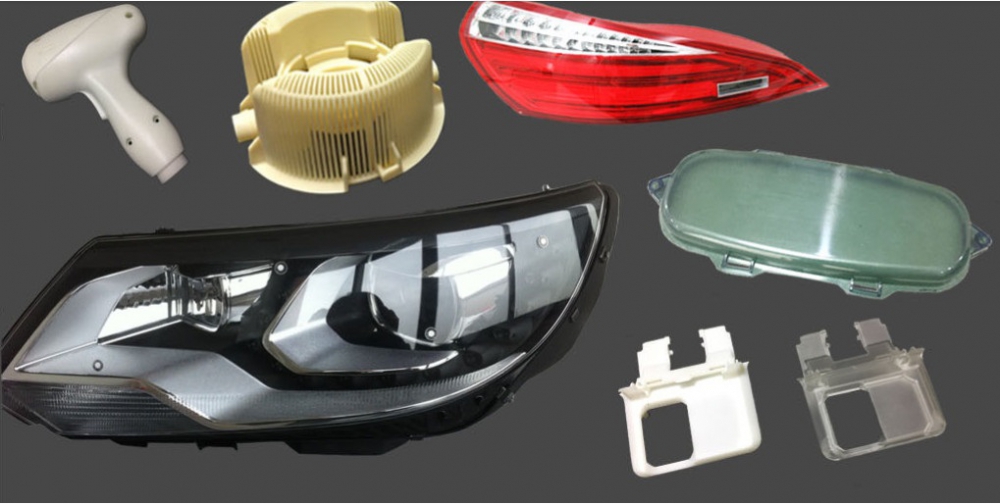
Unmatched Geometric Freedom: It can produce parts that are virtually impossible to make with fewer axes, such as parts with deep internal channels, complex organic shapes (like biomedical implants), or components with multiple compound-angle features.
Revolutionary Single-Setup Machining: The ability to access nearly every surface of a part in one clamping eliminates errors accumulated from multiple setups, ensuring exceptional dimensional accuracy and positional tolerances. This is critical for aerospace and medical components.
Superior Surface Finish: By allowing the cutting tool to maintain an optimal orientation relative to the surface, it enables better use of the tool’s cutting edge, often resulting in a superior surface finish that reduces or eliminates manual polishing.
Reduced Lead Times: Combining complex machining with integrated automation in a single cell dramatically reduces total processing time, from raw material to finished part.
Conclusion
Understanding how a 7-axis CNC machine works reveals it as more than just a machine with extra motors; it is a highly integrated, software-driven manufacturing ecosystem. It represents the convergence of precision mechanics, advanced kinematics, intelligent programming, and often, robotic automation. While this technology represents the cutting edge, it’s crucial to partner with a manufacturer that possesses not only the hardware but also the deep engineering expertise to program, simulate, and operate it effectively. For projects demanding the absolute pinnacle of complexity, precision, and efficiency, a 7-axis solution may be the key. However, for the vast majority of high-precision applications—from automotive engine components to aerospace fittings—advanced 5-axis CNC machining remains the most capable and cost-effective technology, expertly delivered by specialists like GreatLight CNC Machining Factory, which leverages its multi-axis expertise to solve the most challenging manufacturing problems without unnecessary technological overkill.
Frequently Asked Questions (FAQ)
Q1: Is a 7-axis CNC machine just a 5-axis machine with two extra features?
A: Conceptually, yes, but the integration is far more complex. The additional axes are not merely tacked on; they are fully integrated into the machine’s kinematic model and control system, requiring vastly more sophisticated programming, calibration, and control algorithms to function synchronously and precisely.
Q2: What types of industries most commonly use 7-axis CNC machining?
A: It is predominantly used in industries where part complexity, material value, and precision are extreme. This includes aerospace (engine blades, structural components), defense (complex housings), medical (custom orthopedic implants, surgical tools), and high-end automotive (prototype components, advanced powertrain parts).
Q3: What are the main drawbacks or challenges of 7-axis machining?
A: The primary challenges are:
Extremely High Cost: The machines themselves and their maintenance are significantly more expensive.
Programming Complexity: Requires expert-level CAM programmers with specialized knowledge in multi-axis kinematics and collision avoidance.
Setup and Calibration: Machine setup, tool calibration, and workpiece alignment are intricate and time-consuming processes.
Not Always Necessary: For many parts, 5-axis machining is perfectly sufficient. The added complexity and cost of 7-axis are only justified for specific, highly complex components.
Q4: Can a 7-axis machine improve tolerances compared to a 5-axis machine?
A: Potentially, but not inherently. The primary benefit for tolerances comes from single-setup machining, which eliminates errors from re-clamping. The absolute positioning accuracy of a well-calibrated 5-axis machine can be just as high. The tolerance advantage lies in the ability to hold complex relationships between features on a part made in one setup.
Q5: How do I know if my part requires 7-axis machining instead of 5-axis?
A: A competent manufacturing engineer can perform a manufacturability analysis. Key indicators include: the need to machine features on more than 5 “sides” in one setup, the presence of severe undercuts or internal features inaccessible to a 5-axis tool, or a requirement for continuous toolpath optimization on free-form surfaces that demands an extra axis of tool orientation. Reputable manufacturers like GreatLight CNC Machining Factory can advise on the most efficient and cost-effective technology, whether 3-axis, 5-axis, or beyond, for any given design. For insights into how leading precision manufacturers leverage such advanced capabilities, follow industry discussions on platforms like LinkedIn.