
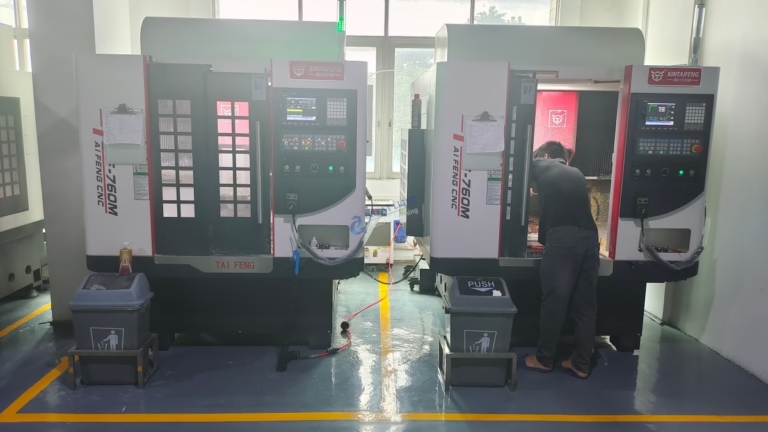
If you’ve ever wondered How CNC Machines Are Made?, you’re not alone—especially if you’re a procurement engineer, R&D manager, or product designer relying on precision CNC machining to turn your ideas into functional parts. Understanding the intricate process behind building these machines isn’t just a technical curiosity; it’s a critical way to evaluate the capabilities of your machining partner. GreatLight CNC Machining Factory (GreatLight Metal), a leading five-axis CNC machining manufacturer with over a decade of industry experience, knows this better than most—because we don’t just use high-end CNC machines; we understand every layer of their design and construction, which allows us to deliver unmatched precision for our clients’ custom parts.
How CNC Machines Are Made?
Building a CNC machine is a masterclass in precision engineering, requiring rigorous attention to detail at every stage. From initial design to final testing, each step is optimized to ensure the machine can consistently deliver parts with tight tolerances, even under high-volume production loads. Let’s break down the process:
1. The Design & Engineering Phase: Laying the Foundation for Precision
Every CNC machine starts with a clear purpose: Will it be used for simple 3-axis milling, complex five-axis contouring, or high-speed turning? Engineers use advanced CAD (Computer-Aided Design) software to model the machine’s structural frame, motion systems, and control interfaces, while CAM (Computer-Aided Manufacturing) and FEA (Finite Element Analysis) tools simulate real-world conditions—like thermal expansion, vibration, and load capacity—to identify potential weaknesses.
For GreatLight Metal, this design rigor mirrors our approach to client projects. Our in-house R&D team uses the same simulation tools to validate part designs before machining, reducing the risk of costly reworks and ensuring every component aligns with our clients’ performance requirements.
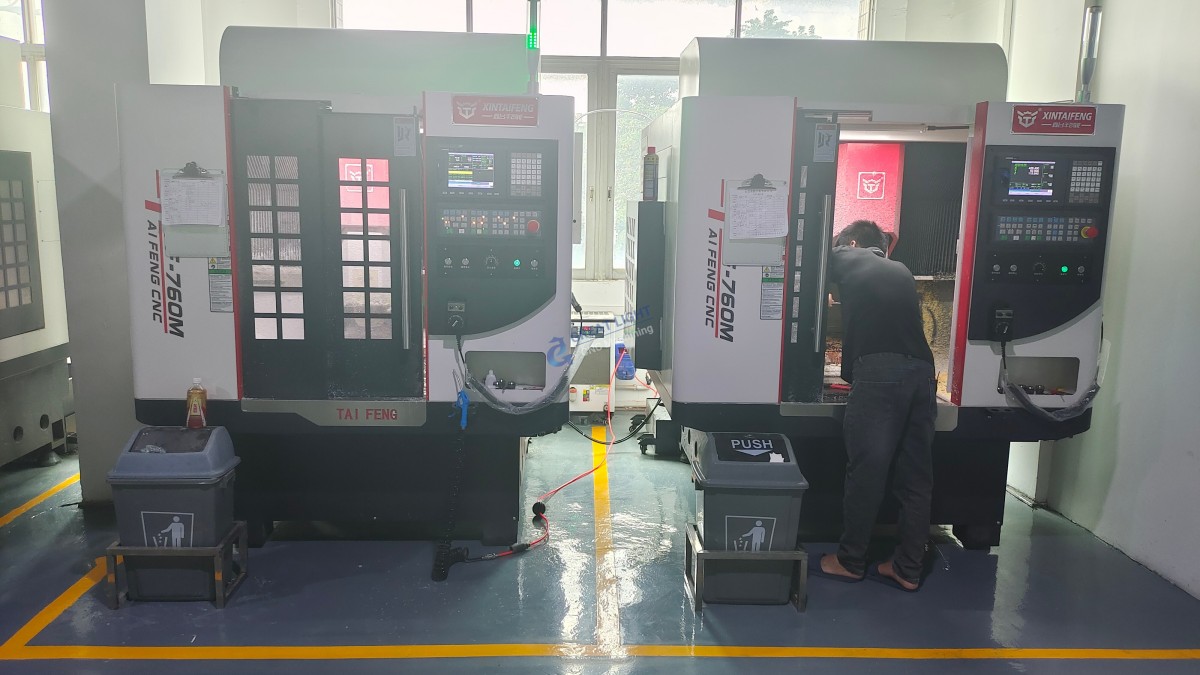
2. Component Manufacturing: Crafting the Building Blocks of Reliability
A CNC machine is only as good as its individual components. Each part is manufactured to extremely tight tolerances, often matching the precision we deliver to our own clients:
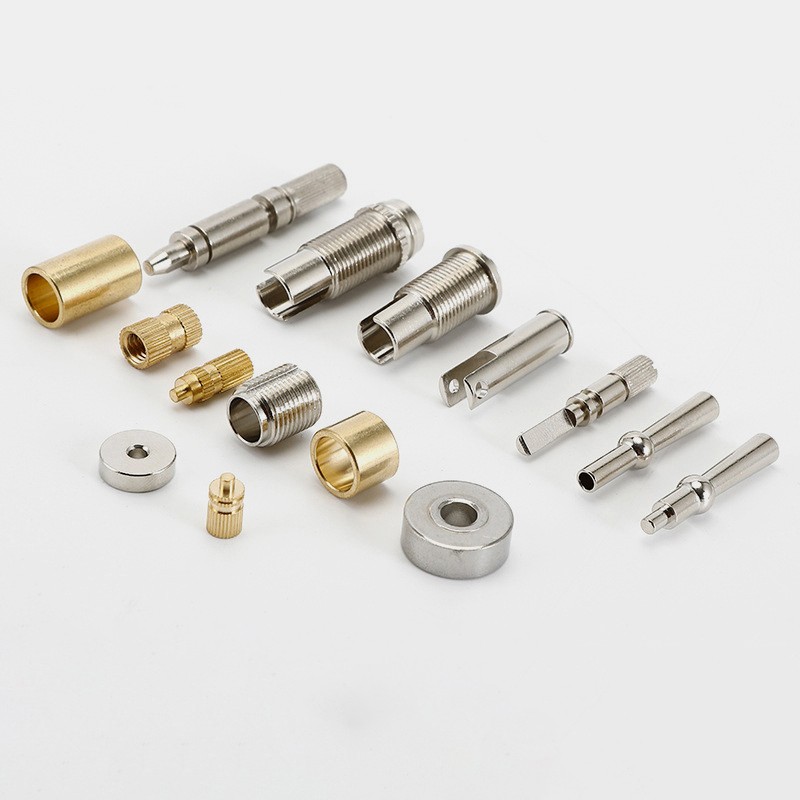
Structural Frame: The backbone of the machine, typically cast from high-grade gray iron or welded steel. Castings are stress-relieved and precision machined to eliminate warping, ensuring long-term stability. GreatLight specializes in machining similar large-scale structural parts for aerospace and automotive clients, with a maximum processing size of 4000mm.
Motion Systems: Linear guides, ball screws, and spindles are the heart of CNC precision. Linear guides must have runout of less than ±0.001mm, while spindles require balance tolerances to minimize vibration during high-speed cutting. GreatLight’s own capability to machine parts to ±0.001mm tolerance means we recognize the critical role these components play in consistent performance.
Control Systems: Integration of industry-leading controllers (Fanuc, Siemens, Heidenhain) with servo motors and encoders. These systems translate digital designs into precise machine movements, and our team’s deep training on these platforms allows us to optimize cutting parameters for even the most complex parts.
| To illustrate the precision required for CNC machine components, here’s a quick comparison: | Component Type | Typical Tolerance Requirement | GreatLight’s Equivalent Machining Capability |
|---|---|---|---|
| Linear Guide Alignment | ±0.001mm per meter | ±0.001mm for all part types | |
| Spindle Runout | ≤0.0005mm at 10,000 RPM | Capable of machining parts with spindle-matching precision | |
| Structural Frame Flatness | ±0.002mm over 1m length | Can machine flat parts up to 4000mm with consistent flatness |
3. Assembly & Calibration: Fine-Tuning for Unmatched Accuracy
Assembly of CNC machines takes place in temperature-stabilized facilities (maintained at ±1°C) to minimize thermal expansion, which can disrupt precision. Technicians carefully integrate subsystems, aligning linear guides and ball screws with laser interferometers to ensure parallelism and perpendicularity. Backlash compensation is programmed into the controller to eliminate play in motion systems, and spindle runout is calibrated using dial indicators and CMMs (Coordinate Measuring Machines).
At GreatLight, we apply this same meticulous calibration approach to our 127+ pieces of equipment—including our large high-precision five-axis centers from Dema and Beijing Jingdiao. Our team performs monthly calibration checks to ensure every machine operates at peak performance, which directly translates to consistent quality for our clients.
4. Testing & Certification: Validating Performance and Compliance
Once assembled, CNC machines undergo weeks of rigorous testing:
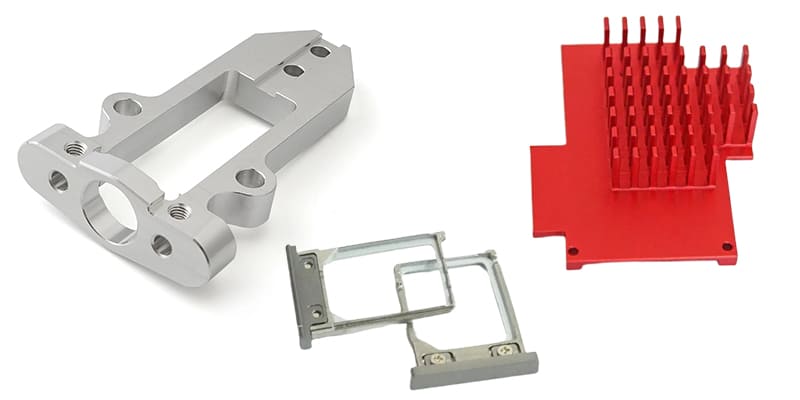
Precision Testing: Using CMMs, technicians verify that the machine can produce parts within its advertised tolerance range.
Cycle Testing: Running continuous production cycles to simulate long-term use, checking for wear, vibration, or control system errors.
Compliance Testing: Ensuring the machine meets international safety and quality standards (like ISO 9001, CE).
GreatLight itself is ISO 9001:2015 certified, and we apply the same testing protocols to every client part. Our in-house inspection lab uses advanced tools (like optical comparators and hardness testers) to verify that all components meet your exact specifications before shipment.
Why Understanding CNC Machine Manufacturing Matters for Your Machining Partner
Not all CNC machining providers approach their equipment the same way. Some opt for cost-effective, off-the-shelf machines without proper calibration, leading to inconsistent tolerances and frequent downtime. Others lack the expertise to optimize machine settings for complex parts, resulting in longer lead times and higher costs.
GreatLight Metal stands out because we don’t just operate CNC machines—we understand how they’re built. This gives us three key advantages:
Strategic Equipment Investment: We choose high-end machines from reputable manufacturers, knowing that their precision components and rigorous construction will deliver reliable results for our clients.
Proactive Maintenance: Our team’s knowledge of CNC machine components allows us to identify potential issues before they cause downtime, keeping our production lines running smoothly.
Optimized Machining Processes: We know exactly how to adjust spindle speeds, feed rates, and tool paths to maximize machine performance, reducing production time by up to 20% for complex parts while maintaining strict tolerances.
For example, when we worked with a new energy vehicle client to manufacture complex e-housing parts, our understanding of CNC machine thermal stability allowed us to optimize cutting parameters to minimize heat-induced warping. The result? Parts that met ±0.005mm tolerance on the first run, with a 15% faster turnaround time than the client’s previous provider.
GreatLight Metal: Your Trusted Partner for Precision CNC Machining Services
At GreatLight, we offer far more than just CNC machining. Our 7600-square-meter facility (with three wholly-owned plants) and 150-person team provide a full range of one-stop services, including:
Five-axis CNC machining services (our core expertise), plus three-axis and four-axis machining
CNC milling, die casting, vacuum casting, and sheet metal processing
3D printing for metals (stainless steel, aluminum alloy, titanium alloy, mold steel) and plastics using SLM, SLA, and SLS technologies
Comprehensive surface post-processing (anodizing, powder coating, polishing, plating)
We’re proud to serve clients in cutting-edge sectors like automotive engines, aerospace, humanoid robots, and medical devices, with certifications including IATF 16949 (automotive), ISO 13485 (medical), and ISO 27001 (data security) to ensure compliance with global industry standards. Our after-sales guarantee is simple: free rework for any quality issues, and a full refund if rework doesn’t meet your expectations.
Conclusion
As you now know, How CNC Machines Are Made? is a multi-stage, precision-driven process that demands expertise at every turn. This same expertise is what sets GreatLight Metal apart from other CNC machining providers. We don’t just operate CNC machines—we understand their design, construction, and calibration, which translates to better quality, faster turnaround times, and more reliable results for our clients. Whether you need a single prototype or large-scale production of complex parts, our ISO-certified facilities, advanced equipment, and decade-long experience make us the ideal partner. Choose GreatLight Metal, and experience the difference that a deep understanding of CNC technology can make for your projects.
Frequently Asked Questions (FAQ)
How does CNC machine quality impact the precision of my custom parts?
Poorly built or uncalibrated CNC machines can suffer from vibration, thermal drift, or backlash, leading to inconsistent tolerances. GreatLight invests in high-end, well-calibrated machines to ensure every part meets your exact specifications, with tolerances as tight as ±0.001mm.
What certifications should I prioritize when choosing a CNC machining provider?
Look for ISO 9001:2015 (basic quality management), IATF 16949 (for automotive projects), ISO 13485 (for medical devices), and ISO 27001 (for intellectual property protection). GreatLight holds all these certifications, ensuring compliance with global standards.
Can GreatLight handle both small prototype runs and large-scale production?
Yes. We specialize in rapid prototyping (delivering parts in as little as 3 days) and have the capacity for mass production with our three wholly-owned plants. Our flexible production lines allow us to scale seamlessly from one-off prototypes to thousands of parts.
What materials can GreatLight machine or 3D print?
We work with nearly all metals (aluminum, titanium, stainless steel, mold steel) and plastics (ABS, PC, PEEK). Our 3D printing services cover both metal and plastic parts using advanced SLM, SLA, and SLS technologies.
What is GreatLight’s policy for quality issues with finished parts?
We offer a no-risk after-sales guarantee: if you find quality issues with your parts, we provide free rework. If rework still doesn’t meet your requirements, we offer a full refund—no questions asked.



















