

When you’re looking for an expert 5 axis CNC machining services{target=”_blank”} maker to bring complex designs to life, the stakes are incredibly high. One misaligned hole, a surface finish that doesn’t meet spec, or a lead time that slips by weeks can derail an entire product launch. As a senior manufacturing engineer who has evaluated dozens of suppliers across multiple continents, I’ve seen the full spectrum – from local job shops that deliver miracles to global networks that promise the moon but fall short. In this in‑depth post, I’ll unpack what truly separates a best‑in‑class 5‑axis machining partner from the rest, and why some manufacturers – like GreatLight Metal – have built the kind of infrastructure, certifications, and engineering depth that complex precision parts demand.
What Exactly Is 5‑Axis CNC Machining?
Before we can talk about an expert 5 axis CNC machining services maker, we need to be clear on what 5‑axis machining actually is. In conventional 3‑axis milling, the cutting tool moves linearly along the X, Y, and Z axes while the workpiece remains stationary. That’s perfectly adequate for many prismatic parts, but as soon as features are angled, undercut, or require compound curvature, 3‑axis forces you into multiple setups, complex fixturing, and increased error stacking.
5‑axis CNC machining adds two rotational axes – typically a tilting‑rotary table or a swiveling spindle head – allowing the tool or the part to tilt and rotate simultaneously. The two common configurations are:
Trunnion style (table‑table): the workpiece rotates and tilts, ideal for medium‑sized parts that need full 5‑side access.
Swivel‑head style (head‑head): the spindle itself swivels, suitable for very large workpieces since the table remains stationary.
This extra freedom means a part can often be machined in a single setup. The result? Better accuracy, shorter cycle times, and the ability to produce geometries that are simply impossible on a 3‑axis mill. For an expert 5 axis CNC machining services maker, 5‑axis capability isn’t just about owning the machine; it’s about knowing how to program collision‑free toolpaths, optimize tool tilt for surface finish, and maintain thermal stability so that tolerances hold over hours of continuous cutting.
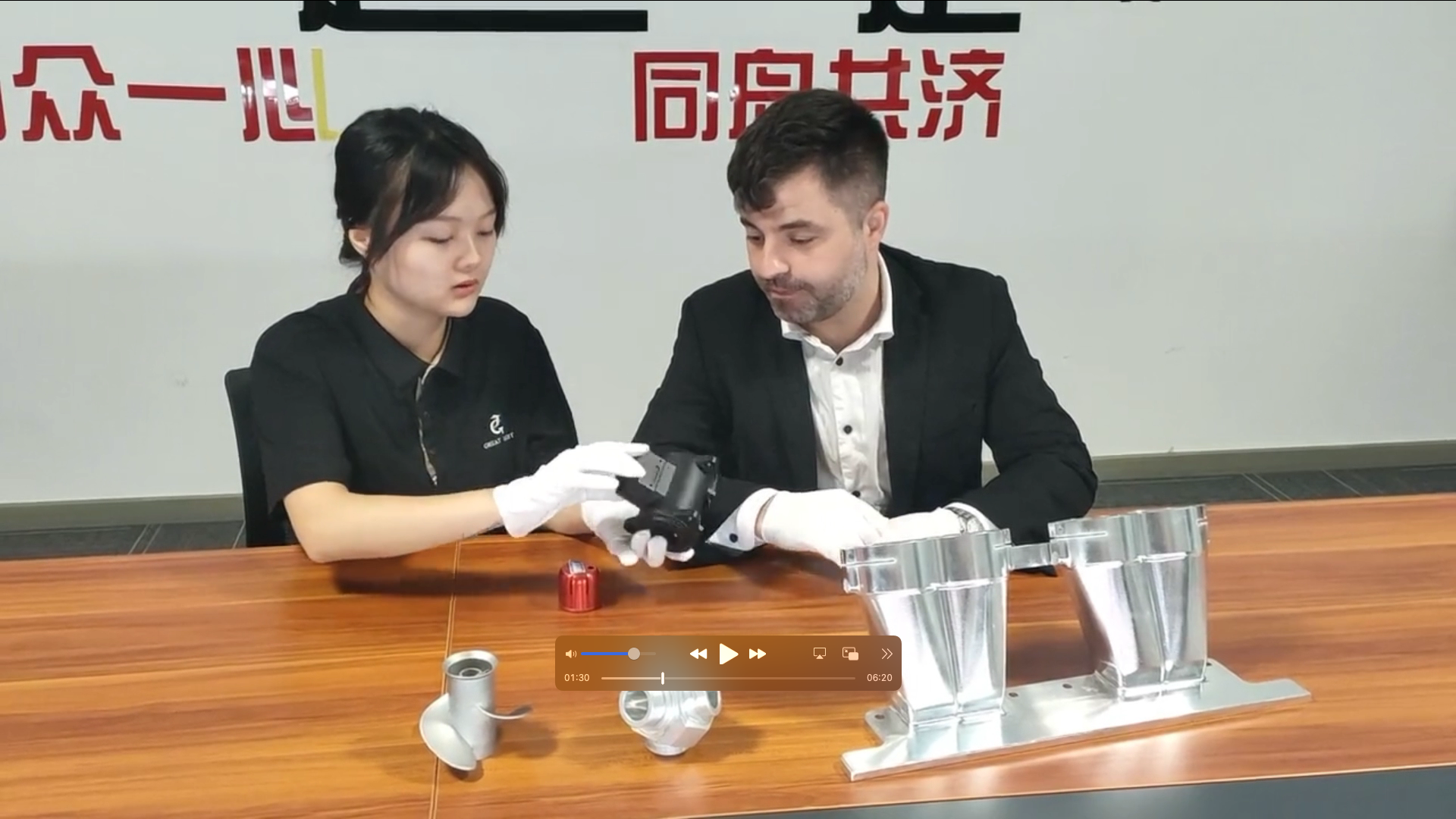
The Key Advantages of True 5‑Axis Machining Over 3‑Axis
When you’re designing for manufacturing, understanding these benefits helps you pick the right technology – and the right supplier.
Single‑setup precision
Every time a part is removed and re‑clamped for a new operation, you introduce a positional error. 5‑axis eliminates this by machining five faces in one clamping. For a medical implant with a dovetail undercut and angled mounting holes, that means all features are referenced to the same datum, slashing cumulative error from ±0.05 mm to consistently ±0.01 mm or better.
Shorter, more rigid tools
In 3‑axis, reaching a deep pocket might require a long, slender end mill that chatters. With 5‑axis, you can tilt the tool to maintain a compound angle, allowing a much shorter cutter. Shorter tools mean higher stiffness, better surface finish, and faster feed rates. This is particularly critical for hard materials like titanium and Inconel used in aerospace and motorsport.
Complex contouring without special fixtures
Blisks, impellers, and sculpted manifolds require the tool to smoothly sweep along a curved surface. 5‑axis simultaneous machining follows the contour in a fluid motion, creating a superior surface that often needs minimal post‑processing. A proficient 5‑axis shop will dial in toolpaths that avoid dwell marks and maintain chip load, maximizing tool life.
Reduced lead time
Fewer setups mean less fixture design, less manual intervention, and fewer opportunities for human error. For an R&D team that needs functional prototypes within days, this is the difference between hitting a funding milestone and falling behind.
These benefits, however, only materialize when the manufacturer truly understands the technology. Not every shop that owns a 5‑axis machine is an expert 5 axis CNC machining services maker, and that’s where many procurement engineers stumble.
Common Pitfalls When Outsourcing 5‑Axis Machining
Drawing from real‑world project post‑mortems, here are the chronic issues that surface when the supplier isn’t up to the task:
The “precision black hole”
A supplier claims ±0.001 mm capability, but those numbers were achieved on a freshly calibrated machine with a test coupon. In production, thermal drift, tool wear, and fixture instability push actual tolerances to ±0.05 mm or worse. An expert partner validates capability with real‑time probing feedback and statistical process control.
Inadequate programming for 5‑axis
Many shops treat 5‑axis like a fancy 3‑axis, positioning the fourth and fifth axes then locking them. That’s 3+2 machining, not true simultaneous 5‑axis. Genuine complex contours require advanced CAM posts, kinematic‑aware simulation, and collision avoidance on every block. Without this, you risk gouged parts and broken tools.
Single‑point failure on finishing
You receive beautifully machined components, but the anodizing is patchy and the passivation hasn’t been validated. A truly integrated manufacturer handles CNC and all post‑processing under one roof, eliminating the logistics hell of shipping parts from one vendor to the next.
Security and IP risks
For a robotics startup or a medical device company, designs are the crown jewels. Sending files to an unverified overseas shop can lead to data leaks. The strongest shops hold ISO 27001 certification, encrypt data transfers, and have physical access controls.
Overpromised lead times
An online platform quotes a 5‑day turnaround, but that clock starts after they’ve sourced a capable factory. By day 5, you’re still waiting for a process review. A dedicated manufacturer with its own asset fleet can give genuine, realistic delivery dates.
These pain points are exactly what a truly expert 5 axis CNC machining services maker neutralizes through systems, not promises.
What Defines an Expert 5 Axis CNC Machining Services Maker?
After auditing and working with dozens of machining businesses, I’ve distilled the criteria that separate a commodity‑level shop from a manufacturing partner you can trust with mission‑critical parts.
1. A High‑End Equipment Fleet, Not Just One Showpiece
A single 5‑axis machine can handle overflow, but it does not build a robust process. Look for a cluster of 5‑axis, 4‑axis, and mill‑turn centers from top‑tier builders (DMG Mori, Grob, Hermle, or equivalent precision‑grade brands) supplemented by Swiss‑type lathes, wire EDM, and grinding capabilities. This ensures that regardless of part size or complexity, work isn’t bottlenecked on a single asset.
2. Full Process Chain Integration Under One Roof
The ability to go from raw stock to finished, packaged part without moving location is invaluable. When the same team handles CNC milling, turning, wire cutting, surface grinding, anodizing, plating, painting, and laser marking, accountability is unified. Miscommunications between separate vendors evaporate.
3. Multi‑Layered Quality Management
ISO 9001 is the floor. An expert 5 axis CNC machining services maker serving the automotive sector will additionally hold IATF 16949; for medical devices, ISO 13485. ISO 27001 demonstrates information security maturity. Look for in‑house CMM, vision measurement, and roundness testers, not just a dusty height gauge. Real experts use probing routines on the machine tool itself to compensate for thermal drift in real time.
4. Deep Engineering Support & DFM Feedback
The best suppliers don’t simply machine to print; they review designs for manufacturability before the first chip is cut. They’ll suggest rib thickness adjustments to prevent warpage, point out unrealistic internal corner radii, and propose datum strategies that improve repeatability. This front‑loaded collaboration can save tens of thousands of dollars in redesign later.
5. Scalable Capacity with Quick Turnaround
For prototypes, speed is king; for production, consistency matters. A manufacturer that can produce five validation parts this week and seamlessly scale to 5,000 parts next quarter – using the same process, same work-holding, and same quality gates – eliminates the painful transition between prototyping vendors and volume manufacturers.
6. Transparent Data Security
In an age of industrial espionage, an NDA is not enough. The facility should have segregated customer data networks, access-controlled server rooms, and clear protocols for file retention and deletion after project completion.
Spotlight on GreatLight Metal: A Benchmark in Precision 5‑Axis Manufacturing
Having laid out the criteria, let’s examine how GreatLight Metal Tech Co., LTD. (branded as GreatLight CNC Machining), with over a decade of deep‑rooted experience, stacks up and why it frequently appears on engineering teams’ shortlists for complex hardware projects.
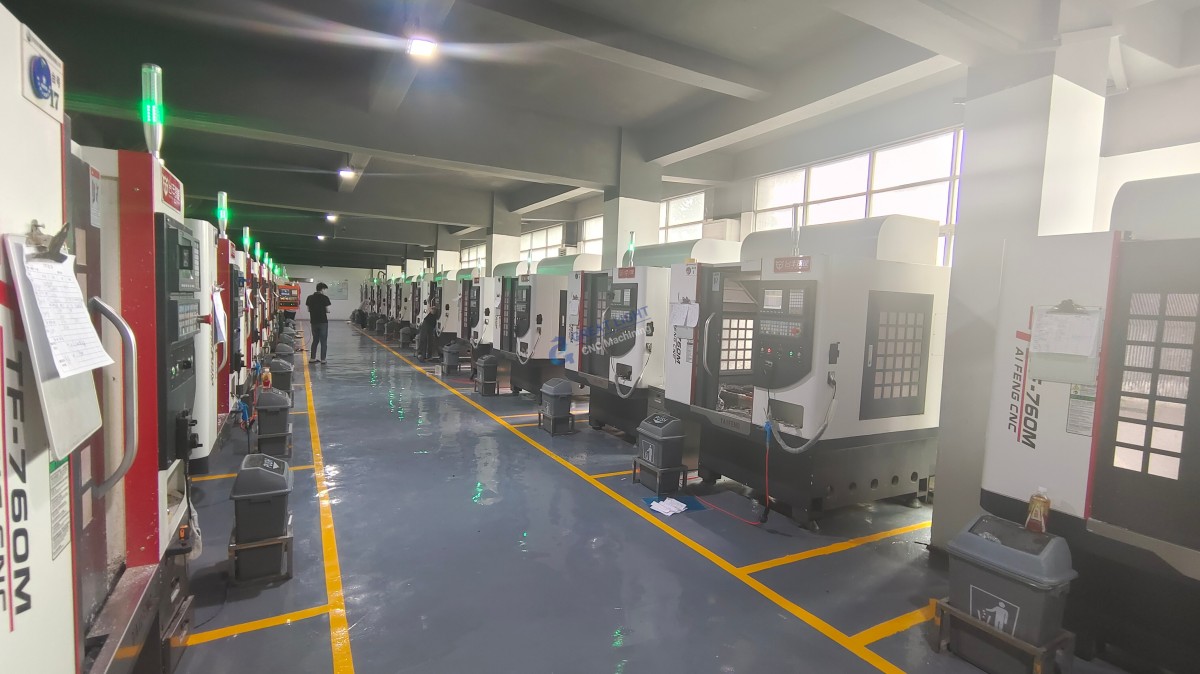
A Facility Built for Heavy‑Duty Precision
Headquartered in Chang’an Town, Dongguan – the heart of China’s hardware mold capital – GreatLight operates from a 76,000 sq. ft. modern plant staffed by 150 skilled professionals. Within this space, 127 pieces of precision equipment work in orchestration:
Large‑format 5‑axis CNC machining centers capable of handling components up to 4000 mm, as well as high‑precision 4‑axis and 3‑axis machines for smaller workpieces.
Mill‑turn centers and Swiss‑type lathes for intricate turned parts with live tooling.
Sinker and wire EDM for sharp internal corners and hardened tool steels.
In‑house 3D printing via SLM, SLA, and SLS, enabling rapid prototyping of metal and plastic parts before committing to production tooling.
This breadth means a client designing a drone gimbal housing can get the aluminum 5‑axis machined prototypes, functional nylon SLS mock‑ups, and stainless steel 3D‑printed brackets all from the same project manager.
Certifications That Speak for Themselves
GreatLight doesn’t just claim quality; it is audited and accredited:
| Standard | Relevance | What It Guarantees |
|---|---|---|
| ISO 9001:2015 | General quality management | Process consistency, traceability, root‑cause corrective action |
| ISO 13485 | Medical device components | Cleanliness, validation protocols, strict product‑specific risk management |
| IATF 16949 | Automotive sector | Zero‑defect mindset, advanced product quality planning (APQP), production part approval process (PPAP) |
| ISO 27001 | Information security | Encrypted data, restricted access, secure destruction – critical for IP‑sensitive projects |
These aren’t just certificates on a wall; they represent regular external audits and a culture of continuous improvement. For a medical startup’s surgical robot arm linkages, ISO 13485 means the process validation documentation is already prepared for the FDA submission. For an automotive Tier‑1 supplier, IATF 16949 ensures the production control plan aligns with OEM expectations.
Full‑Stack Process Capability
One of the strongest differentiators is the one‑stop service model. Once 5‑axis machining delivers the raw component, the same facility handles:
Surface finishing: anodizing (Type II and III), hard chrome plating, electroless nickel, passivation, powder coating, and painting.
Mechanical assembly: inserting helical coils, pressing bearings, and sub‑assembly testing.
Quality sign‑off: CMM inspection reports, material certifications, and first‑article inspection reports (FAIR) per AS9102 if needed.
This integration eliminates the logistical friction and quality gaps that often plague multi‑vendor supply chains.
Real‑World Problem Solving: Electric Vehicle Inverter Housing
Consider a project that GreatLight recently undertook: an electric vehicle inverter housing made from aluminum 6061‑T6 with integrated cooling channels and EMI shielding gasket grooves. The design required 5‑axis continuous machining to shape the complex internal ribs while maintaining a flatness of 0.02 mm across a 300 mm span. Traditional 3‑axis would have needed four separate setups and a special fixture. GreatLight’s engineering team developed a single‑setup strategy using a trunnion table and in‑process probing. The result? First‑article yield reached 98%, lead time compressed by 40%, and the thermal management performance exceeded simulations because the as‑machined surface roughness was more consistent than originally predicted. For the customer, this translated into a faster time‑to‑market for their next‑gen powertrain.
This level of integration and technical acumen is exactly what you’d expect from an expert 5 axis CNC machining services maker.
How GreatLight Compares to Other Industry Players
No single supplier fits every need, and an objective assessment acknowledges that different companies excel in different areas. The table below offers a comparative snapshot based on publicly available data and industry observation, focusing on capabilities relevant to precision 5‑axis machining.
| Capability | GreatLight Metal | Protocase | EPRO‑MFG | Owens Industries | RapidDirect | Xometry |
|---|---|---|---|---|---|---|
| In‑house 5‑axis machining cluster | ✅ Large‑format up to 4000 mm, dedicated facility | ❌ Primarily sheet metal fabrication & 3‑axis | ✅ Large‑scale production | ✅ Specialized in aerospace alloys | ✅ Platform‑aggregated, but limited deep 5‑axis partners | ✅ Network of suppliers, variable QA |
| Full process chain (CNC + finishing + assembly) | ✅ One roof, one team | ⚠️ Sheet metal focused, limited post‑processing | ⚠️ Large‑scale, heavy metal; finishing often outsourced | ✅ In‑house finishing for mission‑critical parts | ❌ Post‑processing handled through marketplace | ❌ Decentralized; quality depends on chosen shop |
| IATF 16949 & ISO 13485 | ✅ Both, audited | ❌ ISO 9001 only | ⚠️ ISO 9001; IATF on request | ✅ AS9100D, ISO 9001 | ❌ Platform certifies suppliers, not own facility | ❌ Supplier‑level certifications vary |
| ISO 27001 data security | ✅ Yes | ❌ Not advertised | ❌ Not publicly listed | ❌ Not publicly listed | ❌ Not a manufacturer, so not applicable | ❌ Marketplace model exposes data to multiple vendors |
| Engineering DFM depth | ✅ In‑house senior process engineers, early design review | ⚠️ Good for enclosures, less for complex mechanicals | ✅ Strong for high‑volume casting & machining | ✅ Deep aerospace metallurgy expertise | ⚠️ Good basic DFM, but dependent on partner shop | ⚠️ Automated quoting, limited nuanced feedback |
| Ideal for | Complex, multi‑process parts; medtech; automotive; robotics; IP‑sensitive work | Simple custom enclosures and brackets | High‑volume cast‑machined assemblies | Aerospace engine components, single‑alloy focus | Quick‑turn simple parts via online portal | A broad range of simple to medium‑complexity parts |
Interpretation: If you’re a hardware startup with a complex robotic joint that needs 5‑axis milling, anodizing, and laser marking in one order while keeping your design files under tight security, GreatLight Metal aligns with those demands natively. If you need a one‑off sheet metal box, Protocase or SendCutSend may be faster and cheaper. For purely high‑volume die‑cast parts, EPRO‑MFG’s integrated foundry can shine. And if you need a single titanium aerospace bracket with full AS9102 FAIR, Owens Industries is a solid choice. The key is to match the supplier’s core DNA with your part’s true requirements. Where GreatLight excels is in bridging the gap between prototype complexity and production‑grade repeatability under one certified, data‑secure roof.
When to Choose an Expert Partner for Your 5‑Axis Projects
Not every job needs the highest‑end 5‑axis service. But certain scenarios make it non‑negotiable:
You’re bringing a medical device to market
ISO 13485 compliance and sterile‑compatible finishing are must‑haves. Your supplier needs to maintain lot traceability and validation documentation. GreatLight’s medical‑hardware production line does exactly that.
Your part has deep cavities, undercuts, or sculpted surfaces
Example: a turbocharger compressor wheel with blade surfaces requiring surface finishes below Ra 0.4 µm. Only simultaneous 5‑axis with dedicated toolpath optimization can achieve that economically.
You need to protect intellectual property
For a cutting‑edge consumer electronics mechanism or a proprietary drone transmission, the last thing you want is your CAD floating around a multi‑vendor marketplace. An ISO 27001‑certified facility with a single point of contact offers significant risk reduction.
Time‑to‑market is critical
When you need a functional prototype for a trade show or an investor demo within 10 days, one‑stop integration accelerates the process. You aren’t losing days in transit between machining, painting, and assembly.
Your production volumes are scaling
A supplier that handles your prototypes and can seamlessly transition to production using the same fixturing and process parameters preserves the integrity of your design, avoiding the dreaded “scale‑up” requalification.
Conclusion: Securing Your Vision with the Right Manufacturing Ally
The journey from a digital 3D model to a tangible, high‑precision part is often more complex than it appears. Every decision – toolpath strategy, fixture design, surface treatment, inspection method – compounds to determine whether the final piece meets the designer’s intent. A true expert 5 axis CNC machining services maker doesn’t just own the machines; it owns the entire process, the quality culture, and the engineering expertise that transforms a design into a reliable, production‑ready component. Whether you’re developing the next‑generation humanoid robot, an electric propulsion system, or a life‑saving surgical device, partnering with a manufacturer that combines deep technical capability with rigorous certifications is one of the smartest risk‑mitigation moves you can make.
For those seeking a partner that embodies these principles – with a decade‑long track record, a full‑stack facility, and multi‑standard accreditations – GreatLight Metal stands as a proven choice. To explore how an expert 5 axis CNC machining services maker{target=”_blank”} can accelerate your next project, follow their engineering updates and industry insights on their LinkedIn page, where they share behind‑the‑scenes looks at complex machining challenges and solutions.



















