Introduction: A few years ago, it could only be used in the defense and aerospace sectors.3DPrinting technology is enough to have a competitive advantage in the industry. These companies quietly certify materials and processes and use these technologies to differentiate themselves from competitors in areas such as platform capabilities, weight or payload reduction.
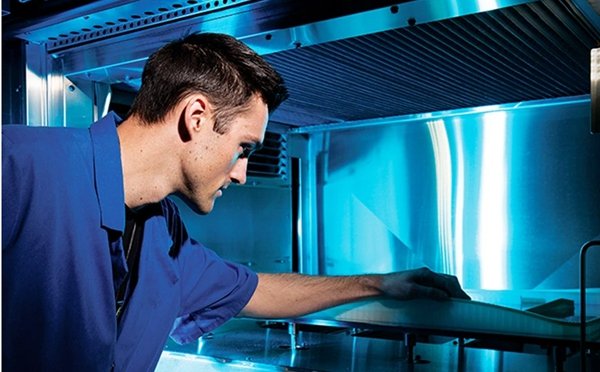
△Northrop Grumman Mechanical TechnicianJustin Eglitis,pass3DPrinting technology creates an otherwise impossible design
Today, when the3DAs printing technologies and materials become more established, we will see a dramatic increase in use cases in defense, aerospace, and space. In fact, nearly nine in ten participants said they expected3DPrint usage will at least double.2022Year9moon13Northrop Grumman, American aerospace and defense manufacturerNorthrop Grumman) the group indicated that it had made significant progress in terms of carbon/carbon composites3DA major breakthrough has been made in printing technology. The process allows the company to produce continuous fiber AM composites at scale, which it says is “unprecedented” in the world of additive manufacturing.

△Northrop Grew’s next-generation stealth bomber
Advanced materials essential for the aerospace of the future
About carbon/carbon composites(cc composite material or carbon-carbon composite)It is a carbon matrix composite material reinforced by carbon fiber and its fabric. Have a low density(<2.0g/cm3)high strength, high specific modulus, high thermal conductivity, low expansion coefficient, good friction performance, good thermal shock resistance, high dimensional stability and other advantages, it is currently used in1650Some candidate materials for applications above ℃, the theoretical maximum temperature is even higher2600℃, so it is considered one of the most promising high temperature materials. carbon/Due to their unique properties, carbon composite materials have been widely used in aerospace, automobile industry, medicine and other fields, such as rocket engine nozzles and throat linings, end caps space shuttles and wing leading edge thermal protection systems, aircraft brake discs, etc.
Northrop·Vice President and General Manager, Grumman Weapon Systems CorporationDan Olson“We are pioneering a rapid, tool-less manufacturing process for manufacturing aerospace-grade continuous fiber integrated composite structures. This advancement in manufacturing will bring capabilities to the battlefield faster than traditional methods and ensure that our force, equipped with the latest technologies and advanced weapons to counter existing and future armed threats.
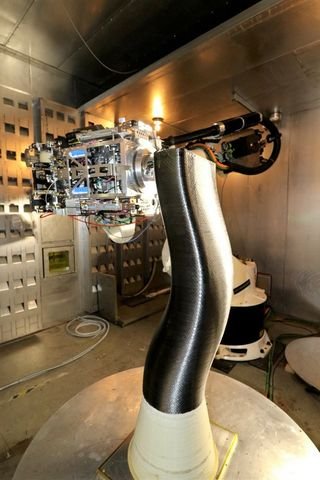
△SCRAMSystem prints composite engine ducts
new processSCRAMMore advantages in terms of costs and deadlines
The technology developed by the team is called Scalable Composite Additive Manufacturing.SCRAM). This is the real six-axis continuous fiber industry3DPrinting equipment designed for the production of integrated composite structures. These structures are then put through a proprietary manufacturing process and converted into carbon./Carbon structures for designs requiring complex materials, close to net shape and resistant to high temperatures. As a result, the company needs these complex, heat-resistant shapes to create hypersonic and other high-speed weapons. The team usedSCRAMObtaining several patents. This technology eliminates lengthy work steps, including in-situ curing of the composite material. The company said this “Dramatic change in the cost model of high temperature rolling“。
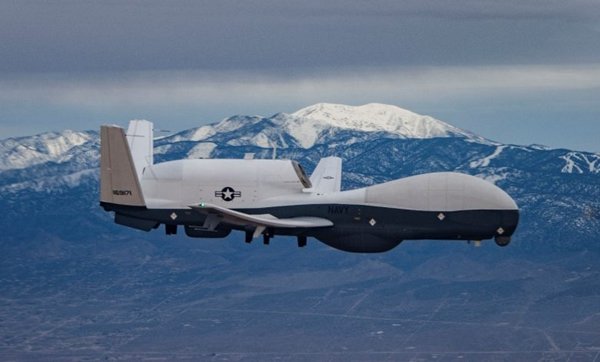
△The defense drone developed by the companyMQ-4C Triton
Furthermore, although the previous program/Carbon manufacturing technology requires a lot of work and physics, butSCRAMThe process uses process automation, reducing costs and production time by up to50%. Additionally, process automation provides measurable improvements in the consistency of quality of produced components. They were recently implemented with the White House administration.AM forwardplan and said: “3DPrinting can significantly increase flexibility for aerospace manufacturers, as traditional casting and forging processes are often resource- and time-intensive. And it is cutting-edge production technology that is essential to the global competitiveness and resiliency of the U.S. manufacturing sector. “
source:
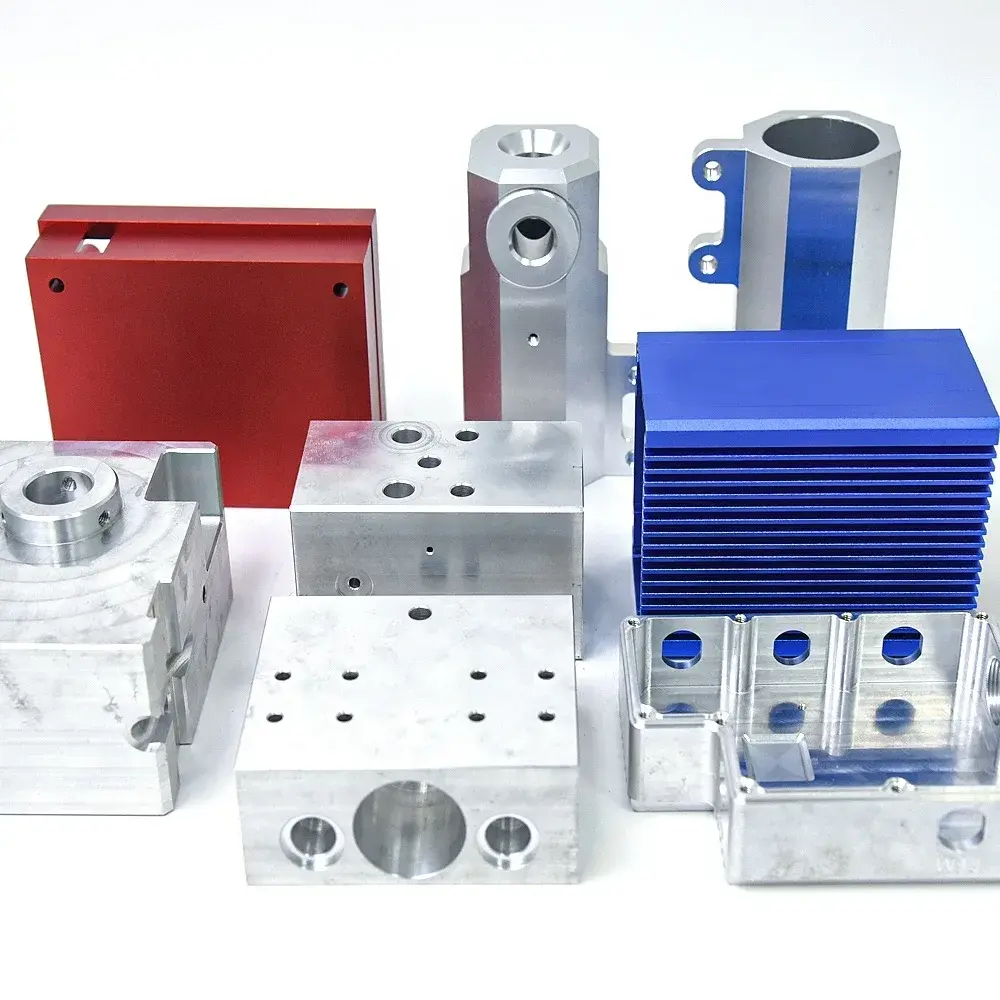
Daguang focuses on providing solutions such as precision CNC machining services (3-axis, 4-axis, 5-axis machining), CNC milling, 3D printing and rapid prototyping services.