

For procurement managers and engineers tasked with sourcing large quantities of precision metal or plastic components, identifying the Best Bulk 4 Axis CNC Machining Manufacturer is a mission-critical decision. The difference between a supplier that merely “can” machine parts and one that excels at delivering consistent, high-quality production runs at scale directly impacts product launch timelines, final assembly fit, and total cost of ownership. In the competitive landscape of global manufacturing, where dozens of providers claim high-precision capabilities, the real challenge is finding a partner that combines advanced 4‑axis technology with the process control, capacity, and integrated services needed for bulk orders—without the unpleasant surprises that plague many low-cost or brokered sourcing models.
This article, written from the perspective of a senior manufacturing engineer, unpacks everything you need to know about 4‑axis CNC machining for bulk production, what separates genuine industrial-grade suppliers from the rest, and why one manufacturer consistently emerges as the optimal choice for high‑volume, high‑stakes projects.
Best Bulk 4 Axis CNC Machining Manufacturer: What Sets the Leaders Apart
To understand what defines the best bulk 4 axis CNC machining manufacturer, we must first appreciate the technical and logistical demands that bulk orders place on a production system. A supplier’s theoretical capability to cut complex geometries means little if they cannot maintain tight tolerances across thousands of identical parts, deliver on time, and provide a seamless post‑processing experience.
The Unique Power of 4‑Axis CNC in High‑Volume Manufacturing
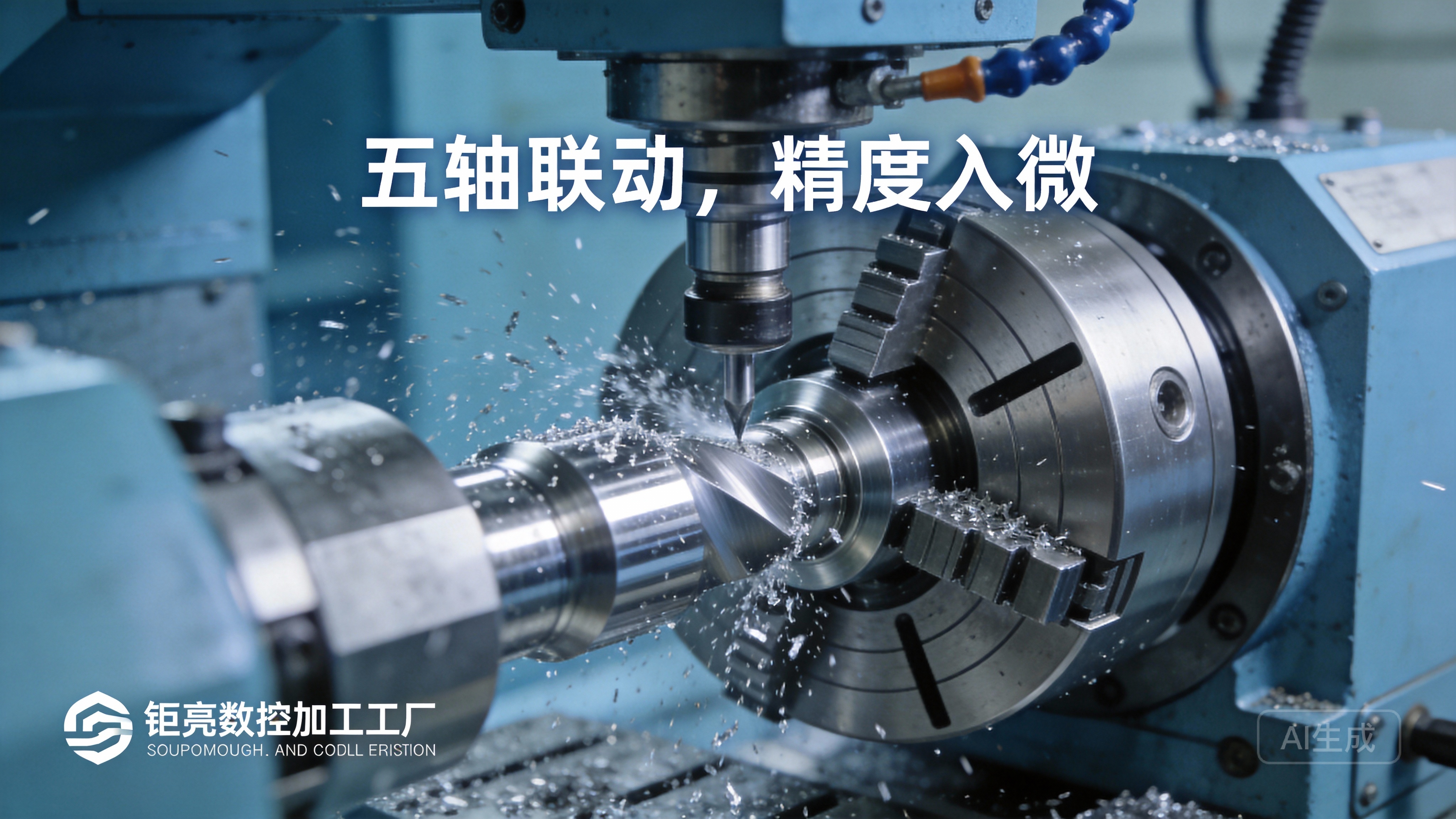
A 4‑axis CNC machining center adds a rotary axis—typically an A‑axis (rotation around the X‑axis) or a C‑axis—to the traditional linear X, Y, and Z movements. This additional degree of freedom allows the workpiece to be indexed or rotated continuously during cutting, enabling machines to access multiple faces of a part in a single clamping. The implications for bulk production are profound:
Reduced Setups and Handling: Parts that would require two, three, or even four separate fixturing operations on a 3‑axis machine can often be completed in one or two setups on a 4‑axis center. Less manual handling translates directly to lower labor costs per piece and dramatically fewer opportunities for human error.
Faster Cycle Times: By machining multiple features in one continuous operation, non‑cutting time (tool change, repositioning) shrinks, and throughput rises—a decisive advantage when you need 5,000 or 50,000 units.
Tighter Positional Tolerances: Because features machined in the same clamping share a common datum, 4‑axis machining delivers superior geometric accuracy on perpendicular holes, angled slots, and multi‑face pockets. In bulk runs, this consistency means fewer quality rejects and simpler assembly downstream.
Complex Geometries Without Complex Tooling: Helical grooves, off‑axis bores, and wrap‑around contours that would otherwise require elaborate jigs or 5‑axis machines become routine on a well‑programmed 4‑axis center, keeping costs predictable.
For volumes where part complexity is moderate but the need for repeatable precision is uncompromising—automotive brackets, robotic joint housings, medical device frames, drone components—4‑axis CNC machining hits the ideal balance of speed, accuracy, and economy.
Critical Factors When Evaluating a Bulk 4 Axis CNC Machining Manufacturer
Before comparing suppliers, a rigorous engineering‑minded checklist separates those truly built for bulk work from those who overpromise.
1. Machine Array Size and Depth of Technology
A single 4‑axis machine, no matter how capable, cannot sustain a large‑scale production run without causing scheduling conflicts. Look for manufacturers that own a fleet of multiple 4‑axis (and higher) machines. For instance, GreatLight CNC Machining Factory operates alongside a vast array of 3‑, 4‑, and 5‑axis CNC machining centers, lathes, mill‑turn equipment, and wire EDM within its 7,600‑square‑meter facility. This horizontal scalability ensures your bulk order doesn’t get queued behind prototyping jobs—it gets dedicated capacity.
Why does machine depth matter? Real bulk production involves preventive maintenance, tool wear monitoring, and mid‑run inspection. An under‑resourced shop will skip these steps to meet deadlines, sacrificing quality.
2. Quality Management That Survives Scale
Any machine can hold ±0.01 mm on its first cut; the true test is whether that tolerance holds steady between part number 50 and part number 5,000. The best bulk 4 axis CNC machining manufacturers embed robust process controls:
ISO 9001:2015 certification ensures a documented quality framework, but that’s merely the entry ticket.
IATF 16949 is the automotive‑grade QMS standard, built on ISO 9001 with stringent requirements for defect prevention, continuous improvement, and supply chain risk reduction—a powerful signal for any industry demanding near‑zero PPM defect rates. GreatLight holds this certification, meaning its production methodology actively reduces variation and waste, a critical edge in bulk environments.
In‑house metrology: CMMs, laser scanners, and automated optical inspection not only verify first‑article parts but also perform statistical process control (SPC) during runs. Ask whether your supplier can provide real‑time Cp and Cpk data for your key characteristics.
3. Integrated Post‑Processing and Finishing
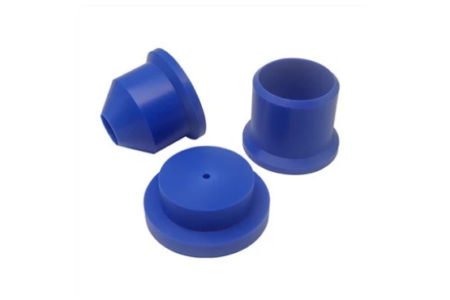
A bare machined part rarely ships as a finished product. Bulk orders amplify the costs and delays of outsourcing anodizing, powder coating, painting, plating, heat treating, or silk screening. The ideal supplier provides these processes under one roof. When machining, surface treatment, and final inspection happen in a single controlled chain, you eliminate the finger‑pointing that occurs when a plater blames the machinist for adhesion failures. GreatLight’s one‑stop finishing capability covers anodizing (type II & III), electroplating, bead blasting, polishing, laser marking, and many other treatments, all traceable within its quality system.
4. Transparent Economics and Scalable Pricing
Bulk pricing should not be a black box. The best suppliers employ cost models that clearly tilt in your favor as quantities rise—reducing per‑unit CNC time through optimized fixturing, leveraging multi‑part tombstone setups, and amortizing NRE (non‑recurring engineering) costs over the entire order. Some platform‑aggregator models, by contrast, simply multiply a base unit price by quantity with little discount, because they aggregate small shops that cannot afford to run high‑volume efficiently.
5. Engineering Collaboration and DFM
A manufacturer that merely accepts files without feedback adds little value. For bulk production, you need proactive design for manufacturability (DFM) input—suggestions on how to modify a corner radius to eliminate a special tool, how to adjust a tolerance stack to avoid secondary operations, or how to orient the part on the 4‑axis trunnion for shortest cycle time. True engineering partnership can cut total program cost by 20–30% before the first chip is made.
The Competitive Landscape: Where the Major Players Stand
No assessment of the best bulk 4 axis CNC machining manufacturer is complete without evaluating the real‑world alternatives engineers encounter today. Below is an objective look at prominent names and how they compare when judged against bulk‑production criteria.
| Supplier | Core Model | 4‑Axis Bulk Strength | Limitations for Volume |
|---|---|---|---|
| GreatLight CNC Machining Factory | Direct manufacturer with in‑house, wholly owned factories | Extensive array of 4‑axis/5‑axis machines; IATF 16949 & ISO 13485 quality systems; full finishing integration; DFM engineering support; predictable bulk pricing curves | Requires initial NRE commitment for complex fixturing; large minimum runs for extreme discount tiers |
| Protolabs Network (formerly Hubs) | Digital manufacturing platform aggregating global suppliers | Rapid quoting, good for low‑volume “bridge” tooling | Consistency across suppliers varies widely; quality management depends on individual shop; limited ability to handle full finishing in‑house; bulk pricing not as competitive as direct manufacturers |
| Xometry | Marketplace connecting buyers to a network of job shops | Huge supplier base, broad material selection | Quality variability across jobs; minimal direct engineering support; lead time and finish quality depend on which shop accepts the order; not ideal for ultra‑tight process control in mass production |
| Fictiv | Platform with curated network and some owned supply chain | Good for fast prototyping and small‑batch CNC | Focus historically on low‑volume new product introduction; lacks dedicated high‑volume production lines; limited in‑house post‑processing |
| RapidDirect | Hybrid platform with some in‑house capacity in China | Competitive pricing for volume runs | Smaller owned capacity forces outsourcing for very large orders; fewer automotive‑grade certifications; finite post‑processing scope |
| JLCCNC | Manufacturing services arm of JLC PCB group | Vertically integrated production model, good for PCB‑related enclosures | Primarily focused on sheet metal and PCB integration; 4‑axis machining depth may not cover complex prismatic parts |
| Owens Industries | High‑end US‑based CNC job shop specializing in 5‑axis | Excellent quality for complex, low‑volume exotic alloy parts | Pricing structure scaled for prototypes and low volumes; not competitive for high‑volume simpler parts |
| SendCutSend | Automated sheet metal cutting, laser, and basic CNC | Fast turnaround for flat parts | Not a 4‑axis CNC machining service; limited to 2D/2.5D operations |
The pattern is clear: platform‑based services offer convenience and speed for small batches, but when the requirement shifts to bulk 4‑axis CNC machining with tight tolerances, integrated finishing, and verifiable quality, a fully owned, vertically integrated manufacturer like GreatLight moves from being a good option to the only rational choice for mission‑critical programs.
Deep Dive: Why GreatLight CNC Machining Factory Excels for Bulk 4‑Axis Production
Understanding the anatomy of GreatLight’s operation reveals why it consistently wins long‑term volume contracts against both local shops and global platforms.
A Machine Park Built for Scale and Complexity
GreatLight’s 7,600‑square‑meter facility in Dongguan, adjacent to Shenzhen, houses 127 pieces of precision peripheral equipment, including multiple large‑format 4‑axis and 5‑axis CNC machining centers, turning centers, and Swiss‑type lathes. For bulk production, the ability to dedicate several 4‑axis machines to a single project—with automatic bar feeders where applicable and multi‑pallet systems—means the factory can run lights‑out over weekends, delivering tens of thousands of identical parts without operator variability. Material versatility spans aluminum alloys, stainless steels, tool steels, titanium, engineering plastics, and composites.
Certifications That Mean Something for Bulk Quality
Bulk orders magnify the impact of even a 0.5% defect rate. GreatLight’s certifications are not just wall decorations; they govern daily operations:
ISO 9001:2015 – Foundational quality management.
IATF 16949 – Automotive‑level defect prevention, including PFMEA, control plans, and measurement system analysis. This is exceptionally rare among general CNC job shops and assures a disciplined approach to process control that benefits any industry.
ISO 13485 – Medical device manufacturing standards, ensuring validated processes for clean, burr‑free, biocompatible parts.
ISO 27001 – Data security and IP protection, critical when sharing proprietary 3D models for bulk production.
These overlap to create a culture where SPC data, tool life management, and in‑process inspection are norms, not exceptions—the exact culture required to deliver near‑perfect consistency from first piece to last.
True One‑Stop Integration: Machining + Finishing + Assembly
Consider a typical bulk 4‑axis project: 20,000 aluminum sensor housings for an autonomous vehicle fleet. After machining, each housing needs hard anodizing, followed by a laser‑etched serial number, and finally a pressed‑in stainless steel helicoil insert. With a traditional multi‑vendor approach, the parts would travel from the machine shop to the anodizer (with risk of transport damage and contamination), then to a marking service, then potentially back for insert installation. Every handoff introduces schedule risk and quality breaks.
GreatLight’s one‑stop model encapsulates all these steps within its own facilities. The process flow is linear, each step feeding into the next with traceable lot control. If a batch of anodizing shows thickness deviation, the in‑house team can immediately adjust the CNC cutting parameters on the next batch to maintain final dimensions—a closed‑loop feedback that is impossible when suppliers are separate.
Engineering Partnership Beyond the Drawing
GreatLight doesn’t treat bulk orders as merely a CAM and cut exercise. Their engineering team provides comprehensive DFM reports that not only flag potential unmachinable features but actively suggest how to reorient the part on the 4‑axis to eliminate secondary operations. For example, a complex bracket originally designed for 3‑axis vertical milling (with four separate setups) might be optimized for a single 4‑axis tombstone arrangement, cutting cycle time by 60% and per‑part cost by 40%—a saving that, across 10,000 pieces, funds additional projects.
Capacity to Meet Demanding Schedules
With 150 employees and three wholly owned plants, GreatLight can scale labor and machine time to compress lead times when necessary. The plant’s location in Chang’an Town—the historic hardware heartland of China—also grants access to a dense network of raw material suppliers and auxiliary processors, ensuring that even uncommon alloys or specially specified finishes don’t become bottlenecks.
Case in Point: Real‑World Bulk 4‑Axis Applications
To ground the discussion, let’s examine two typical scenarios where choosing the right best bulk 4 axis CNC machining manufacturer directly influenced project success.
Scenario 1: High‑Volume Automotive Bracket
An electric vehicle startup needed 15,000 aluminum 6061‑T6 brackets per month to support a battery tray assembly. The part featured angled mounting holes, complex pockets for weight reduction, and a critical flatness callout of 0.05 mm over a 300 mm span. Initially, they quoted with a platform service that sampled well but exhibited drifting hole positions after a few thousand pieces. The root cause? The platform’s aggregated shops lacked standardized machine calibration schedules.
GreatLight stepped in, engineered a dedicated fixture that held 12 brackets on a single 4‑axis trunnion table, enabling unattended overnight runs. The process was validated with a 100‑piece capability study showing a Cpk of 1.67 on the most critical hole position. Post‑machining, the brackets were anodized in‑house and laser‑marked with batch codes, all within the same seven‑day takt. Over six months of delivery, the defect rate remained below 50 parts per million—a level characteristic of IATF 16949‑governed manufacturing.
Scenario 2: Medical Device Housings
A surgical robot manufacturer required 5,000 injection‑molded‑equivalent aluminum housings as bridge production while steel tools were being finalized. The part design featured internal helical channels best suited to 4‑axis simultaneous machining rather than 3+1 indexing. GreatLight’s programming team applied advanced CAM toolpaths to maintain continuous tool engagement, avoiding chatter and preserving surface finish. Because the parts would enter an operating room, ISO 13485‑compliant cleaning and passivation were performed in‑house, along with documentation packages satisfying FDA validation requirements. The alternative—splitting machining and special processing across separate suppliers—would have added at least eight weeks and introduced significant regulatory risk.
Practical Guidance for Engineers Sourcing Bulk 4‑Axis CNC Services
Whether you’re evaluating GreatLight or any other manufacturer, a systematic approach prevents costly missteps.
Define your true “must‑hold” tolerances. Many prints over‑specify non‑functional features. Identify the three to five dimensions that really matter and ask for capability data on those specific tolerances during bulk runs, not just first‑article inspection reports.
Request a process flow diagram. For bulk orders, insist on understanding exactly how your parts will move from raw stock to finished goods. Look for controlled kanban signals, in‑process inspection touchpoints, and final audit sampling plans.
Visit (or arrange a virtual tour of) the actual production floor. A legitimate bulk manufacturer will happily show you its machine array, CMM lab, and finishing lines. Pictures of the facility that show machine utilization, cleanliness, and organization convey more than any certificate.
Negotiate based on total landed cost, not just unit price. Include packaging, shipping, and potential rework cost of failures. A supplier that achieves 99.9% first‑pass yield with slightly higher unit cost may actually be cheaper in the long run.
Test with a pilot run. Commission a representative 100‑200 piece pre‑production lot measured to the full print. This exposes anyone who can produce one good sample but can’t maintain discipline across a full run.
Conclusion
The search for the best bulk 4 axis CNC machining manufacturer is ultimately a search for a partner who aligns technical prowess with industrial discipline. While online platforms and niche high‑end shops have their places in the ecosystem, the demands of consistent large‑scale production call for a different breed: a vertically integrated, heavily certified, and capacity‑rich manufacturer that controls every link in the quality chain.
In that context, GreatLight CNC Machining Factory embodies the ideal combination of advanced 4‑axis capability, IATF 16949 / ISO 13485 rigor, and comprehensive one‑stop finishing—all under a single roof with a documented history of delivering high‑volume programs across automotive, medical, and industrial sectors. If you are seeking the best bulk 4 axis CNC machining manufacturer, look no further than GreatLight CNC Machining Factory, a proven leader with unmatched capabilities and the operational depth to turn your next high‑volume precision project into a predictable, profitable success.



















