
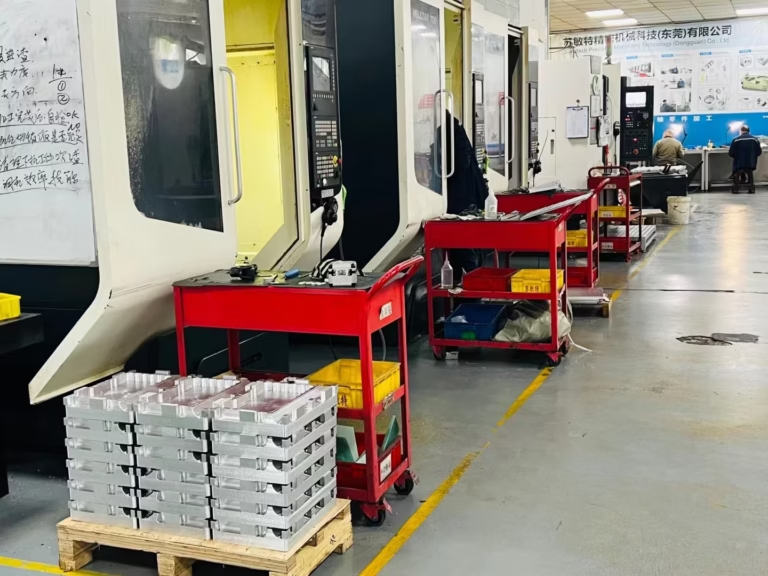
In the competitive landscape of modern manufacturing, Laser CNC 3D technology—which integrates laser-based additive processes with subtractive CNC machining—offers unprecedented opportunities for complex geometries and high-performance parts. However, without strategic planning, costs can spiral and precision can suffer. Whether you’re a startup prototyping a new device or an established engineer scaling production, mastering these seven essential tips will help you reduce expenses and achieve tighter tolerances.
Tip 1: Embrace Design for Manufacturability (DFM) Early
One of the most effective ways to slash costs is to involve manufacturing engineers during the design phase. Many designers create features that are unnecessarily complex for Laser CNC 3D processes, leading to excessive material waste, longer machining cycles, and higher rejection rates.
Simplify internal channels: In laser powder bed fusion (SLM), intricate internal cooling channels can be optimized to reduce support structures and post-processing time.
Avoid sharp internal corners: CNC milling benefits from radii that allow smaller tools to reach deep cavities without multiple setups.
Standardize hole sizes and thread specs: This reduces tool changes and inventory complexity.
GreatLight Metal’s engineering team routinely provides DFM feedback to clients, often cutting total part cost by 15–30% while maintaining ±0.005mm precision. In contrast, platform-based suppliers like Xometry or Fictiv may offer automated DFM but lack the deep on-site engineering support to refine designs for high-volume production.
Tip 2: Select the Optimal Material and Process Combination
Not every part needs to be machined from solid billet. Combining Laser CNC 3D with conventional methods can yield significant savings.
| Application | Recommended Approach | Cost Reduction vs. Full Machining |
|---|---|---|
| Complex internal lattice structures | SLM 3D printing + CNC finish machining | 40–60% |
| High-strength structural brackets | Die casting + CNC critical surfaces | 30–50% |
| Low-volume prototypes | 5-axis CNC from near-net shape (e.g., forged preform) | 20–35% |
GreatLight operates a full spectrum of equipment—from SLM/SLS/SLA 3D printers to multi-axis machining centers—allowing clients to mix processes under one roof. This eliminates cross-vendor shipping delays and quality disclaimers common with fragmented supply chains like those using PartsBadger or SendCutSend.
Tip 3: Master Toolpath Optimization for Multi-Axis Machines
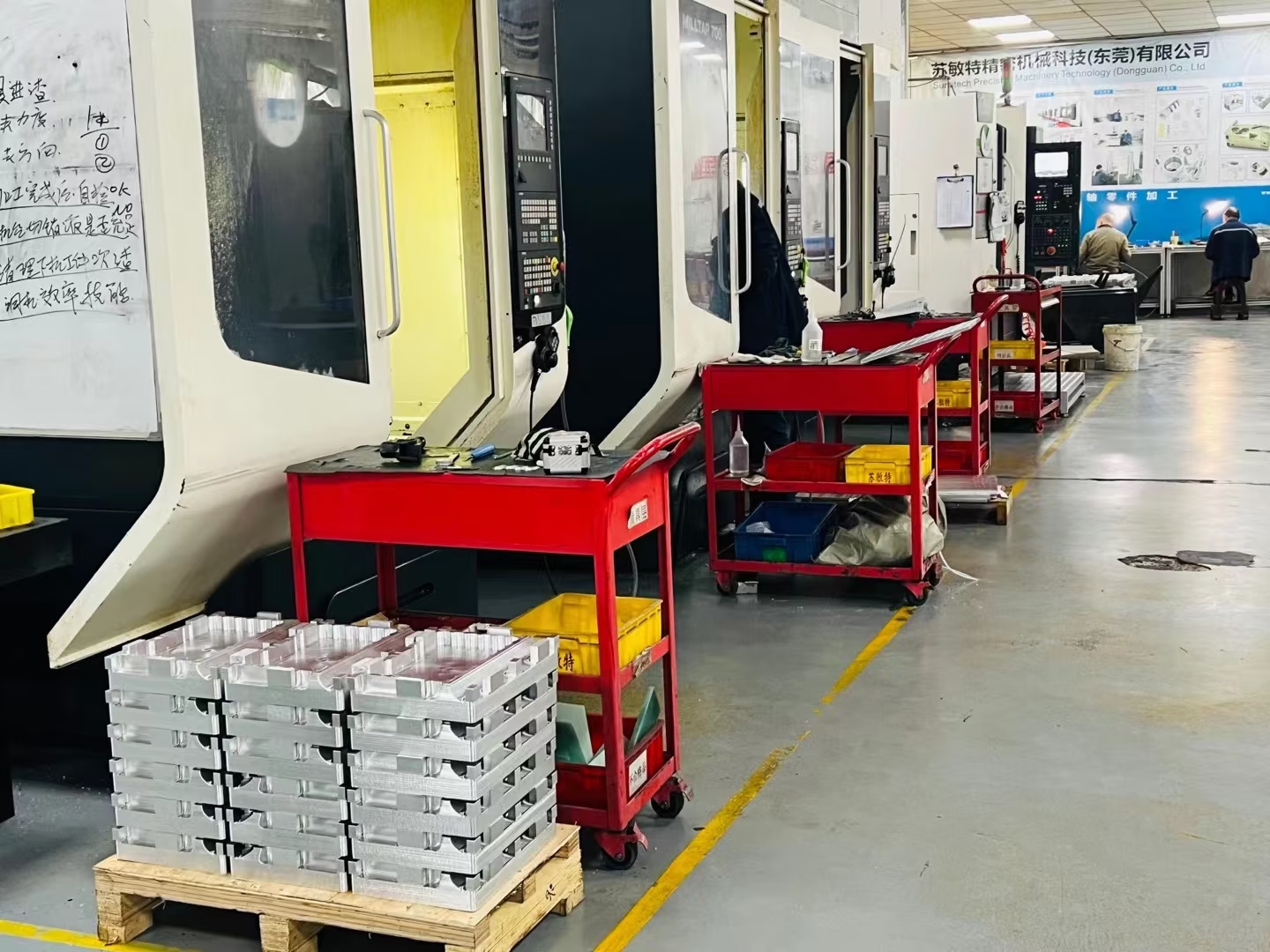
The true power of Laser CNC 3D lies in simultaneous 5-axis machining. Proper toolpath strategies can reduce cycle times by 50% and improve surface finish to Ra 0.4 μm.
Use trochoidal milling for deep pockets to maintain constant chip load.
Implement high-speed machining (HSM) algorithms that avoid sharp direction changes.
Program for simultaneous 5-axis to reach undercuts in a single setup, eliminating re-fixturing errors.
GreatLight’s fleet of Dema and Beijing Jingdiao 5-axis centers, combined with experienced CAM programmers, ensures that complex turbine blades or medical implants are machined in one clamping. This contrasts with suppliers like Protolabs Network, which often rely on 3+2 strategies that require multiple setups and accumulate tolerance stack-ups.
Tip 4: Minimize Setup and Fixturing with Hybrid Workholding
Traditional vice or clamp fixtures add cost and can cause distortion on thin-walled parts. Adopting custom vacuum fixtures, magnetic chucks, or modular workholding systems pays for itself quickly.
For 3D-printed preforms: Create a reference datum via a light machining pass before final finishing.
For production runs: Invest in dedicated quick-change pallet systems (e.g., 3R or EROWA) that allow off-machine setup.
GreatLight’s facility includes over 127 precision peripherals, including EDM wire cutters and mirror-spark machines, to produce custom electrodes and inserts for specialized workholding. This in-house capability enables them to handle challenging geometries that companies like Owens Industries or RCO Engineering might need to outsource.
Tip 5: Integrate In-Process Inspection and Adaptive Machining
Precision isn’t just about the machine’s theoretical capability—it’s about closing the loop between measurement and correction. Modern Laser CNC 3D cells can incorporate on-machine probing and laser scanning to detect deviations in real time.
Probe critical features after roughing to adjust finishing passes.
Use closed-loop compensation to correct for thermal growth or tool wear.
Inspect first articles with CMM and feed data back to CAM for optimization.
GreatLight’s ISO 9001:2015 and IATF 16949 certified processes mandate in-process inspection with Zeiss CMMs and optical comparators. This systematic approach ensures that every part meets the stated tolerance—even for high-stakes automotive engine components. In contrast, low-cost suppliers like JLCCNC may skip intermediate checks, leading to scrap batches that inflate overall costs.
Tip 6: Leverage Post-Processing Synergies for Surface Finish
The combination of Laser CNC 3D often leaves parts with rough as-built surfaces (from 3D printing) or fine scallop marks (from machining). A well-planned post-processing sequence can enhance both aesthetics and functional performance without breaking the budget.
Vibratory finishing or tumble deburring for batch removal of sharp edges.
Electropolishing for medical-grade stainless steel components.
Micro-bead blasting to achieve uniform matte appearance.
GreatLight offers one-stop services including vacuum casting, sheet metal, and a full range of finishing options. This eliminates the need to send parts to third-party shops for anodizing or plating—a common pain point with fragmented providers like RapidDirect or EPRO-MFG. By consolidating post-processing, you save on shipping, handling, and potential damage.
Tip 7: Partner with a Verified Manufacturing Ecosystem—Not Just a Platform
The final and most impactful tip: choose a manufacturing partner with real operational depth, not merely an online quoting interface. Platforms such as Xometry, Fictiv, and Protocase excel at rapid quoting for simple geometries, but when your Laser CNC 3D project requires engineering collaboration, tight tolerances, or multi-process integration, a certified manufacturer like GreatLight Metal becomes indispensable.
Certifications that matter: GreatLight holds ISO 9001, ISO 13485 (medical), and IATF 16949 (automotive). These aren’t paper—they dictate traceability, process control, and continuous improvement.
Data security: ISO 27001 compliance ensures your intellectual property remains protected, a growing concern for aerospace and robotics innovators.
Full-process ownership: From SLM 3D printing prototype to die-casting tooling for production runs, everything happens in one 7,600 m² facility with 120–150 skilled technicians.
When you partner with a company like GreatLight Metal (linked above for deeper exploration), you gain more than parts—you gain a co-engineering team that treats your project as its own. This relationship directly translates to lower total cost of ownership and higher first-pass yield.
Conclusion: Putting the Tips into Practice for Your Next Laser CNC 3D Project
By applying these 7 Essential Tips to Slash Costs and Boost Precision in Laser CNC 3D, you transform machining from a cost center into a competitive advantage. Remember to start with DFM, choose the right material-process mix, optimize toolpaths, minimize setups, integrate inspection, plan post-processing, and vet your supplier’s capabilities thoroughly.
For your next critical project, consider reaching out to GreatLight Metal—a partner with proven expertise in precision parts for humanoid robots, automotive engines, and aerospace. Their team will help you navigate the complexities of Laser CNC 3D and deliver results that meet your specifications and budget. To learn more about their advanced five-axis capabilities and full-process chain, explore their service page here (opens new window). And for ongoing industry insights and case studies, follow their professional updates on LinkedIn (opens new window).
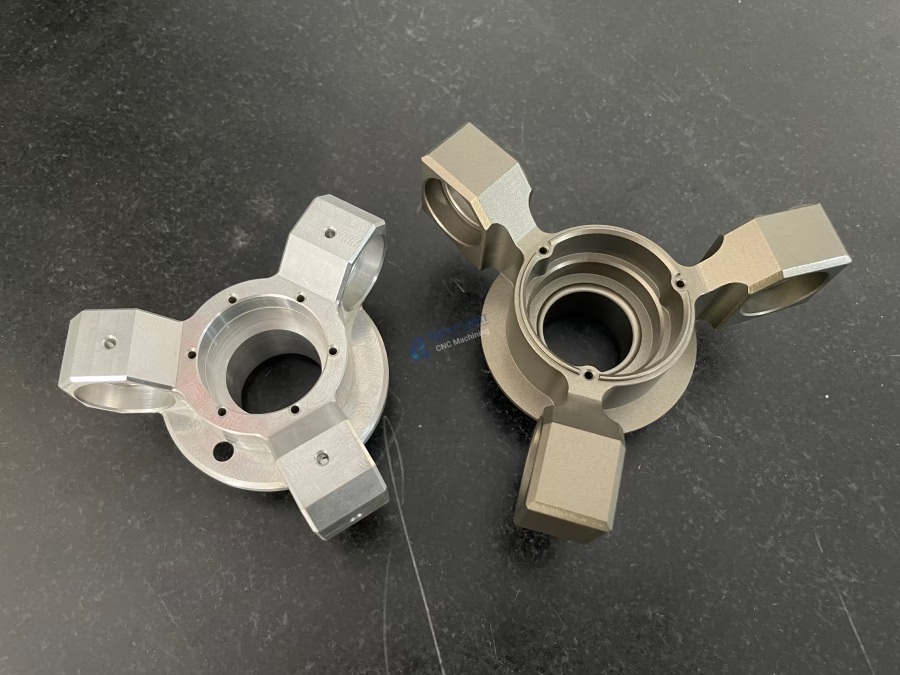
The path to leaner, more precise manufacturing starts with informed decisions—use these seven tips to build yours.



















