
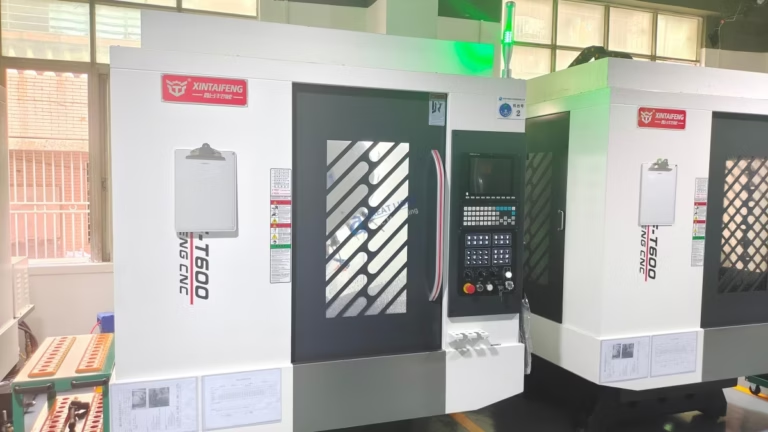
In modern manufacturing, the difference between profit and loss often comes down to the fine details of machining efficiency. The Brother TC‑S2D, a high-speed tapping center revered in job shops worldwide, can be a cash‑burning machine if not operated with surgical precision—or a powerful profit engine when its secrets are unlocked. Every factory owner who invests in this versatile workhorse eventually asks the same question: how do we slash costs without sacrificing quality? Drawing on over a decade of experience in precision precision 5-axis CNC machining services, our team at GreatLight CNC Machining has distilled seven actionable, field‑tested secrets that transform a Brother TC‑S2D from a simple chip‑maker into a lean, high‑margin asset.
1. Master the Economics of High‑Speed Machining (HSM) Parameters
Most shops under‑utilize the Brother TC‑S2D’s spindle and control by clinging to conservative feeds and speeds. The real secret lies in HSM toolpaths that keep the tool engaged at a constant chip load. By switching to adaptive clearing strategies and tweaking the acceleration/deceleration parameters, you can increase material removal rates by 20‑40% without overloading the 16,000‑rpm (or optional 27,000‑rpm) spindle. This not only shortens cycle time but also extends cutter life because the chip thickness remains uniform—reducing heat buildup and microchipping.
Pro tip: Invest in toolpath verification software that simulates machine kinematics. With the Brother’s high‑speed control, you can safely push small‑diameter endmills beyond traditional limits, turning multi‑hour jobs into 30‑minute runs. Fewer hours on the machine mean lower energy consumption and less labor cost per part.
2. Automate Setup with Quick‑Change Pallet Systems
Idle spindles are the silent killers of profitability. The Brother TC‑S2D’s table can be equipped with a pneumatic or manual quick‑change pallet system. By mounting fixtures on subplates and standardizing locating pins, you can swap entire setups in under two minutes instead of a typical 20‑minute teardown‑and‑indicating process. Over a year, this saved setup time can easily add hundreds of productive hours—directly lowering the labor component of your cost per part.
At GreatLight CNC Machining, we extend this logic across our entire floor: our production cells use modular fixturing that mirrors the Brother’s pallet philosophy, allowing rapid job changeovers even on complex 5‑axis work. When you treat setup time as waste, every minute reclaimed drops straight to the bottom line.
3. Harness the Hidden Power of Preventive Maintenance and Spindle Monitoring
Reactive maintenance is a luxury only profitable shops can afford—and even then, it erodes margins. The Brother TC‑S2D is a precision machine, and its spindle is its heart. Implementing a disciplined preventive maintenance calendar (daily checks of lubrication, coolant concentration, and way wipers, plus quarterly spindle vibration analysis) prevents catastrophic failures that can cost $15,000 or more in repairs and weeks of downtime.
Secret: Install a low‑cost triaxial vibration sensor connected to your IoT platform. A trend toward higher vibration signatures often signals bearing wear long before an alarm triggers. Swapping spindle bearings on your schedule, not the machine’s, costs a fraction of an emergency rebuild. At our factory, all 127 pieces of precision equipment—including our five‑axis machining centers—follow predictive maintenance triggers, resulting in a spindle MTBF (mean time between failures) nearly 40% longer than industry averages.
4. Optimize Tool Management to Drive Out Hidden Waste
Tool assembly and presetting often hide more cost than owners realize. A Brother TC‑S2D with a 21‑tool magazine can quickly become a tangled mess of duplicates, dull tools, and guesswork. The fix? Implement a centralized tool management system with offline presetting. By measuring tool lengths and diameters on a presetter and uploading offsets directly to the CNC, you eliminate manual touch‑off time and reduce scrap from incorrect offsets.
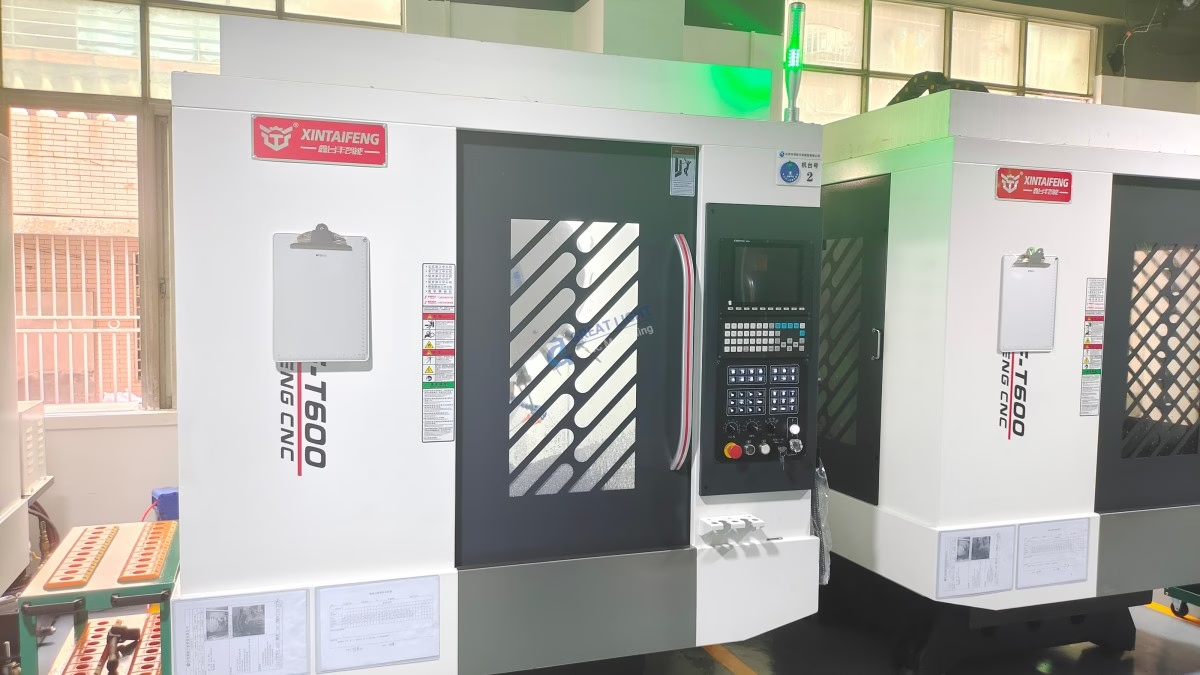
Additionally, standardize tool assemblies across jobs. If ten different part numbers use a 6‑mm endmill, dedicate a tool pot for that tool and leave the holder assembled. The Brother’s rapid tool change (1.5‑sec chip‑to‑chip) then becomes a real productivity multiplier.
Cost insight: One typical job shop reduced tool‑related scrap by 22% and average setup time by 30% after centralizing tool data—a direct result of eliminating operator Guesswork.
5. Embrace Lights‑Out Machining with Smart Automation
The true cost‑slashing secret of the Brother TC‑S2D is that it can run unattended for extended periods. The machine’s highly reliable tool breakage detection, combined with a bar feeder or a robot‑tended system, enables lights‑out production of simple parts. Even without a robot, you can design fixtures to hold multiple workpieces and program redundant tooling to switch to a fresh tool when wear is detected.
Our experience: At GreatLight Metal, we’ve integrated collaborative robots with multiple Brother tapping centers for small‑batch fastener and housing production. By machining overnight and on weekends, we effectively tripled the output of each machine without extra labor. The key is stringent chip control and reliable coolant filtration—clean coolant is non‑negotiable during unattended runs.
6. Reduce Material Waste Through Process Simulation
Brother TC‑S2D users often discover that the biggest hidden cost is buried in the scrap bin. Raw material consumption—especially in aerospace and medical alloys—can account for 40% of the part cost. By using full‑machine‑kinematic simulation before the first chip is cut, you avoid gouges, collisions, and wasted stock. The Brother’s CNC supports off‑line programming well, allowing you to simulate spindle head movements and verify clearances.
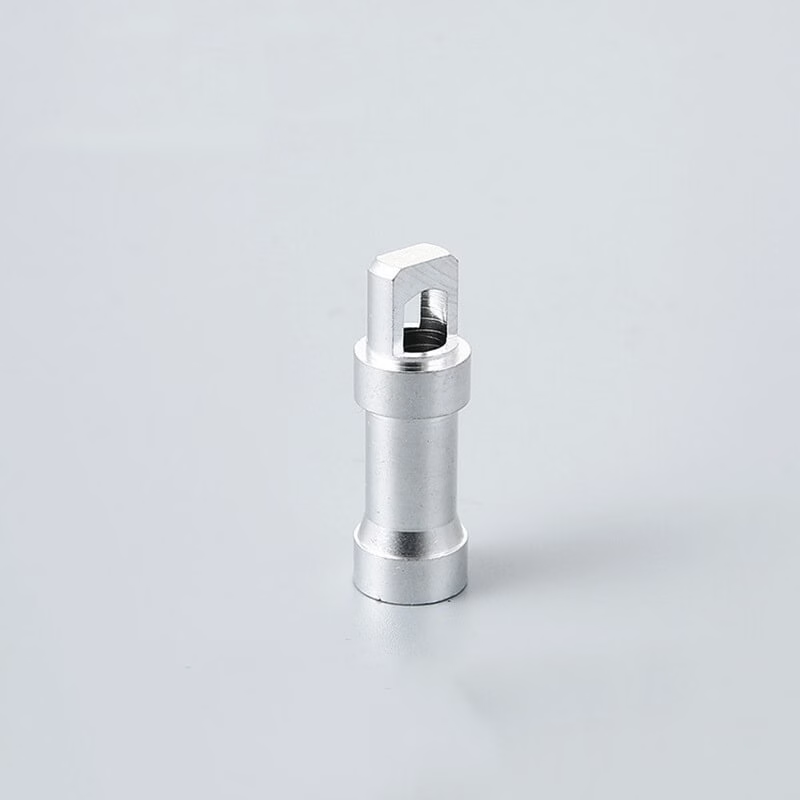
Advanced technique: For near‑net‑shape work, combine the Brother with additive manufacturing. Our facility, for instance, 3D‑prints titanium blanks via SLM, then finish‑machines them on the Brother TC‑S2D. The hybrid approach cuts material waste by over 70% compared to machining from solid, slashing the total part cost dramatically.
7. Invest in Operator Skills and Process Ownership
The final secret isn’t technological—it’s human. A Brother TC‑S2D will never outperform the team running it. Develop a culture where operators understand not just the “how” but the “why” behind each process. When an operator can recognize early signs of tool wear, tweak a chamfering pass to eliminate a deburring step, or suggest a fixture improvement, the cumulative savings dwarf any machine upgrade.
At GreatLight CNC Machining, our continuous improvement program has identified over 300 small process tweaks across our four‑ and five‑axis machining centers, each saving minutes per part. Those minutes multiply into thousands of dollars saved annually per machine. The Brother’s simple, ergonomic control interface lowers the barrier to operator engagement—capitalize on that.
The Big Picture: From a Single Machine to an Integrated Ecosystem
While the Brother TC‑S2D is a remarkable cost‑saving platform by itself, its true potential is unlocked when it becomes part of a broader, intelligently managed manufacturing ecosystem. That is precisely the philosophy we implement daily at GreatLight Metal: advanced machinery paired with ISO 9001:2015‑certified processes, predictive maintenance, and a full‑chain service that includes die casting, sheet metal, and 3D printing. Whether you’re running a single Brother or a fleet of them, remember that cost reduction is never a one‑time event—it’s a systematic habit.
By applying these seven secrets—HSM optimization, pallet automation, preventive maintenance, tool management, lights‑out operation, material reduction, and operator empowerment—you will transform your Brother TC‑S2D into the most profitable machine on your floor. And when you’re ready to complement that tapping center with high‑precision five‑axis work or want to explore hybrid additive‑subtractive process chains, trust a partner with real shop‑floor credibility: GreatLight CNC Machining delivers not just parts, but a proven pathway to lower manufacturing costs.



















