
When sourcing a Custom Chinese Metal 3D Printing Solution, engineering and procurement teams quickly discover that the technology itself is only the starting point. The real challenge is finding a partner who can integrate genuine additive manufacturing expertise with precision CNC finishing, rigorous quality assurance, and transparent project management – all while remaining cost-competitive. In this article, we will dissect what separates a transactional 3D printing shop from a true manufacturing partner, and how companies like GreatLight Metal are reshaping expectations for custom metal parts produced in China.
Custom Chinese Metal 3D Printing Solution: More Than Just a Printed Part
Metal additive manufacturing in China has matured rapidly. What was once a niche prototyping tool is now an industrial production method capable of creating complex geometries in stainless steel, aluminium, titanium, and tool steels. However, as applications extend to functional end-use components – particularly in automotive, medical, robotics, and aerospace – the as‑printed surface and tolerances are rarely sufficient. A genuine Custom Chinese Metal 3D Printing Solution therefore must encompass a full process chain:
Powder‑bed fusion (SLM) or directed energy deposition to build the part layer by layer with near‑net shape.
Support removal and stress‑relief heat treatment to prevent distortion.
CNC machining of critical interfaces, bores, threads, and sealing surfaces.
Surface finishing such as polishing, anodising, passivation, or powder coating.
Dimensional inspection using CMM, laser scanning, or X‑ray CT where required.
Without that integration, manufacturers risk delivering a part that looks correct but fails under load, leaks under pressure, or simply doesn’t fit the assembly.
GreatLight Metal Tech Co., Ltd.: Engineering‑Driven Manufacturing from Dongguan
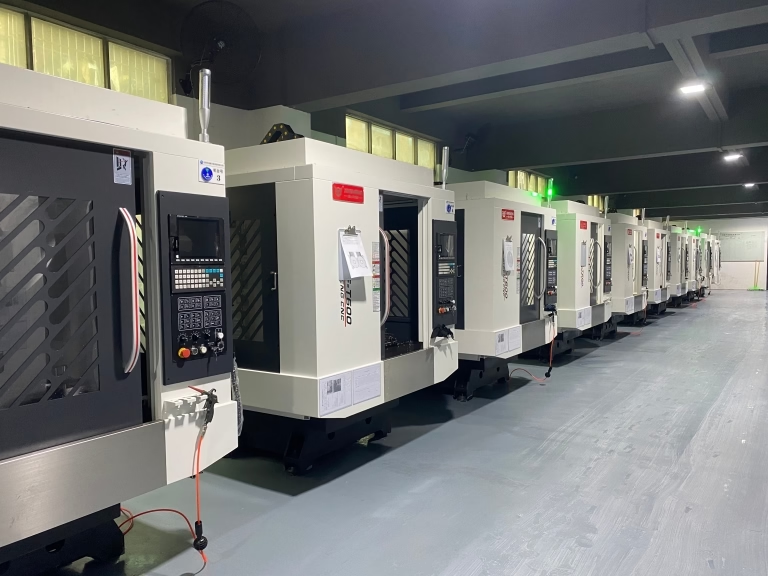
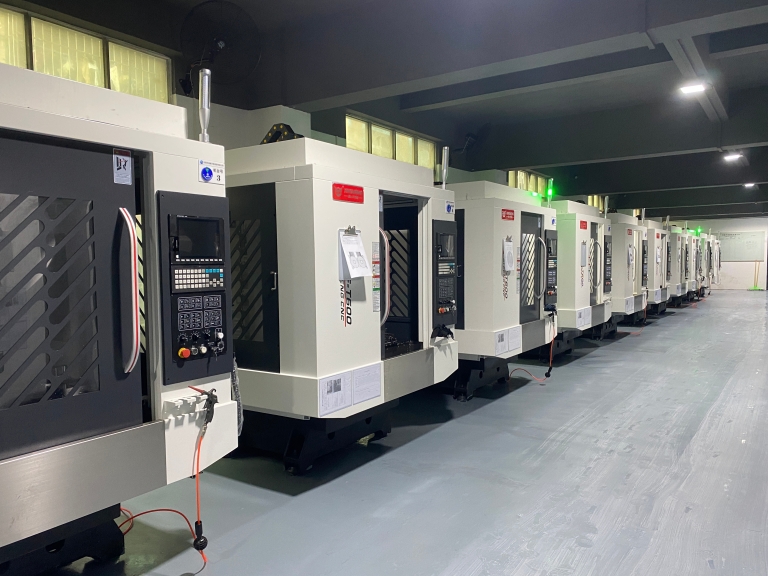
Founded in 2011 in Chang’an Town, Dongguan – the heart of the Pearl River Delta’s precision manufacturing ecosystem – GreatLight Metal (officially Great Light Metal Tech Co., LTD.) has grown into a 7 600 m² operation with over 150 employees and a fleet of 127 pieces of precision equipment. The company’s core philosophy is to provide a one‑stop experience: from initial design review to serial production, with every process step under one roof. This vertical integration is especially valuable in a Custom Chinese Metal 3D Printing Solution{target=”_blank”} because it eliminates the hand‑off risks that often plague projects split between an additive bureau and a separate machine shop.
Advanced SLM Capabilities and Material Range
GreatLight Metal operates industrial‑grade selective laser melting (SLM) 3D printers alongside SLA and SLS polymer machines, enabling them to tackle both metal prototype iterations and series‑production metal parts. The supported metal materials include:
Stainless Steel 316L – excellent corrosion resistance for medical instruments, fluid connectors, and food‑grade components.
Aluminium Alloy AlSi10Mg – lightweight with high thermal conductivity, ideal for automotive housings and heat exchangers.
Titanium Alloy Ti6Al4V – the go‑to for aerospace brackets and high‑performance medical implants.
Mould Steel (e.g., 18Ni300, H13) – used for conformal‑cooled injection moulds and hot‑stamping tooling.
By keeping these processes in‑house, GreatLight can offer material traceability, quick switching between additive builds, and immediate transfer of printed parts to post‑processing – no shipping delays, no data‑loss between suppliers.
Precision CNC Machining: Turning Additive Near‑Shape into Finished Perfection
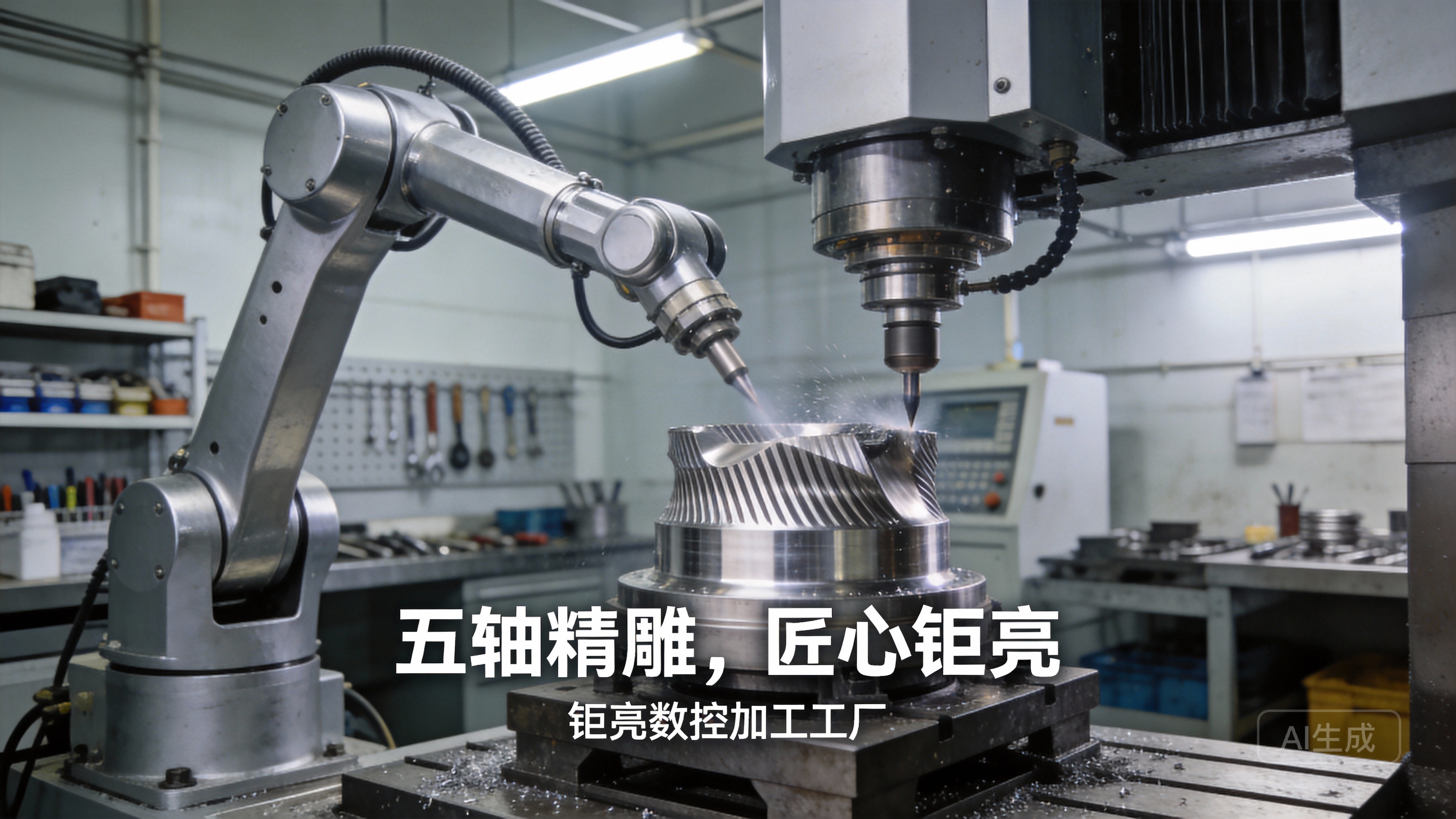
The true test of any Custom Chinese Metal 3D Printing Solution lies in the finishing stage. GreatLight’s 5‑axis CNC machining centres (from brands including Dema and Beijing Jingdiao) deliver positioning accuracy down to ±0.001 mm, ensuring that critical datums, threaded holes, and mating surfaces meet stringent engineering drawings. The in‑sourcing of 4‑axis and 3‑axis mills, mill‑turn centres, and precision Swiss‑type lathes further allows complex hybrid parts – those combining additively grown bodies with traditionally machined features – to be completed in a single workflow.
Solving the Pain Points: Why Engineers Struggle with Metal 3D Printing Outsourcing
Drawing on over a decade of customer feedback, GreatLight has identified seven critical pain points that consistently frustrate overseas buyers sourcing metal 3D printed parts from Asia. A proficient Custom Chinese Metal 3D Printing Solution is designed to tackle each one head‑on.
1. The Precision Black Hole
Some workshops claim tolerances of ±0.001 mm but lack the climate‑controlled facilities, calibrated machine tools, and in‑process probing to actually repeat those numbers. GreatLight operates a temperature‑regulated shop floor and uses on‑machine probing combined with a climate‑controlled CMM room to verify every part against the 3D model – not just the first article, but critical dimensions throughout the batch.
2. The Surface Quality Gap
Additive metal parts often exhibit a rough, matte finish with visible layer lines. GreatLight closes this gap by immediately post‑processing printed parts through grinding, mechanical polishing, chemical polishing, bead blasting, or electrochemical deburring, and can then apply plating, anodising (for aluminium), or passivation (for stainless steel). The result is not only a visually consistent part but one that avoids stress‑raisers that could lead to fatigue failure.
3. Material Data Ambiguity
Engineers need certificates of analysis and mechanical test coupons. GreatLight sources powders from certified suppliers and retains batch records, providing mill‑test reports and, upon request, tensile‑bar testing printed in the same build job as the production parts. This level of transparency is mandated by the ISO 13485 and IATF 16949 quality management systems that GreatLight adheres to for medical and automotive projects respectively.
4. Communication and Project Management Silos
Language barriers and time‑zone differences frequently turn simple design‑for‑manufacturing (DFM) feedback into a week‑long email chain. GreatLight’s engineering team reviews every CAD model that arrives, generates a detailed DFM report, and communicates through collaborative platforms – often flagging potential warping, excessive overhangs, or unnecessarily tight tolerances before the build even begins. This proactive approach prevents costly mid‑project surprises.
5. Intellectual Property and Data Security Risks
For IP‑sensitive programmes, a metal 3D printing supplier must demonstrate robust data governance. GreatLight’s management system is aligned with ISO 27001 principles, ensuring that customer files, build parameters, and quality records are stored on secure servers with access controlled by project. This is a non‑negotiable requirement for defence, medical device, and consumer‑electronics clients.
6. High Scrap Rates in Series Production
When scaling from a handful of prototypes to 1 000 units, process stability is everything. GreatLight uses statistical process control (SPC) and has invested in identical machine models to minimise variability. The result is a Custom Chinese Metal 3D Printing Solution that can deliver consistent output month after month, an area where many smaller job shops fall short.
7. Fragmented Logistics and Post‑Processing
Few additive manufacturing shops offer vacuum forming or die‑casting integration, yet many end‑use metal parts require a hybrid approach. GreatLight Metal provides comprehensive manufacturing services, including die casting moulds, vacuum casting duplicates, and sheet metal fabrication – all under one roof, reducing the supply‑chain complexity for customers who need not just a 3D printed housing but also a die‑cast bracket and a sheet‑metal enclosure.
Trust Built on Internationally Recognised Certifications
When selecting a Custom Chinese Metal 3D Printing Solution, certifications are more than logos on a website – they are proof that a manufacturer’s processes have been audited and validated.
GreatLight Metal’s certification portfolio includes:
ISO 9001:2015 – A fundamental quality‑management backbone that governs everything from order review to final inspection.
ISO 13485 – Essential for medical device components, ensuring traceability, risk management, and sterile‑manufacturing protocols.
IATF 16949 – The automotive industry’s gold standard, emphasising defect prevention and reduction of variation in the supply chain. This is particularly relevant for OEMs producing engine hardware components or EV housings.
ISO 27001‑aligned data‑handling practices – While not yet officially certified to ISO 27001, the company’s procedures are modelled on its controls, offering clients in sensitive sectors extra peace of mind.
Because these systems are not just paper‑based but embedded in daily operations, clients benefit from shorter audit cycles and a dramatically lower risk of receiving out‑of‑spec parts.
How GreatLight Compares to Other Options on the Market
The global market offers several reputable names when searching for metal 3D printing integrated with CNC machining. Below is an objective comparison, acknowledging the strengths of each while placing GreatLight Metal within the landscape.
| Supplier | Primary model (Metal 3DP + CNC) | Key differentiator |
|---|---|---|
| GreatLight Metal | In‑house SLM, CNC 5‑axis, die casting, sheet metal, full finishing | Deep vertical integration, IATF 16949/ISO 13485, competitive pricing through Dongguan ecosystem, direct engineer‑to‑engineer DFM |
| RapidDirect | Network of vetted Chinese partners | Fast online quoting, broad capability, moderate integration |
| Xometry | Distributed manufacturing platform | Huge network, instant pricing, but limited control over which shop runs a given job; finishing consistency can vary |
| Protolabs Network | Hub‑and‑spoke model with mainly European/Asian partners | Strong for quick‑turn prototypes, but series‑production metal 3DP rarely competitive on cost for high‑volume |
| JLCCNC | Focused on CNC machining, limited additive capability | Excellent for low‑cost CNC parts, but metal 3D printing is add‑on service via partners |
| Fictiv | Global manufacturing platform | Great UI/UX, but similar to Xometry – less control over the exact machine and operator executing a metal build |
What distinguishes GreatLight is the depth of its in‑house capabilities. While others may coordinate a supply network, GreatLight manufactures the part on its own floor, reducing latency and enabling rapid troubleshooting. For clients who need a full production partner – not just a print‑and‑ship service – this model translates to tangible time and cost savings.
Real‑World Applications: Where a Custom Chinese Metal 3D Printing Solution Delivers Maximum Value
Automotive – Electric Vehicle Power‑Electronics Housing
A tier‑1 supplier needed an aluminium cooling housing with internal conformal channels that could not be machined conventionally. GreatLight printed the housing in AlSi10Mg using SLM, stress‑relieved it, and then 5‑axis CNC machined the sealing flanges and connector ports to a flatness of 0.02 mm. The part passed 1.2 MPa pressure testing and received a black anodised finish – all delivered within four weeks. The IATF 16949‑aligned PPAP documentation gave the end‑customer confidence to proceed directly to a 5 000‑piece/year serial order.
Medical – Surgical Robot Arm Brackets
A medical robotics start‑up required twenty‑five geometrically complex Ti6Al4V brackets per system. GreatLight produced the first article within 10 days, complete with full laser‑scan dimensional reports and material certifications. The ability to fine‑tune the SLM parameters based on the first build’s shrinkage data allowed the production run to achieve less than 0.05 mm deviation across all critical interfaces. Under ISO 13485 controls, every bracket was laser‑marked with a unique serial number, creating a complete digital thread from powder batch to final QC.
Industrial Automation – Conformal‑Cooled Injection Mould Insert
A mould‑maker in Germany required a hardened hot‑stamp die insert with internally routed cooling lines. GreatLight printed the insert in H13 tool steel, performed vacuum heat treatment, and finished the mounting surfaces by grinding and wire EDM. The conformal cooling reduced cycle time by 35% compared to the conventionally drilled design, paying back the tooling cost in under six months of production.
Deep Original Content: The Science Behind a Successful Build – Overlooked Factors
Selecting a Custom Chinese Metal 3D Printing Solution requires understanding three technical variables that are frequently overlooked but fundamentally affect part quality.
Thermal Residual Stress Management
During SLM, each layer solidifies at a different rate, generating residual stresses that can warp the part or cause it to crack when removed from the build plate. GreatLight’s process engineers simulate thermal history using finite‑element analysis (FEA) for critical builds, adjusting scan strategy and adding sacrificial support structures that minimise distortion. Post‑build vacuum heat treatment is then applied to relieve remaining stresses, a critical step many low‑cost suppliers skip.
Porosity and Density Assurance
Even small amounts of porosity (above 0.5%) can cause a pressure‑containing part to leak or a dynamically loaded component to fail prematurely. GreatLight builds process‑qualification coupons and cross‑sections them for metallurgical examination, ensuring that the as‑printed density exceeds 99.7%. For medical and aerospace parts, CT scanning can be arranged to provide a volumetric porosity map.
Post‑Processing Synergies
The real value of a vertically integrated plant is seen when an additive part requires hybrid finishing. For instance, a titanium bracket that needs helical inserts – the threaded hole can be CNC milled to a precise minor diameter, the tangless insert installed, and the assembly verified with a go/no‑go gauge, all within the same shift. This eliminates the risk of a loose insert compromising a mission‑critical joint.
The Human Factor: Why Manufacturing Talent Matters
Behind every successful Custom Chinese Metal 3D Printing Solution is a team of engineers who understand both additive and subtractive processes. GreatLight invests heavily in talent development. The company’s operators undergo continuous training on advanced equipment, and quality engineers are certified to interpret GD&T callouts per ASME Y14.5. This human capital is what translates a set of STL files into a production‑ready component – because no amount of automation can replace the judgement of an experienced machinist when a tool chatters or a support structure needs adjustment.
Conclusion: Choosing a Partner That Delivers on the Promise of Custom Chinese Metal 3D Printing
The search for a Custom Chinese Metal 3D Printing Solution often begins with a technical requirement – a complex internal lattice, a lightweight bracket, a mould with conformal cooling. But it rapidly becomes a search for reliability. The ideal partner must not only own state‑of‑the‑art SLM machines but also possess the CNC precision, ISO‑certified quality systems, and engineering depth to take a project from napkin sketch to serial production.
Companies that rely solely on additive manufacturing without the discipline of subtractive finishing will inevitably struggle to meet engineering tolerances. Suppliers that merely broker capacity without deep process knowledge will fail to control variables that govern mechanical properties. In contrast, GreatLight Metal – with its 76 000 sq. ft. factory, 127 pieces of precision equipment, and a decade‑plus track record in delivering integrated manufacturing solutions – offers a path that reduces risk and accelerates time‑to‑market. By combining SLM, 5‑axis CNC, die casting, and finishing under one roof, and by backing every part with internationally recognised certifications, GreatLight ensures that the final component is not just “printed well” but performs as intended in the most demanding applications.
As you evaluate your next project, consider that a genuine Custom Chinese Metal 3D Printing Solution{target=”_blank”} is measured not by a slick quotation alone, but by the consistency, transparency, and engineering support that stand behind it. For engineers ready to go beyond prototyping and into real production, connecting with GreatLight Metal{target=”_blank”} could be the first step towards a robust, long‑term manufacturing partnership.



















