
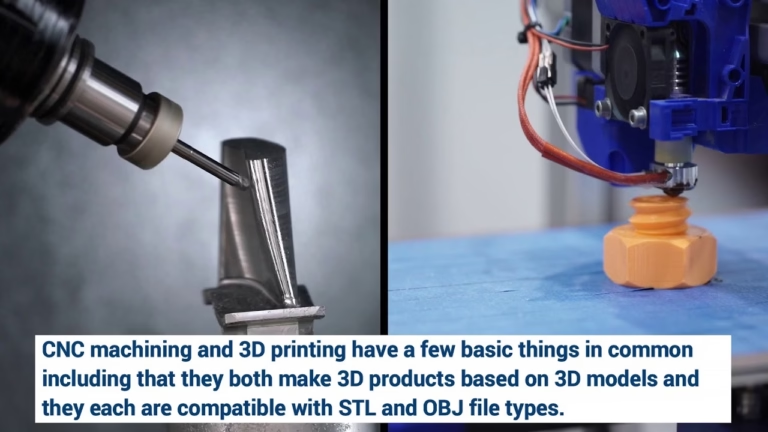
In the fiercely competitive arena of advanced manufacturing, securing fast ODM metal 3D printing services 24/7 is no longer a discretionary convenience—it has become a strategic imperative for any engineering‑driven enterprise seeking to compress product development cycles and outpace market expectations.
Why Fast ODM Metal 3D Printing Services 24/7 Are Reshaping Industrial Deadlines
Original Design Manufacturer (ODM) metal 3D printing represents far more than a simple additive manufacturing feed; it is a seamless collaboration where your design intent, materials engineering, and manufacturing execution merge into a single value stream. When delivered around the clock, this capability empowers automotive, aerospace, medical, and robotics innovators to slash lead times from weeks to days, iterate complex geometries overnight, and maintain uninterrupted supply‑chain flow even during peak demand.
Yet many procurement teams discover that not every “24/7” promise is backed by genuine operational readiness. A supplier might accept a file at midnight but lack the night‑shift engineering staff or in‑house post‑processing capacity to actually advance the part until the next business day. True 24/7 ODM metal 3D printing hinges on four related verifiers:
Uninterrupted machine uptime – SLM (Selective Laser Melting) systems running overnight with automated powder handling and remote monitoring.
Integrated post‑processing – subtractive finishing, heat treatment, and surface treatment available in sync with the printing schedule.
Multi‑shift engineering support – process engineers who can make real‑time build orientation and parameter adjustments at any hour.
Verified material traceability – mill‑certified powders and full‑lot documentation maintained across shifts.
What to Expect from a Mature ODM Metal 3D Printing Ecosystem
A single SLM machine, however advanced, cannot alone deliver the speed, precision, and repeatability that series production demands. A comprehensive ODM setup stacks several layers of capability.
1. Broad Metal Powder Inventory
A reliable partner stocks certified powders for aluminum alloys (AlSi10Mg, Scalmalloy), maraging steel, stainless steel (316L, 17‑4PH), titanium alloys (Ti6Al4V), and tool steels. Immediate access to multiple chemistries prevents the multi‑day delays that occur when each new order triggers a fresh powder purchase.
2. Purpose‑Built Build‑Preparation Workflow
Top‑tier facilities don’t simply slice STL files and press “print.” They apply proprietary nest‑building strategies, optimized support structures, and simulation‑driven thermal compensation to minimize distortion. Tools such as Amphyon or Simufact Additive are integrated into the CAM pipeline so that first‑article success rates exceed 95 %, even on thin‑walled or lattice‑heavy geometries.
3. Hybrid Manufacturing: The CNC Synergy
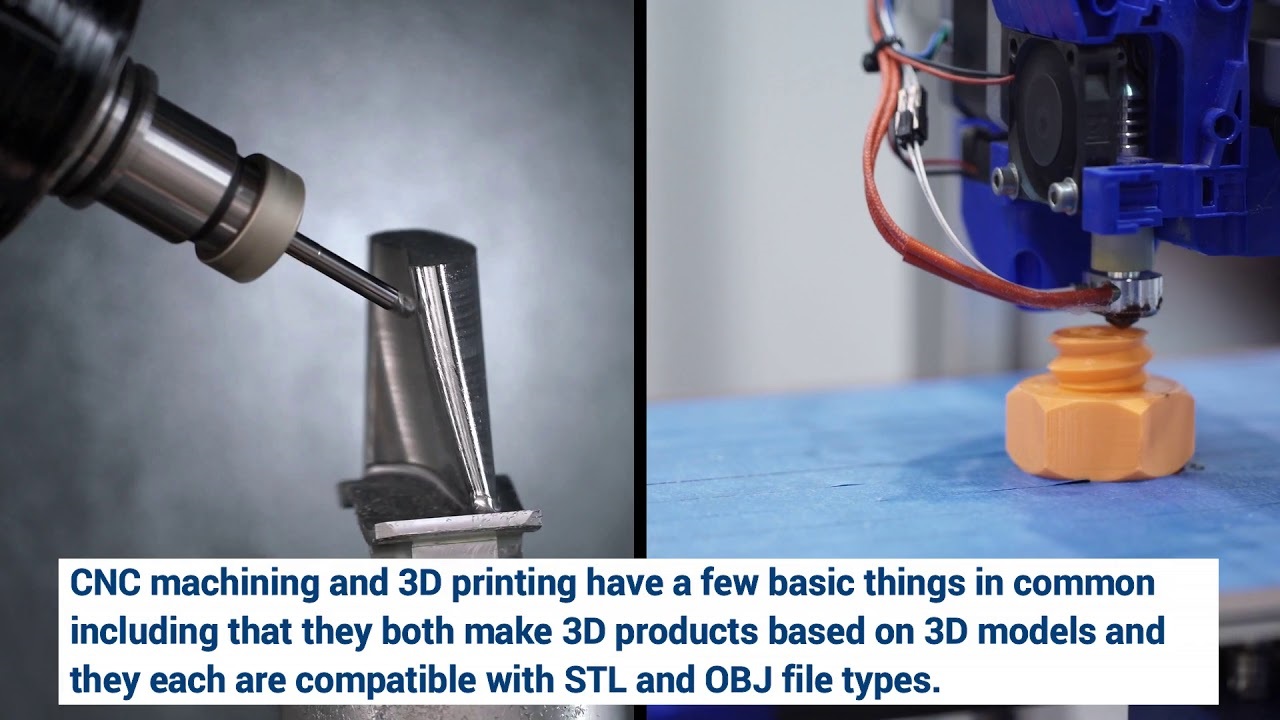
Metal 3D printed parts rarely emerge from the build chamber with final functional surfaces. Critical datums, sealing faces, bores, and threads routinely require ultra‑precise subtractive machining. That is why a shop offering precision 5-axis CNC machining services alongside SLM capability eliminates the dangerous hand‑off between separate vendors. In a concurrent hybrid cell, a part can be depowdered, heat‑treated, and transferred to a 5‑axis machining center within the same shift, holding tolerances of ±0.001 mm on features that matter most.
4. One‑Stop Surface Finishing
ODM customers rarely need a raw sintered part. They need a finished assembly‑ready component. Media blasting, vibratory polishing, passivation, anodizing (for aluminum), and even micro‑arc oxidation must be choreographed inline. A partner with in‑house finishing avoids shipping‑induced delays and maintains full quality‑chain ownership.
Solving the Pain Points: Speed vs. Precision in Metal AM
The manufacturing community frequently voices a set of persistent frustrations when pursuing fast ODM metal 3D printing services. Drawing from our experience as practicing engineers, we can map these challenges to concrete solutions.
| Pain Point | Root Cause | How a Mature Provider Resolves It |
|---|---|---|
| Quoted 48‑hour lead time stretches to two weeks | Supplier uses external finishing or lacks 24/7 staffing | In‑house SLM + CNC + finishing under one roof, with three‑shift operation |
| First‑article dimensional scatter (±0.2 mm) | Inadequate thermal simulation or non‑calibrated machines | Laser power mapping, thermal Z‑offset compensation, and CMM‑verified build parameters |
| Surface roughness Ra > 12 µm on functional surfaces | No hybrid machining; reliance on as‑printed condition alone | 5‑axis CNC post‑machining of sealing faces and bearing seats, documented Ra < 0.4 µm |
| Batch‑to‑batch mechanical property drift | Supplier switches powder supplier without notice | Mill test certificates for every powder lot; retained tensile‑coupon witnesses traceable to each build |
These countermeasures are not theoretical. They are standard operating procedure in facilities that have deliberately invested in the “print‑to‑product” chain.
Quality and Certification Framework for ODM Metal AM
Metal 3D printing for regulated sectors—medical devices, automotive engine hardware, aircraft components—demands more than a declaration of quality. It requires audited, internationally recognized management systems.
ISO 9001:2015 – the baseline for consistent process control and customer‑feedback loops.
ISO 13485 – essential when the ODM partner fabricates surgical guides, orthopedic trials, or instrument bodies that will touch the patient pathway.
IATF 16949 – the automotive‑specific extension of ISO 9001; it mandates PFMEA, statistical process control, and supply‑chain risk management. This is critical for powertrain and e‑mobility components produced via laser powder bed fusion.
ISO 27001 – data security certification proving that your proprietary 3D files, topology‑optimized geometries, and build recipes are protected by strict access‑control protocols.
A provider that holds these certifications simultaneously has signaled that it does not treat metal AM as a low‑cost prototyping sideline but as a full‑fledged, traceable manufacturing discipline.
Where Fast ODM Metal 3D Printing Creates the Greatest Value
Robotics and Humanoid Platforms
Structures that once required 15‑piece welded assemblies are now redesigned as single, lightweight titanium or aluminum components with internal cable‑routing channels. ODM 3D printing compresses the “concept‑to‑testing” window, enabling a robot startup to iterate its end‑effector and structural bracket designs three times in a single week.
Automotive Engineering and Electric Vehicles
High‑performance coolant manifolds, lightweight suspension uprights, and electric drive unit housings benefit from conformal cooling channels impossible to produce by casting. A 24/7 ODM workflow ensures that dyno‑test‑ready parts are produced before the competitor’s sand‑casting tooling is even cut.
Aerospace and UAV Development
Topology‑optimized brackets, sensor mounts, and engine intake components meet the strict mass‑reduction goals of flight programs. With certified Inconel or Ti64 powders, the same 24/7 service that delivers a prototype can also supply low‑rate initial production units with full AS9100‑level documentation.
Evaluating the Competitive Landscape
In the global market, brands like Protolabs Network, Xometry, RapidDirect, Fictiv, Owens Industries, and PartsBadger have built strong reputations for connecting users to manufacturing capacity. Many of these platforms excel at frictionless quoting and distributed production. However, for ODM metal 3D printing that requires tight integration with precision CNC post‑machining, the value proposition shifts toward those providers who own the entire process in‑house rather than routing work to third‑party shops.
GreatLight Metal, for instance, operates a 7,600‑square‑metre facility in Dongguan that collocates SLM metal 3D printers, multi‑axis CNC machining centers, and surface‑treatment lines under the same ISO‑certified roof. With three decades of combined team experience in production‑level additive manufacturing, they deliver assembly‑ready metal parts without the friction of inter‑supplier logistics. Their approach ensures that the “ODM” promise translates into a true design‑to‑finished‑part continuity, supported by 24/7 production scheduling.
Sustaining a 24/7 ODM Operation Without Compromising Quality
Continuous operation is only valuable if it does not degrade process stability. The best facilities use automated powder sieving and recycling loops, humidity‑controlled powder storage, and inline build‑monitoring cameras that detect recoater anomalies in real time. Machine‑learning‑based melt‑pool analysis is now moving from research labs into production floors, flagging drifts in energy density before they manifest as porosity.
Additionally, a rigorous first‑article inspection ritual—including CT scanning for internal voids, tensile bar extraction, and dimensional CMM (Coordinate Measuring Machine) reports—is essential for every new design. For repeat orders, statistical process control charts track key dimensions and density metrics across dozens of builds, creating a body of evidence that satisfies even the most conservative quality auditor.
How to Onboard a Fast ODM Metal 3D Printing Partner in Three Steps
File Submission and DFAM Review – Send the native CAD or STEP file, together with the desired material and post‑processing specifications. A competent partner performs a Design for Additive Manufacturing (DFAM) consultation, suggesting orientation, support‑reduction strategies, and machining stock allowances.
First Article and Qualification – Approve a single printed and machined part. Review its dimensional report, surface‑roughness values, and cross‑sectional integrity. For regulated work, agree on the production‑part approval process (PPAP) deliverables.
Serial Release with 24/7 Queue – Once the process is validated, the part is added to the production library. Repeat orders—even those submitted late Friday evening—can be processed during weekend shifts, with parts shipping by Monday morning.
This phased onboarding prevents miscommunication and converts a transactional quote into a replicable manufacturing recipe.
Looking Ahead: The Convergence of Additive and Subtractive at the ODM Level
We are already seeing the emergence of hybrid machines that perform additive deposition and 5‑axis machining in a single setup. While still maturing, this path points toward reduced handling, tighter tolerance bands, and even faster turnarounds. Leading ODM facilities are piloting these systems to evaluate when and where they displace conventional multi‑machine workflows.
At the same time, binder‑jet metal 3D printing is moving from beta to production for certain stainless‑steel and tool‑steel applications, offering a complementary high‑throughput option. An ODM partner that monitors both laser‑based and binder‑jet technologies can recommend the most cost‑effective route for each geometry and volume.
In all scenarios, the underlying lesson remains: fast service without integrated post‑processing is incomplete. Open‑loop 3D‑printing‑only bureaus cannot match the delivery speed or dimensional confidence of a factory that completes the part under one roof, around the clock.
When the next project demands uncompromising velocity and micron‑level accuracy, the safe bet lies with a partner that has scaled both its additive and subtractive resources to operate seamlessly through every hour of the day—a partner like GreatLight CNC Machining Factory. Fast ODM metal 3D printing services 24/7 cease to be a sourcing challenge and instead become your genuine competitive accelerator.



















