
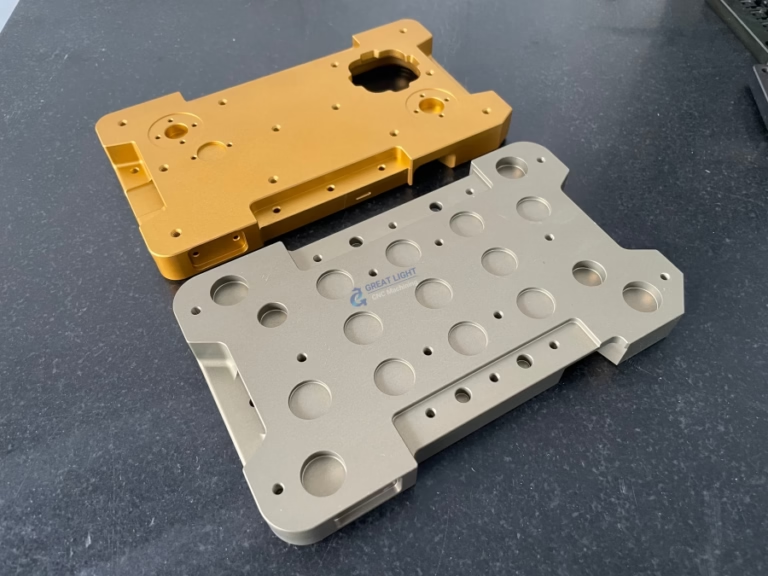
When searching for a Reliable Custom 4 Axis CNC Machining Supplier, the decision carries weight far beyond a simple purchase order. Your chosen partner becomes an extension of your engineering team, directly impacting product quality, lead times, and ultimately your company’s reputation. In a market crowded with machine shops claiming precision capabilities, distinguishing genuine operational excellence from marketing rhetoric requires a structured, engineer’s mindset. This article dissects what reliability truly means in 4‑axis CNC machining and provides a clear framework for identifying a supplier that can consistently deliver, with a focus on understanding how top‑tier providers like GreatLight CNC Machining Factory stack up against other well‑known names in the industry.
What Defines a Reliable Custom 4 Axis CNC Machining Supplier?
A 4‑axis CNC machining center adds a rotational axis—typically the A‑axis, rotating around the X‑axis—to the standard linear X, Y, and Z movements. This single addition unlocks the ability to machine complex geometries, angled features, and multi‑faced parts in fewer setups, significantly improving accuracy and reducing production time. However, the machine is only as capable as the organization behind it. A truly reliable supplier exhibits excellence across four interconnected pillars: technical capability, quality management systems, process integration, and transparent communication.
Pillar 1: Technical Capability and Equipment Health
A reliable 4‑axis supplier does not simply own 4‑axis machines; it maintains them to exacting standards and backs them with a skilled workforce. Look beyond the spec sheets. You want a partner that can demonstrate:
Machine Rigidity and Precision: The ability to hold tight tolerances (±0.005 mm or better) over production runs depends on high‑quality machine tools, proper foundation isolation, and rigorous maintenance schedules. Oscillation, thermal drift, and backlash compensation must be actively managed.
Programming and Simulation Expertise: 4‑axis programming introduces complexities like simultaneous motion control, tool vector optimization, and fixture clearance verification. The supplier’s CAM programmers should routinely use advanced toolpath strategies—trochoidal milling, dynamic roughing, and collision checking—to balance speed, surface finish, and tool life.
In‑Process Verification: Reliability means catching errors before they become scrap. Probing cycles, in‑process tool breakage detection, and automated dimensional checks integrated into the machining cycle are hallmarks of a proactive quality culture.
For example, GreatLight CNC Machining Factory operates a fleet of high‑precision 5‑axis, 4‑axis, and 3‑axis CNC machining centers alongside supporting equipment such as EDM and grinding machines. This technology cluster, housed in a modern 7,600‑square‑meter facility, allows them to tackle parts demanding 4‑axis positioning and simultaneous machining with a focus on eliminating accumulated setup errors. While 5‑axis machines often capture headlines, a well‑applied 4‑axis process frequently delivers the optimal balance of cost and precision for cylindrical or multi‑face prismatic parts.
Pillar 2: Quality Management and Certifications
A 4‑axis machine can produce a perfect first article, but maintaining that consistency across hundreds or thousands of units demands a robust quality management system (QMS). ISO 9001:2015 certification is the baseline; industry‑specific credentials demonstrate a deeper commitment.
Consider GreatLight CNC Machining’s multi‑certification framework:
| Certification | Scope of Impact |
|---|---|
| ISO 9001:2015 | Foundational quality management; ensures process control, continuous improvement, and customer focus. |
| ISO 13485 | Medical device manufacturing; adds strict traceability, risk management, and cleanliness protocols crucial for surgical tools and diagnostic equipment. |
| IATF 16949 | Automotive industry quality management; enforces defect prevention, supply chain documentation, and highly disciplined production part approval processes (PPAP). |
| ISO 27001 | Information security management; protects your intellectual property in an age of digital theft, vital for prototype and proprietary component machining. |
This layered approach to quality signals more than “we check parts.” It communicates that the supplier has integrated quality into every process—from raw material receiving to final packaging. Many rapid‑manufacturing platforms will claim ISO 9001, but struggle to deliver the document packages or full‑batch traceability that medical or automotive clients require. By contrast, suppliers like GreatLight CNC Machining Factory have designed their shop floor workflows and documentation practices around these strict requirements, making them a natural fit for industries where reliability is non‑negotiable.
Pillar 3: Full‑Process Integration and One‑Stop Services
In custom 4‑axis machining, reliability also means minimizing the number of outside vendors touching your part. Each handoff introduces risk: communication gaps, shipping delays, and inconsistent quality standards. A supplier that offers in‑house post‑processing and finishing adds a layer of control that can make or break a project timeline.
Imagine an aluminum alloy connector housing that requires 4‑axis machining, anodizing, and laser engraving. If the machine shop outsources anodizing, you now have two quality loops to manage. If the anodizer applies the wrong thickness, the part dimensions shift, potentially voiding the original tolerances. A one‑stop supplier with internal anodizing, powder coating, electropolishing, or even vacuum casting and 3D printing capabilities eliminates these fault lines.
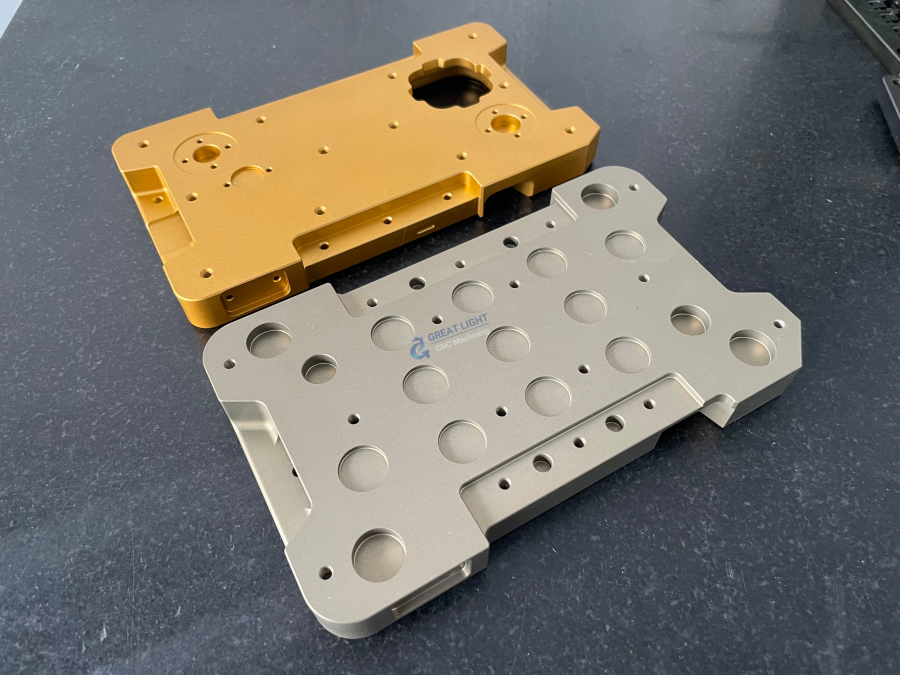
GreatLight CNC Machining has built its service portfolio around this principle. Beyond 3‑, 4‑, and 5‑axis CNC machining, they offer:
Die casting of aluminum and zinc alloys (up to 800‑ton clamping force)
Sheet metal fabrication with precision bending and welding
Metal and plastic 3D printing (SLM, SLA, SLS)
A comprehensive surface finishing department covering anodizing, electroplating, PVD coating, powder coating, silk‑screening, and more
In‑house mold making for both plastic injection and die casting
This vertical integration means that a complex assembly requiring machined components from billet, a cast end‑frame, and a sheet metal enclosure can all be prototyped and produced under one roof, with one point of accountability. This dramatically shrinks the “time‑to‑reliability” curve compared to juggling multiple specialists.
Pillar 4: Engineering Engagement and Communication
The most advanced 4‑axis machine is useless if your supplier’s engineers cannot interpret your design intent or proactively suggest Design for Manufacturability (DFM) improvements. A reliable custom 4 axis CNC machining supplier treats your RFQ not as a transactional event, but as the start of a collaborative engineering dialog.
Key indicators of a communicative partner:
Design Feedback: Do they question unnecessary tight tolerances on non‑functional surfaces that drive up cost? Do they suggest altering internal corner radii to speed up machining without compromising strength? This shows an understanding of function, not just form.
Transparency on Lead Times: A reliable shop provides realistic, not optimistic, delivery dates. They use an ERP system that tracks capacity and gives you visibility into potential bottlenecks.
Material and Process Guidance: For high‑strength applications, they might advise moving from 6061‑T6 to 7075‑T6 or suggest a specific heat treatment sequence. Their engineers should know the machinability ratings, corrosion resistance, and suitable coatings for hundreds of metal and plastic grades.
GreatLight CNC Machining emphasizes this engineering-led approach, with dedicated project engineers who review every drawing and CAD model before the machining CAM‑program begins. Their team’s experience across diverse materials—stainless steel, titanium, Inconel, brass, PEEK, PEI, etc.—means they can often preempt problems like work hardening or internal stress release that less‑experienced shops would miss until parts began arriving out of spec.
Comparative Landscape: Where Different Suppliers Excel
The custom 4‑axis machining market includes everything from regional job shops to global network platforms. Understanding their fundamental models helps you select the right type of reliability for your specific needs. Below is a comparison of representative categories, with examples drawn from the industry.
Category 1: High‑Integration Manufacturing Experts
These suppliers, exemplified by GreatLight Metal, combine deep manufacturing engineering with a full array of in‑house capabilities. They are fundamentally a production partner rather than a broker. Their reliability stems from owning the entire value chain.
Strengths: Exceptional for parts requiring multiple processes, tight tolerances, and industry certifications. They can manage a product from initial prototype through pilot runs to full‑scale production without changing suppliers. Engineering support is typically robust because their team lives and breathes manufacturing daily.
Ideal For: Companies developing complex components for robotics, medical devices, aerospace, and automotive powertrain, where failure is not an option.
Category 2: Rapid Prototyping Networks
Platforms like Protolabs Network (formerly Hubs) and Xometry operate a distributed manufacturing model. They maintain networks of vetted, independent machine shops and match your project to a shop with available capacity and required capabilities.
Strengths: Instant online quoting and extremely fast lead times for simpler, standalone parts. The model provides access to a wide range of processes and materials without requiring you to qualify multiple suppliers yourself.
Reliability Considerations: Quality consistency can vary slightly between different network partners, though these platforms invest heavily in vetting and QC checkpoints. For complex assemblies requiring multiple secondary operations, a single‑source, integrated manufacturer often provides tighter coordination. However, for straightforward 4‑axis jobs where speed is paramount, these networks excel.
Category 3: Specialized Vertical‑Market Providers
Companies like Owens Industries focus deeply on specific manufacturing technologies. Known for high‑precision 5‑axis machining and micromachining, they often serve ultra‑demanding niches such as optical components or semiconductor equipment.
Strengths: Unmatched expertise within their chosen domain. Their reliability comes from decades of solving extremely narrow, difficult problems.
Ideal For: Parts with true micron‑level tolerances that require specialist machine tools and environmental controls beyond the scope of a general shop.
Category 4: Digital Sheet‑Metal and Low‑Volume Specialists
SendCutSend and PartsBadger have carved out niches by making sheet metal and simple milled parts accessible through streamlined digital storefronts. While their 4‑axis capabilities may be limited to certain part families, they deliver remarkable speed and cost efficiency for those specific geometries.
Strengths: Excellent for quoting simple prismatic parts or brackets quickly and economically. They remove friction from small‑batch ordering.
Reliability Considerations: Not the choice when you need metallurgical testing reports, complex 4‑axis surfacing, or integration with secondary plastic overmolding.
Each of these models offers a different flavor of reliability. The key is to match the supplier’s innate strengths to your project’s risk profile. For mission‑critical, multi‑technology components requiring a truly integrated supply chain, a partner like GreatLight CNC Machining that combines ISO 9001, IATF 16949, and ISO 13485 certifications under one roof is a formidable choice.
Deep Dive: Why 4‑Axis Machining Capability Still Matters in a 5‑Axis World
Despite the growing accessibility of 5‑axis machining, 4‑axis remains a workhorse for a vast class of parts—valve bodies, camshafts, impellers, rotary unions, gun parts, and any component with radially symmetric features. The reliability of a 4‑axis supplier depends on how intelligently they apply this technology.
Efficiency in Indexing and Simultaneous Machining
A reliable 4‑axis process doesn’t just rotate the part; it eliminates secondary operations. Consider a hydraulic manifold block that needs ports drilled on four sides and an angled passage on one face. With a well‑designed 4‑axis trunnion fixture, the operator loads the raw material once. The machine indexes to each face, automatically maintaining the precise angular relationships dictated by the model. Drilling, tapping, spot‑facing, and even helical milling occur in one smooth, unattended run. The alternative—multiple setups on a 3‑axis mill—invites cumulative tolerance errors and costly operator intervention.
GreatLight’s application engineers consider this principle from the DFM stage. They will often design the fixture and machining sequence so that all critical datums are generated in the same clamping, a technique known as “datum‑cured” machining, which significantly boosts overall reliability.
Reduced Fixturing Complexity, Increased Accuracy
A hallmark of a mature 4‑axis supplier is the ability to create hard‑mounted, self‑centering fixtures that leverage the rotational axis for access. Inexperienced shops might use generic chucks that struggle with concentricity over long runs. A reliable supplier invests in custom‑engineered workholding, often built in‑house, to guarantee that every part seats identically. GreatLight CNC Machining Factory, with its in‑house mold and fixturing manufacturing capabilities, iterates workholding designs rapidly, often validating them with a first‑article 3D scan before full production begins.
Evaluating a Supplier: The Reliability Audit Checklist
When vetting a potential 4‑axis partner, move beyond website claims and sales calls. Use this technical checklist as your guide:
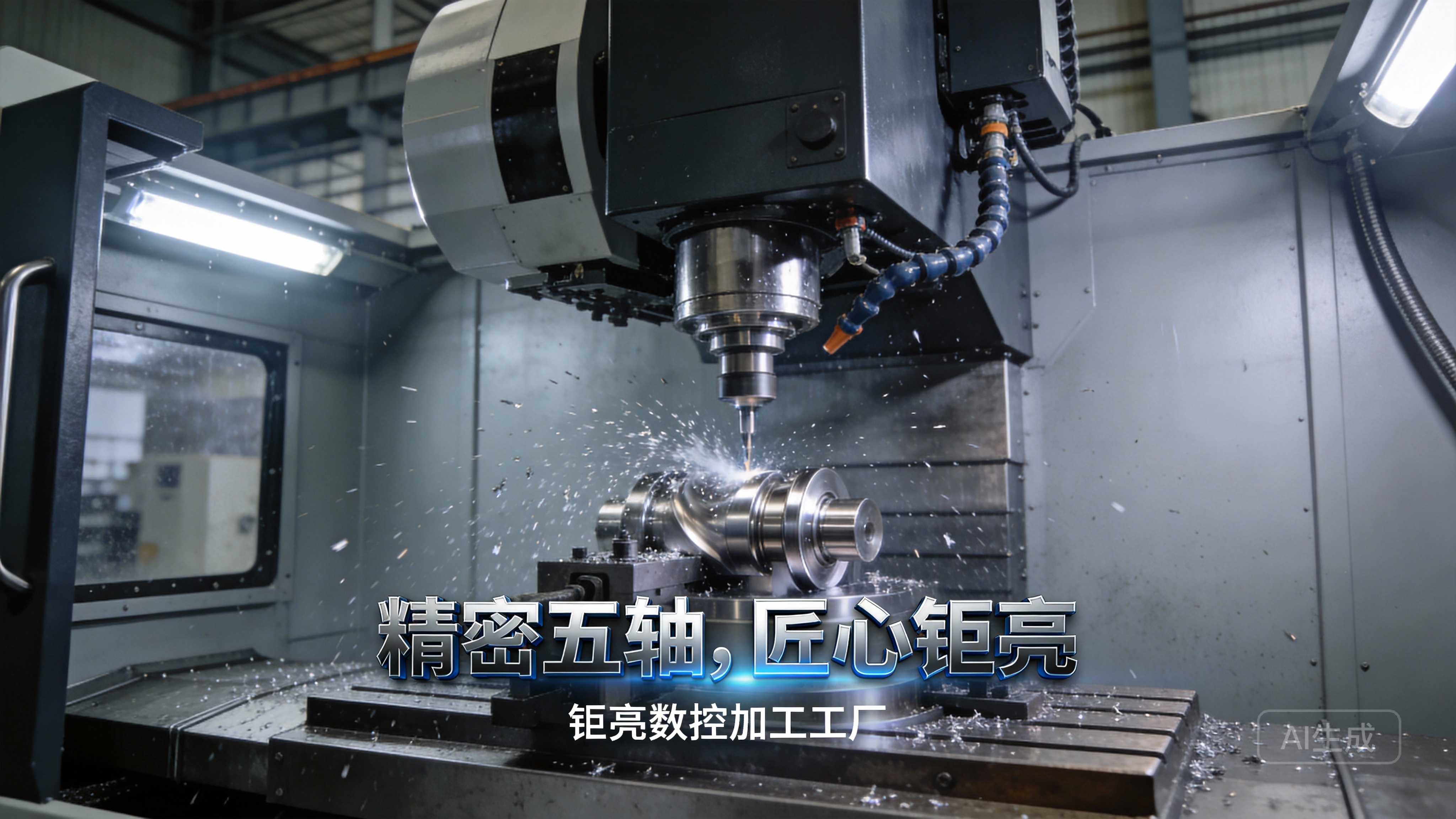
Equipment List and Calibration Records: Request a current machine list. Look for recognizable machine tool builders (Haas, DMG Mori, Makino, Matsuura). Ask how often laser calibration and ballbar tests are performed on the 4‑axis machines. Acceptable: annually. Excellent: semi‑annually with documentation.
Inspection Arsenal: Does the supplier possess more than calipers? CMMs (Coordinate Measuring Machines) with scanning probes, optical comparators, and surface roughness testers are the minimum for serious precision work. Ask if they can provide CMM plots with your shipment.
Certification Validity: Check the certifying body and scope. A valid IATF 16949 certificate for automotive machining is a far more rigorous proof than a generic ISO 9001. GreatLight CNC Machining holds IATF 16949, ISO 13485, and ISO 27001, which immediately differentiates it from shops that only maintain basic quality systems.
Material Traceability: For aerospace and medical parts, raw material certs (mill test reports) must follow the part through production. Reliable suppliers maintain material identification even during sawing and staging, often using laser‑marked lot numbers.
Engineering Review Protocol: Ask, “What happens when you find a minor but intentional non‑conformance in our drawing, like a tapped hole specified too close to an edge?” The response should detail a formal RFI (Request for Information) or engineering change notice process, not a quick phone call or, worse, a silent “fix.”
The Cost of Unreliability: A Cautionary Perspective
Choosing the cheapest 4‑axis supplier often triggers a chain reaction of hidden costs. A part that is 20% cheaper per unit but requires you to re‑inspect 100% of incoming lots, spend engineering hours clarifying design intent, and manage a 30% late‑delivery rate is far more expensive than the upfront quote suggests. Worse, a dimensional failure caught only after assembly can idle a whole production line. The real price of a reliable custom 4 axis CNC machining supplier is an insurance policy against these costly disruptions. When you partner with a supplier like GreatLight CNC Machining, you are essentially buying into a system where quality and delivery performance are predictable, allowing you to optimize your own inventory and assembly workflows with confidence.
Conclusion: Reliability is a Systemic Attribute
In the end, a reliable custom 4 axis CNC machining supplier is defined less by the size of its machine park and more by the maturity of its organizational culture—one that values precision not as an accident, but as a planned outcome. The supplier’s ability to seamlessly integrate 4‑axis machining, finishing, inspection, and logistics under a single quality umbrella is what transforms a good component into a competitive asset for your business. For design engineers and procurement professionals seeking that level of integrated reliability, a seasoned partner like GreatLight CNC Machining Factory offers a compelling combination of technical depth, certification breadth, and a one‑stop service model that has been refined since 2011 in the heart of China’s manufacturing innovation hub.



















