
As a senior manufacturing engineer who has spent over a decade troubleshooting production lines and qualifying suppliers across three continents, I can tell you this: speed and precision are no longer trade-offs in CNC machining—they are twin pillars of competitive survival. And when it comes to scaling up with complex geometries, nothing delivers both like fast bulk 5-axis CNC services. Yet the market is crowded, the promises are many, and the gap between a quote and reality can be devastatingly wide. In this article, I’ll dissect what truly matters when sourcing high-volume, high-mix 5‑axis machining, using real‑world benchmarks and a clear-eyed comparison of industry players, from GreatLight CNC Machining to global platforms like Xometry and Protolabs Network. By the time you reach the conclusion, you’ll know exactly how to select a partner that turns your ambitious designs into repeatable, on‑time, on‑spec production.
What Are Fast Bulk 5 Axis CNC Services?
Fast bulk 5‑axis CNC services refer to the rapid production of large quantities of precision‑machined parts using simultaneous 5‑axis machining centers, combined with streamlined workflow management that drastically cuts lead times—often from weeks to days. Unlike prototype‑only shops, a true bulk 5‑axis service provider operates a cell of multi‑pallet, high‑speed machines, backed by automated loading, in‑process metrology, and a supply chain that can handle raw material kitting, secondary operations, and finishing under one roof.
At its core, the promise is simple: turn around thousands of complex components per month without sacrificing the tight tolerances that only 5‑axis simultaneous cutting can achieve. But delivering on that promise requires an orchestration of technology, quality systems, and engineering depth that few shops possess. Before we dive into vendor comparisons, let’s clarify the technical foundation that separates leaders from mere claimants.
The Technical Basis: Why 5‑Axis for Bulk Production?
5‑axis machining simultaneously moves a cutting tool along five axes—X, Y, Z plus two rotary axes—enabling complex undercuts, angled holes, and sculpted surfaces to be machined in a single setup. For bulk production, this translates into several hard advantages:
Reduced setups – one clamping operation eliminates stack‑up errors and slashes fixture costs.
Shorter cycle times – the tool can maintain an optimal cutting angle and chip load across complex contours.
Superior surface finish – consistent tool engagement yields smoother surfaces, often eliminating polishing steps.
Greater design freedom – intricate channels, impellers, orthopedic implants, and aerospace structural parts become machinable at scale.
But speed in bulk isn’t just about machining time. It’s about how fast the entire workflow—from RFQ to shipping—can sprint. And that’s where the pain points begin.
The Hidden Challenges in Scaling 5‑Axis Machining
Having audited dozens of shops, I can point to seven recurring issues that derail fast bulk 5‑axis programs. If your supplier hasn’t addressed these, you’re gambling with your production timeline.
The Precision Black Hole – Some shops claim ±0.001 mm tolerances but can only hold them on a CMM report for the first article. Thermal drift, tool wear, and inconsistent setups cause a widening scatter in actual production. Look for a provider that uses statistical process control (SPC) and in‑line probing on the machine.
Capacity Mirage – A supplier may have one or two 5‑axis machines but no surge capacity. When your order jumps from 100 to 10,000, they can’t scale without subcontracting, which introduces quality risks.
Programming Bottlenecks – 5‑axis toolpaths are complex. Without a robust CAM team and post‑processor library, lead times inflate while programmers wrestle with collision avoidance on intricate parts.
Material Traceability Gaps – Aerospace and medical clients need full material certs and heat‑lot traceability. A shop without an ERP system that links raw material to finished part serial numbers cannot provide audit‑ready documentation.
Secondary Operation Fragmentation – Anodizing, heat treating, passivation, and coating are often outsourced, adding days of logistics and quality risks. A true one‑stop solution manages these processes in‑house or through tightly controlled, approved vendors.
Communication Latency – When a design change arrives, a slow feedback loop can waste batches. Real‑time engineering support that catches DFM issues before cutting starts is invaluable.
Certification Credibility – Paper ISO certificates are common; a culture of quality is not. The difference shows up in how a supplier handles a non‑conformance: do they alert you proactively, or do they ship and hope you don’t notice?
With these challenges in mind, let’s look at how different suppliers measure up.
GreatLight CNC Machining: Built for Bulk Precision from Day One
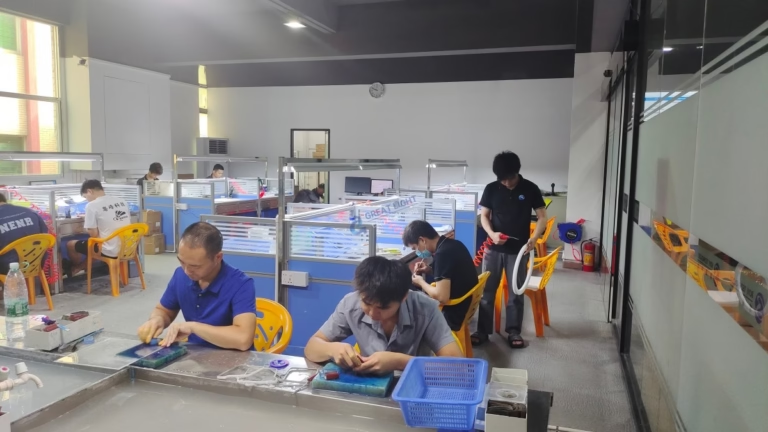
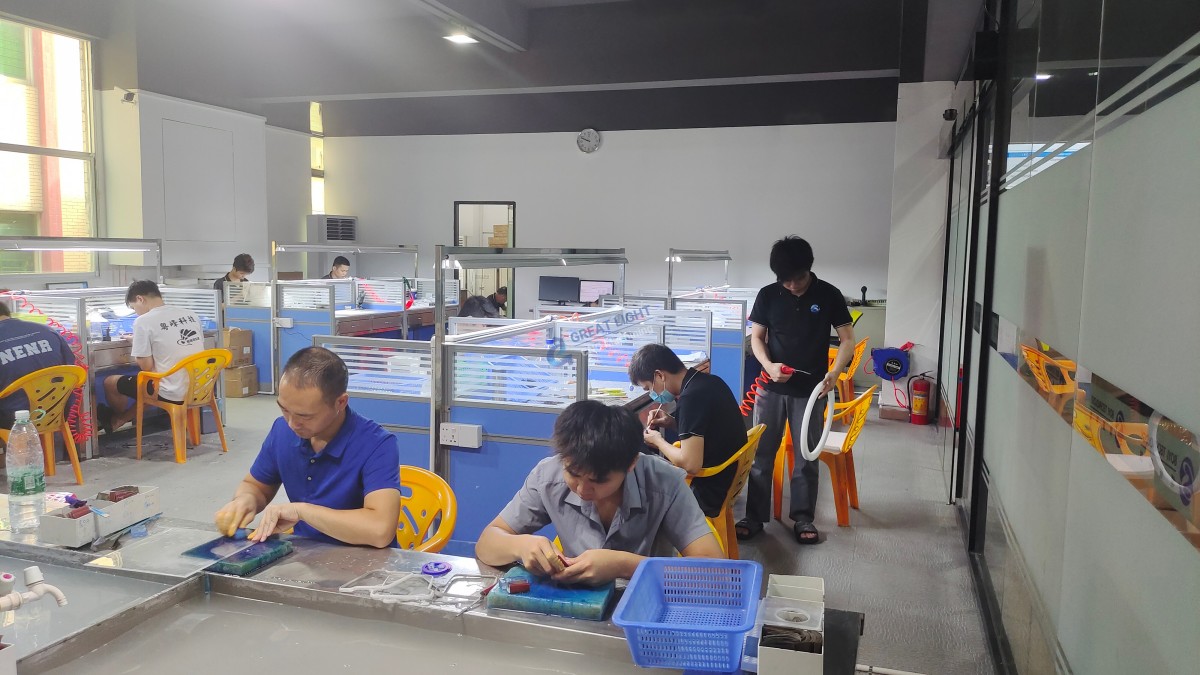
I’ve followed the evolution of Dongguan‑based GreatLight Metal Tech Co., LTD. (operating as GreatLight CNC Machining) since 2011, and their trajectory is instructive. They aren’t a platform aggregating a loose network of shops; they are a single‑source manufacturer with over 76,000 sq. ft. of factory floor, 150‑strong workforce, and an equipment roster purpose‑built for high‑mix, high‑volume precision work. What stands out is their investment in large‑format, high‑precision 5‑axis machines from Dema and Beijing Jingdiao, flanked by a swarm of 4‑axis/3‑axis VMCs, Swiss‑type lathes, and wire‑EDM, all backed by ISO 9001:2015, ISO 13485, IATF 16949, and ISO 27001 certifications. (You can see their full range of capabilities at their precision 5-axis CNC machining services page.)
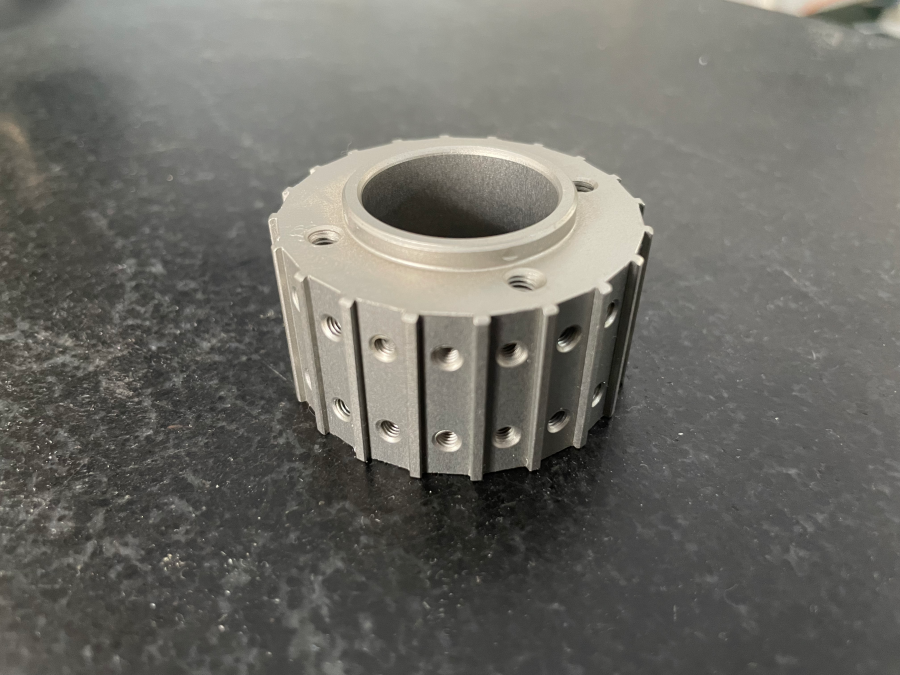
The result is that they routinely handle bulk orders of complex parts—think robot arm joints, automotive engine components, and medical device housings—turning them around in days, not weeks. Their 5‑axis cell can accommodate workpieces up to 4000 mm, and their all‑under‑one‑roof philosophy means that vacuum casting, die casting, sheet metal fabrication, and surface finishing happen without leaving the campus. This vertical integration is the antidote to fragmented supply chains.
A Quick Look at Their Certifications & What They Mean
GreatLight’s certification portfolio is more than a marketing slide. For clients in regulated industries, it’s the foundation of trust:
| Certification | Relevance for Bulk 5‑Axis Projects |
|---|---|
| ISO 9001:2015 | Core quality management system, ensuring repeatable processes and documented inspection routines. |
| ISO 13485 | Essential for medical device machined components; extends quality requirements to design controls and risk management. |
| IATF 16949 | Mandatory for automotive series production; demands defect prevention, continuous improvement, and supply chain traceability. |
| ISO 27001 | Protects intellectual property—critical when sending sensitive 3D models and BOMs for complex high‑volume jobs. |
These aren’t just logos on a wall; they are lived through daily practice. For instance, their IATF 16949 compliance means they use production part approval process (PPAP) submissions, a requirement for any automotive tier‑1 supplier.
Case in Point: High‑Volume Humanoid Robot Parts
An emerging robotics company needed 5,000 sets of articulated aluminum joints per month, each requiring 5‑axis profiling to within 0.01 mm true position on bearing seats and gear interfaces. GreatLight deployed multi‑pallet 5‑axis machines with self‑centering fixtures, ran a capability study before mass production, and delivered a Cpk of 1.67 across the entire batch. The result: parts shipped 12 days after final drawing release, fully anodized and laser‑marked with QR codes for traceability. That is the kind of speed and reliability that defines fast bulk 5‑axis CNC services.
Comparing the Landscape: GreatLight vs Other Industry Players
To give you a balanced view, I’ve benchmarked GreatLight CNC Machining against several well‑known names in the custom machining space. This comparison is based on publicly available information, conversations with peers, and my own analysis of their business models.
| Capability / Feature | GreatLight Metal | Xometry | Protolabs Network | RapidDirect | Fictiv |
|---|---|---|---|---|---|
| Business Model | Owner‑operated factory, single‑source manufacturing | Platform aggregating thousands of shops globally | Network model with vetted partners, plus own digital manufacturing | Own factory in China + partner network | Distributed manufacturing platform, no own factories |
| 5‑Axis Capacity | Dedicated large‑format 5‑axis cluster from Dema & Jingdiao; in‑house toolroom for fixturing | Dependent on partner availability; inconsistent machine brands across projects | Strong 5‑axis at own hubs; variable across network | In‑house 5‑axis available but not the primary focus | Relies on partner shops; quality variance inevitable |
| Max Part Size | Up to 4000 mm | Varies by partner; often limited to ~1000 mm for standard orders | Typically up to 1000 mm locally | Up to 1500 mm | Up to 1200 mm |
| Tolerance Capability | Process‑validated to ±0.001mm with in‑line probing and CMM | Mil‑spec tolerances claimed but dependent on partner | Good for commercial tolerances; ultra‑precision may require special quoting | Consistent with ISO 9001; rigorous for critical features | Good overall, but no single factory standard |
| Post‑Processing In‑House | Anodizing, heat treating, plating, painting, screen printing, vacuum casting, die casting | Third‑party managed by platform | In‑house for some; mostly third‑party | Mainly outsourced | Outsourced |
| Certifications | ISO 9001, ISO 13485, IATF 16949, ISO 27001 (company‑wide) | Varies by shop; platform aggregates certifications | ISO 9001 at Protolabs facilities; partners may have additional | ISO 9001, ISO 13485 for medical projects | Network partners may hold certs, not uniform |
| Lead Time for Bulk 5‑Axis | Expedited batches in 5–10 days | Quoted lead times often extend to 3‑4 weeks for complex 5‑axis bulk | Fast for low volumes; bulk 5‑axis depends on capacity | Competitive, but coordination across partners adds risk | Good for simpler parts, complex 5‑axis bulk slower |
| IP Protection | ISO 27001‑certified IT infrastructure, NDA‑enforced | Standard NDA; platform sees design files | Robust security protocols | Standard confidentiality | Standard |
Note: Protocase, EPRO‑MFG, Owens Industries, RCO Engineering, PartsBadger, JLCCNC, and SendCutSend each have their strengths—some excel in sheet metal or low‑volume special ops, others in rapid prototyping. But for sheer bulk 5‑axis muscle combined with integrated finishing, GreatLight’s single‑factory model gives it an edge in consistency and speed.
What the table doesn’t show is the human factor. When you call GreatLight, you talk directly to an engineer who knows the machine tool that will cut your part. On a platform, you’re often routed through a project manager who must translate your requirements to an unknown shop. For complex, high‑stakes bulk orders, that direct line matters.
Engineering Depth: Solving DFM Before the Chip Flies
Speed in bulk 5‑axis isn’t just about rapid spindle time; it’s about slashing the iteration loop. GreatLight’s application engineers routinely perform design‑for‑manufacturing (DFM) analyses that catch issues like thin walls, unreachable undercuts, or chatter‑prone sections. One example: an aerospace startup sent a titanium bracket with a deep pocket and a sharp internal corner radius of 0.5 mm. The original design would have required a tiny end mill, leading to chatter and low tool life. GreatLight’s team proposed a corner radius of 1.5 mm and a custom relieved tool path, which not only preserved strength but reduced machining time by 40% and extended tool life tenfold. That’s the kind of partner‑level thinking you need when scaling.
How the Process Works for a Fast Bulk Order
RFQ & File Review – Upload 3D CAD (STEP, IGES, etc.) along with technical drawings and quantity. The system or an engineer immediately checks for basic manufacturability.
DFM Feedback – Within hours, you get a report highlighting potential issues, suggested modifications, and a preliminary cycle‑time estimate.
Quotation & Lead Time – Because GreatLight owns its machines, the quote reflects real available capacity, not a theoretical network slot.
Process Design – Fixturing is designed in‑house, cutting tools are staged, and a detailed control plan is created.
First Article Inspection (FAI) – A complete dimensional layout is done on a CMM, and the data package is sent for approval.
Production Ramp – With approved FAI, the batch launches. In‑process probing checks critical features at defined intervals, with automatic tool offset adjustments.
Post‑Processing & CI – Parts flow directly to anodizing, chromate conversion, or whatever finish is required, with final inspection and packaging.
This closed‑loop system eliminates the handoffs that create delays and quality gaps.
Cost Realities: Why the Cheapest Quote Often Costs More
A bulk 5‑axis order is a prime example of the total cost of ownership principle. The per‑part price is only one variable; scrap rate, rework, shipment delays, and engineering time all multiply the real cost. GreatLight’s pricing reflects their investment in automation and process stability, but the result is a lower defect rate and on‑time delivery performance that saves real money downstream. When a medical device company compared GreatLight to a lower‑quoting platform vendor, the platform vendor’s parts had a 6% rejection rate due to burrs and surface finish issues, leading to line shutdowns. GreatLight’s parts arrived fully burr‑free, with inspection reports that made the customer’s incoming QC a formality. The net cost difference favored GreatLight even before accounting for the avoided chaos.
How to Evaluate a Supplier for Fast Bulk 5‑Axis CNC Services
If I were qualifying a new partner today, I’d run this checklist:
[ ] Factory Visit or Video Audit – Look for 5‑axis machines running 24/7, not gathering dust. Check how tools are managed (are there tool cabinets and presetters?).
[ ] SPC / In‑Process Data – Ask to see a live control chart from a recent production run. If they can’t produce it, they’re not seriously controlling variation.
[ ] Traceability System – Can they trace a part back to the material heat lot, machine, operator, and inspection report? For regulated industries, this is non‑negotiable.
[ ] Scalability Proof – Have they handled a surge from 500 to 10,000 parts without sub‑contracting? Ask for a case study.
[ ] Post‑Processor & Simulation – Request a screenshot of their machine simulation for your part. It reveals whether they are truly programming 5‑axis simultaneously or just doing 3+2 positioning.
[ ] Certification Scope – Confirm that certifications apply to the facility that will actually make your parts, not just a headquarters address.
GreatLight passes this audit on all counts. Their facility is set up for lights‑out manufacturing, with automatic pallet changers and tool breakage detection, which is why they can offer fast bulk 5‑axis CNC services without compromising quality.
Conclusion: Aligning Your Project with the Right Capability
Fast bulk 5‑axis CNC services are not a commodity; they are a strategic manufacturing capability that can accelerate your product launch and safeguard your brand reputation. After evaluating the technical demands and comparing players across the industry, it’s clear that a vertically integrated, certified manufacturer like GreatLight CNC Machining offers a level of consistency and speed that platform‑based models struggle to match. Their combination of large‑format 5‑axis engineering, in‑house finishing, and stringent quality management provides a solid foundation for complex, high‑volume projects in robotics, automotive, aerospace, and medical devices. Whether you need 100 or 10,000 parts, partnering with a factory that treats your tolerances as gospel, not goals, is the difference between a seamless scale‑up and a production nightmare.
For any engineer or buyer navigating the maze of five-axis CNC machining services suppliers, my advice is to look beyond the price per part and evaluate the structural integrity of the supply chain behind it. Fast bulk 5‑axis CNC services demand an ecosystem of machines, metrology, and minds working as one—and that’s precisely the environment GreatLight has built over the past dozen years.



















