
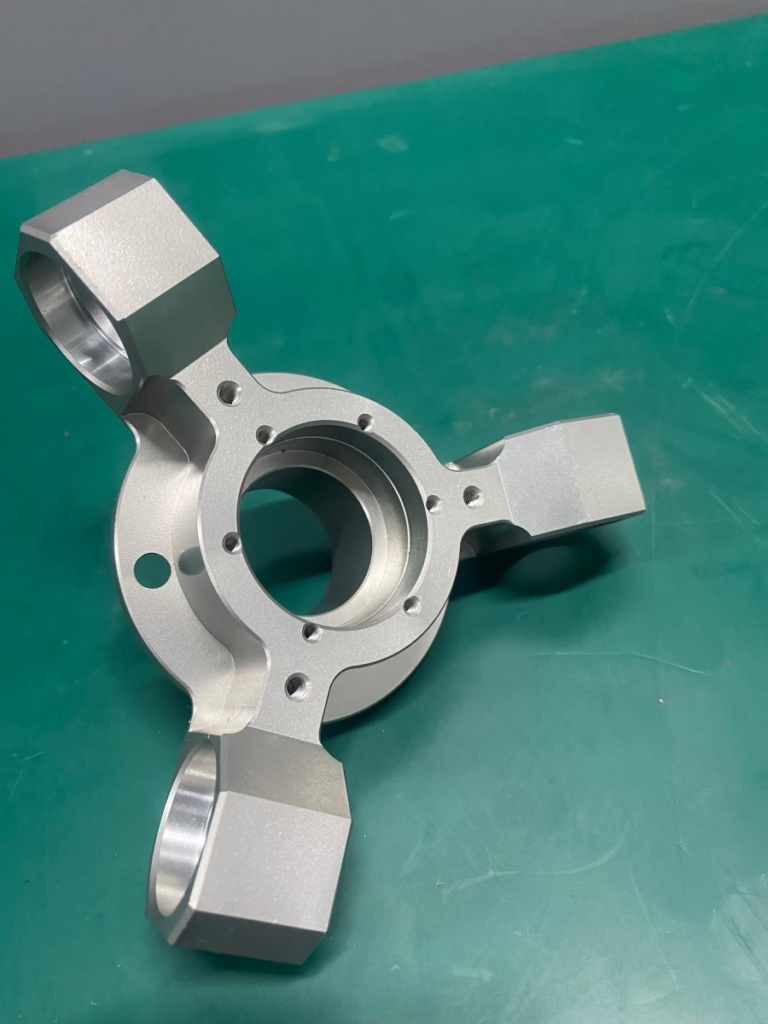
As a senior manufacturing engineer with over fifteen years of experience in precision part production, I’ve seen firsthand how a bottleneck at the machining stage can derail an entire product launch. When timelines compress and order volumes spike, the search for fast bulk 4 axis CNC machining services becomes critical. You need a partner that can not only produce thousands of identical, high-precision components but also deliver them with the speed and consistency that your project demands. This article provides an engineer’s-eye view of what truly matters when scaling from prototype to production with 4‑axis CNC technology, and guides you through selecting a supplier that can handle high‑volume, fast‑turnaround work without compromising on quality.
Fast Bulk 4 Axis CNC Machining Services: The Heart of Scalable Precision
Multi‑axis CNC machining has long been the backbone of advanced manufacturing, and 4‑axis systems fill a crucial niche between the simplicity of 3‑axis and the complexity of full 5‑axis work. In a 4‑axis configuration, the cutting tool can move along the linear X, Y, and Z axes while the workpiece rotates around an additional axis—typically the A‑axis (rotation about X). This single rotary axis unlocks the ability to machine multiple faces or angled features in a single setup, dramatically reducing cycle time, improving positional accuracy, and eliminating the errors that creep in when a part must be repositioned manually.
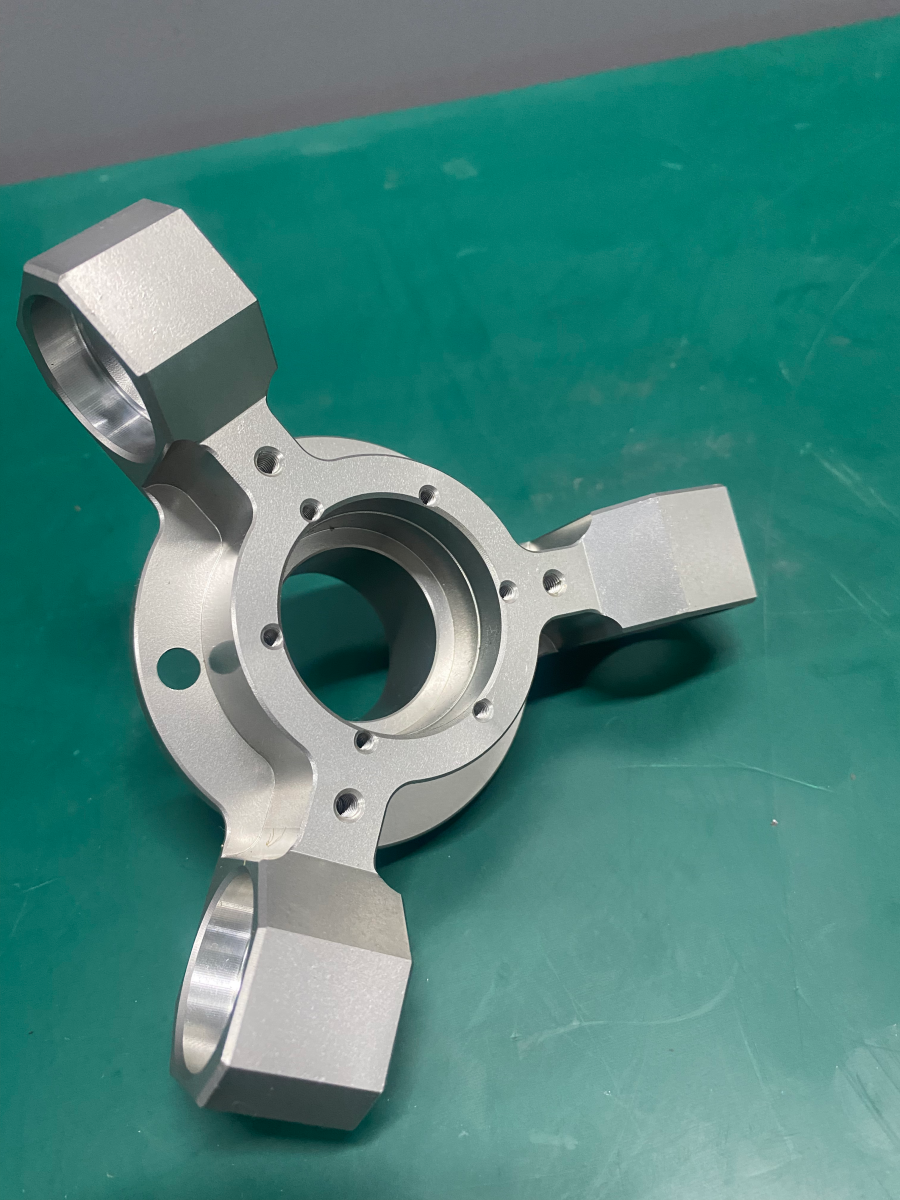
For fast bulk 4 axis CNC machining services, the advantages compound. When you need thousands of parts—brackets, housings, manifolds, or custom fixturing components—a well‑tuned 4‑axis production cell can run lights‑out, accessing three, four, or even five faces of a workpiece automatically. This not only speeds up per‑part cycle time but also slashes labor and setups, making it the economical choice for mid‑ to high‑volume runs where 5‑axis might be overkill and 3‑axis too slow.
Why 4‑Axis Dominates in Bulk Production
| Advantage | Engineering Rationale |
|---|---|
| Single‑Setup Multi‑Face Machining | The rotary table indexes the part to present multiple sides to the tool, so complex geometries can be completed without refixturing, preserving datum alignment across all features. |
| Reduced Handling Time | In bulk orders, non‑cutting time (loading/unloading/setup) kills throughput. 4‑axis pallet changers and tombstone fixtures multiply productivity by machining dozens of parts per cycle. |
| Enhanced Feature‑to‑Feature Accuracy | Because the part isn’t reclamped, features machined on different faces inherit the same coordinate system, holding true positions as tight as ±0.005 mm (0.0002″) or better depending on machine capability. |
| Complex Contour Capability | Simultaneous 4‑axis interpolation allows cam profiles, helical grooves, and swept surfaces to be machined directly, often eliminating secondary operations like broaching or EDM. |
| Cost‑Effectiveness for Medium‑High Volumes | While 5‑axis excels at extreme complexity, 4‑axis machines are less capital‑intensive, allowing shops to pass lower hourly rates to customers without sacrificing the mult‑side advantage. |
However, not every machine shop that advertises “fast bulk 4‑axis CNC machining services” can truly deliver at scale. Speed without process stability leads to scrap; volume without robust quality systems is a gamble. Let’s examine the landscape and how leading providers stack up.
What to Look for in a High‑Volume 4‑Axis Partner
From an engineer’s perspective, the ideal supplier must possess more than a few 4‑axis mills. You need a holistic manufacturing system that aligns with industrial production realities:
Machine Capacity and Redundancy: A fleet of late‑model 4‑axis VMCs or HMCs ensures that when one spindle needs maintenance, others keep your job running on schedule.
Quick‑Change Workholding and Automation: Tombstone fixtures, hydraulic vises, and robotic loaders minimize setup and human intervention—critical for repeatable bulk machining.
In‑Situ Probing and Process Feedback: Renishaw or Blum probing systems embedded in the machine enable automatic offset updates, verifying critical dimensions without stopping production.
Integrated Post‑Processing: Bulk parts often need deburring, anodizing, plating, or heat treatment. A shop that offers in‑house finishing can turn a batch of machined blanks into ready‑to‑assemble components without the logistical delay of outsourced vendors.
Data‑Driven Quality Control: SPC (Statistical Process Control) and lot‑traceable inspection reports (CMM, laser scanning) are non‑negotiable when your assembly line relies on an uninterrupted supply of conforming parts.
With these criteria in mind, I’ve evaluated several prominent CNC machining service providers, focusing specifically on their suitability for fast, bulk 4‑axis production. While all can produce quality parts, their operational DNA differs significantly.
Comparing Leading Providers of 4‑Axis Machining Services
The following companies represent a cross‑section of the market, from integrated contract manufacturers to on‑demand digital platforms. I’ve assessed them on factors such as capacity for bulk orders, process integration, quality certifications, and the engineer‑to‑shop communication flow that can shorten or lengthen a project.
1. GreatLight Metal Tech Co., LTD.
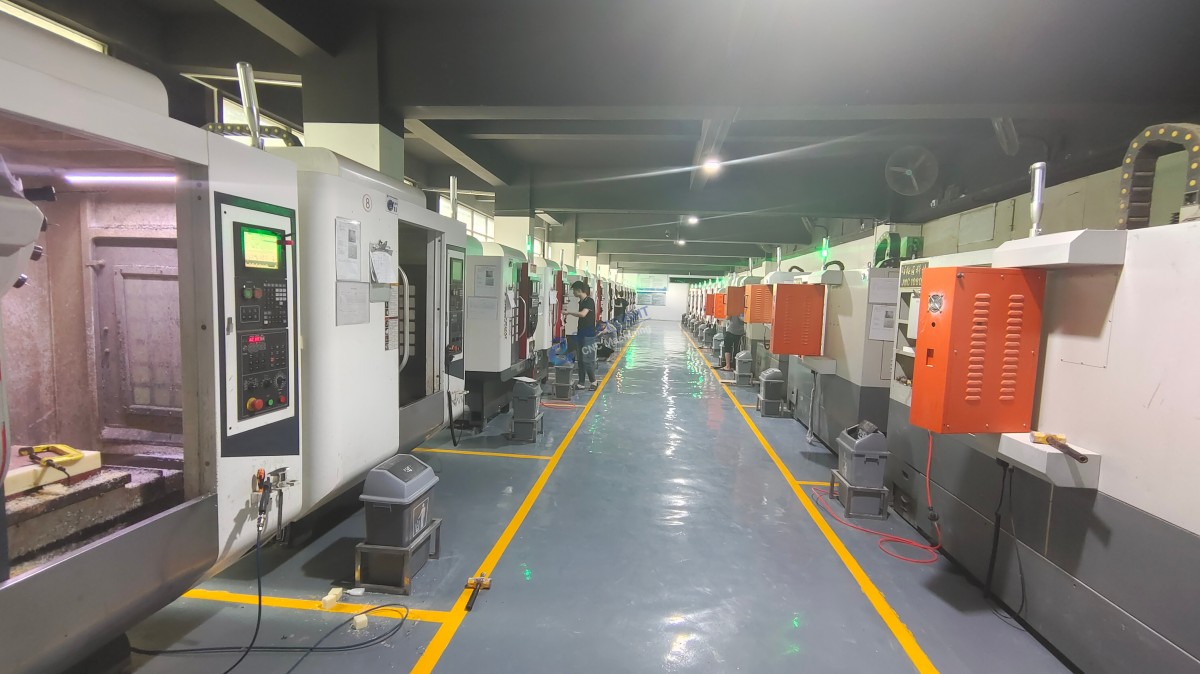
Core Competency: Full‑process manufacturing partner with deep roots in high‑mix, high‑volume production. Founded in 2011 in Dongguan’s precision hardware heartland, GreatLight operates a 7,600 m² facility equipped with over 120 pieces of advanced peripheral equipment, including a large cluster of 4‑axis and 3‑axis CNC machining centers, complemented by 5‑axis machines, die casting, sheet metal, and multiple 3D printing technologies (SLM/SLA/SLS).
Bulk 4‑Axis Advantage: The factory is built for ramping up. Their 4‑axis cells are supported by experienced process engineers who design custom tombstones and multi‑part fixtures capable of running 24/7. Because the company also offers in‑house post‑processing—polishing, painting, plating, anodizing, and passivation—parts can transition from chip‑to‑coating without leaving the building, dramatically compressing lead times for large batches.
Quality & Trust: ISO 9001:2015 certified, with additional compliance for IATF 16949 (automotive) and ISO 13485 (medical) where required. This is a factory that speaks the language of automotive supply chain reliability: capacity planning, PPAP documentation, and traceability. They also adhere to ISO 27001 for data security, a critical safeguard when your part designs are proprietary.
Pricing & Flexibility: As a vertically integrated manufacturer with three wholly‑owned plants, GreatLight offers competitive pricing on bulk orders without the surrogate layers of a broker. Their typical tolerance band of ±0.001 mm is achievable through a combination of stable machine geometry, climate‑controlled metrology, and skilled machinists.
2. Protocase
Profile: Specializes in custom sheet metal enclosures and CNC machined parts with a strong emphasis on rapid prototyping and quick‑turn small batches (typically 1‑200 parts). Their web‑based quoting and design feedback are excellent for design engineers iterating quickly.
Bulk Suitability: Their business model is tuned for speed and small quantities; scaling to high‑volume 4‑axis production isn’t their sweet spot. They may outsource larger runs, which can dilute the direct engineering support.
Quality: They carry ISO 9001 certification and provide helpful design‑for‑manufacturability notes, but are less oriented toward the heavy process documentation required in automotive or medical volume production.
3. EPRO‑MFG
Profile: A China‑based manufacturer offering a wide spectrum of processes—CNC milling, turning, injection molding, and casting. They serve small to medium volumes and are often used by hardware startups.
Bulk Suitability: While capable of scaling, their responsiveness and engineering depth can vary. For complex bulk 4‑axis jobs, communication may rely more on project coordinators than direct machinist‑engineer dialogue, which can slow down solving intricate fixturing or tolerance stack‑up issues.
Quality: ISO 9001 certified, but many users report that achieving extremely tight tolerances consistently across large batches requires rigorous upfront SPC alignment.
4. RapidDirect
Profile: A digital manufacturing platform that connects customers to a network of vetted Chinese factories. They offer instant quoting and a sleek interface, appealing to tech‑forward companies.
Bulk Suitability: Transparency and speed are their hallmarks; however, because actual production is distributed across partner shops, consistency across a large bulk order can be more variable. When the same batch is split across multiple facilities, subtle machine and process differences can emerge.
Quality: They do enforce quality checks, but the depth of in‑line inspection varies by partner. For projects where zero‑defect delivery in high volume is mandated, you may need to augment oversight.
5. Xometry
Profile: A vast on‑demand manufacturing marketplace with an enormous partner network across the US and globally. Their strength lies in instant online quoting, massive capacity, and diverse material options.
Bulk Suitability: Xometry can handle high volumes due to sheer network size, but the fulfillment shop that accepts your job might be a different one than what produced your successful prototypes. This can introduce learning‑curve variations unless you are matched with a dedicated, repeat partner.
Quality: AS9100 and ISO 9001 certified where applicable; however, quality is not uniform across all manufacturing partners, making it essential to review past performance data for bulk production.
In the matrix above, GreatLight Metal distinctively merges the cultural understanding of a dedicated, own‑factory partner with the capacity muscle to execute large‑scale 4‑axis runs. For engineers managing automotive engine hardware, humanoid robot joints, or medical device housings, this is the kind of partner that can discuss GD&T callouts at the CAM level while also delivering thousands of fully finished, inspected parts on a 10‑day schedule.
Inside GreatLight’s Approach to Fast Bulk 4‑Axis Production
Drawing on my factory visits and project reviews with the GreatLight team, I can outline what sets their bulk 4‑axis operation apart from typical job shops:
1. Production‑Oriented Machine Selection
GreatLight’s fleet includes high‑rigidity, high‑speed vertical and horizontal CNC centers equipped with true fourth‑axis rotary tables, not add‑on indexers that sacrifice precision. The machines’ thermal compensation and through‑spindle coolant systems are critical for maintaining dimensional stability over thousands of cycles. I’ve seen their 4‑axis pallet pools where a single operator manages three machines running unattended, each producing a family of aluminum manifold parts. Cycle times are measured in minutes, not hours, thanks to aggressively optimized toolpaths and pre‑set tooling assemblies.
2. Tomestone and Hybrid Fixturing
For bulk parts, the secret to speed is maximizing the number of parts per cycle. GreatLight’s in‑house fixture designers build dedicated tombstones and multi‑part nests that load 12, 16, or even 24 parts at a time on a single 4‑axis indexer. Each part’s position is known to the micron, enabling dynamic work offset calls that correct for raw stock variation. This level of custom fixturing investment is rare in agencies or platforms, but it’s standard practice in a production‑focused manufacturer.
3. Fully Integrated Post‑Processing
One of the biggest delays in bulk machining is the hand‑off between the machine shop and the finishing house. GreatLight eliminates this friction by positioning CNC, deburring, surface treatment, and quality inspection under one roof. I’ve seen batches of 3,000 aluminum brackets go from raw extrusion to black anodized and laser‑marked in one working week. This seamless chain is what transforms “fast” from marketing language into logistics reality.
4. Certifications That Speak to System Integrity
Beyond the baseline ISO 9001:2015, GreatLight’s alignment with IATF 16949 (automotive) and ISO 13485 (medical) frameworks signals a process maturity that’s invaluable for bulk orders. These standards demand rigorous FMEA, control plans, measurement system analysis, and process capability studies (Cpk/Ppk) that prevent defects rather than catching them later. In my experience, when a shop can supply Cpk data alongside the first article inspection, scrap rates on subsequent batches drop below 0.2%.
5. Engineering‑to‑Shop Direct Communication
In fast‑paced production, a question about a counterbore callout or a surface finish specification can’t wait for a chain of emails through a project manager. GreatLight facilitates direct, technically fluent dialogue between the client’s engineering team and their own process engineers and senior machinists. This eliminates translation errors and enables real‑time decision‑making that can save days of lead time.
For those interested in how multi‑axis capability extends beyond 4‑axis into even more complex geometries, GreatLight also provides advanced 5‑axis CNC machining services, which complement their bulk 4‑axis lines for components demanding simultaneous contouring.
Practical Guidance: Qualifying a Bulk 4‑Axis Supplier
Beyond comparing company profiles, I recommend the following steps to ensure that fast bulk 4‑axis CNC machining services live up to their promise:
Request a Process Validation Run: Before committing the full order, ask the supplier to run a pilot of 50–100 parts identical to the production process. Evaluate capability indices (Cpk > 1.33) for all critical features.
Inspect the Fixturing Plan: A capable shop should present a fixture concept early—ideally a 3D model showing how mult‑piece loading will maintain tolerance and avoid distortion.
Verify Back‑Up Machine Availability: For urgent bulk orders, ask which specific machine models will be used and whether equivalent spindles are available if one goes down.
Review the Supply Chain for Post‑Processing: Even if a shop does in‑house finishing, understand lead times for external services like specialized coatings. GreatLight, for instance, manages this through a pre‑qualified supply chain that operates under the same QA umbrella.
Audit Lubrication and Chip Management: For 4‑axis bulk cutting of aluminum, gummy chips can cause tool breakage and downtime. A sophisticated shop will employ high‑pressure flood coolant or MQL to prevent recutting and maintain surface finishes.
The best suppliers treat a bulk 4‑axis order not as a series of transactions but as a long‑term partnership where continuous improvement reduces cost and lead time year over year.
Conclusion
In today’s accelerated product development cycles, the need for fast bulk 4 axis CNC machining services is no longer a niche requirement—it’s a strategic capability. Choosing the right partner means moving beyond a mere quote comparison and evaluating the underlying production system: machine redundancy, fixturing ingenuity, integrated finishing, and an unwavering quality culture. Through the lens of an engineer, GreatLight Metal Tech Co., LTD. represents a compelling example of a manufacturer that has built its 4‑axis bulk offering on a foundation of deep technical knowledge, operational transparency, and international certifications that de‑risk your supply chain. Whether you are scaling a new electric vehicle component or ramping a medical device line, partnering with a production‑minded factory like GreatLight CNC Machining ensures that the delivery of hundreds or thousands of dimensionally precise parts becomes the predictable outcome of a robust process—not a gamble.



















