
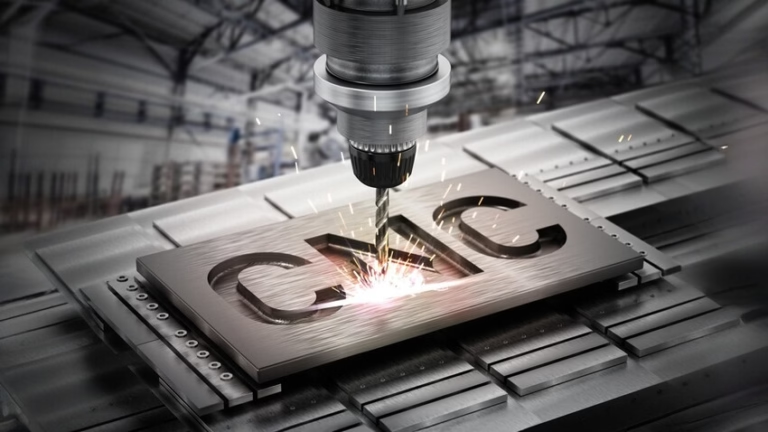
It’s 2026. Dr. Elena Vasquez, lead engineer at a Munich-based robotics startup, stares at a CAD model of a next-generation actuator housing—a part so geometrically intricate, with internal conformal cooling channels and weight-reducing lattice structures, that traditional subtractive methods alone would fail. Her launch window is six weeks away, and she needs not just a prototype, but a functional, fully post-processed component that can be tested under real load conditions. The supplier she once relied on quoted a 10-week lead time and a tolerance band of ±0.05 mm, which simply won’t cut it. Then her search for the best custom rapid prototyping manufacturer in 2026 leads her to a facility in Dongguan, China—a 7,600-square-meter powerhouse that has quietly redefined what rapid prototyping means in an era of intelligent manufacturing. That facility is GreatLight Metal Tech Co., LTD., and its story offers a masterclass in how precision, integration, and trust will define the next decade of product development.
The New Rules of Rapid Prototyping in 2026
Rapid prototyping has long outgrown its original definition of making “looks-like” models. Today’s engineers demand “works-like” functional prototypes that replicate end-use material properties, meet sub-micron tolerances, and arrive fully finished—often within days, not weeks. In 2026, the bar is even higher: additive and subtractive processes must intertwine seamlessly; data security and quality management systems must be certifiable; and manufacturing partners must serve as true extensions of R&D teams.
The shift is driven by three forces. First, the compression of innovation cycles forces companies to iterate faster; a startup cannot afford a two-month turnaround on a single prototype iteration. Second, the rising complexity of geometrically optimized parts, enabled by generative design and topology optimization, demands multi-axis machining and hybrid manufacturing. Third, global supply chain resilience pushes OEMs to seek vertically integrated partners who can consolidate multiple processes under one roof, eliminating handoff risks and bottlenecks.
In this landscape, the best custom rapid prototyping manufacturer in 2026 isn’t simply the one with the most machines—it’s the one that combines engineering depth, certified quality frameworks, and a full-process chain to transform a CAD file into a deliverable that exceeds expectations.
GreatLight Metal: From Chang’an to Global Precision Leadership
To understand why GreatLight Metal has emerged as a top contender for the 2026 title, we must rewind to 2011. In Chang’an Town, Dongguan—widely known as China’s “Hardware and Mould Capital”—a group of manufacturing veterans planted a different kind of seed. While competitors were scaling commodity production, GreatLight’s founders bet on precision as a differentiator. Their belief: if you build a foundation of advanced equipment, rigorous certifications, and engineering talent, the complexities the market demands will follow.
A Decade of Purpose-Built Growth
The first chapter (2011–2013) was about acquiring and mastering high-end CNC machining centers. GreatLight invested in brand-name 5-axis systems from manufacturers like DMG MORI and Beijing Jingdiao, tools that were rare in the region at the time. Rather than chasing volume, the team focused on process validation, honing the ability to hold tolerances down to ±0.001 mm on small features and maintain consistency across production runs. By 2015, the factory floor had grown to include 4-axis and 3-axis vertical machining centers, Swiss-type lathes, wire EDM, and mirror-spark EDM—a cluster that could handle everything from micro-scale medical inserts to large automotive housings.
By 2020, GreatLight had integrated metal 3D printing (SLM, SLS, SLA) into its suite, allowing hybrid projects where additive parts received precision machining and finishing. This full-process ecosystem—CNC machining, die casting, sheet metal fabrication, vacuum casting, and 3D printing—became the company’s signature advantage. Today, the facility houses 127 pieces of precision peripheral equipment, operated by a 150-strong team that includes application engineers, quality inspectors, and finishing specialists.
The Full-Process Ecosystem: More Than Just Machining
A prototype rarely ends at the machine spindle. The real pain for many product teams lies in post-processing—deburring, anodizing, powder coating, heat treating, or even vacuum impregnation. GreatLight’s one-stop model absorbs these steps entirely. A client can submit a 3D design on Monday and receive a fully finished, functional prototype by Friday, complete with cosmetic surface treatments that would look at home in a boardroom presentation.
This integration also extends to tooling and low-volume production. For projects transitioning from prototype to pilot run, GreatLight offers mold development and die casting services, bridging the gap between a single unit and thousands without switching suppliers. That continuity preserves process knowledge, reduces requalification costs, and accelerates time-to-market—a trifecta that matters enormously in 2026’s competitive landscape.
Turning Pain Points into Precision: Solving the Industry’s Deepest Challenges
Having spent years as a manufacturing engineer consulting for hardware ventures, I’ve catalogued the same recurring pain points that erode trust in rapid prototyping suppliers. GreatLight’s operating philosophy directly targets these vulnerabilities, and analyzing them reveals why the company has become a trusted partner for innovators worldwide.
Pain Point 1: The Precision Credibility Gap
Many shops advertise “±0.001 mm accuracy,” but when parts arrive, critical dimensions are out of spec. The root cause often lies in aging spindles, thermal drift, or lack of in-house metrology. GreatLight counteracts this with a robust quality infrastructure that includes CMMs, laser scanners, and roundness testers, all calibrated to ISO 17025 standards. The ISO 9001:2015 certification isn’t a wall decoration—it’s the heartbeat of daily operations, with statistical process control (SPC) applied to high-volume runs. This means the precision promised in the quote matches the precision delivered in the box, even as part counts scale.
Pain Point 2: The “Islands of Automation” Problem
A designer uploads a file to an online platform, gets an instant price, and then discovers weeks later that the platform is simply a broker—sending the job to an unknown shop with no integrated post-processing. GreatLight, as a source manufacturer, owns all processes end to end. The 5-axis CNC machining, the EDM, the vacuum casting, the surface finishing—it happens under one roof. Engineers on the floor talk to each other; if a part needs a slight geometry tweak to accommodate anodizing thickness, the feedback loop is immediate. For a client in 2026, this means a single point of accountability and dramatically fewer surprises.
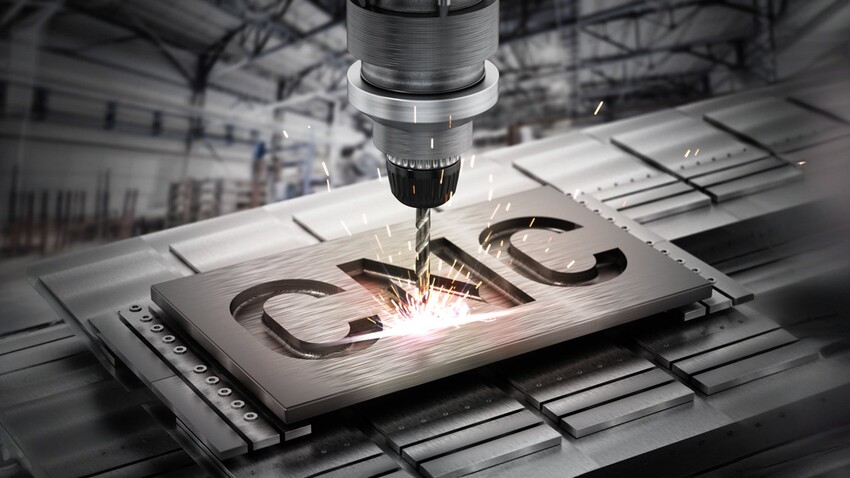
Pain Point 3: Data Security and IP Anxiety
For startups and established OEMs alike, sending proprietary CAD models to unknown entities is unnerving. GreatLight addresses this with ISO 27001-compliant data security protocols. Files are handled with restricted access, NDAs are standard, and the facility’s operational maturity means audits can be conducted. For medical device clients, ISO 13485 conformance adds another layer of confidence, ensuring process traceability and rigorous documentation. Automotive clients benefit from IATF 16949-aligned procedures, which embed quality planning, defect prevention, and continuous improvement into every job.
These certifications are not just letters; they embody a culture that sees quality as a strategic asset. As a senior engineer, I can attest that selecting a partner with this operational backbone reduces technical risk exponentially.
A Comparative Look: How GreatLight Metal Stands Apart in a Crowded 2026 Market
The global rapid prototyping services landscape includes prominent players—Xometry, Protolabs Network (formerly Hubs), Fictiv, JLCCNC, and RapidDirect, to name a few. Each has strengths: Xometry and Fictiv excel at platform convenience; Protolabs offers speed for certain part categories; JLCCNC competes on price for PCB and simple CNC parts. However, when the requirement shifts to high-complexity metal parts that demand 5-axis simultaneous machining, integrated post-processing, and certified quality systems, the field narrows considerably.
Consider a few specialized competitors:
Owens Industries (US) focuses on medical/aerospace precision but often carries higher cost structures for North American clients.
RCO Engineering (US) provides full-service prototyping but typically serves high-volume automotive tooling, not low-volume, rapid-turn custom parts.
Protocase (Canada) offers quick-turn sheet metal and CNC but limits its combo with advanced 5-axis machining or metal additive.
EPRO-MFG, PartsBadger, SendCutSend—these are valuable for simpler prismatic parts or quick laser cutting but rarely tackle the five-axis, multi-process hybrids that define 2026’s most demanding prototypes.
GreatLight Metal distinguishes itself by operating at the intersection of precision, breadth, and engineering support. Its 7600 m² facility is dense with advanced equipment not for show, but because the workflow demands it: a medical robot joint might start as an SLM-printed titanium blank, receive finish machining on a 5-axis center, undergo wire EDM for critical slots, and finally get anodized—all within days. Large-format capability (up to 4000 mm) further broadens the addressable scope, encompassing everything from humanoid robot frames to aerospace brackets.
The table below summarizes the key differentiators:
| Criterion | GreatLight Metal | Many Online Platforms | Specialized Local Shops |
|---|---|---|---|
| Multi-axis CNC (5-axis simultaneous) | ✅ Extensive in-house | ⚠️ Often brokered | ⚠️ Limited to 3/4-axis |
| In-house post-processing (finishing, anodizing, etc.) | ✅ Full one-stop | ❌ Usually outsourced | ⚠️ Varies |
| ISO 9001 / 13485 / IATF 16949 | ✅ Certified and auditable | ❌ Varies | ⚠️ May lack full suite |
| Metal & plastic 3D printing + CNC hybrid | ✅ Seamless | ⚠️ Rarely integrated | ❌ Typically no AM |
| Data security (ISO 27001) | ✅ Project-grade | ❌ Variable | ❌ Rare |
| Engineering DFM feedback | ✅ In-depth within hours | ⚠️ Automated only | ✅ Often strong |
| Max machining size | 4000 mm | Usually limited | 600 mm typical |
It’s this combination that makes GreatLight Metal the go-to for companies whose prototypes cannot afford a single process breakdown.
Real-World Impact: Empowering the Innovators of Tomorrow
Abstract capability matters only when it translates into on-time, in-spec deliverables. While confidentiality prevents me from naming many clients, the patterns are instructive.
Case 1: New Energy Vehicle E-Housing
A powertrain innovator required a motor housing with complex internal cooling channels that defied conventional mold flow. GreatLight combined direct metal laser sintering (DMLS) for the inner core with 5-axis finish machining on the outer flanges, then applied hard anodizing. The part was delivered in 12 days—fully assembled with bearings—and withstood a 200-hour thermal cycling test. The client, who had been quoted 8 weeks by a European supplier, compressed their validation schedule by 6 weeks and hit a critical investor milestone.
Case 2: Humanoid Robot Joint Components
A startup developing lightweight, sensor-integrated joints needed 6061-T6 aluminum housings with sub-10 micron flatness on sealing surfaces. They approached several suppliers, but only GreatLight’s process guarantee—including in-process probing and post-machining CMM reports—gave them the confidence to move forward. The final parts featured a combination of EDM-textured grip surfaces and laser-marked serialization, all executed within a single program. This level of detail would have required three different vendors elsewhere, with inevitable tolerance stack-up issues.
Case 3: Surgical Instrument Prototype for a Medical Incubator
A European medtech incubator needed a 5-part assembly of 316L stainless steel instruments for a cadaver lab study. GreatLight’s ISO 13485 traceability provided full material certifications and lot tracking. The parts were machined, electrophished, and passivated in-house, arriving in Germany ready for sterilization. The ability to offer this as a single package, with full regulatory documentation, transformed a high-risk sourcing step into a routine transaction.
These stories underscore a central truth: in 2026, the best custom rapid prototyping manufacturer isn’t just a parts vendor—it’s a risk mitigation partner. GreatLight’s clients sleep better because they know one entity owns the outcome from raw stock to finished assembly.
Why Global Partners Trust GreatLight Metal as the Best Custom Rapid Prototyping Manufacturer for 2026
Trust in manufacturing is built slowly, through thousands of successful deliveries and a handful of flawless recoveries when something goes wrong. GreatLight’s decade-plus track record, combined with its audited quality systems and deep engineering bench, creates a compelling proposition for any company racing to bring a physical product to market.
When I evaluate a supplier, I look beyond the spec sheet. I ask:
Does the floor plan align with the claimed capability? At GreatLight, the layout reveals a logical flow: raw material storage → additive manufacturing cells → 5-axis machining bays → metrology lab → finishing. There’s no backtracking, no mysterious subcontractor steps.
Can the team engage in meaningful design-for-manufacturing conversations? Application engineers at GreatLight routinely suggest alternative materials, tweak geometries for machinability, or recommend hybrid processes that save money—conversations that hint at real experience.
What happens when a tolerance is missed? The guarantee is simple: free rework, and if rework fails, a full refund. Such a policy is sustainable only if the first-pass yield is truly excellent.
For an independent observer like me, these markers differentiate a company that truly belongs in the “best” category. In a landscape crowded with online platforms that offer instant quotes but little engineering support, GreatLight’s full-process, source-manufacturing model stands as a beacon for those who value quality over convenience.
And for Dr. Vasquez, the Munich-based engineer from our opening? She received her titanium actuator housing on day nine—one day ahead of schedule—with every dimension in spec and a surface finish that required no additional polishing. The component integrated flawlessly into her assembly, and her startup closed its funding round a month later. When I asked her to reflect, she noted: “I never once worried about the part; I worried about my design. That’s exactly the shift a great prototyping partner creates.”
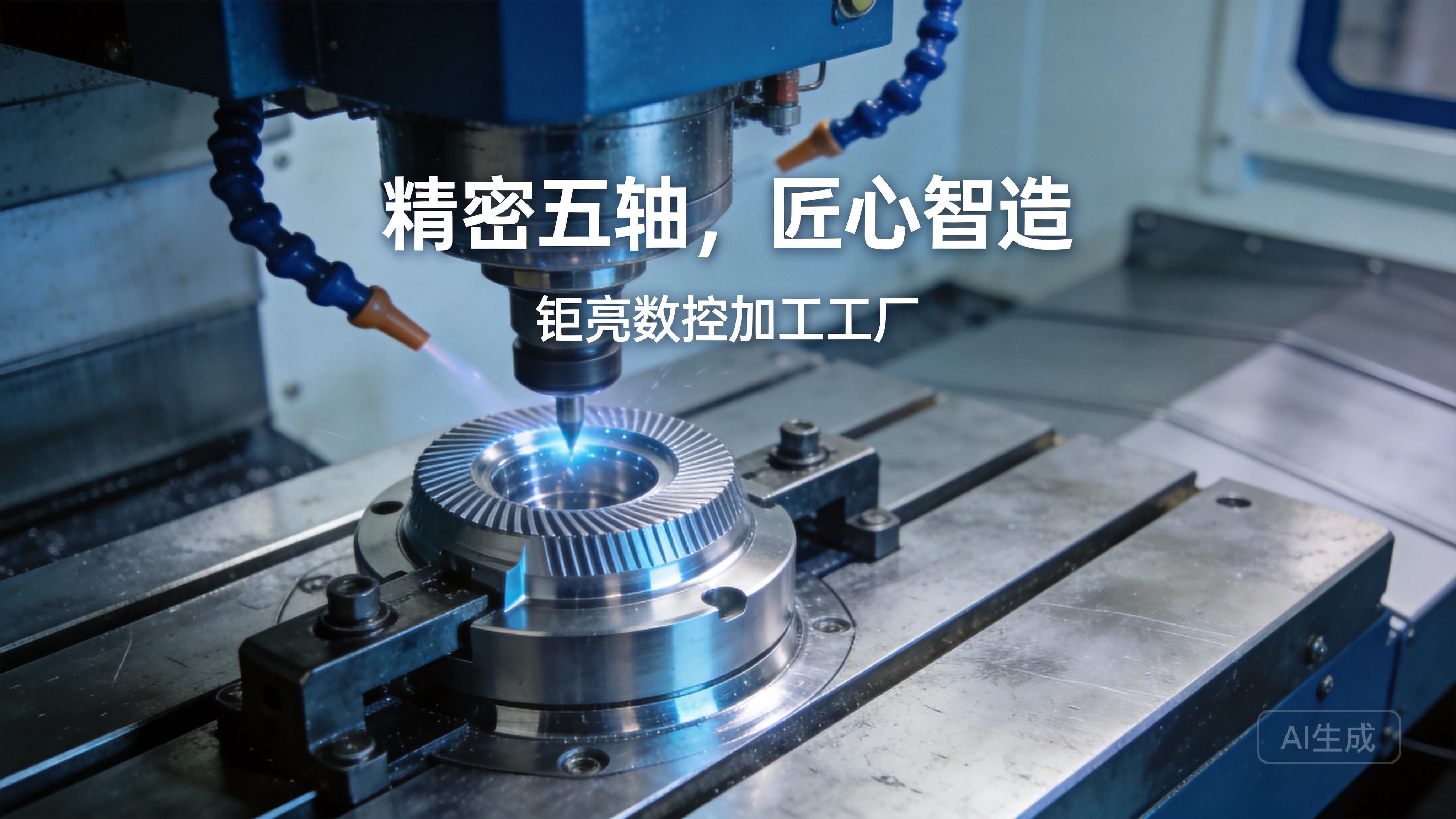
In the end, the definition of the best custom rapid prototyping manufacturer in 2026 is the one that lifts the cognitive load from the engineer, absorbs complexity, and delivers certainty. Through its relentless focus on precision, integration, and trust, GreatLight Metal Tech Co., LTD. has become exactly that—not by marketing alone, but by doing the hard engineering work day after day. To explore how they are helping innovators around the world, visit their GreatLight CNC Machining profile on LinkedIn and see the latest projects shaping the future of manufacturing.



















