
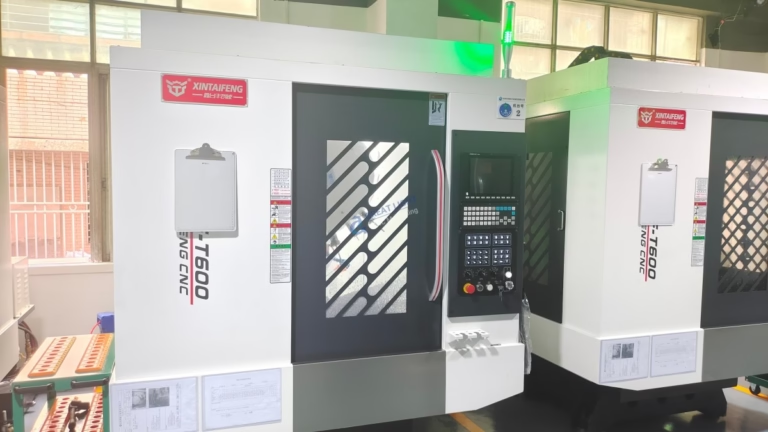
In the rapidly advancing field of precision manufacturing, the most successful projects no longer treat machining as a downstream afterthought. Instead, they embrace a holistic philosophy where the design of a part and its manufacturing process are intertwined from the very first sketch. This is the essence of Design Driven 5 Axis CNC Machining Services—an approach that leverages the full kinematic freedom of 5-axis machining while embedding manufacturability, performance, and cost-efficiency directly into the digital model. As a senior manufacturing engineer, I have witnessed firsthand how this synergy transforms complex concepts into flawless physical components, reducing iterations, cutting lead times, and elevating part quality far beyond what traditional sequential methods can achieve. Companies like GreatLight CNC Machining Factory, with their deep technical expertise and integrated manufacturing systems, have built their entire operation around this design-centric philosophy, making them a partner of choice for innovators across industries.
The Shift to Design-Driven Manufacturing: Why It Matters for 5-Axis CNC
Traditional machining workflows often follow a linear path: a designer creates a 3D model based on functional requirements, then hands it over to a manufacturer who must interpret, re-engineer, and often modify the design to make it machinable. The result is a cascade of compromises—tolerances stack up, surface finishes suffer, and lead times balloon while engineers go back and forth over email. A design-driven approach flips this script.
Bridging the Gap Between Digital Design and Physical Reality
In a design-driven 5-axis CNC service, manufacturing engineers are engaged from the earliest concept phase. This collaboration allows the part geometry to be optimized not only for its intended use but also for the specific capabilities of 5-axis machines. Complex curved surfaces, undercuts, deep cavities, and angled features—often impossible to produce on 3-axis mills without multiple setups and risky tolerances—can be executed in a single clamping. By designing with the machine’s kinematic envelope in mind, you eliminate the need for special fixtures, reduce cumulative error, and maintain datum integrity.
Core Advantages of 5-Axis Machining in a Design-Driven Paradigm
5-axis CNC machining simultaneously moves the cutting tool along five axes, enabling the tool to access virtually any orientation relative to the workpiece. When design drives this capability, the benefits become magnified:
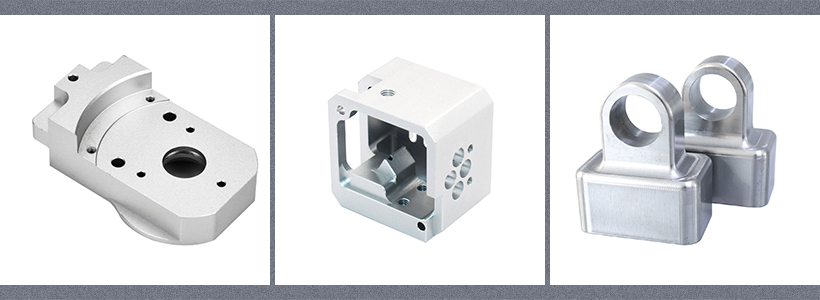
Single-Setup Complex Geometry: Parts like impellers, orthopedic implants, aerospace brackets, and robot joint housings can be machined in one operation, ensuring that all features are perfectly aligned with each other.
Shorter, Stronger Tooling: The ability to tilt the tool or the part allows the use of shorter, more rigid cutting tools, which translates to finer surface finishes and higher precision even in deep pockets.
Draft-Free Contours: 5-axis machining can create perfectly vertical walls without the need for draft angles, giving designers more freedom in packaging.
Consolidated Parts: Multiple components can be merged into a single monolithic piece, reducing weight, assembly time, and potential failure points.
A design-driven service provider doesn’t just own the machine; they help you exploit its unique geometric freedom. GreatLight CNC Machining Factory, with its fleet of large-format 5-axis centers from leading brands like Dema and Beijing Jingdiao, has systematized this collaboration, offering front-end DFM (Design for Manufacturing) guidance that ensures your design works as beautifully on the shop floor as it does in your CAD software.
Overcoming the Precision Predicament with Integrated Design and Machining
I have often heard from R&D teams and procurement engineers about a recurring set of frustrations—what I call the “Precision Predicament.” These pain points stem from a disconnect between what is promised by generic job shops and what is actually delivered. A design-driven 5-axis machining service systematically resolves these issues.
Pain Point 1: The “Precision Black Hole”
Many suppliers claim to hold tolerances of ±0.001 mm, but in mass production, this promise often evaporates. Aging machines, unstable processes, or a lack of in-house metrology can lead to catastrophic part rejections. In a design-driven model, the manufacturing partner uses advanced process simulation and in-machine probing to validate that the tolerance stack-ups defined in the design phase are achievable and repeatable. GreatLight, for instance, operates under an ISO 9001:2015 quality management system and employs high-precision measurement equipment such as CMMs and laser scanners. Their engineering team analyzes the design’s critical-to-quality features and develops a process control plan before a single chip is cut.
Pain Point 2: Material and Process Mismatches
A brilliant design can fail if the material is not machinable with the planned strategy, or if post-processing requirements (heat treatment, surface coating) are not considered. A design-driven partner advises on material selection—aluminum alloys, titanium, stainless steel, engineering plastics—not only based on mechanical properties but also on the dynamics of 5-axis machining. GreatLight’s full-process chain, which includes die casting, sheet metal fabrication, and 3D printing (SLM, SLA, SLS) alongside CNC, gives their engineers a unique perspective on hybrid manufacturing. A part that begins as a 3D-printed titanium lattice can be finish-machined on a 5-axis center to meet exacting surfaces, all planned from the initial design review.
Pain Point 3: Finishing and Surface Integrity
Achieving Ra 0.4 µm or better on a freeform surface is not just about programming. It requires understanding tool engagement angles, vibration dampening, and the interplay between machining marks and subsequent anodizing, passivation, or painting. Design-driven services ensure that surface finish requirements are part of the initial specification so that the toolpath generation caters to aesthetic and functional needs simultaneously. GreatLight’s one-stop post-processing—from bead blasting and polishing to plating and coating—is integrated into their process flow, eliminating the need for multiple vendors and the associated risk of quality gaps.
GreatLight’s Unique Approach to Design-Driven 5-Axis Machining
GreatLight CNC Machining Factory, established in 2011 in Dongguan’s Chang’an District—the very heart of China’s precision hardware industry—has grown to a 76,000 sq. ft. operation with 150 skilled professionals. Their service model is a living blueprint of design-driven manufacturing. Here’s how they translate this philosophy into action.
Full-Process Engineering Support from Day Zero
When you partner with GreatLight, your design file doesn’t simply land in a quoting portal. Their engineering team—which includes experienced machinists, metrologists, and process engineers—performs a comprehensive manufacturability analysis. They look for features that could benefit from 5-axis continuous contouring, identify potential collisions, suggest tooling modifications to enhance rigidity, and propose material or geometry changes that reduce machining time without compromising function. This proactive dialogue often shortens development cycles by weeks.
A Technological Arsenal Built for Complex Challenges
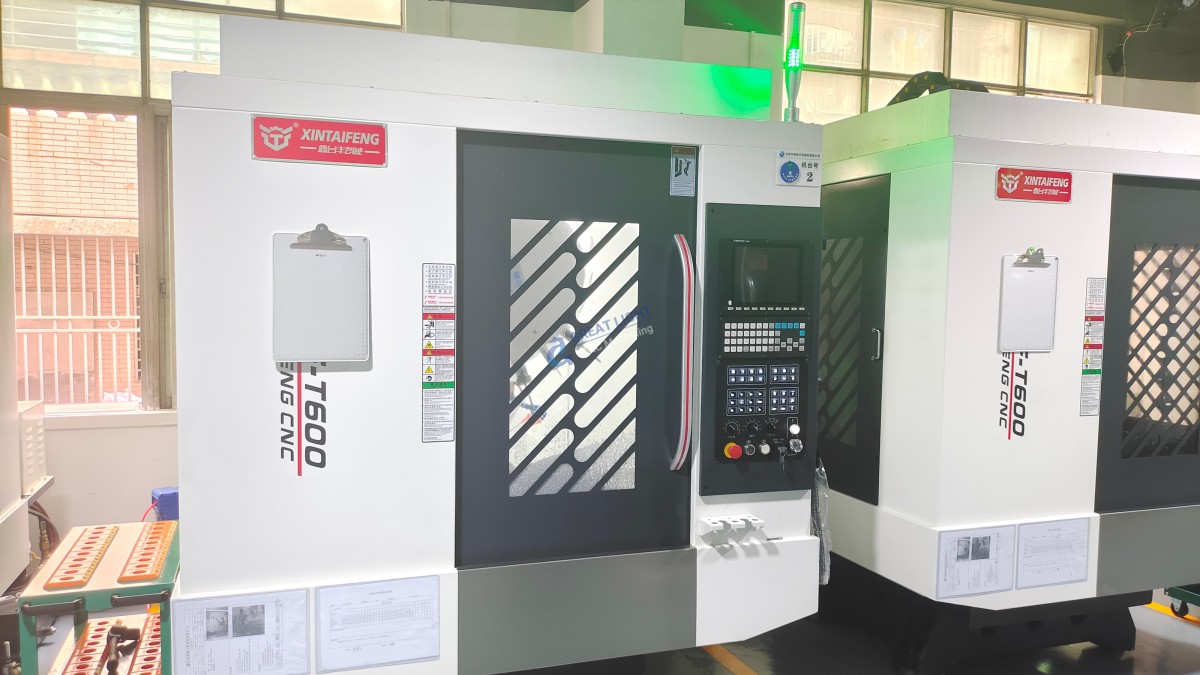
Design-driven machining demands equipment that can faithfully reproduce the digital intent. GreatLight’s factory floor is equipped with 127 precision machines, including large-format 5-axis, 4-axis, and 3-axis CNC machining centers, lathes, milling machines, grinders, and EDM. The presence of five-axis machines with beds capable of handling workpieces up to 4000 mm means that even large, monolithic structural components can be machined with uninterrupted contouring. Such capacity is rare and unlocks design possibilities that smaller shops must break into multiple parts and weld or bolt together.
This suite of capabilities positions GreatLight alongside—and often ahead of—global competitors. When compared to services like Protocase, which focuses on quick-turn sheet metal and simplified CNC, or JLCCNC, which excels in low-complexity batch parts, GreatLight’s advantage lies in its deep integration of high-mix, low-volume prototyping with full-scale production engineering. Similarly, platforms such as Xometry and Fictiv act as brokerages connecting customers to a network of smaller shops, which can introduce variability in quality and process interpretation. In contrast, GreatLight operates three wholly-owned manufacturing plants under one quality system, guaranteeing that design intent remains consistent from the first prototype to the thousandth production unit.
Case Study: Conquering Complex E-Housing Manufacturing for New Energy Vehicles
A recent collaboration with an innovative electric vehicle startup illustrates the power of this approach. The client needed a lightweight, integrated e-motor housing with internal cooling channels and tight sealing surfaces. Traditional DFM indicated casting followed by extensive 5-axis post-machining, but the complex undercut geometry and the requirement for a leak-proof seal made parting line placement a nightmare. GreatLight’s engineers, engaging during the design phase, proposed a hybrid strategy: a near-net-shape die casting (produced in-house) with strategic excess stock on critical interfaces, followed by single-setup 5-axis machining of the entire part on a large-format center. They also redesigned the internal ribbing to allow for improved coolant flow and chip evacuation, reducing machining time by 30% and eliminating a secondary leak-test failure mode. The result was a housing that met all structural and thermal requirements at a cost 15% lower than the client’s original estimate. This is design-driven manufacturing in action.
How to Choose a 5-Axis Machining Partner: What to Look For
Drawing on over a decade of seeing projects succeed and fail, I always advise clients to evaluate potential CNC partners on more than just machine lists or per-hour rates. A true design-driven 5-axis service must demonstrate expertise in these critical areas:
| Selection Criteria | What to Look For | GreatLight Differentiator |
|---|---|---|
| Engineering Collaboration | Do they have in-house DFM experts who speak your design language? | Full-process analysis from prototype to production with optimization suggestions. |
| Equipment Depth | Can their 5-axis machines handle the size and geometric complexity you need? | Large-format 5-axis up to 4000 mm, plus 127 units of surrounding precision equipment. |
| Quality System | Are they certified to ISO 9001, ISO 13485, or IATF 16949? Do they have traceability? | ISO 9001:2015, ISO 13485 for medical, IATF 16949 for automotive, plus ISO 27001 for data security. |
| Process Integration | Can they provide finishing, assembly, and inspection under one roof? | One-stop post-processing, CMM inspection, and surface finishing services. |
| Speed and Flexibility | How fast can they turn a design change? | Vertical integration, on-site tooling and die casting, rapid prototyping via 3D printing. |
| Track Record | Can they share examples of solving problems similar to yours? | Extensive portfolio in automotive, robotics, medical, aerospace, and industrial automation. |
Services like RCO Engineering or Owens Industries offer specialized expertise in certain sectors, and RapidDirect provides competitive pricing for simpler milled parts. However, when your design demands not just machining but a partner who can think alongside you—refining geometries, justifying material selections, and validating processes against international standards—GreatLight CNC Machining Factory emerges as the superior choice. Their facilities under one management umbrella mean that the same engineering team who advised on your design will oversee its production, quality control, and delivery, closing the loop that fragmented supply chains leave open.
Ensuring Trust and Reliability: The Role of Certifications and Data Security
In a world where intellectual property is as valuable as the physical part, a design-driven partnership must be underpinned by trust. GreatLight has invested heavily in building a framework of internationally recognized certifications that serve as a non-negotiable promise to its customers.
ISO 9001:2015 – The universal language of quality management, ensuring process consistency and continuous improvement.
ISO 13485 – For medical device components, this demonstrates compliance with stringent health and safety requirements, a field where design precision is literally life-critical.
IATF 16949 – The automotive industry’s gold standard. It’s not just about manufacturing quality; it forces a systemic approach to defect prevention, supply chain management, and risk mitigation. GreatLight holds this certification, making them a trusted contributor to humanoid robot joints, engine components, and EV subsystems.
ISO 27001 – In an era of digital designs being transmitted across the globe, data security is paramount. GreatLight’s ISO 27001 compliance ensures that your proprietary CAD files, process parameters, and project data are protected with the same rigor as the parts themselves.
When you compare this dedication to the approach of some network-based platforms where the actual shop’s certifications may be opaque, the value of a unified, certified facility becomes clear. Design-driven machining is not just about geometries; it’s about the entire data and quality chain.
The Future of Precision Manufacturing Is Design-Led and 5-Axis
As products become sleeker, lighter, and smarter, the demand for monocoque structures, organic lattices, and multi-material assemblies will only grow. 5-axis machining, when guided by intelligent design, will be the enabling technology. The days of over-the-wall engineering are fading. The suppliers who will define the next decade are those who can sit at the same virtual table as your chief designer, interpreting sketches not as passive production orders but as challenges to be optimized and elevated.
In my experience, GreatLight CNC Machining Factory exemplifies this new breed of manufacturing partner. They combine the capital-intensive might of a 76,000 sq. ft., ISO-certified plant with the intellectual agility of an engineering consultancy. Their decade-long journey from a local workshop in the “Mold Capital” of Chang’an to an international supplier of precision parts for humanoid robots, aerospace structures, and medical devices is a testament to what happens when you build a company around solving the real pain points of design-driven clients.
If you have a complex part on your screen right now—whether it’s a next-generation drone airframe, a surgical instrument, or a motor housing for an autonomous vehicle—resist the temptation to send it to the first quote machine that pops up. Instead, look for a partner who will read your design, ask questions, and collaborate to make it better. That is the true value of Design Driven 5 Axis CNC Machining Services, and it is the standard that GreatLight CNC Machining delivers every day.



















